 CryptoChain Blog

Understanding DePIN Node Economics in 2026
Decentralized Physical Infrastructure Networks (DePIN) continue to attract investors seeking passive income through node operations. In 2026, the focus remains on wireless, storage, and energy verticals, where real token performance data helps evaluate returns. This guide provides actionable insights, including step-by-step ROI calculations, hardware examples, regulatory considerations, and benchmarks for top protocols. DePIN projects operate by incentivizing individuals to deploy physical hardware that supports decentralized networks, replacing traditional centralized infrastructure with community-driven alternatives. Investors benefit from token rewards distributed based on contribution metrics such as uptime, data throughput, and geographic coverage. Understanding the economics requires examining each vertical separately while recognizing how tokenomics influence overall viability across different market conditions.
Wireless Network Nodes: Performance and Rewards
Wireless DePIN projects like those building community-powered coverage reward operators for providing connectivity. Uptime is critical, with top networks targeting 99% availability. Setup typically involves a compatible radio device and stable internet. Rewards scale with coverage density and data relayed, though competition in urban areas can reduce per-node earnings. Operators in rural locations often see higher relative returns due to lower node density and greater demand for extended coverage. Performance data from established networks shows consistent reward distribution tied directly to verified signal strength and user connections. Hardware examples include outdoor antennas with integrated processing units that require minimal maintenance beyond periodic firmware checks.
Key Benchmarks for Wireless Protocols
- Uptime: Leading protocols report 98-99.5% average across global deployments.
- Rewards: Variable based on location and token price fluctuations observed in recent quarters.
- Setup time: 2-4 hours for basic installation including site survey and alignment.
Compare options by reviewing on-chain metrics for active nodes and token distribution patterns. Real-world examples demonstrate that nodes positioned near high-traffic corridors generate more consistent payouts than those in isolated areas.
Storage Nodes: Capacity and Economics
Storage-focused DePIN emphasizes reliable data hosting. Operators earn tokens for uptime and retrieval performance. Hardware requirements include high-capacity SSDs or HDDs with redundant power. Benchmarks show top networks achieving strong retrieval speeds and consistent payouts tied to utilization rates. Long-term operators report that diversified storage allocations across multiple projects reduce risk from single-protocol volatility. Practical examples involve setting up RAID-configured arrays to ensure data integrity while maximizing available capacity for network contributions. Token performance in this sector often correlates with overall data demand spikes during peak usage periods.
Energy Networks: Power Distribution Insights
Energy DePIN enables peer-to-peer power sharing and grid balancing. Nodes monitor and trade excess energy, often using smart meters. Returns depend on local energy prices and grid demand, with protocols emphasizing sustainable sourcing. Operators in regions with high renewable adoption frequently achieve better integration with existing infrastructure. Detailed examples include residential solar setups feeding into decentralized marketplaces where excess generation is tokenized and traded in real time. Performance metrics highlight the importance of accurate metering to avoid disputes over contribution credits.
Step-by-Step ROI Calculations
Calculating returns starts with tallying initial hardware costs, ongoing electricity, and internet fees against projected token rewards. Step 1: Estimate hardware investment by researching current market options for compatible devices in each vertical. Step 2: Project monthly rewards using current network dashboards and historical payout data. Step 3: Subtract operational expenses including power consumption and connectivity fees. Step 4: Factor in token volatility over a 12-month horizon by modeling different market scenarios. Step 5: Compare net ROI across protocols by normalizing results to a common timeframe. Always model multiple scenarios for conservative, base, and optimistic token prices to build resilience in your projections. Practical application involves tracking weekly performance reports and adjusting node configurations based on emerging reward trends.
FCC regulatory resources provide guidance on spectrum use for wireless nodes in the US.
US and EU Regulatory Notes
In the US, operators must comply with FCC rules for wireless equipment and SEC guidelines on token classifications. EU participants navigate GDPR for data storage nodes and energy directives for power-sharing projects. EU energy policy updates highlight compliance for cross-border operations. Additional considerations include local permitting for antenna installations and data residency requirements that vary by member state. Investors should review recent policy consultations to anticipate changes affecting node operations in both regions.
Security Best Practices
Secure your nodes with hardware wallets, regular firmware updates, and strong network firewalls. Avoid sharing private keys and monitor for unusual activity via protocol dashboards. Multi-factor authentication on associated accounts adds another layer of protection. NIST cybersecurity frameworks offer foundational guidance adaptable to DePIN environments. Regular audits of node software and network traffic patterns help identify vulnerabilities early. Operators managing multiple nodes benefit from centralized monitoring solutions that aggregate alerts across deployments.
Common Pitfalls for Beginners
New operators often overlook location-based reward variations or underestimate electricity costs. Another mistake is selecting protocols without reviewing tokenomics or long-term sustainability. Always test with minimal hardware before scaling. Additional pitfalls include neglecting insurance for physical equipment and failing to diversify across verticals, which exposes portfolios to sector-specific downturns. Beginners should also avoid chasing short-term reward spikes without analyzing underlying network health metrics.
Protocol Comparison Benchmarks
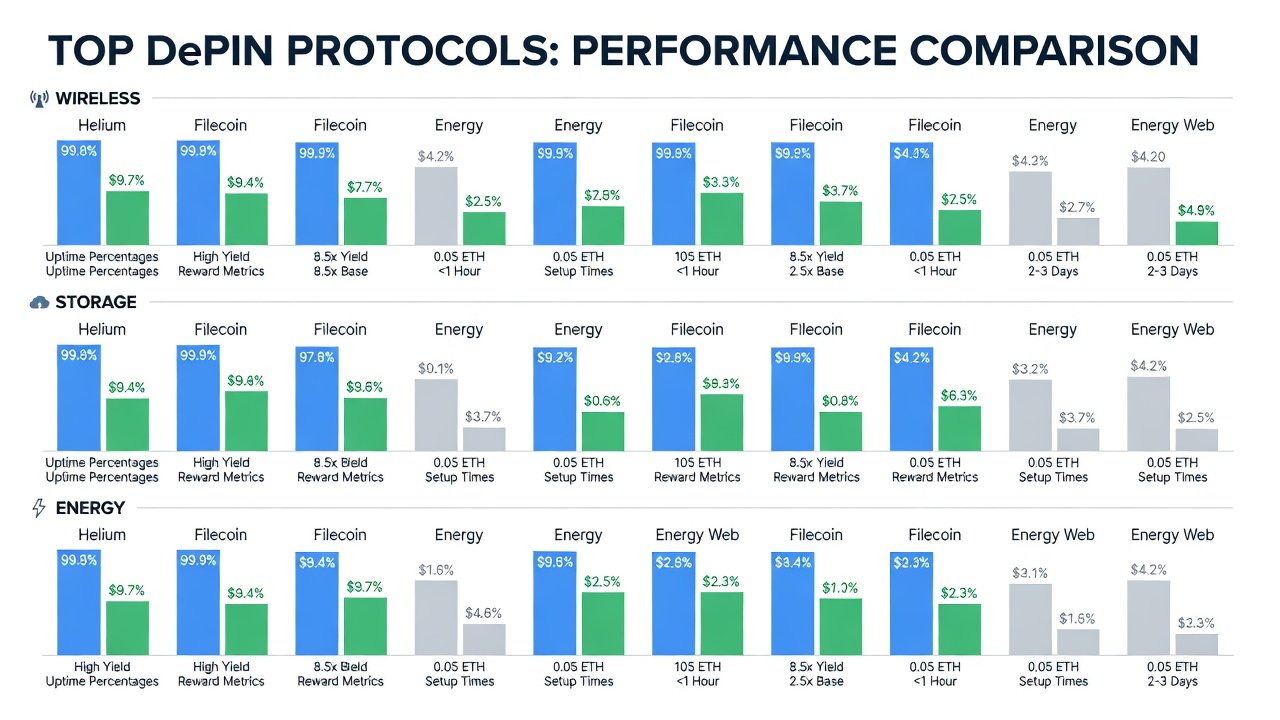
Top wireless protocols show setup times of 3 hours average versus 5 hours for storage setups. Energy nodes often require 4-6 hours. Uptime rewards favor networks with proven 99%+ reliability. Review live metrics to compare current reward rates and token velocity. Wireless networks typically excel in geographic reward multipliers, while storage protocols prioritize consistent retrieval volume. Energy projects differentiate through integration with local utility incentives. Comprehensive comparisons reveal that hybrid operators running nodes in two or more categories achieve more stable overall returns.
Practical Checklist for Evaluating New DePIN Projects
- Verify token utility and distribution model through official documentation and on-chain analysis.
- Assess hardware compatibility and costs by consulting community forums and manufacturer specifications.
- Check community governance and developer activity on public repositories and discussion channels.
- Review regulatory alignment in target regions using government resources and legal summaries.
- Analyze historical uptime and reward consistency via transparent network explorers.
- Evaluate exit liquidity for the native token across major exchanges.
- Examine insurance options and physical security measures for deployed hardware.
- Consider scalability potential when planning multi-node expansions.
FAQ: Scaling Multiple Nodes
How many nodes can one operator realistically manage? Most beginners start with 2-3 nodes across different verticals to diversify risk before expanding further based on operational capacity.
What monitoring tools help with scaling? Protocol dashboards combined with third-party uptime trackers provide real-time alerts and performance summaries across all deployments.
Are there tax implications? Consult local regulations, as rewards are typically treated as income in both US and EU jurisdictions requiring proper record-keeping.
How does hardware failure impact ROI? Redundant setups and quick replacement minimize downtime losses while maintaining contribution streaks.
What strategies improve multi-node efficiency? Centralized management platforms and automated alert systems reduce manual oversight requirements significantly.
Can nodes be relocated easily? Wireless and energy nodes often allow relocation with minimal reconfiguration, whereas storage setups may require data migration planning.
Final Investor Takeaways
DePIN node operations in 2026 offer structured opportunities when approached with data-driven analysis. Prioritize protocols with transparent metrics, strong security, and clear regulatory paths. Diversification across wireless, storage, and energy reduces exposure while maximizing learning. Continuous monitoring and adaptation remain essential for sustained returns. By following structured evaluation processes and maintaining disciplined operations, investors can navigate the evolving landscape effectively.


No comments yet. Be the first!