 CryptoChain Blog
Introduction to DePIN Wireless Networks in 2026
Decentralized Physical Infrastructure Networks (DePIN) continue to grow in 2026, enabling individuals to earn crypto rewards by deploying wireless nodes that provide real-world connectivity. This guide focuses on beginner-friendly wireless projects like Helium and comparable networks, offering step-by-step instructions for hardware selection, installation, and ongoing operations. Wireless DePIN projects reward operators for contributing to decentralized 5G, LoRaWAN, and Wi-Fi coverage. Unlike centralized telecoms, these networks rely on community hardware to expand reach while distributing token incentives. As adoption increases, more participants are exploring how to participate effectively without prior technical expertise.
The appeal lies in passive income potential combined with supporting global connectivity infrastructure. Beginners benefit from simplified onboarding processes that have matured since earlier network iterations. This article provides depth on every stage, from initial research to long-term management, ensuring readers gain actionable knowledge.
Hardware Requirements for Wireless DePIN Nodes
Beginners should start with certified devices that meet network standards. For Helium, popular options include indoor hotspots with integrated antennas and outdoor units for better range. Key specs include support for specific frequency bands, sufficient processing power, and Ethernet or Wi-Fi connectivity. Additional accessories often needed are high-gain antennas, mounting brackets, and surge protectors. Always verify compatibility with the latest firmware updates before purchase to avoid compatibility issues. Consider environmental factors such as weather exposure for outdoor installations and power consumption for indoor units running continuously.
Examples from 2026 deployments show that users in apartment buildings often succeed with compact indoor models placed near windows, while suburban homeowners achieve broader coverage with elevated outdoor antennas. Research manufacturer specifications thoroughly and cross-reference community forums for real-user experiences before committing to a model. Investing time in hardware selection prevents costly replacements later.
Software Installation and Configuration Steps
Most wireless nodes use web-based dashboards or mobile apps for setup. Connect the device to power and your network, then follow the onboarding wizard to register the node on the blockchain. This typically involves linking a crypto wallet and claiming the device's unique identifier. Advanced users may opt for command-line tools or custom scripts to optimize performance. Regular updates ensure security patches and new features are applied promptly. Begin by downloading the official application associated with your chosen network and create a dedicated wallet if you do not already have one.
During configuration, select the appropriate frequency plan for your geographic region to comply with local spectrum rules. Test connectivity immediately after activation and monitor initial data transmission logs for anomalies. Many networks provide diagnostic tools that highlight signal strength and potential obstructions, allowing quick adjustments.
Understanding Tokenomics and Reward Calculations
Wireless DePIN networks use native tokens to incentivize coverage and data transfer. Rewards are calculated based on factors like location density, data usage, and uptime. Operators earn more in underserved areas where their node fills coverage gaps. Token distribution follows predefined schedules, with portions allocated to node operators, developers, and ecosystem growth. Monitoring dashboards provide real-time estimates of potential earnings. In practice, a node in a low-density rural zone might accumulate rewards steadily through consistent uptime, whereas high-density urban nodes compete more intensely for data-related incentives.
Understanding these mechanics helps operators optimize placement and maintenance routines. Token value fluctuations also affect overall returns, so tracking network governance proposals can reveal upcoming changes to reward structures.
Real-World ROI Benchmarks from 2026 Deployments
Operators in 2026 report varying returns depending on location and hardware quality. Urban setups often achieve steady but modest yields due to competition, while rural deployments can deliver stronger long-term results. Factors such as consistent uptime and strategic placement significantly influence outcomes. Case studies from recent deployments illustrate how combining multiple nodes across different networks can diversify income streams and mitigate risks associated with single-project performance.
US and EU Regulatory Considerations
In the United States, operators must comply with FCC regulations on radio frequency emissions and licensing. Check local zoning laws before installing outdoor equipment. Different states may impose additional permitting requirements for structures exceeding certain heights. In the European Union, operators follow guidelines from the European Commission regarding spectrum use and data privacy. GDPR compliance is essential when handling network data. Security best practices include using strong passwords, enabling two-factor authentication, and keeping firmware updated. Consulting local regulatory bodies or legal experts familiar with decentralized networks can prevent future compliance challenges.
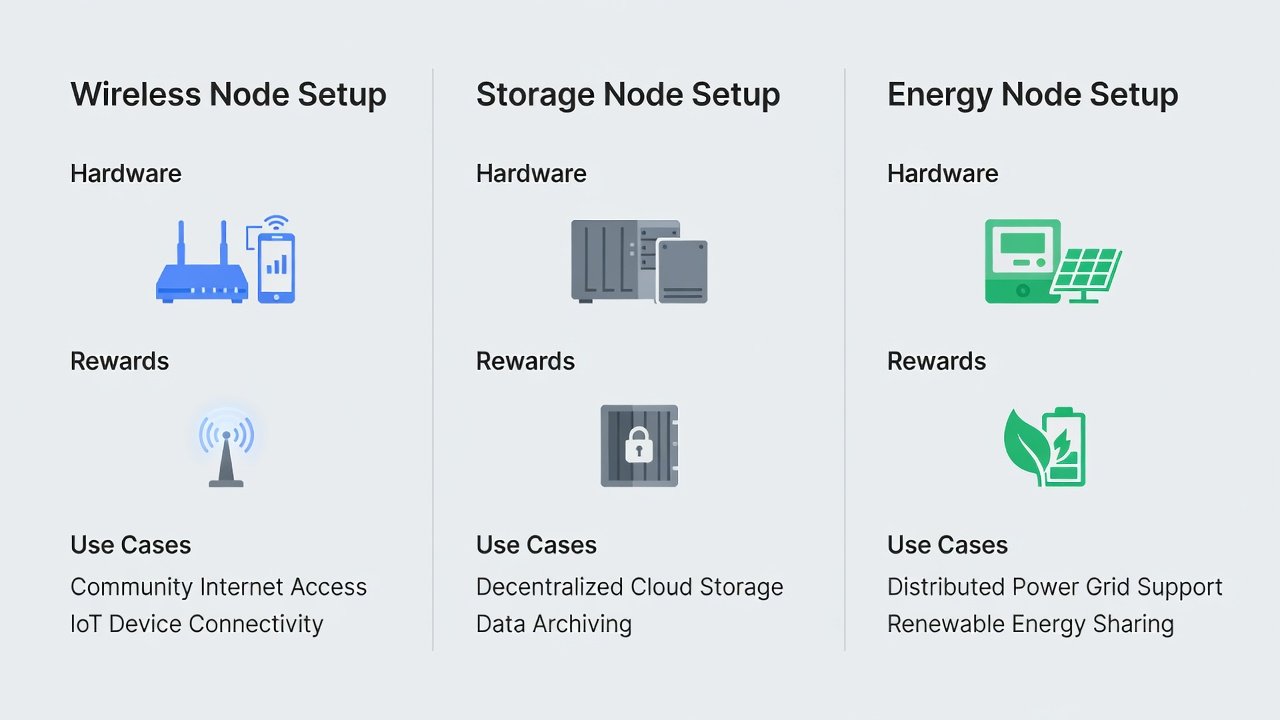
Practical Comparisons: Wireless vs Storage vs Energy DePIN
Wireless nodes focus on connectivity and require physical placement for signal coverage. Storage DePIN variants emphasize hard drive capacity and uptime for decentralized file hosting. Energy DePIN projects involve solar or battery systems that contribute to grid stability. Wireless setups typically demand less physical space but are highly sensitive to geographic positioning. Storage solutions scale with additional drives yet require reliable cooling and power. Energy variants often involve higher upfront complexity but align well with sustainability goals.
- Wireless: Lower entry barriers but location-dependent rewards; ideal for urban or suburban users with good line-of-sight.
- Storage: Higher hardware costs with more predictable scaling; suits those with spare bandwidth and disk space.
- Energy: Complex installation yet potential for larger incentives in green initiatives; best for property owners with outdoor space.
Choose based on your available space, technical skills, and risk tolerance. Many operators begin with wireless nodes due to simpler onboarding before expanding into other categories.
Common Pitfalls and How to Avoid Them
New operators often overlook antenna positioning, leading to poor performance. Another frequent mistake is ignoring software updates, which can expose nodes to vulnerabilities. Always research local regulations early to prevent compliance issues. Additional pitfalls include underestimating electricity costs for always-on devices and failing to secure wallets against phishing attempts. Learning from community case studies helps identify these issues before they impact rewards.
First-Time Operator Checklist
- Research approved hardware models and read recent user reviews.
- Verify internet speed and stability at the intended installation site.
- Prepare a secure crypto wallet with backup phrases stored safely.
- Install and test the node indoors first before permanent mounting.
- Monitor rewards daily for the first month to establish baselines.
- Document all expenses for tax purposes and maintain a maintenance log.
- Join official community channels for ongoing support and updates.
Frequently Asked Questions
What are typical setup costs?
Entry-level wireless nodes involve moderate hardware investment plus optional antenna upgrades. Exact figures fluctuate; consult current vendor listings for up-to-date pricing as of late 2026. Focus on total cost of ownership including electricity and potential maintenance.
How much maintenance is required?
Minimal ongoing work is needed beyond periodic firmware updates and occasional hardware checks. Remote monitoring tools simplify oversight and alert operators to issues promptly.
What are the tax implications of crypto rewards?
Rewards are generally considered taxable income in most jurisdictions. Consult a tax professional familiar with cryptocurrency regulations in your region for personalized advice. Record-keeping from day one simplifies annual filings.
Can I run multiple nodes on the same network?
Most networks permit multiple nodes, but operators must follow rules regarding minimum distances between devices to avoid penalties. Review official documentation before scaling.
How do I choose between different wireless projects?
Evaluate coverage maps, community activity, token utility, and long-term roadmap. Starting with established projects like Helium provides more resources for beginners.
Conclusion
Deploying a wireless DePIN node in 2026 offers an accessible entry into decentralized infrastructure. By following best practices for setup, compliance, and optimization, beginners can contribute meaningfully while earning rewards. Start small, monitor performance, and scale strategically based on real results. Continued education through official resources and community engagement will maximize success over time.

No comments yet. Be the first!