 CryptoChain Blog

Introduction to DePIN Wireless Nodes in 2026
Decentralized Physical Infrastructure Networks (DePIN) continue to grow as a practical way for individuals to earn crypto rewards by contributing real-world hardware like wireless hotspots. In 2026, wireless DePIN projects such as Helium remain popular entry points for newcomers seeking passive income through coverage provision. This guide delivers actionable steps for selecting hardware, configuring wallets, understanding token mechanics, and navigating regulations to help maximize your setup success. DePIN wireless nodes operate by creating decentralized networks for IoT connectivity, 5G offloading, or similar services. Participants deploy nodes that provide coverage and receive tokens in return based on usage and performance metrics. Beginners benefit from starting with established protocols that offer clear documentation and community support. The appeal lies in combining everyday hardware with blockchain incentives, allowing users to contribute to global connectivity while participating in the crypto economy. Success depends on careful planning around location, equipment quality, and ongoing maintenance.
Hardware Selection for Wireless DePIN Nodes
Choosing the right hardware is the foundation of a successful deployment. Focus on devices compatible with your target network, such as Helium-compatible hotspots that support LoRaWAN or CBRS frequencies. Look for models with strong antennas, reliable power supplies, and easy firmware updates. Consider indoor versus outdoor units based on your location and desired coverage radius. Outdoor nodes typically deliver better signal reach but require weatherproofing and proper mounting. Key factors include compatibility with current network standards, power efficiency, and scalability for future upgrades. Research manufacturer warranties and community reviews before purchase. Always verify that the hardware meets local spectrum regulations to avoid operational issues. Popular choices often include devices with integrated GPS for precise location proof and multiple frequency bands for broader compatibility. When evaluating options, compare antenna gain ratings and power consumption to ensure long-term reliability. For example, placing a node near a window with line-of-sight to open areas can significantly improve performance compared to enclosed basement installations. Test signal strength using manufacturer tools before final mounting to avoid repositioning later.
Wallet Configuration and Security Best Practices
Secure wallet setup protects your earnings. Begin by creating a non-custodial wallet that supports the specific tokens of your chosen DePIN network. Enable two-factor authentication and store seed phrases offline in multiple secure locations. Never share private keys or enter them on unverified sites. For added security, use hardware wallets for larger holdings and regularly monitor transaction activity. Implement firewall rules on any connected devices and keep firmware updated to patch vulnerabilities. These steps reduce risks from phishing or network attacks common in crypto environments. Step-by-step, first download the official wallet app from verified sources, generate a new wallet, back up the recovery phrase on paper, and test a small transfer before linking to your node dashboard. Always use unique passwords and avoid reusing them across platforms. Consider multi-signature setups for shared or high-value nodes to add an extra layer of protection against unauthorized access.
Understanding Token Reward Mechanics
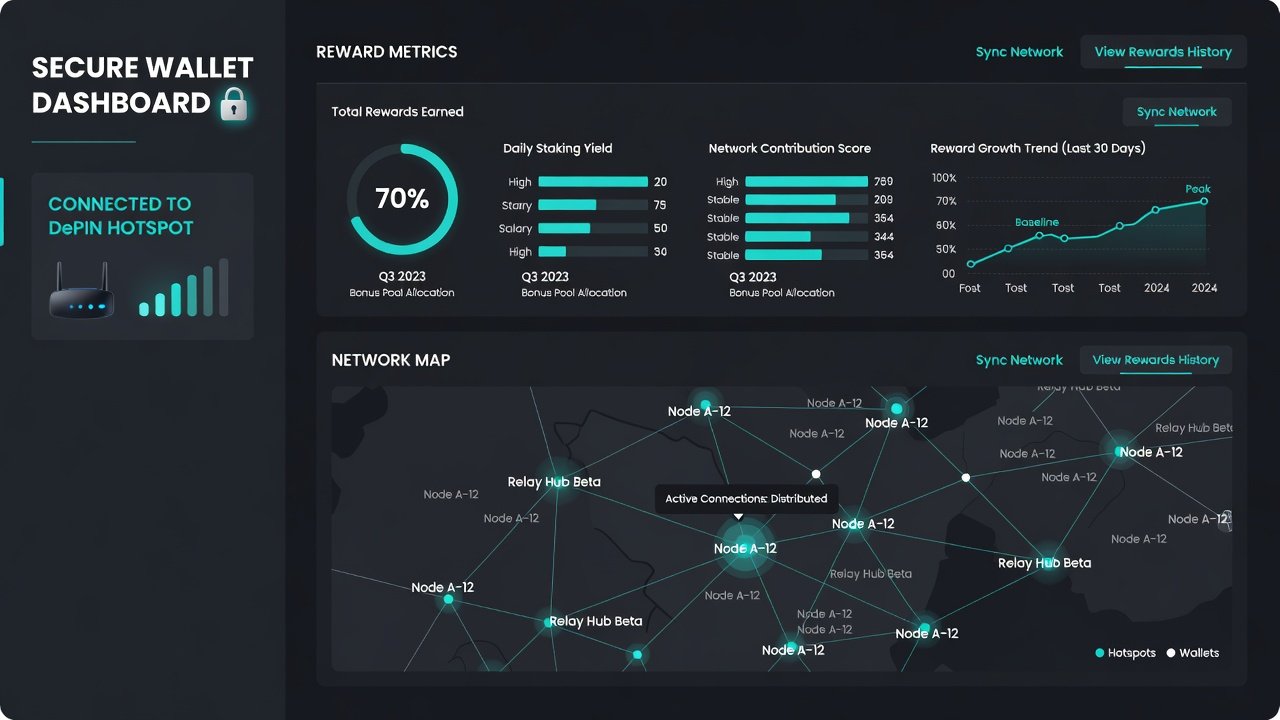
Rewards in wireless DePIN networks are typically distributed based on data transfer volume, coverage consistency, and proof-of-coverage challenges. Nodes earn tokens proportionally to their contribution, with bonuses for high-density or underserved areas. Track performance through official dashboards to optimize placement and antenna orientation. Mechanics can evolve with network upgrades, so stay informed via official channels. Rewards are often claimable periodically, and some protocols include staking options to compound earnings over time. In practice, a well-positioned node might participate in multiple challenges daily, each verifying its coverage through interactions with other nodes or mobile devices. Understanding the weighting system helps prioritize upgrades like better antennas over frequent relocations. Real deployments show that consistent uptime and strategic placement near high-traffic zones yield steadier returns than sporadic operation.
EU and US Regulatory Considerations
Operators must comply with spectrum and data privacy rules. In the US, consult the Federal Communications Commission guidelines for unlicensed band usage. In the EU, review directives from the European Commission on electronic communications and radio equipment compliance. Local permits may be required for outdoor installations in certain jurisdictions. Tax obligations on earned tokens also apply; maintain accurate records of rewards received. Consulting a local legal expert ensures ongoing adherence as rules develop. Additional considerations include noise ordinances that might restrict antenna placement in residential zones and data protection laws governing any user information passing through the node. Staying updated on policy changes through official government portals helps avoid compliance surprises that could interrupt operations.
ROI Benchmarks and Comparison of Top Protocols
Real-world deployments show varying returns influenced by location, hardware quality, and network adoption. Qualitative benchmarks indicate stronger performance in urban or suburban areas with high device density. Always evaluate long-term viability rather than short-term spikes. Factors such as local competition, building density, and network maturity all play roles in determining overall effectiveness. New operators should start with conservative expectations and focus on consistent coverage rather than chasing peak periods.
| Protocol | Focus | Hardware Type | Key Advantage |
|---|---|---|---|
| Helium | IoT Connectivity | LoRaWAN Hotspots | Established ecosystem and broad device support |
| Other Wireless DePIN | 5G/ Broadband | CBRS or Mesh Nodes | Higher throughput potential in dense areas |
| Emerging Variants | Specialized Coverage | Hybrid Antenna Systems | Niche market opportunities |
Maximizing Rewards: Actionable Steps and Troubleshooting
To boost outcomes, begin with a site survey using signal mapping apps to identify optimal mounting points. Regularly clean antennas and check connections for corrosion or damage. Monitor network dashboards daily for alerts on performance dips. Common troubleshooting includes rebooting the node after firmware updates, verifying internet backhaul stability, and adjusting antenna angles based on coverage heatmaps. If rewards plateau, experiment with minor relocations or adding signal boosters where permitted. Document all changes to replicate successful configurations across multiple nodes.
Common Pitfalls and FAQ
- Insufficient antenna height leading to poor coverage and reduced challenges.
- Ignoring firmware updates that improve efficiency and security.
- Overlooking local zoning rules for installations resulting in forced removals.
- Using weak or shared internet connections that cause downtime during peak reward windows.
- Failing to diversify across protocols when regulations shift in one region.
Frequently Asked Questions
How long does setup take? Most beginners complete initial configuration in a few hours once hardware arrives, though fine-tuning placement may require several days of observation.
Can I run multiple nodes? Yes, but performance monitoring across locations is essential for optimal results and to prevent interference between units.
What if rewards decrease? Relocate the node or upgrade hardware to adapt to changing network demands and maintain competitive coverage levels.
Is technical expertise required? Basic networking knowledge helps, but many platforms provide guided apps and community forums for step-by-step assistance.
How do I handle hardware failures? Maintain spare components and contact manufacturer support promptly while keeping detailed logs of operational history.
Conclusion
Setting up a DePIN wireless node in 2026 offers a tangible way to participate in decentralized networks while potentially earning rewards. By following structured steps for hardware, security, and compliance, newcomers can build reliable deployments. Start small, track results, and scale based on proven outcomes for sustainable involvement. Consistent attention to maintenance and regulatory updates will support long-term success in this evolving space.


No comments yet. Be the first!