 CryptoChain Blog
Introduction to 2026 Stablecoin Compliance
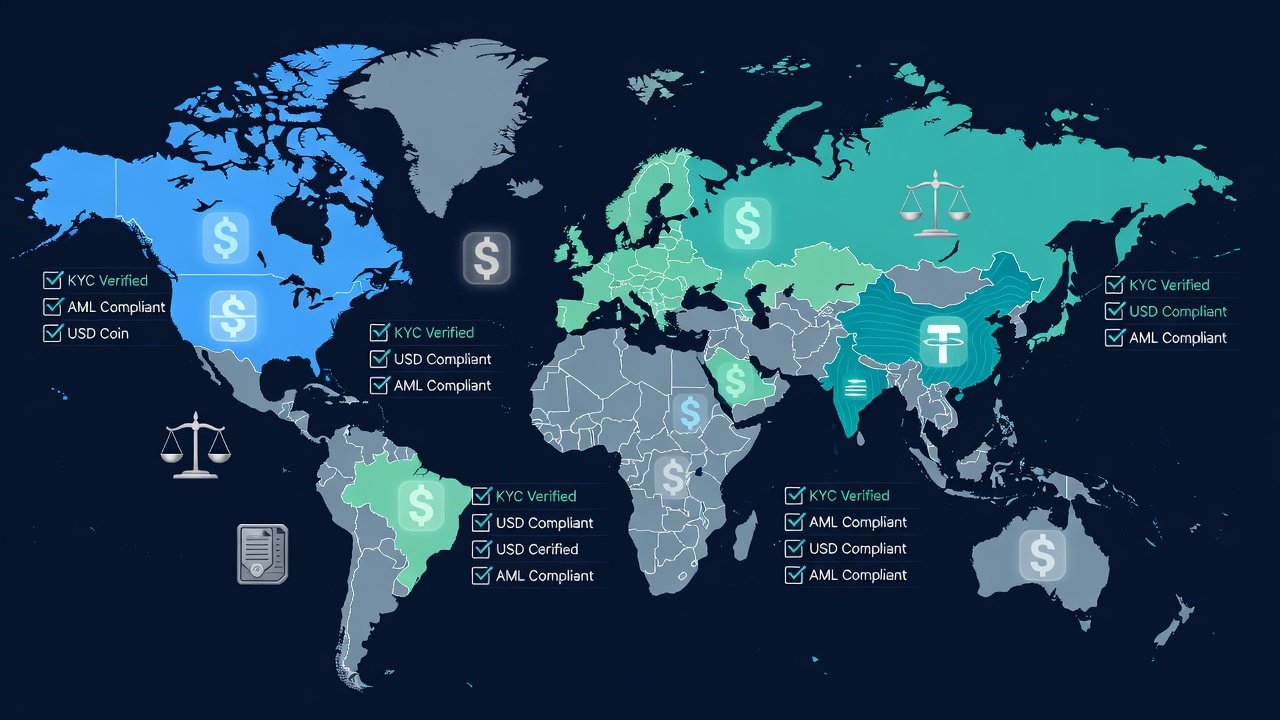
Stablecoins have become essential building blocks for crypto investors seeking stability amid market volatility. In 2026, regulatory shifts across the United States, European Union, and Asia demand rigorous compliance strategies. This comprehensive guide equips investors with practical tools to navigate US Treasury guidance, EU MiCA updates, and emerging Asian licensing regimes. Real-world examples from issuers like Circle’s USDC and Tether’s USDT illustrate successful adaptations. Readers will explore a repeatable five-step evaluation process, detailed risk assessment tables, market impact analysis, wallet selection strategies, and reporting tools that support global portfolios. The content emphasizes actionable steps rather than theory, helping investors reduce legal exposure while maintaining portfolio efficiency.
US Treasury Guidance and Stablecoin Oversight
The US Treasury Department has intensified focus on stablecoin reserves, anti-money laundering protocols, and sanctions compliance throughout 2026. Issuers must provide regular attestations confirming that reserves match circulating supply and consist of high-quality liquid assets. USDC has responded by publishing monthly attestations from independent auditors, while USDT has expanded its reserve breakdown to include more US Treasuries and cash equivalents. Investors should review Treasury statements on payment stablecoins and cross-border transfer requirements. Key considerations include whether an issuer maintains a US presence or partners with regulated banks. Practical steps involve cross-checking issuer disclosures against Treasury lists of sanctioned entities. For official updates, consult US Treasury official guidance. Failure to monitor these developments can result in frozen assets or restricted access to US markets.
EU MiCA Updates and Licensing Requirements
The Markets in Crypto-Assets regulation reached full enforcement across the EU in 2026, mandating that stablecoin issuers obtain authorization as electronic money institutions. MiCA enforces strict rules on reserve segregation, redemption at par value within one business day, and marketing disclosures. Both USDC and USDT have established EU-licensed entities to continue serving European users without interruption. Investors must verify that any stablecoin they hold carries an approved white paper and complies with ongoing supervisory reporting. Additional requirements cover governance standards and conflict-of-interest policies. The European Commission maintains detailed implementation resources at European Commission MiCA resources. Non-compliant tokens face delisting from EU exchanges, underscoring the need for proactive due diligence before allocating capital.
Asian Licensing Trends and Regional Variations
Asia’s regulatory landscape features distinct approaches tailored to local priorities. Singapore’s Monetary Authority of Singapore requires stablecoin issuers to hold reserves in major currencies and obtain payment services licenses with minimum capital thresholds. Japan emphasizes consumer protection through strict capital adequacy rules, while South Korea focuses on transaction monitoring and anti-fraud measures. Hong Kong’s licensing regime for fiat-referenced stablecoins mandates regular audits and segregation of client assets. USDC and USDT have secured or applied for licenses in multiple jurisdictions to preserve access. Investors should track jurisdiction-specific thresholds distinguishing retail from institutional offerings. Multi-jurisdictional portfolios require mapping each holding against the strictest applicable rule set.
Five-Step Stablecoin Compliance Evaluation Process
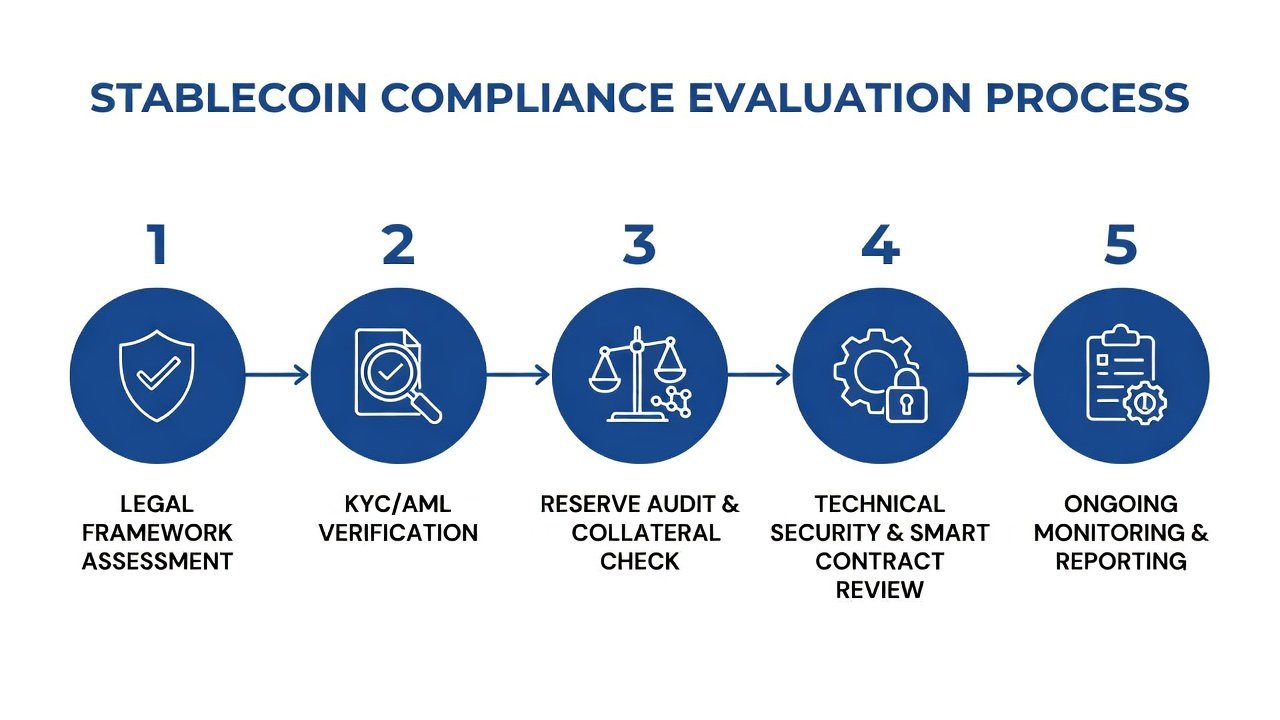
Apply this repeatable framework quarterly to any stablecoin under consideration. Step one requires verifying the issuer’s licensing status through official regulatory registries in each target jurisdiction. Step two involves reviewing reserve composition, attestation frequency, and third-party audit quality; for example, confirm that reserves exceed 100 percent of circulation with low-risk assets. Step three assesses sanctions screening and AML/KYC controls by examining issuer policies and any enforcement actions. Step four evaluates redemption mechanisms, including processing times and liquidity provisions during stress periods. Step five documents ongoing monitoring obligations and integrates automated alerts for regulatory changes. Each step should be recorded in a compliance log with supporting evidence such as audit reports and license certificates.
Risk Assessment Tables
| Jurisdiction | Primary Risk | Mitigation Strategy | Example Issuer Response |
|---|---|---|---|
| United States | Reserve attestation gaps | Monthly third-party audits | USDC enhanced attestations |
| European Union | MiCA authorization delays | Use only authorized issuers | USDT EU entity licensing |
| Singapore | Reserve currency mismatch | Hold SGD and USD reserves | Local partnership models |
| Japan | Capital adequacy shortfalls | Maintain excess reserves | Bank-backed structures |
Market Impact Analysis
Regulatory clarity in 2026 has supported stablecoin market expansion while raising compliance costs for smaller issuers. Major players adapted by localizing operations, forming bank partnerships, and improving transparency reports. Investors benefit from reduced counterparty risk when selecting compliant assets but must account for potential delistings of non-conforming tokens. Market data shows increased trading volumes on regulated platforms following MiCA implementation. Global portfolios that apply consistent compliance checks experience fewer disruptions during enforcement actions. Monitoring issuer market share shifts provides early signals of regulatory acceptance or challenges ahead.
Investor Tips: Wallet Selection and Reporting Tools
Choose non-custodial wallets with built-in compliance features such as transaction labeling, exportable tax reports, and integration with analytics platforms. Hardware wallets paired with software dashboards allow investors to track holdings across borders while maintaining private keys. Reporting tools should support automated generation of acquisition, transfer, and redemption records required for tax authorities. Cross-reference wallet providers against jurisdiction-specific approved lists where available. Additional best practices include enabling multi-signature controls, using VPNs for access from restricted regions, and scheduling quarterly portfolio reviews. Investors holding both USDC and USDT should maintain separate wallets for each to simplify jurisdiction-specific reporting.
Common Mistakes to Avoid
Investors frequently overlook reserve audit frequency or assume a global license applies locally. Another error involves neglecting redemption liquidity during market stress. Always confirm current authorization status through primary regulatory sources before increasing exposure. Diversification across three or more compliant issuers reduces single-point failure risk.
FAQ
What are common pitfalls when evaluating stablecoins?
Overlooking reserve audit frequency and assuming global licenses apply locally are frequent errors. Always confirm current authorization status through official registries and maintain documentation of each review.
How should global portfolios adapt to 2026 rules?
Diversify across compliant issuers and implement the five-step process quarterly. Use automated reporting tools to maintain accurate records for tax and regulatory filings across jurisdictions.
Where can investors find official updates?
Consult primary sources such as the Financial Stability Board and regional regulators on a monthly basis. Subscribe to official newsletters for timely alerts.
What wallet features matter most for compliance?
Look for exportable transaction histories, sanctions screening alerts, and integration with tax software. Hardware options with open-source firmware provide additional security layers.
Conclusion and Next Steps
Staying ahead of 2026 stablecoin regulations requires proactive due diligence and structured processes. Apply the checklist and five-step evaluation framework to maintain compliant, resilient portfolios across US, EU, and Asian markets. Regular reviews combined with reliable reporting tools position investors for sustainable growth in the evolving regulatory environment.


No comments yet. Be the first!