 CryptoChain Blog
Introduction to 2026 Stablecoin Regulations
Stablecoins have become essential to crypto portfolios, but 2026 brings stricter rules across major regions. Investors must adapt to evolving compliance requirements in the US, EU, and Asia to protect holdings and capitalize on opportunities. This playbook examines key changes, including adaptations by issuers like USDC and USDT, MiCA 2.0 nuances, and Asian licensing developments, with actionable comparisons and strategies. The regulatory environment is shifting rapidly as governments seek to balance innovation with consumer protection and financial stability. Understanding these rules is critical for anyone holding or trading stablecoins, as non-compliance can lead to frozen assets or reduced liquidity in key markets.
US Regulatory Landscape for Stablecoins
The United States continues to refine its approach through frameworks involving the SEC and Federal Reserve. Issuers must prioritize reserves transparency and anti-money laundering protocols. USDC has enhanced attestations while USDT focuses on broader banking partnerships to meet expectations. Investors should monitor enforcement actions that could influence market liquidity. Recent guidance emphasizes monthly reserve reports and clear segregation of customer funds. For example, stablecoin issuers are now required to maintain reserves in highly liquid assets such as cash and short-term government securities. This creates both challenges and opportunities for investors who must evaluate which issuers demonstrate the strongest operational resilience. Failure to adapt could result in delisting from major exchanges or restricted access for US-based users.
How USDC and USDT Are Adapting
USDC has introduced enhanced on-chain attestations and third-party audits to align with emerging federal expectations. USDT has expanded its presence in regulated banking channels and improved disclosure practices. These adaptations help maintain trust but also introduce new reporting obligations that investors need to track. Practical steps include reviewing issuer transparency portals regularly and diversifying holdings across multiple compliant stablecoins to reduce single-issuer risk.
EU MiCA 2.0 and Its Implications
Europe's Markets in Crypto-Assets regulation evolves with MiCA 2.0, emphasizing consumer protection and stablecoin authorization. Requirements include detailed reserve management and redemption rights. European Commission resources provide official guidance on implementation timelines. MiCA 2.0 introduces stricter capital requirements and mandatory stress testing for issuers. Investors in the EU must ensure their chosen stablecoins are fully authorized under the new regime, as unauthorized tokens may face trading restrictions after the transition period. This creates a more predictable environment but also raises barriers to entry for smaller issuers.
Asian Licensing Shifts and Regional Variations
Asia presents diverse approaches, from Singapore's progressive licensing to Japan's strict oversight. China maintains its digital yuan focus while other hubs adapt rules for cross-border use. USDT and USDC navigate these by securing local approvals where possible. Singapore's Monetary Authority continues to refine its stablecoin framework with emphasis on technology risk management. Japan requires issuers to obtain licenses under the Payment Services Act, leading to increased compliance costs. These regional differences mean investors must conduct jurisdiction-specific due diligence before allocating capital.
Side-by-Side Regulatory Comparison
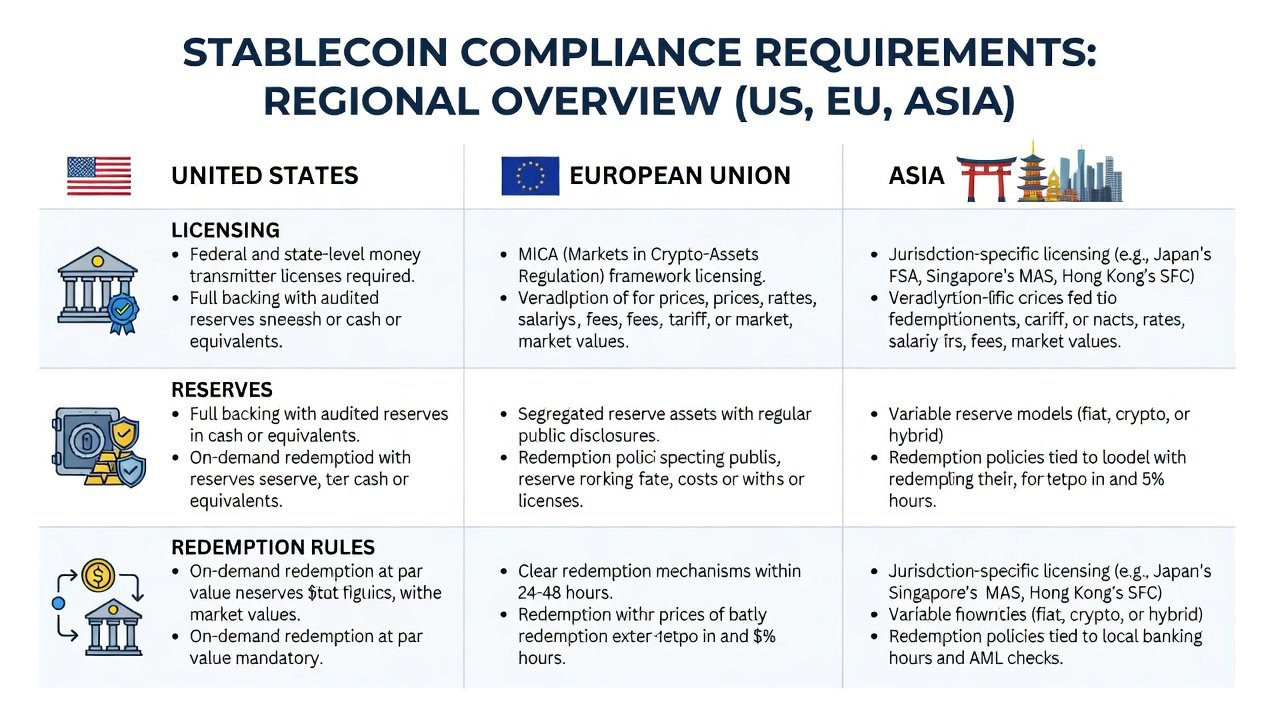
Understanding the differences helps investors make informed decisions. The following comparison highlights core areas:
- US: Emphasis on reserve audits and issuer registration with focus on anti-money laundering compliance.
- EU: Mandatory authorization under MiCA 2.0 with strict redemption policies and consumer safeguards.
- Asia: Mix of sandbox testing and full licensing depending on jurisdiction, with varying levels of reserve transparency requirements.
Additional considerations include tax reporting obligations and cross-border transfer rules that differ significantly between regions.
Real-World Case Studies
USDC's response to US proposals demonstrates proactive reserve disclosures and regular third-party verification. USDT's adjustments in Asia highlight licensing navigation amid varying enforcement levels, including partnerships with local banks in Singapore and Japan. These examples show how issuers are responding to regulatory pressure while maintaining market share. Investors can learn from these cases by prioritizing stablecoins with proven track records of regulatory engagement.
Compliance Checklist for Investors
- Verify issuer reserve reports quarterly through official channels and independent audits.
- Assess regional licensing status before allocation and confirm authorization in target jurisdictions.
- Review redemption terms and counterparty risks, including banking partner stability.
- Track upcoming deadlines for MiCA 2.0 full enforcement and US reporting cycles.
- Document all holdings for tax and regulatory reporting purposes.
- Monitor exchange policies on supported stablecoins to avoid sudden delistings.
Risk Assessment Steps
Begin with portfolio exposure analysis, followed by stress testing against regulatory scenarios. Diversify across compliant issuers and jurisdictions to mitigate concentration risks. Evaluate liquidity under different enforcement outcomes and maintain contingency plans for rapid reallocation. Regular reviews every quarter are recommended to stay ahead of policy changes.
Investor Tips and Upcoming Deadlines
Stay informed via official channels such as SEC publications and consider phased adjustments ahead of key 2026 milestones. Professional advice tailored to individual holdings is recommended. Key deadlines include MiCA 2.0 authorization deadlines in mid-2026 and potential US legislative updates expected in the second half of the year. Investors should also review guidance from Singapore's monetary authority for Asian market exposure.
Common Mistakes to Avoid
Many investors overlook redemption rights or fail to diversify across regions. Another frequent error is ignoring tax implications of stablecoin transactions in different jurisdictions. Always cross-reference multiple official sources before making allocation changes.
FAQ on Portfolio Adjustments
How should I rebalance stablecoin holdings? Prioritize issuers with proven compliance across regions and maintain a mix of USDC and other authorized tokens.
What deadlines matter most? Monitor MiCA 2.0 transition periods and US reporting cycles throughout 2026.
Are there safe allocation strategies? Use the checklist above for systematic evaluation and consider small test allocations first.
How do regional rules affect liquidity? Stricter rules in one region may reduce available trading pairs, requiring investors to plan exit strategies accordingly.
Conclusion
Navigating 2026 stablecoin regulations requires proactive monitoring and structured compliance practices. By following the strategies outlined in this playbook, investors can position their portfolios for resilience across the US, EU, and Asia markets.

No comments yet. Be the first!