 CryptoChain Blog

Introduction to Advanced Crypto Hedging in 2026
Cryptocurrency markets continue to exhibit high volatility in 2026, driven by regulatory shifts, macroeconomic factors, and technological advancements. Investors seeking sophisticated risk management must move beyond basic allocation strategies. This guide explores practical hedging techniques using options, perpetual futures, and stablecoin allocations, supported by real-world examples and frameworks. Effective hedging allows portfolios to weather downturns while maintaining exposure to potential upside moves in digital assets.
Understanding Portfolio Hedging Fundamentals
Hedging protects against downside risk while preserving upside potential. In crypto, this involves derivatives and stable assets to offset losses during market corrections. Effective hedging requires understanding correlation, implied volatility, and liquidity dynamics unique to decentralized markets. Unlike traditional assets, crypto experiences rapid sentiment shifts influenced by on-chain activity and social media trends.
Key Concepts for 2026 Markets
Market conditions in 2026 emphasize on-chain data and institutional flows. Hedgers monitor funding rates on perpetual contracts and options skew to time entries. Diversification alone proves insufficient against black swan events common in digital assets. Correlations between major coins like Bitcoin and altcoins can spike during stress periods, reducing the effectiveness of simple diversification.
Step-by-Step Hedging with Options
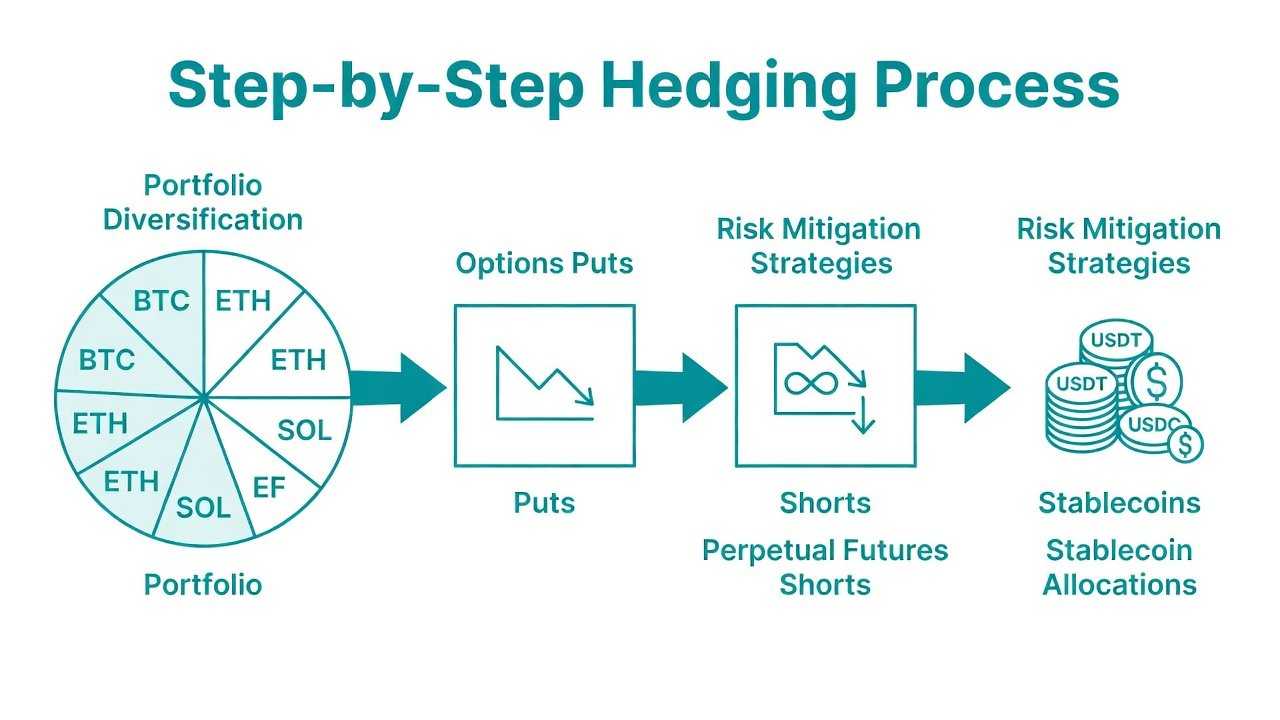
Options provide asymmetric protection, allowing investors to cap losses without fully exiting positions. Start by assessing portfolio beta to Bitcoin and Ethereum using historical price data. Purchase put options on major assets or use protective collars to limit premium costs.
- Identify exposure: Calculate delta-neutral positions by measuring overall portfolio sensitivity to underlying price changes.
- Select strikes: Choose out-of-the-money puts for cost efficiency while ensuring meaningful protection levels.
- Manage expiration: Roll contracts monthly to align with volatility cycles and avoid gamma risk near expiry.
- Monitor implied volatility: Enter positions when IV ranks high relative to historical averages for better pricing.
Real-world example: A portfolio holding 50% ETH and 30% BTC might buy ETH puts struck 15% below spot during elevated volatility readings. This setup allows the position to gain value if ETH drops sharply while the remaining holdings capture any rebound.
Hedging with Perpetual Futures
Perpetual futures enable continuous short positions without expiration dates. Traders short BTC perpetuals to hedge long spot holdings, adjusting leverage based on funding rates that fluctuate with market sentiment. These contracts mirror spot prices closely but require careful management of basis and funding payments.
Compare tools: Options offer defined risk but premium decay over time, while perps provide flexibility at the cost of ongoing funding fees. On-chain metrics like exchange reserves and whale accumulation signal optimal entry points for shorts. For instance, rising exchange inflows often precede price pressure, making them a trigger for increasing hedge sizes.
Stablecoin Allocations as a Hedge
Allocating 20-40% to stablecoins reduces overall portfolio volatility without complex derivatives. USDC and USDT serve as safe havens during downturns, allowing redeployment when conditions improve. This approach also provides liquidity for opportunistic buying during dips.
Comparisons of Hedging Tools
Options excel in tail-risk scenarios but require active management and understanding of Greeks like delta and theta. Perpetual futures suit directional hedges yet expose users to liquidation risk if leverage exceeds prudent levels. Stablecoins provide simplicity with minimal yield opportunity costs in 2026 environments. A hybrid approach often works best, combining small options positions with stablecoin buffers for layered protection.
On-Chain Metrics for Timing Entries
Monitor dashboards from providers like Glassnode for signals such as exchange inflows, realized price, and SOPR ratios. Enter hedges when on-chain activity indicates distribution phases by large holders. Additional metrics include NVT ratios to gauge network value relative to transaction volume and active address growth to confirm underlying demand strength. These data points help avoid hedging too early or too late in a cycle.
Stress Testing Frameworks
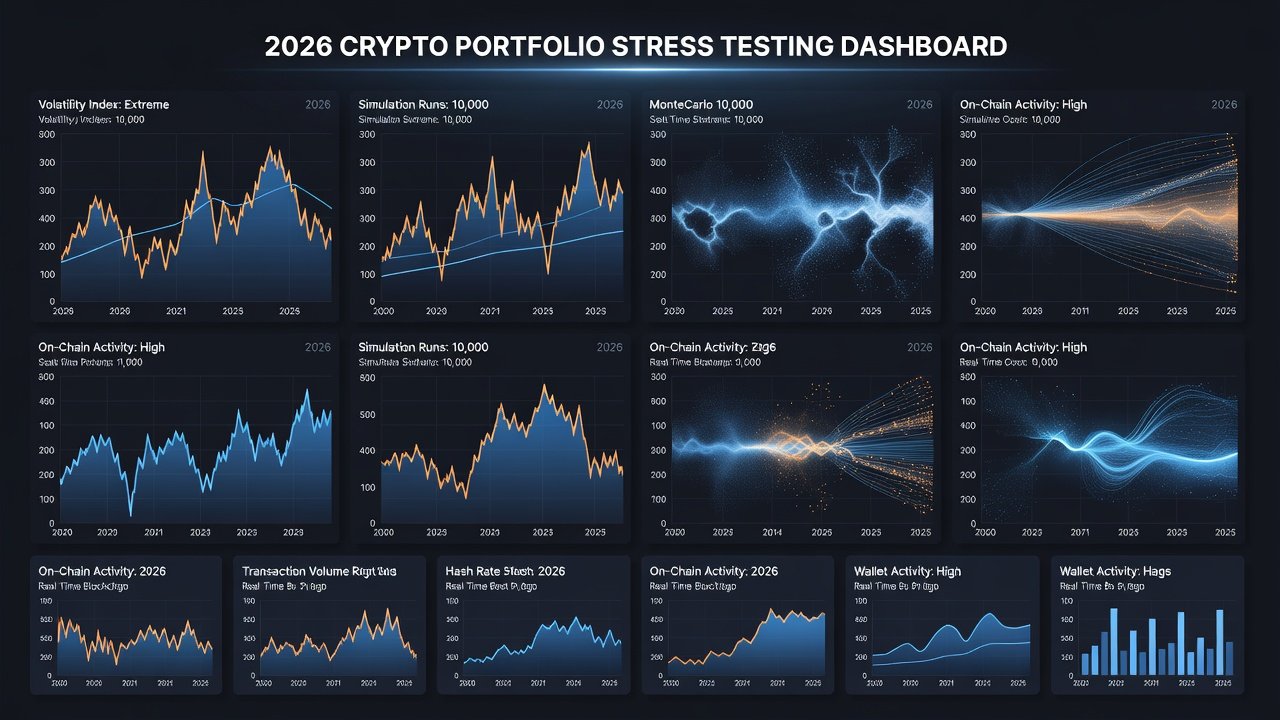
Simulate 50% drawdowns using historical data from 2022 and 2025 cycles. Apply Monte Carlo models to test hedge ratios under varying correlations between assets. Include scenario analysis for regulatory announcements or exchange failures. Review results quarterly and adjust hedge ratios accordingly to maintain target risk levels.
Actionable Checklists
- Review portfolio delta weekly and adjust derivatives as needed.
- Rebalance stablecoin ratios quarterly based on market regime changes.
- Stress test after major news events or on-chain anomalies.
- Document all derivative positions for compliance and tax reporting.
- Track funding rates daily to optimize perpetual futures entries.
- Verify counterparty risk on chosen platforms before scaling positions.
Common Pitfalls to Avoid
Over-hedging erodes returns through excessive premiums and opportunity costs. Ignoring basis risk between spot and derivatives leads to imperfect protection during volatile periods. Failing to account for tax events on hedge closeouts creates surprises at filing time. Another frequent mistake involves neglecting liquidity differences, which can widen spreads and increase execution costs during market stress. Always maintain clear records of entry and exit rationale for each hedge.
Regulatory and Platform Considerations
Investors should review guidelines from authorities such as the U.S. Securities and Exchange Commission when structuring derivatives strategies. Execution platforms must support advanced order types and provide transparent fee schedules. Cross-reference with resources from the Internal Revenue Service to understand reporting requirements for gains and losses on hedged positions.
FAQ Section
What are the tax implications of crypto hedging?
Hedging transactions often trigger capital gains or losses depending on holding periods and jurisdiction. Consult IRS guidelines or equivalent authorities for mark-to-market rules on derivatives. Positions held over one year may qualify for preferential rates in some jurisdictions, but frequent rolling of contracts can reclassify activity as ordinary income.
Which platforms support advanced execution?
Leading venues include Deribit for options depth and Binance or Bybit for perpetual futures liquidity. Always verify regulatory status in your region and use hardware wallets for underlying spot assets to minimize custody risks.
How often should hedges be reviewed?
Conduct weekly delta reviews and monthly full stress tests. Major market events warrant immediate reassessment to ensure protection levels remain aligned with current volatility.
Conclusion
Implementing these techniques positions investors to navigate 2026 volatility with greater resilience. Combine multiple tools, monitor on-chain data closely, and maintain disciplined checklists for optimal results. Continuous education and adaptation remain essential as market structures evolve.

No comments yet. Be the first!