 CryptoChain Blog
Introduction to Crypto Portfolio Stress Testing in 2026
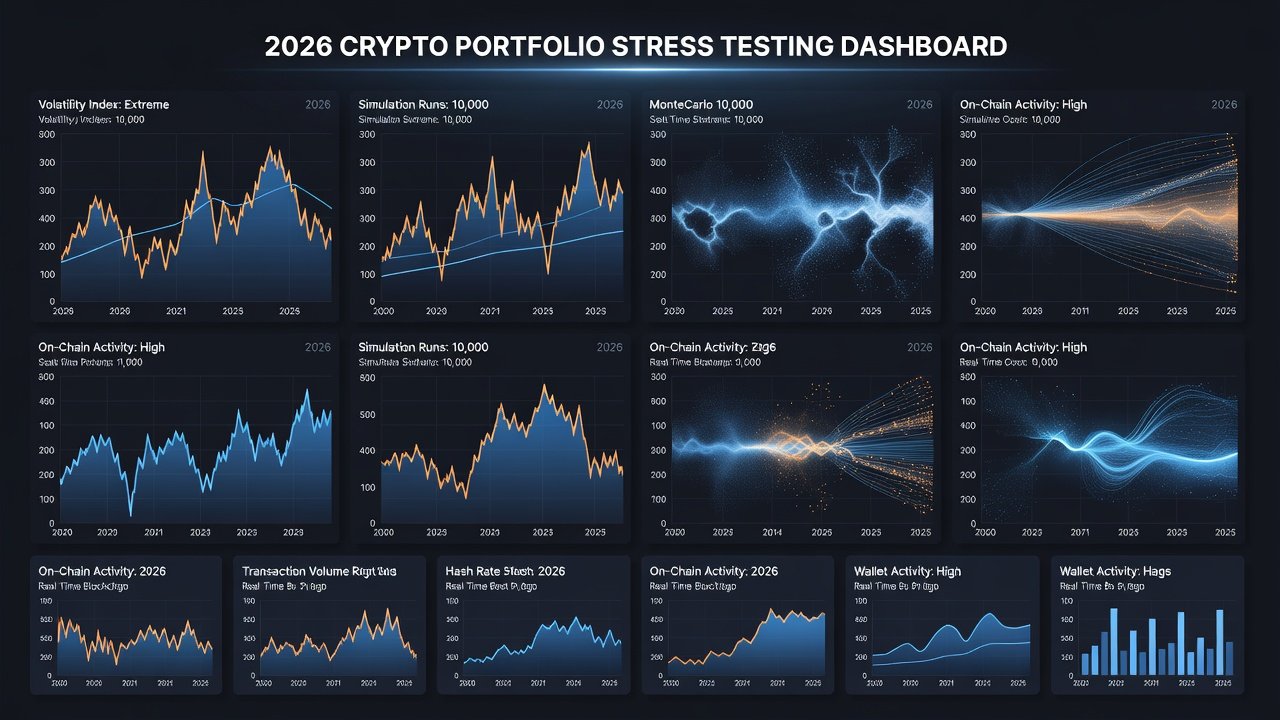
As cryptocurrency markets mature into 2026, volatility remains a defining characteristic driven by macroeconomic shifts, regulatory changes, and technological innovations. Advanced retail investors must move beyond basic allocation to implement rigorous stress testing. This guide provides actionable methods to evaluate portfolio resilience under extreme conditions, incorporating historical data, probabilistic modeling, and blockchain-specific indicators. Stress testing helps identify vulnerabilities before they materialize into losses. By simulating adverse scenarios, investors can adjust exposures proactively and maintain long-term strategies amid uncertainty. In an environment where rapid price swings can erase months of gains overnight, understanding how your holdings behave under pressure becomes essential for preserving capital and capitalizing on recoveries.
Why Stress Testing Matters for 2026 Volatility
Market conditions in 2026 feature amplified swings from institutional adoption and global economic factors. Without stress testing, portfolios risk significant drawdowns during black swan events or prolonged bear phases. Effective testing reveals correlations between assets that basic diversification overlooks, enabling better capital preservation. Regulatory developments, including oversight from bodies like the U.S. Securities and Exchange Commission, add layers of uncertainty that can trigger sudden liquidity crunches. Investors who regularly stress test their positions are better positioned to navigate these dynamics without emotional decision-making during crises.
Step-by-Step Stress Testing Methods
1. Historical Scenario Analysis
Begin by replaying past crises on current holdings. Apply 2018 crypto winter declines, 2022 Terra-Luna collapse impacts, or 2020 COVID market crash to your allocation. Calculate maximum drawdowns and recovery times for each asset class including Bitcoin, Ethereum, and altcoins. For example, take a portfolio with heavy exposure to DeFi tokens and simulate the cascading liquidations seen in May 2022; track how stablecoin depegging would affect overall returns and rebalancing needs. Extend this by layering in macroeconomic shocks such as interest rate hikes tracked by the Federal Reserve to capture cross-asset spillovers.
2. Monte Carlo Simulations
Run thousands of randomized paths using volatility parameters derived from recent market data. This probabilistic approach generates distributions of potential outcomes, highlighting tail risks. Tools like Python libraries or specialized platforms allow customization of drift and volatility assumptions tailored to 2026 conditions. Investors should vary correlation matrices between assets to reflect evolving market regimes, then examine the 5th and 95th percentile results for worst-case and best-case projections. Incorporate fat-tail adjustments to account for crypto's tendency toward extreme moves not seen in traditional equities.
3. Integrating On-Chain Metrics
Incorporate blockchain analytics such as exchange inflows, whale wallet movements, and network hash rate trends. These real-time signals provide early warnings of stress not captured in price history alone. Combine with traditional financial ratios for a hybrid view. Monitor metrics like realized volatility on-chain and active address growth to detect weakening fundamentals before price action confirms them. Advanced users can build custom dashboards that flag when exchange reserves spike alongside declining transaction volumes, indicating potential sell pressure.
Portfolio Allocation Examples Under Stress
Consider a sample diversified portfolio: 40% Bitcoin, 30% Ethereum, 20% blue-chip altcoins, and 10% stablecoins. Apply historical stress: a 70% BTC drop reduces overall value dramatically. Rebalance targets might shift toward higher stablecoin buffers post-simulation. Monte Carlo outputs often suggest maintaining 15-25% in uncorrelated assets to buffer volatility. Another example involves a growth-oriented allocation with 50% altcoins; stress testing might reveal excessive concentration risk, prompting rotation into blue-chip names or addition of inverse products during high-volatility periods. Review results quarterly and document allocation shifts to refine future models.
Hedging Strategies with Derivatives
Protect gains using options, futures, and perpetual swaps. For instance, purchasing put options on major holdings can cap downside during simulated crashes. Compare cost structures across exchanges while monitoring funding rates. Derivatives allow asymmetric protection without liquidating core positions. The Commodity Futures Trading Commission provides oversight resources that help investors understand margin requirements and counterparty risks in these instruments. Combine static hedges with dynamic delta adjustments based on simulation outputs for more responsive protection.
Tools for Daily Monitoring and Automation
Implement dashboards from platforms like TradingView or on-chain explorers integrated with alerts. Set thresholds for key metrics such as realized volatility or funding rate extremes. Automated scripts can rerun stress tests weekly, flagging deviations from target risk parameters. Popular open-source solutions enable integration of multiple data feeds, while commercial platforms offer backtesting environments that incorporate live on-chain feeds. Establish a routine of reviewing outputs each morning before market open to stay ahead of developing stress signals.
Comparing Bull and Bear Market Outcomes
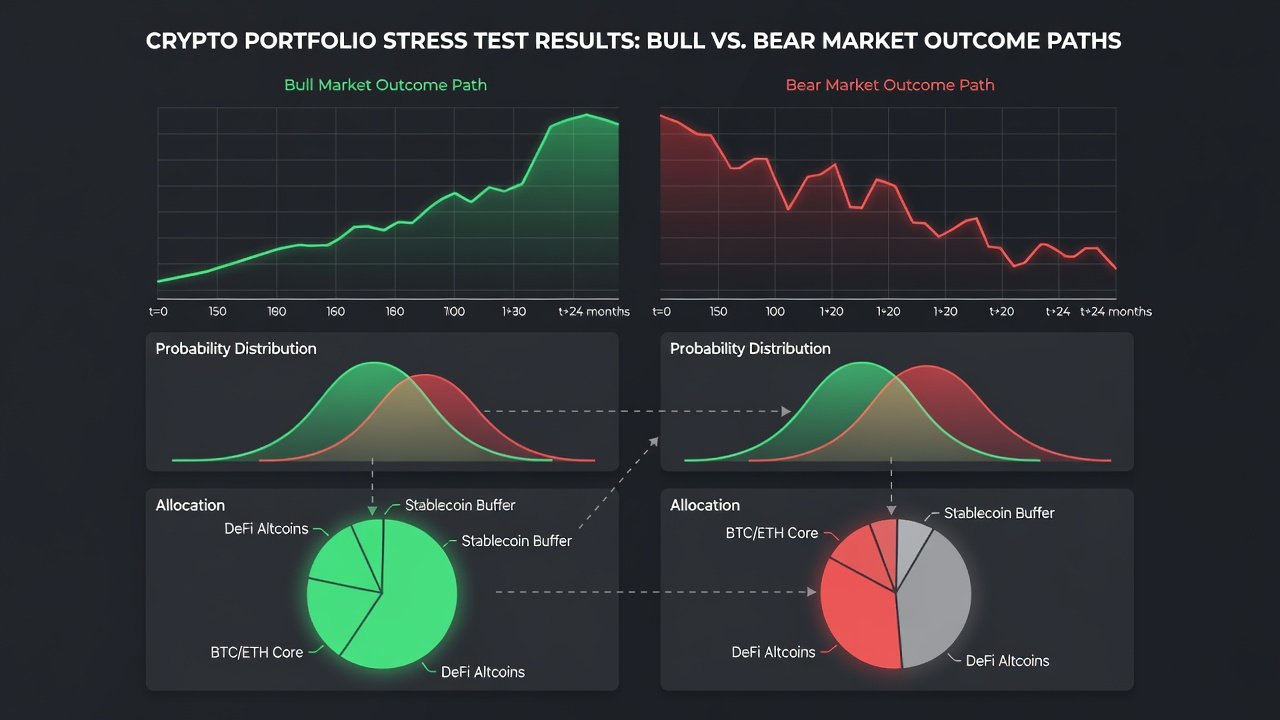
- Bull Scenario: Strong adoption drives substantial gains; stress tests confirm upside capture with limited drawdowns under moderate stress levels.
- Bear Scenario: Regulatory tightening causes sharp declines; resilient portfolios limit losses via hedges and show faster recovery through rebalancing.
Side-by-side analysis reveals that portfolios with built-in stress buffers outperform in both regimes over multi-year horizons. Documenting these comparisons helps investors set realistic expectations and avoid over-optimism during favorable periods.
Common Mistakes to Avoid in Stress Testing
Many investors overlook liquidity assumptions, assuming assets can be sold at modeled prices during crises. Others rely on too few historical scenarios or ignore changing correlations. Over-reliance on a single simulation tool without cross-validation leads to blind spots. Always test for margin call cascades in leveraged positions and review results against multiple data providers.
FAQ: Common Pitfalls in Crypto Stress Testing
How does over-leveraging undermine stress tests?
Excessive leverage amplifies losses in simulations, often leading to liquidation cascades. Always model margin requirements explicitly and maintain conservative debt levels to ensure realistic survival rates in adverse scenarios.
Should I ignore low-probability tail events?
No. Even rare scenarios can devastate unprepared portfolios. Prioritize 1% and 5% tail outcomes in Monte Carlo runs for comprehensive coverage and include sensitivity analysis around key assumptions.
What data sources are most reliable?
Combine public blockchain data with reputable price feeds. Cross-verify on-chain metrics across multiple providers to avoid single-point errors and update parameters regularly as market structure evolves.
How often should stress tests be updated?
Conduct full reviews monthly and run lighter daily checks on key metrics. Major market events or portfolio changes warrant immediate re-testing to keep risk parameters current.
Can stress testing predict exact losses?
It provides probability ranges rather than precise forecasts. Use outputs to inform position sizing and hedging rather than attempting to time markets based on single runs.
Conclusion
Mastering portfolio stress testing equips advanced investors for 2026's dynamic crypto landscape. By combining historical replay, simulations, on-chain insights, and hedging, you build strategies resilient to volatility. Regular application of these techniques transforms risk management from reactive to proactive, supporting sustainable growth and informed decision-making across market cycles.


No comments yet. Be the first!