 CryptoChain Blog

Introduction: Building Resilient Crypto Portfolios Amid 2026 Volatility
As markets evolve in 2026, investors are increasingly turning to cryptocurrencies for retirement planning. This guide focuses on risk-adjusted allocation strategies that balance growth potential with downside protection. By emphasizing Layer 1 assets, cycle-aware diversification, and tax-efficient structures, you can construct a portfolio suited for long-term retirement goals. The crypto landscape continues to mature, yet volatility persists due to global economic shifts, technological breakthroughs, and evolving regulatory environments. Retirement investors must move beyond simple buy-and-hold approaches to implement sophisticated risk management techniques that protect principal while allowing for meaningful appreciation over decades.
Successful crypto integration into retirement accounts requires understanding both the unique characteristics of digital assets and the broader financial planning principles that have stood the test of time. This comprehensive approach ensures your portfolio can withstand market cycles without derailing your retirement timeline.
Understanding 2026 Market Volatility in Crypto
Volatility remains a defining feature of crypto markets. Regulatory shifts, macroeconomic factors, and technological advancements create both opportunities and risks. Effective retirement strategies start with recognizing these dynamics rather than chasing short-term gains. In 2026, factors such as central bank policies, institutional adoption rates, and geopolitical events continue to influence price swings. Investors who study historical volatility patterns from previous cycles can better anticipate drawdowns and position their portfolios defensively.
Layer 1 blockchains form the foundation of the crypto ecosystem, providing the security and scalability needed for long-term holdings. Understanding how these base-layer networks perform during different market regimes helps investors select assets that offer resilience rather than speculative upside alone.
Step-by-Step Portfolio Construction Using Layer 1 Assets
Begin by selecting foundational Layer 1 blockchains known for security and adoption. Allocate across Bitcoin and Ethereum as core holdings, then layer in established alternatives like Solana for higher throughput needs. Assess each asset's fundamentals, including network security, developer activity, and real-world utility before committing capital. Evaluate metrics such as total value locked, transaction volume, and governance participation to gauge long-term viability.
Next, determine position sizes based on your risk tolerance and time horizon to retirement. Conservative retirees might start with 60% in Bitcoin and Ethereum combined, adjusting downward for greater stability as they approach withdrawal phases. Intermediate steps include setting up secure wallets, verifying custody arrangements, and establishing clear entry and exit rules for each position. Document your investment thesis for every asset to maintain discipline during emotional market periods.
Diversification Across Market Cycles
Crypto experiences distinct bull, bear, and accumulation phases. Diversify holdings to capture upside while mitigating prolonged downturns. Include assets with varying correlations to traditional markets for smoother performance over multi-year retirement horizons. In practice, this means blending high-conviction Layer 1 tokens with lower-volatility options and stablecoin reserves that can be deployed opportunistically during market dips.
Consider how different assets behave across cycles. Bitcoin often serves as a store of value during uncertainty, while smart contract platforms may offer growth during expansion phases. A well-diversified portfolio rotates exposure gradually rather than making abrupt changes that incur unnecessary taxes or fees.
Tax-Efficient Wrappers for Crypto Retirement Accounts
Utilize structures such as self-directed IRAs or Roth accounts to shield gains from immediate taxation. These wrappers allow compounding without annual tax drag, a critical advantage for volatile assets. Consult current IRS guidelines at IRS.gov to ensure compliance with contribution limits and distribution rules. Tax-efficient placement also involves understanding wash-sale rules and how cryptocurrency transactions are reported on Form 1099-B when held outside retirement accounts.
Additional considerations include state tax implications and required minimum distributions. Planning ahead for these requirements prevents forced sales during unfavorable market conditions.
Practical Allocation Models with Examples
Consider these sample models for different investor profiles:
- Conservative: 50% Bitcoin, 30% Ethereum, 20% stablecoin reserves for liquidity and rebalancing opportunities.
- Moderate: 40% Bitcoin, 30% Ethereum, 20% Solana, 10% diversified Layer 1 exposure such as Avalanche or Cardano.
- Aggressive: 35% Bitcoin, 25% Ethereum, 25% emerging Layer 1s, 15% yield-generating protocols with strong security track records.
Adjust percentages quarterly based on personal circumstances and overall net worth. For instance, an investor with a $500,000 retirement portfolio might allocate $200,000 to Bitcoin under the moderate model, monitoring network fundamentals and on-chain metrics to inform any shifts. These models serve as starting points rather than rigid prescriptions, allowing customization according to individual risk profiles and retirement timelines.
Stress-Testing Your Portfolio
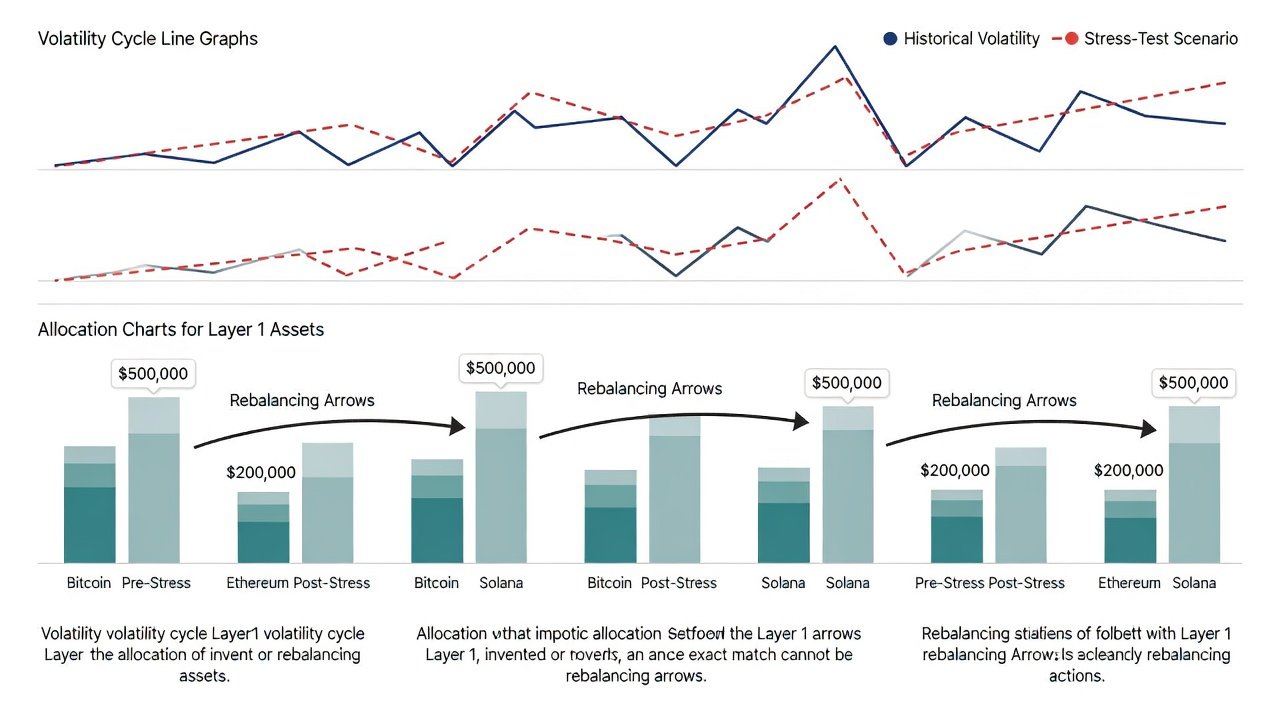
Simulate adverse scenarios such as 50% drawdowns or prolonged sideways markets. Use historical data from past cycles combined with forward-looking volatility estimates. Tools from established financial regulators like SEC.gov provide frameworks for evaluating tail risks. Conduct stress tests at least annually, incorporating variables like correlation breakdowns, liquidity crunches, and regulatory shocks.
Practical methods include Monte Carlo simulations, scenario analysis based on 2022-2023 bear market data, and sensitivity testing around key assumptions such as inflation rates and adoption curves. This process reveals whether your allocation can sustain required withdrawals without depleting principal prematurely.
Rebalancing Tactics for Long-Term Success
Implement calendar-based rebalancing every six months or threshold-based triggers at 5-10% deviations. This disciplined approach locks in gains and prevents overexposure to any single asset. Document all transactions to maintain accurate cost-basis records. Advanced tactics involve tax-loss harvesting within taxable accounts while maintaining overall target allocations inside retirement wrappers.
Rebalancing should also account for life events such as changes in income, health, or family circumstances. Automated alerts from portfolio management platforms can help enforce rules without emotional interference.
FAQs: Regulatory Changes and Custody Solutions
How might new regulations affect crypto IRAs in 2026? Monitor updates from the Investor.gov site for guidance on custody and reporting requirements. For custody, prefer qualified custodians offering cold storage and insurance to protect retirement assets against hacks and loss. Multi-signature setups with institutional providers reduce single-point-of-failure risks while allowing necessary liquidity for distributions.
What custody options minimize counterparty risk? Institutional-grade custodians with SOC 2 compliance and third-party audits offer robust protection. Always verify insurance coverage details and understand the difference between hot and cold wallet allocations within the custodian's infrastructure.
Common Mistakes to Avoid in Crypto Retirement Planning
Many investors overlook the importance of maintaining adequate cash reserves outside crypto, leading to forced liquidations during downturns. Another frequent error is neglecting to update beneficiary designations after major life events. Over-concentration in a single Layer 1 ecosystem can also amplify risks if that network faces technical or competitive challenges. Finally, failing to review allocations after significant market moves often results in unintended risk creep over time.
Conclusion
By applying these risk-adjusted strategies, investors can integrate crypto thoughtfully into retirement plans. Focus on fundamentals, maintain discipline through volatility, and prioritize tax efficiency to build lasting wealth. Regular reviews and professional consultation ensure your portfolio remains aligned with evolving personal goals and market conditions.

No comments yet. Be the first!