 CryptoChain Blog

Introduction to 2026 Bitcoin and Ethereum Dynamics
As the cryptocurrency market matures into 2026, investors are closely examining Bitcoin and Ethereum as the two foundational assets driving the space. This comprehensive analysis delivers data-driven insights into their respective trajectories, helping portfolio managers, institutional players, and retail investors make informed decisions. We examine on-chain metrics, ecosystem developments, institutional flows, adoption patterns, technological roadmaps, volatility drivers, and relative performance scenarios. Practical portfolio allocation steps, real-world case examples, and risk assessment frameworks are included to provide actionable guidance.
On-Chain Metrics Comparison
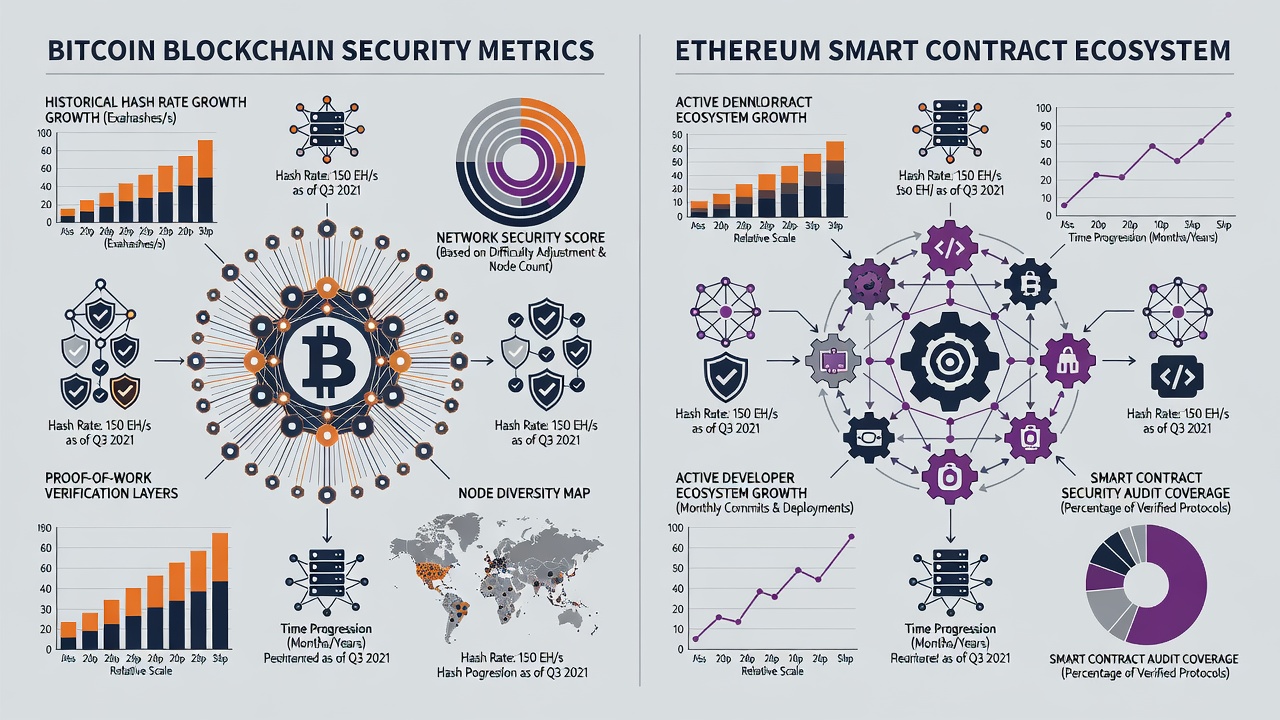
Bitcoin's network continues to demonstrate robust security through its hash rate and transaction volume, serving as a reliable indicator of miner commitment and overall network health. Ethereum, meanwhile, shows strength in active addresses and gas usage, reflecting vibrant smart contract activity across decentralized applications. Key indicators such as realized capitalization and holder distribution reveal differing user bases, with Bitcoin emphasizing long-term value storage behaviors and Ethereum highlighting frequent interactions in programmable finance. Investors should regularly review metrics like exchange reserves, transaction counts, and miner or validator revenue to gauge sentiment shifts early. These on-chain signals often precede price movements and offer a transparent view unavailable in traditional markets.
Ecosystem Developments and Adoption Patterns
Bitcoin's ecosystem has expanded through layer-2 solutions and corporate treasury adoption, enabling faster transactions while maintaining its core security model. Ethereum leads in decentralized finance protocols, tokenization of real-world assets, and non-fungible token marketplaces, creating a rich environment for developers and users alike. Institutional flows into both assets have accelerated, with Bitcoin frequently favored for store-of-value narratives and Ethereum for its programmable finance applications that power lending, borrowing, and derivatives platforms. Adoption patterns indicate growing mainstream integration, particularly in emerging markets where both networks serve as alternatives to traditional banking systems for remittances and savings. Global enterprises are increasingly integrating these technologies into supply chain tracking and payment rails, further embedding them into everyday economic activity.
Technological Roadmaps and Volatility Drivers
Bitcoin's roadmap focuses on scalability enhancements through additional layer-2 innovations and privacy improvements that protect user data without compromising auditability. Ethereum continues its post-merge evolution with upgrades aimed at reducing fees and increasing throughput for higher transaction volumes. Volatility remains influenced by macroeconomic factors such as interest rate decisions, regulatory clarity from bodies like the U.S. Securities and Exchange Commission, and ETF inflows that bring new capital into the ecosystem. External events including geopolitical tensions and technological breakthroughs can amplify price swings, requiring investors to maintain disciplined monitoring routines.
Relative Performance Scenarios
Historical cycles suggest Bitcoin may lead in broad risk-on environments when macro liquidity expands, while Ethereum can outperform during periods of DeFi expansion and developer activity surges. Investors should monitor correlation coefficients and dominance ratios for timing opportunities across market regimes. Scenario planning helps prepare for outcomes where one asset decouples based on sector-specific news or upgrade successes. Diversified exposure often mitigates the impact of any single asset's underperformance.
Practical Portfolio Allocation Steps
Building a resilient allocation between Bitcoin and Ethereum requires a structured approach. First, assess personal risk tolerance and investment horizon to determine baseline exposure percentages. Second, allocate core holdings based on market cap weighting with adjustments for conviction levels derived from ongoing research. Third, diversify across custody solutions including hardware wallets and regulated custodians while rebalancing quarterly to maintain target ratios. Fourth, incorporate staking where appropriate for yield enhancement on Ethereum holdings without introducing excessive smart contract risk. Fifth, document every decision with clear rationale and review allocations annually or after major network events. Real-world examples show investors who followed disciplined rebalancing during 2025 volatility periods preserved capital better than those who reacted emotionally to short-term swings.
Risk Assessment Frameworks and Case Examples
Common risks include regulatory shifts, technological vulnerabilities, and liquidity events that can trigger cascading liquidations. Frameworks emphasize diversification across asset classes, appropriate position sizing relative to total portfolio value, and ongoing monitoring of on-chain signals for early warnings. Case examples include institutional Bitcoin purchases during market dips that stabilized prices through increased demand and Ethereum-based DeFi protocol growth amid network upgrades that boosted total value locked. Another illustration involves cross-border payment companies adopting Ethereum for settlement efficiency, demonstrating tangible utility beyond speculation. Investors are advised to stress-test portfolios against scenarios such as prolonged regulatory uncertainty or delayed upgrades.
Conclusion
Bitcoin and Ethereum each offer distinct value propositions in 2026, with Bitcoin providing digital scarcity characteristics and Ethereum enabling expansive decentralized innovation. A balanced approach combining both assets can optimize risk-adjusted returns for long-term holders seeking exposure to the maturing cryptocurrency sector. Continuous education through official resources such as Bitcoin.org and Ethereum.org supports better decision-making over time.
FAQ
Which asset offers better long-term growth potential?
Bitcoin excels as digital gold while Ethereum drives innovation in decentralized applications; outcomes depend on individual strategy, market conditions, and technological execution rather than one asset universally dominating.
How do institutional flows impact prices?
Large inflows often reduce volatility and support price floors, particularly visible through spot ETF activity that brings regulated capital and increases overall market depth.
What on-chain metrics should investors track?
Focus on active addresses, transaction fees, exchange reserves, and hash rate or staking participation for early signals of market sentiment and network health.
How should beginners approach allocation decisions?
Start with smaller positions, prioritize education, use reputable exchanges, and gradually increase exposure while maintaining strict risk management rules such as never investing more than can be afforded to lose.
What role does regulation play in 2026 outlooks?
Clearer regulatory frameworks can reduce uncertainty and attract additional institutional participation, though sudden policy changes remain a key risk factor requiring ongoing vigilance.


No comments yet. Be the first!