 CryptoChain Blog

Introduction to Cross-Chain Interoperability in 2026
In 2026, blockchain ecosystems have evolved far beyond isolated networks. Cross-chain interoperability now serves as the critical infrastructure layer that enables seamless asset transfers, data exchange, and complex decentralized applications spanning multiple blockchains. This comprehensive analysis examines how leading protocols are transforming cryptocurrency market insights and overall crypto trends, delivering advanced traders with practical intelligence for operating in interconnected ecosystems. The growth of DeFi, tokenized real-world assets, and multi-chain strategies has made interoperability indispensable for liquidity optimization and risk management.
Early blockchains suffered from inherent communication barriers that limited scalability and user experience. Modern cross-chain solutions resolve these constraints by providing standardized messaging, shared security models, and efficient bridging mechanisms. Traders who master these technologies gain significant edges in arbitrage, yield farming, and portfolio diversification across previously siloed environments.
Leading Cross-Chain Solutions: Polkadot, Cosmos, and Emerging Bridges
The interoperability landscape in 2026 is dominated by three main categories. Relay-chain architectures such as Polkadot coordinate multiple specialized chains under a unified security umbrella. Hub-and-zone models like Cosmos connect sovereign blockchains through standardized communication protocols. Specialized bridge solutions focus on targeted asset movement with varying levels of decentralization and speed.
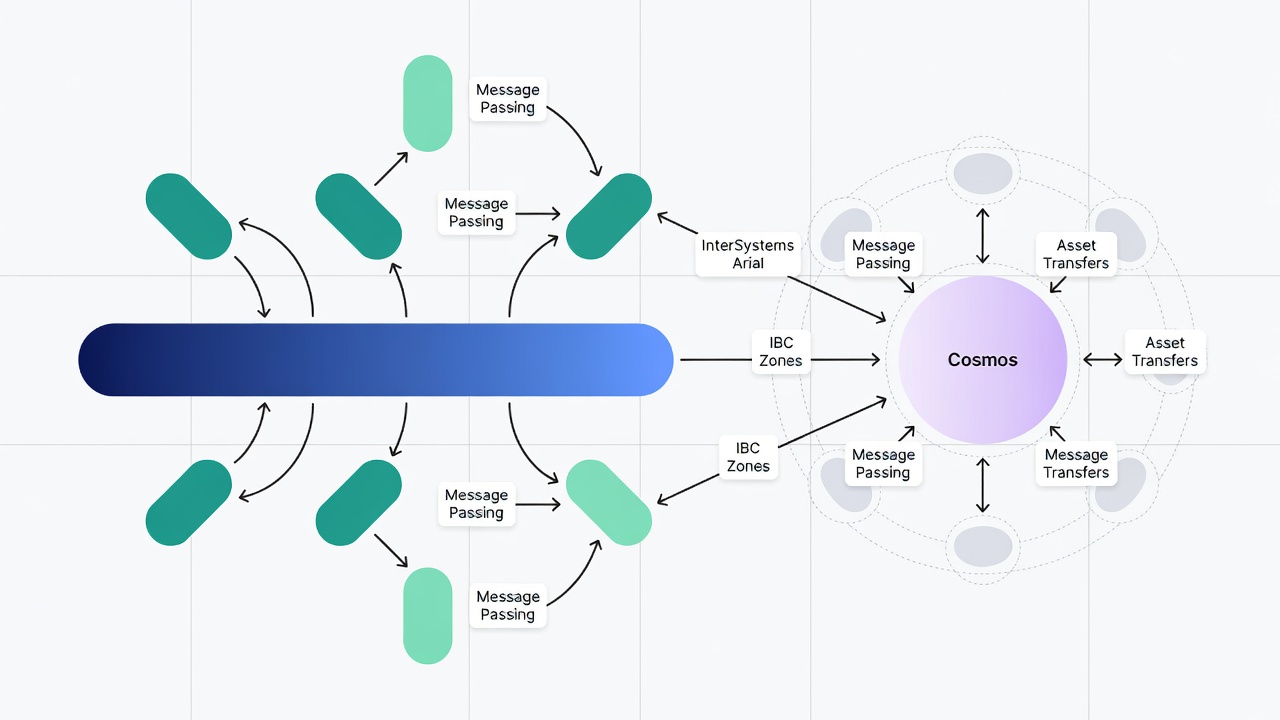
Polkadot’s relay chain orchestrates parachains that share validator security and enable native cross-chain messaging. Cosmos leverages the Inter-Blockchain Communication protocol to link independent zones via hub networks, allowing flexible sovereignty while maintaining reliable data transfer. Emerging bridges incorporate advanced cryptographic techniques or optimistic verification to achieve faster or lower-cost transfers, though each approach carries distinct trade-offs that traders must evaluate carefully.
Comparative Analysis: Security, Speed, and Adoption Metrics
Advanced traders evaluate interoperability solutions across security guarantees, transaction finality times, and ecosystem adoption. Polkadot’s shared security model distributes protection across its validator set, reducing individual chain vulnerabilities. Cosmos zones maintain independent validator sets, granting customization but requiring thorough assessment of each participant’s economic security.
Finality speed varies notably: Polkadot achieves deterministic finality within seconds through its GRANDPA consensus, while Cosmos IBC delivers near-instant messaging between compatible chains. Adoption metrics show both ecosystems expanding rapidly, with increasing numbers of deployed parachains and zones alongside growing developer contributions and institutional integrations.
- Security depth: Shared models versus sovereign validators affect resilience against targeted attacks.
- Throughput considerations: Message queuing and relay efficiency impact high-frequency trading strategies.
- Ecosystem maturity: Total value locked, active addresses, and partnership announcements serve as leading indicators.
Technical Mechanisms Behind Cross-Chain Communication
Deep technical understanding helps traders anticipate protocol evolution and potential failure points. Polkadot employs XCMP for arbitrary message passing between parachains, supported by cross-chain queries and asset teleportation functions. Cosmos IBC uses a standardized packet format with built-in validity proofs relayed by off-chain actors, ensuring reliable delivery without trusted intermediaries.
Emerging bridges often combine light-client verification with economic bonding or fraud proofs. These designs can accelerate transfers but introduce additional attack surfaces that require ongoing monitoring. Understanding these mechanisms allows traders to select the appropriate solution for specific strategies such as time-sensitive arbitrage or long-term liquidity provision.
DeFi Use Cases Powered by Interoperability
Interoperability unlocks sophisticated DeFi strategies across chains. Cross-chain yield aggregation dynamically shifts liquidity to the highest-performing opportunities, while multi-chain collateralized lending optimizes borrowing rates by moving assets in real time. Advanced traders execute arbitrage between decentralized exchanges on different networks and hedge positions using synthetic assets minted on secondary chains.
Practical examples include routing large trades through Cosmos IBC to minimize slippage and leveraging Polkadot parachains for seamless collateral movement in synthetic asset platforms. These capabilities transform previously manual, high-friction processes into automated, efficient workflows.
Risks: Exploits, Fragmentation, and Mitigation Strategies
Cross-chain systems introduce notable risks that demand proactive management. Historical bridge exploits highlight vulnerabilities in smart contract logic and validator coordination. Liquidity fragmentation across chains can reduce overall market efficiency if interoperability layers are underutilized or poorly designed.
Mitigation involves continuous monitoring of validator decentralization metrics, review of recent security audits, and simulation of edge-case scenarios before committing substantial capital. Traders should also track governance proposals that could alter security parameters or upgrade mechanisms.
Step-by-Step Framework for Evaluating Cross-Chain Projects
- Map the security model and validator distribution to identify concentration risks.
- Benchmark transaction finality and throughput under simulated network load conditions.
- Analyze developer activity through commit frequency, grant programs, and ecosystem partnerships.
- Review historical exploit records and incident response quality from official channels.
- Assess governance structures, upgrade timelines, and community participation levels.
- Execute small-scale test transactions across target chains to validate real-world performance.
Real-World Case Studies
One documented implementation involves decentralized exchanges routing trades via Cosmos IBC to capture optimal pricing across multiple zones, resulting in improved execution quality for large orders. Another case demonstrates Polkadot parachains enabling frictionless asset movement for synthetic asset protocols, delivering lower slippage than legacy bridge solutions.
These examples illustrate how interoperability directly translates into measurable trading advantages when protocols are selected and implemented thoughtfully.
Market Trends and Future Outlook for 2026
Throughout 2026, adoption of cross-chain standards continues accelerating as more institutional participants enter multi-chain environments. Integration with oracle networks and account abstraction layers further enhances usability. Traders who build expertise now position themselves to capitalize on emerging opportunities in tokenized assets and composable DeFi primitives.
Frequently Asked Questions
How does cross-chain interoperability affect trading strategies?
It enables multi-chain arbitrage, dynamic liquidity allocation, and hedging techniques unavailable on single-chain platforms, fundamentally expanding opportunity sets.
What are the main risks when using bridges in 2026?
Primary concerns include smart contract vulnerabilities, validator collusion scenarios, and liquidity fragmentation that can amplify slippage during volatile periods.
Which protocol offers the best balance of security and speed?
Polkadot and Cosmos each excel depending on use case; Polkadot favors shared security while Cosmos prioritizes sovereignty and flexibility.
How can traders stay updated on protocol upgrades?
Regular monitoring of official governance forums, validator announcements, and developer documentation provides timely signals for strategic adjustments.
Conclusion
Cross-chain interoperability has matured into an essential component of the 2026 cryptocurrency landscape, offering advanced traders powerful tools for navigating interconnected blockchain ecosystems. Applying structured evaluation frameworks and understanding technical nuances enables effective positioning amid ongoing evolution. For additional reference, consult authoritative sources at Polkadot, Cosmos, and Web3 Foundation.


No comments yet. Be the first!