 CryptoChain Blog

Introduction to Decentralized Identity in Crypto
As cryptocurrency markets evolve rapidly toward 2026, decentralized identity (DID) emerges as a foundational technology reshaping user sovereignty, security, and ecosystem interoperability. Unlike traditional systems reliant on centralized authorities, DID leverages blockchain to grant individuals control over their digital personas. This analysis examines market dynamics, key protocols, and integration pathways with DeFi and Web3, providing forward-looking insights for investors and developers seeking actionable market intelligence in the evolving crypto landscape.
The global shift toward user-controlled data is accelerating due to increasing concerns over privacy breaches and data monopolies held by large tech firms. In 2026, decentralized identity solutions are projected to play a pivotal role in enabling seamless interactions across blockchain networks while maintaining compliance with evolving standards. This comprehensive review delves into comparisons, protocols, real-world applications, and practical frameworks to help stakeholders navigate this transformative space.
Centralized vs Decentralized Identity Solutions
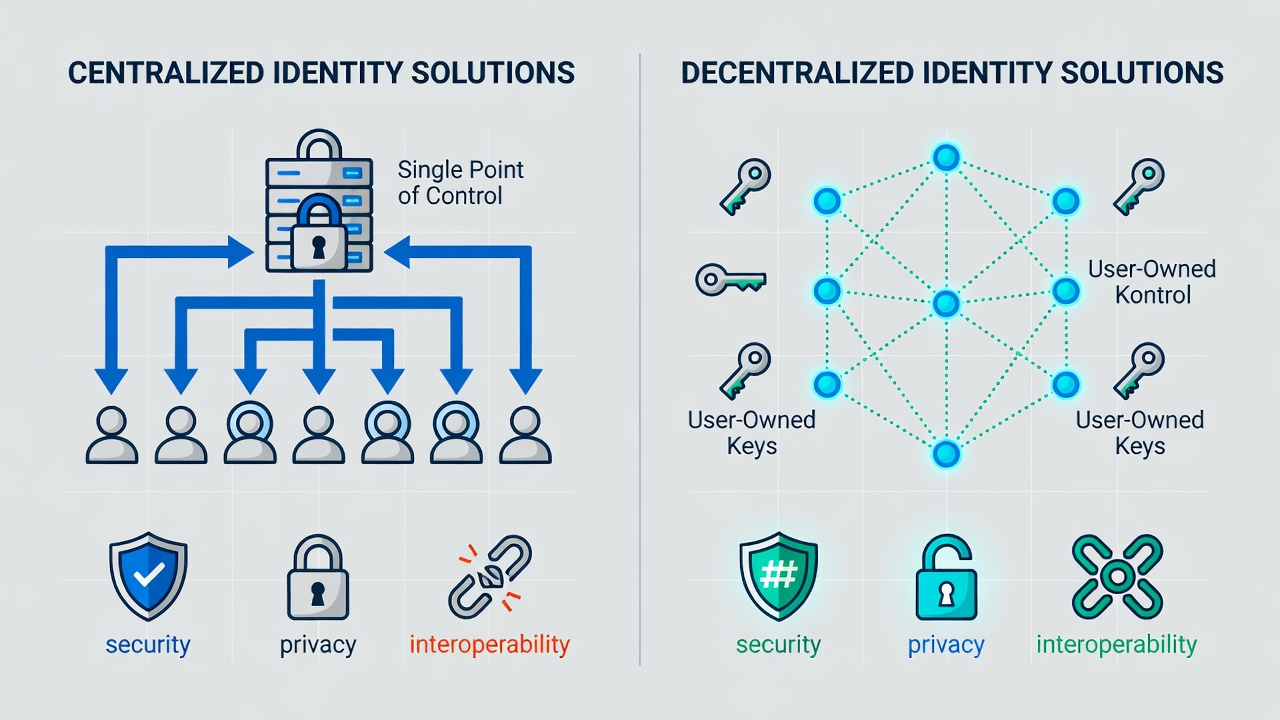
Centralized identity models, such as those managed by banks or social platforms, store user data in single repositories vulnerable to breaches and censorship. These systems often require users to surrender personal information to intermediaries, creating risks of identity theft and unauthorized access. In contrast, decentralized solutions distribute verification across networks, enhancing privacy through zero-knowledge proofs and self-sovereign principles. Key differences include data ownership, where users retain full control in DID systems, versus institutional oversight in centralized ones.
Interoperability stands out as another major differentiator. Centralized platforms typically operate in silos, limiting portability of credentials across services. Decentralized identity, however, supports universal standards that allow credentials to function across multiple blockchains and applications. Resilience against single points of failure further distinguishes the two approaches, as decentralized networks remain operational even if individual nodes fail. Investors evaluating solutions should prioritize protocols offering seamless cross-chain compatibility and robust cryptographic safeguards.
Additional considerations involve user experience and scalability. Centralized systems benefit from familiar interfaces but suffer from trust deficits, while decentralized alternatives demand education yet promise long-term autonomy. Practical examples from 2025 pilots show decentralized models reducing verification times by up to 60 percent in cross-border scenarios compared to traditional methods.
Leading Protocols Shaping the 2026 Market
Prominent protocols include those built on Ethereum and emerging layer-1 chains, focusing on verifiable credentials and DID standards. Ethereum-based solutions leverage smart contracts for credential issuance and revocation, enabling secure attestations without exposing personal data. Other notable protocols incorporate advanced features like decentralized identifiers compliant with W3C specifications, allowing for portable digital wallets that store attestations from multiple issuers.
Adoption drivers encompass rising regulatory demands for KYC alternatives and user demand for portable identities across platforms. Protocols emphasizing governance through token voting have seen increased participation, fostering community-driven improvements. Market analysis indicates growing integration with layer-2 scaling solutions to handle higher transaction volumes expected in 2026.
Integration with DeFi and Web3 Ecosystems
Decentralized identity integrates deeply with DeFi by enabling compliant yet private lending and trading. Users can prove creditworthiness through verifiable credentials without revealing full financial histories, reducing counterparty risks in peer-to-peer protocols. In Web3, it powers decentralized social networks and DAOs, where reputation systems replace centralized logins. This synergy reduces friction in onboarding while mitigating risks like Sybil attacks through unique identity proofs.
Real integration examples include identity-linked collateralization in lending pools and reputation-based access to exclusive DAO governance features. These advancements promote broader participation from users wary of traditional financial gatekeepers, ultimately expanding the total addressable market for decentralized finance applications.
Regulatory Considerations for 2026
Global frameworks are adapting to DID technologies, with emphasis on data protection and anti-money laundering compliance. Jurisdictions in Europe and Asia are piloting sandbox environments to test decentralized identity implementations against existing laws. Stakeholders must navigate varying requirements, favoring solutions aligned with emerging standards from bodies like W3C.
Key challenges involve balancing transparency for regulators with user privacy. Forward-thinking projects incorporate selective disclosure mechanisms that satisfy compliance needs without compromising core decentralization tenets. Monitoring updates from international organizations remains essential for market participants planning long-term deployments.
Real-World Case Studies from 2026 Projects
Projects in 2026 demonstrate DID in action, from supply chain verification on public ledgers to identity-linked NFT marketplaces. One case involves a European logistics consortium using decentralized credentials to authenticate shipment handlers, resulting in streamlined customs processes and reduced paperwork. Another example features a Web3 gaming platform implementing DID for player-owned assets, enhancing trust and reducing account takeovers.
These examples highlight reduced fraud rates and improved user trust metrics across implementations. Additional case studies from Asia-Pacific regions show DID enabling cross-border remittances with built-in compliance checks, fostering financial inclusion in underserved markets. Lessons from these deployments emphasize the importance of intuitive wallet interfaces and multi-chain support for widespread adoption.
Step-by-Step Evaluation Framework for Investors
Investors can follow this structured approach to assess decentralized identity opportunities:
- Assess protocol security audits and adoption metrics by reviewing third-party reports and on-chain activity dashboards.
- Evaluate interoperability with major blockchains through testing credential portability across testnets.
- Review regulatory alignment and privacy features, including support for zero-knowledge technologies and data minimization principles.
- Analyze tokenomics and governance models to ensure sustainable incentives and community participation.
- Simulate integration scenarios within DeFi protocols to measure performance impacts and user friction points.
- Monitor ecosystem partnerships and developer activity as indicators of long-term viability.
This framework helps mitigate risks associated with emerging technologies while identifying high-potential investments aligned with 2026 market trends.
FAQs on Implementation Challenges
How does DID address scalability? Through layer-2 solutions and optimized consensus mechanisms that batch verifications efficiently without compromising security.
What are common pitfalls in adoption? Overlooking user experience design and failing to ensure backward compatibility with existing Web2 systems often leads to low engagement rates.
How can projects ensure regulatory compliance? By incorporating modular compliance layers that adapt to regional laws while preserving decentralized core functions.
What role does governance play in protocol success? Effective token-based governance enables rapid iteration based on community feedback, crucial for staying ahead in fast-moving crypto markets.
Future Outlook and Market Projections
Looking ahead, decentralized identity is expected to underpin broader Web3 infrastructure, including metaverse economies and enterprise blockchain solutions. Continued collaboration between protocol teams and standards organizations will drive standardization, accelerating mainstream acceptance. Investors should watch for convergence with artificial intelligence for automated identity verification processes that enhance both speed and accuracy.
Conclusion
Decentralized identity stands poised to redefine crypto markets by 2026, offering robust tools for secure, user-centric innovation. Forward-thinking investors leveraging these insights can position themselves advantageously amid evolving trends. For further reference, explore resources at Ethereum.org and W3C.


No comments yet. Be the first!