 CryptoChain Blog

Introduction to Behavioral Finance in Crypto Markets
Behavioral finance examines how cognitive biases and emotional responses influence investor decisions, often leading to market inefficiencies. In cryptocurrency, these factors are amplified due to 24/7 trading, high volatility, and retail dominance. As we analyze 2026 market movements, understanding these patterns helps investors interpret price swings beyond pure fundamentals. Unlike traditional assets, crypto markets operate without interruption, allowing emotional impulses to manifest rapidly across global participants.
Traditional finance models assume rational actors, yet crypto history shows repeated deviations. This guide explores core biases, real examples from recent cycles, data-backed insights, and practical tools for improved analysis. Investors who master these concepts gain an edge by separating sentiment from on-chain reality.
Core Psychological Biases Shaping Crypto Trends
Fear of Missing Out (FOMO)
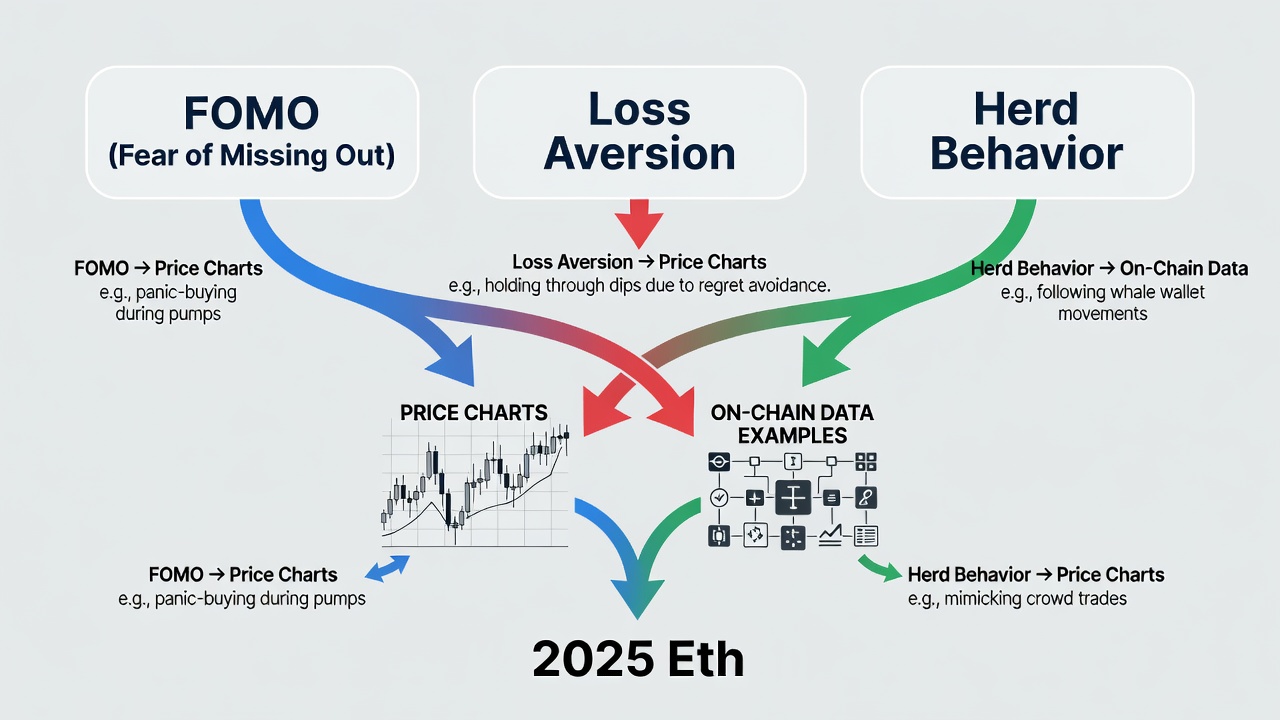
FOMO drives rapid buying during upward momentum, often inflating bubbles. In 2024-2025 cycles, FOMO fueled altcoin surges as social media hype spread. Investors piled into tokens without due diligence, resulting in sharp corrections when momentum faded. This bias particularly affects newer market entrants who monitor price charts obsessively and enter positions at peak euphoria.
Loss Aversion
Loss aversion makes investors hold losing positions longer than rational analysis suggests. Crypto traders frequently refuse to sell at a loss, hoping for recovery, which prolongs downturns and increases opportunity costs. The pain of realizing a loss outweighs the potential benefit of reallocating capital to higher-probability opportunities.
Herd Behavior
Herd behavior occurs when participants follow the crowd rather than independent research. This manifests in coordinated social media pumps or panic selling during black swan events, magnifying volatility beyond on-chain data. Communities on platforms like Telegram and X often accelerate these movements through viral narratives.
Real-World Examples from Recent Market Cycles
The 2021 bull run demonstrated FOMO as Bitcoin reached new highs amid retail influx. Conversely, the 2022 bear market highlighted loss aversion, with holders refusing to exit positions despite clear warning signs from macroeconomic shifts. In 2025, herd behavior appeared in meme coin rallies, where community-driven buying ignored token utility metrics. These patterns repeated across multiple assets, showing consistency in psychological drivers. Additional examples include the rapid rise and fall of certain Layer-2 tokens during network upgrade announcements, where excitement quickly turned to disappointment once initial hype subsided.
Data-Backed Case Studies
Analysis of on-chain metrics during the 2025 Ethereum upgrade revealed spikes in transaction volume correlating with sentiment shifts rather than technical improvements alone. Investopedia outlines similar bias patterns in historical asset classes. Studies of wallet activity showed clusters of addresses exhibiting identical buy/sell timing, indicative of herd effects. These clusters often preceded major price reversals by days or weeks. Further examination of exchange inflow data during periods of extreme social media activity confirmed that retail-driven flows frequently diverged from institutional accumulation patterns tracked through large wallet movements.
Comparisons to Traditional Markets
Unlike stock markets with circuit breakers and institutional oversight, crypto operates continuously, intensifying emotional responses. Traditional equity investors exhibit similar biases but with slower feedback loops due to market hours. Crypto's transparency via public ledgers allows faster identification of bias-driven flows compared to opaque traditional instruments. Regulatory frameworks in equities provide some protection against extreme herding, whereas crypto relies more heavily on individual discipline. Over time, as institutional participation grows in digital assets, some of these differences may narrow, yet the decentralized nature of crypto preserves unique behavioral dynamics.
Practical Steps for Bias-Aware Analysis
- Establish predefined entry and exit rules based on objective metrics before emotional pressure arises. Write these rules in a trading journal and review them weekly.
- Track personal portfolio performance against benchmarks to identify recurring bias patterns. Use spreadsheets or portfolio trackers to log emotional notes alongside trade outcomes.
- Diversify information sources to counter echo chambers from social platforms. Subscribe to on-chain analytics newsletters and follow multiple research firms.
- Review past trades quarterly, noting emotional states at decision points. This retrospective exercise reveals whether FOMO or loss aversion influenced specific outcomes.
- Implement cooling-off periods for large position changes, such as waiting 24 hours before executing emotionally charged trades.
Integrating Sentiment Tools with On-Chain Metrics
Combine tools measuring social volume and fear-greed indices with on-chain indicators such as exchange inflows and active addresses. This hybrid approach flags when sentiment diverges from fundamentals. For instance, rising social mentions paired with declining holder distribution often signals impending corrections. Traders can cross-reference data from multiple platforms to validate signals and reduce false positives. Professional analysts also monitor derivatives funding rates alongside social sentiment scores to gauge leveraged positioning driven by emotional extremes.
Resources like Federal Reserve research provide frameworks adaptable to digital asset sentiment monitoring. Additional guidance from regulatory bodies such as SEC investor resources helps contextualize how behavioral factors interact with market integrity rules.
Common Mistakes to Avoid When Applying Behavioral Insights
Many investors overcorrect by ignoring all social signals, missing genuine momentum opportunities. Others apply bias frameworks too rigidly without adapting to evolving market conditions. Avoid treating every price dip as loss aversion; sometimes fundamentals have genuinely deteriorated. Regularly updating your mental models prevents these pitfalls.
Conclusion
Behavioral finance offers essential context for navigating 2026 cryptocurrency markets. By recognizing biases and applying structured analysis, investors can mitigate emotional pitfalls and make more informed decisions. Continuous education and disciplined processes remain the most reliable paths to long-term success in this evolving asset class.
FAQ
How does FOMO specifically affect altcoin pricing in 2026?
FOMO tends to create short-term spikes in low-cap tokens as retail participants chase narratives, often followed by rapid profit-taking.
What on-chain signals best counter herd behavior?
Monitoring unique active addresses and distribution across wallets helps detect when price moves lack broad organic support.
Can traditional finance bias research apply directly to crypto?
Core principles transfer well, though crypto's speed and accessibility require adjusted timeframes and data sources for accurate application.


No comments yet. Be the first!