 CryptoChain Blog

Introduction to AI-Powered Crypto Trading Bots in 2026
The cryptocurrency market in 2026 continues to exhibit significant volatility, driven by regulatory shifts, macroeconomic factors, and rapid technological adoption across global exchanges. AI-powered trading bots have emerged as essential tools for traders seeking actionable cryptocurrency analysis and real-time market insights. These systems leverage machine learning, natural language processing, and predictive analytics to process vast datasets far beyond human capability, enabling faster decision-making during sudden price swings in Bitcoin, Ethereum, and emerging altcoins.
This comprehensive guide examines the core technologies behind these bots, compares their performance to manual trading with detailed benchmarks, and provides practical steps for integration and risk management. Traders looking to advance their strategies will find detailed platform recommendations, in-depth strategy comparisons, multiple 2026-relevant case studies, and an expanded FAQ addressing regulation and accuracy concerns. The focus remains on delivering depth for those pursuing advanced techniques amid evolving market conditions.
Core AI Technologies Powering Crypto Bots
Modern AI trading bots rely on several foundational technologies that work in concert. Reinforcement learning enables bots to adapt strategies based on simulated market outcomes, continuously refining models through trial and error in backtesting environments. Neural networks analyze historical price patterns alongside on-chain metrics such as wallet flows, transaction volumes, and network hash rates. Sentiment analysis models scan news articles, social media platforms, and regulatory announcements to gauge market mood, while generative AI assists in scenario modeling for potential market shocks like liquidity crises or geopolitical events.
Integration with real-time data feeds allows these systems to execute trades within milliseconds of detecting opportunities, a critical advantage in fast-moving markets. Additional layers include anomaly detection algorithms that flag unusual trading patterns and ensemble methods that combine multiple AI models for more robust predictions. Traders benefit from understanding these components when customizing bot parameters for specific assets.
Performance Benchmarks Versus Manual Trading
Industry reports and trader analyses indicate that well-configured AI bots often outperform manual strategies during high-volatility periods by maintaining consistent execution without emotional bias. Key metrics tracked include win rate, Sharpe ratio for risk-adjusted returns, maximum drawdown levels, and overall portfolio turnover. In 2026 environments, bots have demonstrated improved handling of flash crashes and liquidity events through automated hedging protocols and dynamic position adjustments.
Manual traders benefit from intuition during nuanced events such as unexpected regulatory news, yet AI systems excel at scale, 24/7 monitoring, and processing multi-source data simultaneously. Hybrid approaches, where humans oversee high-level AI decisions and intervene only during extreme anomalies, frequently yield the strongest long-term results. Comparative evaluations across bull, bear, and sideways markets reveal that AI tools reduce latency errors and improve consistency when properly calibrated.
Integration with Real-Time Market Insights
Effective bots connect directly to exchange APIs and on-chain analytics providers to aggregate diverse data streams. They combine price action with derivatives funding rates, order book depth, macroeconomic indicators, and blockchain-specific signals like active address growth. This fusion produces comprehensive cryptocurrency analysis that informs dynamic position sizing, entry timing, and exit logic tailored to current conditions.
Traders should prioritize platforms offering low-latency data pipelines, customizable alert systems, and seamless integration with external oracles. Regular updates to data sources ensure bots remain responsive to new market structures emerging in 2026, such as tokenized real-world assets and cross-chain protocols.
Top Bot Platforms for 2026
Several established platforms lead the market with robust AI features. Selection depends on user experience level, supported exchanges, backtesting depth, and security standards.
- Platforms emphasizing reinforcement learning models for adaptive strategies across multiple timeframes.
- Solutions focused on multi-exchange arbitrage, portfolio rebalancing, and automated tax reporting features.
- Enterprise-grade tools with advanced compliance modules, audit trails, and institutional-grade APIs.
- Open-source frameworks that allow custom model development for experienced developers seeking full control.
Always verify current API integrations, security certifications, and community feedback before committing capital. Comparing user interfaces and support responsiveness helps match a platform to individual trading styles.
Setup Steps for AI Crypto Trading Bots
- Choose a reputable platform and create an account with two-factor authentication and withdrawal whitelisting enabled for security.
- Connect exchange API keys with trading permissions limited to necessary scopes, avoiding full account access where possible.
- Configure risk parameters including maximum drawdown limits, position sizing rules based on volatility, and stop-loss mechanisms.
- Backtest strategies against at least 12-18 months of historical data, including recent 2025-2026 volatility periods and stress scenarios.
- Deploy in paper trading mode for 2-4 weeks to validate live performance under simulated real-market conditions.
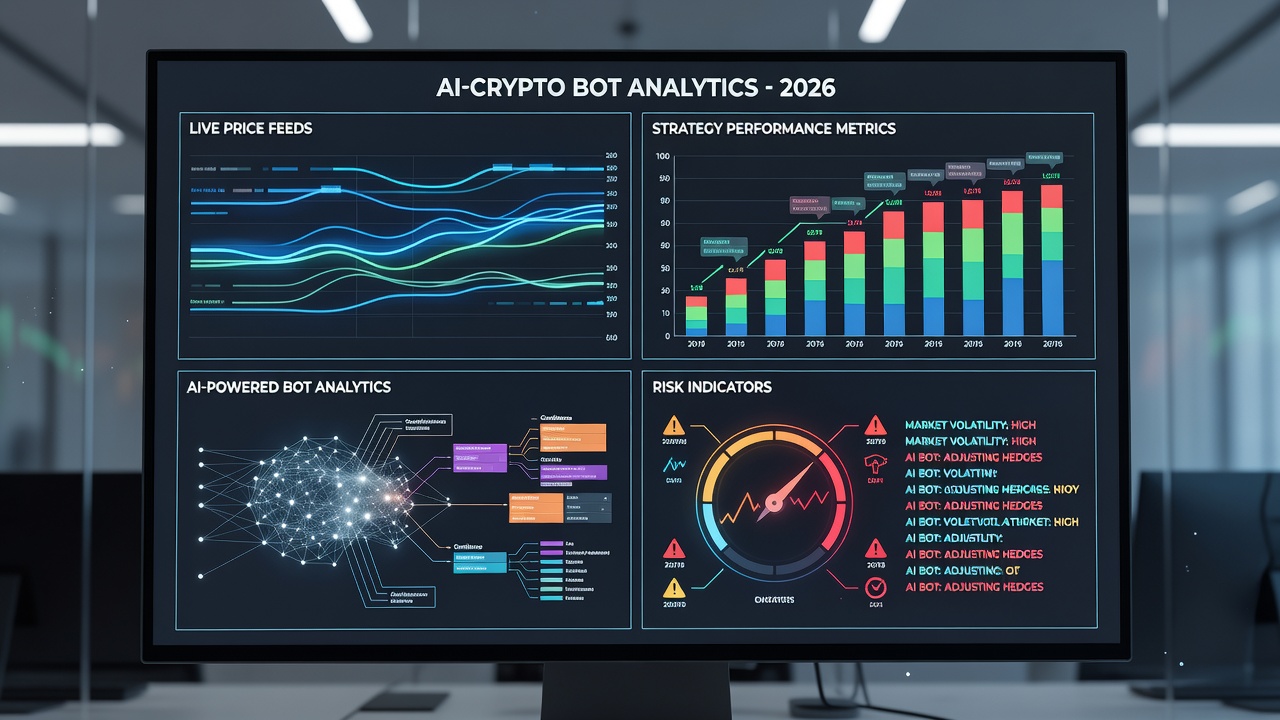
- Monitor ongoing results through built-in analytics dashboards and iteratively refine models based on performance feedback loops.
- Establish logging and notification systems for trade executions, errors, and market regime changes to maintain oversight.
Strategy Comparisons and Practical Examples
Trend-following strategies powered by AI excel in sustained bull or bear markets by identifying momentum shifts early through pattern recognition. Mean-reversion models perform well in range-bound conditions by exploiting temporary deviations from statistical norms. Arbitrage bots capitalize on price discrepancies across exchanges with minimal holding periods, while breakout strategies target volatility expansions following consolidation phases.
In 2026, hybrid strategies combining on-chain signals with technical indicators have shown particular promise during regulatory announcements and macroeconomic data releases. Traders should compare backtested results across multiple market regimes rather than relying on single-period performance, incorporating walk-forward optimization to avoid overfitting. Practical examples include bots adjusting exposure ahead of known events like central bank meetings by weighting sentiment data more heavily.
Risk Mitigation Tactics with 2026 Examples
Key risks include model overfitting to past data, API failures during outages, sudden regulatory changes, and black swan events. Mitigation involves diversified strategies across asset classes, circuit breakers that pause trading during extreme volatility, regular audits of AI decision trees, and maintaining segregated capital reserves. The U.S. Securities and Exchange Commission continues to issue guidance relevant to automated trading systems, while the Commodity Futures Trading Commission oversees derivatives aspects of crypto markets.
Real-world examples from early 2026 highlight the importance of maintaining emergency manual overrides and conducting periodic stress tests. Diversifying across several uncorrelated bots and implementing kill switches further reduces systemic exposure.
Case Studies from Recent Market Conditions
One documented case involved an AI bot navigating the March 2026 correction by dynamically reducing exposure based on sentiment shifts detected across multiple data sources, preserving capital during the downturn. Another study showed improved risk-adjusted returns when bots incorporated Federal Reserve policy signals alongside crypto-specific metrics, referencing resources from the Federal Reserve. A third example demonstrated success in altcoin pairs where reinforcement learning adapted to changing liquidity profiles faster than static rules.
These cases underscore the value of continuous model monitoring and incorporating broader economic indicators into crypto-specific algorithms.
FAQ on Regulation and Accuracy
How are AI trading bots regulated in 2026?
Regulation varies by jurisdiction. Many regions require registration for bots managing third-party funds, with increasing emphasis on transparency in algorithmic decision-making and audit requirements. Traders should consult local authorities and legal experts for compliance.
Can AI bots guarantee trading accuracy?
No system offers guarantees. While AI improves pattern recognition and execution speed, markets remain inherently unpredictable. Accuracy depends heavily on data quality, model training rigor, and ongoing optimization efforts.
What accuracy levels are realistic?
Professional setups often target win rates between 55-65 percent with strong risk management protocols, though results vary widely by asset class, timeframe, and prevailing market conditions.
How do bots handle unexpected regulatory news?
Advanced bots incorporate real-time news sentiment feeds and can pause or reduce positions automatically when predefined thresholds are triggered, allowing human oversight for final decisions.
Conclusion
AI-powered crypto trading bots represent a powerful evolution in cryptocurrency analysis and execution capabilities. By understanding core technologies, following structured setup processes, comparing strategies thoughtfully, and implementing rigorous risk controls, traders can leverage these tools effectively in 2026's dynamic markets. Continuous learning, regular performance reviews, and cautious implementation remain essential for achieving sustainable long-term success while navigating regulatory and technological changes.


No comments yet. Be the first!