 CryptoChain Blog
2026 Crypto Insights: ETF Adoption Driving Market Trends
The cryptocurrency landscape in 2026 is undergoing a profound transformation driven by the widespread adoption of exchange-traded funds (ETFs). Institutional products are no longer niche offerings but central forces reshaping liquidity, investor participation, and overall market dynamics. This comprehensive analysis examines the surge in popularity of crypto ETFs throughout 2026, their measurable effects on liquidity and investor behavior, detailed performance comparisons across Bitcoin, Ethereum, and altcoin ETFs, key regulatory developments, real-world case studies of fund inflows, practical evaluation frameworks, risk assessment tools, and forward-looking trends that will define the sector for years to come. Readers seeking actionable cryptocurrency analysis will find concrete steps, examples, and decision frameworks to navigate this evolving market.
The Surge in Crypto ETF Popularity Throughout 2026
Throughout 2026, crypto ETFs have experienced accelerated growth as more traditional financial institutions integrate digital assets into mainstream portfolios. This popularity stems from improved accessibility, reduced custody concerns, and clearer pathways for retirement accounts. Investors previously hesitant about direct crypto ownership now find ETFs an attractive on-ramp, leading to broader participation from both retail and institutional segments. Major asset managers have launched additional products targeting specific use cases such as spot Bitcoin exposure and Ethereum staking yields, resulting in record subscription volumes during the first two quarters of the year. Educational campaigns by brokerages have further demystified these instruments, encouraging younger demographics and conservative investors to allocate portions of their portfolios to digital assets through familiar brokerage platforms.
Effects on Market Liquidity and Investor Behavior
ETF inflows have significantly enhanced market liquidity by channeling steady capital into underlying assets. This has reduced volatility in some segments while increasing correlation with traditional markets during macroeconomic events. Investor behavior has shifted toward longer-term holding strategies, with many favoring dollar-cost averaging through ETF vehicles rather than active trading on exchanges. The result is a more mature market ecosystem that rewards disciplined approaches over speculative timing. Institutional players now use ETFs for portfolio rebalancing and hedging, which has smoothed out intraday price swings compared to previous cycles. Retail participants report greater confidence in holding through downturns because ETF structures provide transparent daily valuations and easy exit options via stock exchanges.
Performance Comparisons: Bitcoin, Ethereum, and Altcoin ETFs
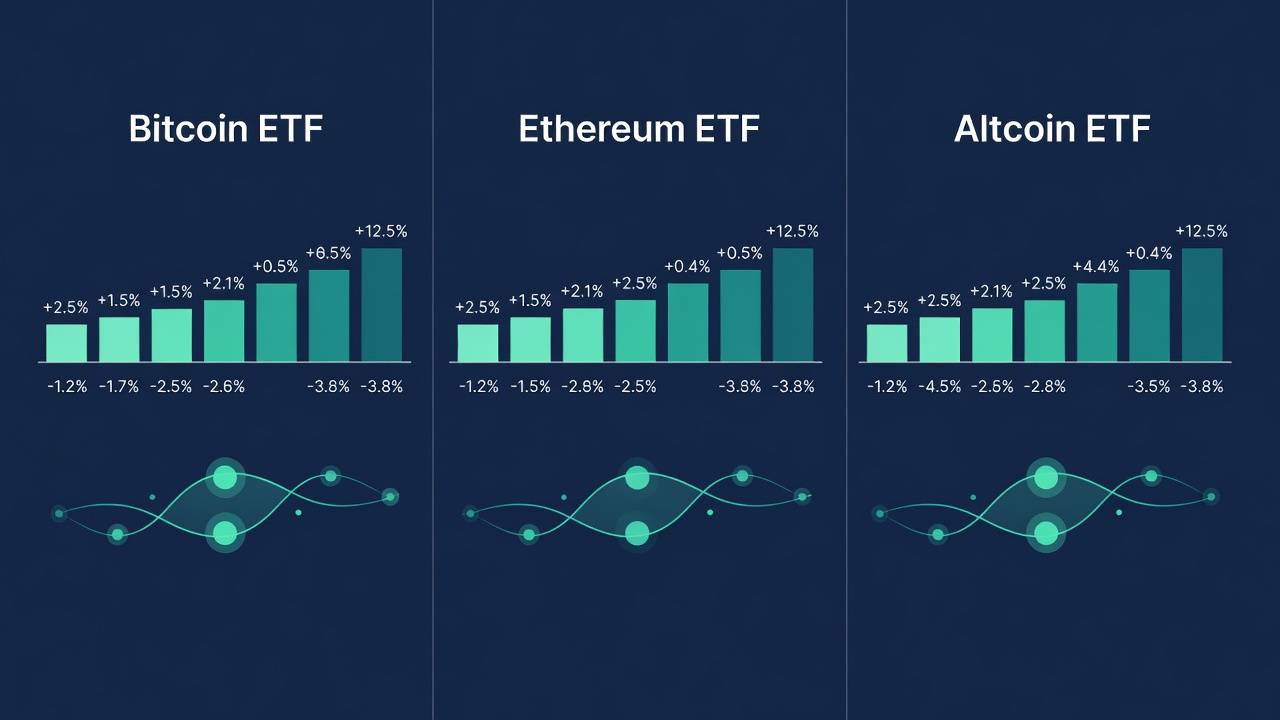
Bitcoin ETFs have generally led in assets under management and trading volume, benefiting from first-mover advantage and strong institutional familiarity. These products have delivered consistent tracking of spot prices with minimal deviations, making them a benchmark for the broader crypto ETF category. Ethereum ETFs have shown competitive returns tied to network upgrades and staking yields, though they sometimes lag during risk-off periods when investors rotate into safer assets. Altcoin ETFs, covering assets like Solana or Avalanche, offer higher growth potential but with elevated tracking errors and liquidity risks during periods of low trading volume. Investors comparing these options should examine historical premium and discount ranges, expense ratios, and underlying index methodologies. For instance, a Bitcoin ETF might exhibit tighter spreads during high-volume sessions, while an altcoin ETF could experience wider gaps that affect entry and exit prices. Performance data from 2026 illustrates how Ethereum products often outperform in bull phases driven by DeFi activity, whereas Bitcoin ETFs provide steadier returns during consolidation periods.
Regulatory Developments Enabling Wider Access
Key regulatory milestones in 2025 and early 2026 have paved the way for expanded ETF approvals and distribution. Oversight bodies have clarified custody standards and disclosure requirements, fostering greater confidence among asset managers. For authoritative details on U.S. regulatory frameworks, readers can consult the SEC, the CFTC, and Investor.gov. These developments have also encouraged cross-border product launches, allowing global investors easier access to U.S.-listed vehicles. New guidance on qualified custodians has reduced operational friction, enabling more fund sponsors to bring products to market efficiently. International regulators have begun harmonizing rules with U.S. standards, which supports smoother listings on multiple exchanges and broader distribution through wealth management channels.
Case Studies of Major Fund Inflows
Several flagship Bitcoin ETFs recorded substantial inflows during the first half of 2026, driven by pension fund allocations and corporate treasury strategies. One prominent product saw consistent weekly inflows exceeding previous records as corporations diversified cash reserves. Ethereum-focused products experienced notable spikes following network improvements, with one leading fund attracting billions in new capital within weeks of launch. Altcoin ETF launches demonstrated rapid uptake among hedge funds seeking diversified exposure, though some experienced outflows during broader market corrections. These case studies highlight the importance of timing and asset selection when evaluating institutional products. For example, funds that launched ahead of major protocol upgrades captured disproportionate market share, while late entrants struggled to gain traction amid increased competition.
Practical Steps for Evaluating ETF Options
To make informed decisions, follow these structured steps: 1) Review the fund's prospectus for tracking methodology, authorized participants, and creation-redemption mechanics. 2) Compare expense ratios and average daily trading volume across similar products to ensure cost efficiency and liquidity. 3) Analyze historical premium and discount data relative to net asset value over at least six months. 4) Assess the custodian's reputation, insurance coverage, and cold storage practices. 5) Consider tax implications in your jurisdiction and how distributions are treated. 6) Evaluate the ETF's alignment with your investment horizon by stress-testing returns against different market scenarios. Applying these steps helps investors avoid products with hidden operational risks or poor tracking performance.
Risk Assessment Frameworks
A robust risk framework begins with evaluating counterparty exposure, including the ETF issuer and underlying asset custody arrangements. Next, quantify tracking error by comparing ETF returns to spot prices over multiple time horizons and market conditions. Stress-test portfolios against regulatory changes, macroeconomic shocks, or sudden liquidity events. Finally, diversify across Bitcoin, Ethereum, and select altcoin ETFs while maintaining position sizing limits based on overall portfolio volatility targets. Investors should also monitor on-chain metrics and correlation coefficients with traditional equities to adjust allocations dynamically. Regular rebalancing and scenario analysis further strengthen resilience against unexpected drawdowns.
Common Mistakes to Avoid When Investing in Crypto ETFs
- Overlooking tracking error in favor of headline assets under management figures.
- Ignoring liquidity differences that can lead to wide bid-ask spreads during volatile sessions.
- Failing to review the full prospectus for hidden fees or redemption restrictions.
- Concentrating too heavily in altcoin ETFs without understanding their higher volatility profiles.
- Neglecting tax reporting requirements specific to ETF structures in different jurisdictions.
Future Trends for 2026 and Beyond
Looking ahead, crypto ETF innovation is expected to expand into thematic products such as DeFi yield strategies or layer-2 scaling solutions. Integration with tokenized real-world assets may further blur lines between traditional and digital finance. Forward-thinking investors should monitor evolving custody solutions and potential spot options on major exchanges as these developments could unlock additional liquidity and hedging opportunities. Continued product launches in emerging categories like sustainable crypto or AI-related tokens are anticipated to attract new capital inflows through 2027.
FAQs
What are typical ETF fees?
Fees vary by provider but generally range from competitive levels that support long-term holding; always verify the latest prospectus for exact figures.
How do tracking errors occur?
Tracking errors arise from management fees, rebalancing costs, and differences between ETF share creation and redemption mechanics and the underlying crypto spot market.
Are crypto ETFs suitable for retirement accounts?
Many platforms now permit crypto ETF holdings in IRAs and 401(k)s, though investors should confirm plan-specific rules and consult tax advisors.
What risks should I consider with altcoin ETFs?
Altcoin ETFs carry higher volatility, potential regulatory uncertainty, and lower liquidity compared to Bitcoin or Ethereum products.
How can investors monitor ETF performance effectively?
Investors should track daily NAV deviations, compare returns against benchmark indices, and review quarterly holdings reports for any drift in strategy.
Conclusion
Crypto ETF adoption in 2026 represents a pivotal shift toward institutional-grade infrastructure in digital assets. By understanding liquidity impacts, performance nuances, regulatory context, and structured evaluation processes, investors can position themselves effectively for sustained market evolution. Staying informed through authoritative sources and applying disciplined risk frameworks will be essential for navigating opportunities and challenges ahead. The continued maturation of these products promises deeper integration of cryptocurrencies into global financial systems, rewarding those who approach the space with thorough research and strategic planning.

No comments yet. Be the first!