 CryptoChain Blog

Introduction: The Maturing Era of Crypto ETFs in 2026
The cryptocurrency landscape in 2026 continues to evolve rapidly as institutional adoption through exchange-traded funds accelerates. ETF inflows are no longer a novelty but a primary driver reshaping liquidity pools, altering investor psychology, and triggering predictable altcoin rotations. This article provides a data-backed examination of these dynamics, drawing on regulatory developments, on-chain indicators, and allocation patterns observed throughout the year. Investors seeking deeper market insights must understand how these products influence everything from Bitcoin dominance to emerging altcoin cycles. Regulatory tailwinds from bodies like the U.S. Securities and Exchange Commission have further legitimized these vehicles, encouraging broader participation from traditional finance players who previously hesitated due to custody and compliance concerns.
Beyond simple price reactions, the structural changes brought by ETFs include improved transparency in holdings reporting and standardized creation-redemption processes that reduce friction for large-scale capital deployment. This evolution marks a shift from retail-driven volatility to a hybrid model where institutional flows set the tone for broader market sentiment. As a result, market participants now monitor ETF statistics with the same rigor once reserved for macroeconomic indicators like interest rates or employment data.
Bitcoin and Ethereum ETF Flow Comparisons
Bitcoin ETFs have historically captured the majority of institutional capital due to their established status. In 2026, however, Ethereum ETFs have narrowed the gap significantly through consistent weekly inflows. Comparative analysis reveals that Bitcoin products often see larger absolute volumes during risk-on periods, while Ethereum flows demonstrate greater resilience during consolidation phases. This divergence highlights differing risk profiles and use-case perceptions between the two leading assets. For instance, Bitcoin is frequently viewed as a macro hedge similar to digital gold, attracting flows tied to inflation expectations, whereas Ethereum benefits from narrative around smart contract upgrades and decentralized finance expansion.
Key Metrics for Flow Analysis
- Daily net inflows reported by major custodians
- Premium or discount to net asset value
- Correlation with spot trading volumes on major exchanges
- Percentage of total assets under management held in cold storage versus active trading wallets
Tracking these metrics allows analysts to anticipate short-term price pressure and rotation opportunities into layer-1 alternatives. When Bitcoin ETF inflows exceed Ethereum by a wide margin, historical patterns suggest subsequent strength in Ethereum-related tokens as capital seeks higher yields within the ecosystem.
Regulatory Tailwinds Fueling Institutional Confidence
Clearer guidelines around custody, disclosure, and tax treatment have reduced barriers for pension funds and endowments. Jurisdictions that aligned standards with existing securities frameworks witnessed accelerated product launches. These developments have directly contributed to measurable declines in overall market volatility as larger, longer-horizon capital enters the ecosystem. The Federal Reserve has also provided indirect support through its ongoing discussions on digital asset integration into payment systems, which lends further credibility to ETF structures.
Regulatory clarity has enabled the creation of multi-asset ETF products that bundle exposure across Bitcoin, Ethereum, and select altcoins. This innovation allows investors to gain diversified crypto exposure without managing multiple wallets or private keys, lowering operational overhead and attracting conservative allocators who prioritize compliance.
Institutional Allocation Shifts and Liquidity Effects
Portfolio managers are reallocating from direct holdings to ETF wrappers for operational efficiency and regulatory compliance. This shift improves liquidity in spot markets during normal conditions but can amplify drawdowns during forced redemptions. On-chain data shows increased exchange reserves tied to ETF creation and redemption mechanisms, providing early signals of potential volatility spikes. Institutions that once held 2-5% of portfolios in direct crypto now route the majority through ETFs to satisfy internal risk committees and auditor requirements.
Examples include university endowments that have publicly disclosed ETF-based positions to demonstrate fiduciary responsibility. These moves create a feedback loop where increased visibility encourages additional adoption from peer institutions, further embedding ETFs into mainstream portfolio construction.
Measurable Effects on Volatility
Studies of post-ETF launch periods indicate a compression in realized volatility for both Bitcoin and Ethereum. However, altcoins experience secondary effects through rotation cycles, where capital flows out of large-cap assets into higher-beta tokens once ETF-driven rallies mature. Understanding these patterns helps investors time entries and manage risk more effectively. Reduced spot volatility has also led to tighter options pricing, creating new opportunities for income generation strategies around ETF holdings.
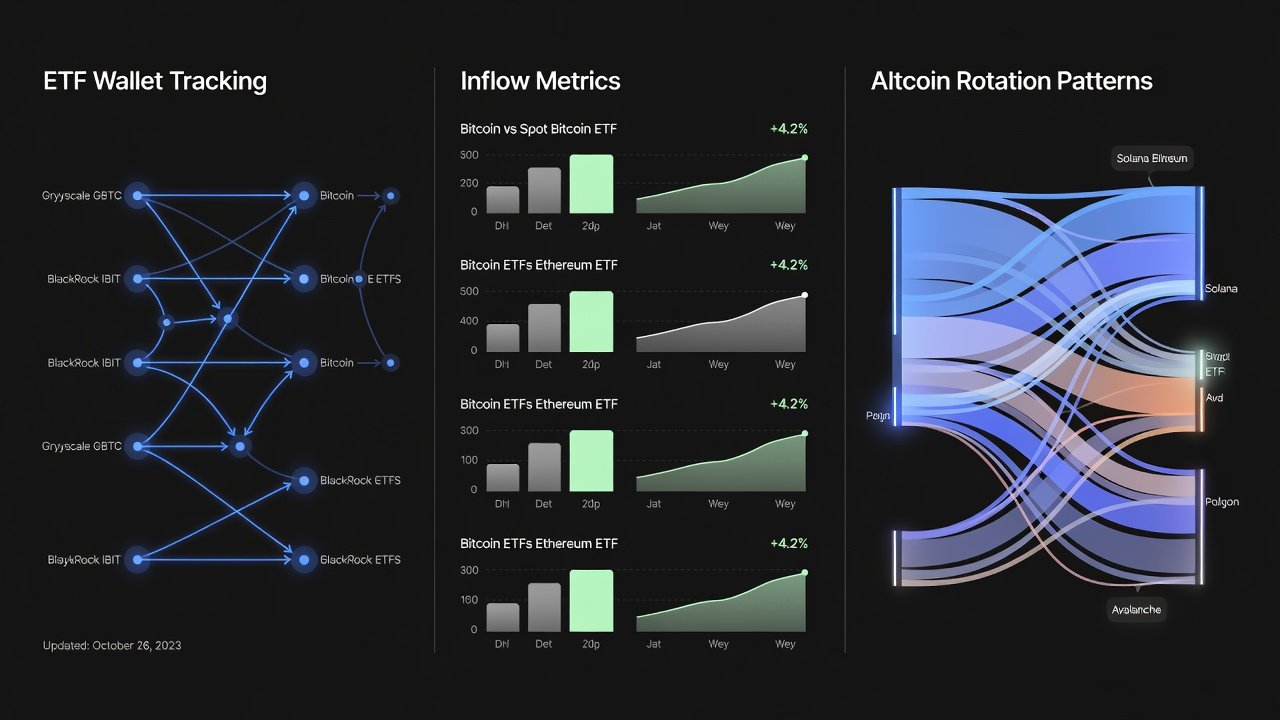
Step-by-Step Framework for Tracking ETF Holdings via On-Chain Metrics
Follow this practical process to monitor institutional positioning:
- Identify wallet addresses associated with ETF custodians through public disclosures and fund prospectuses.
- Monitor daily transaction volumes and balance changes using blockchain explorers and analytics platforms.
- Cross-reference with reported creation unit activity from fund issuers to validate on-chain movements.
- Analyze volume patterns on derivative platforms to detect leveraged positioning that may precede spot rotations.
- Correlate findings with altcoin dominance charts to spot rotation signals before they appear in price action.
- Review weekly holdings reports alongside macroeconomic calendars to contextualize flows within broader market drivers.
This framework transforms raw on-chain data into actionable market insights for portfolio adjustments. Practitioners often combine these steps with sentiment analysis from social channels and traditional news to build a complete picture of impending trend shifts.
Practical Investor Examples and Risk Considerations
Consider an institutional allocator who increased Ethereum ETF exposure in early 2026 while maintaining Bitcoin core holdings. The strategy benefited from relative outperformance during periods of network upgrade anticipation. Retail investors can mirror this approach by dollar-cost averaging into diversified ETF baskets while maintaining strict position sizing rules. Another example involves a family office that used ETF inflows data to rotate a portion of its allocation into mid-cap altcoins during periods when Bitcoin dominance peaked above historical averages.
Risks include tracking error during high-volatility events, potential regulatory reversals, and liquidity mismatches between ETF shares and underlying assets. Always maintain cash reserves and review holdings quarterly against evolving on-chain trends. Additional pitfalls to avoid include over-reliance on short-term flow data without considering macroeconomic overlays and failing to account for tax implications across different jurisdictions.
Common Questions on ETF Allocation
How much should a portfolio allocate to crypto ETFs?
Allocation depends on risk tolerance, but many advisors recommend starting with modest exposure and adjusting based on market conditions and personal financial goals.
Do ETF inflows directly predict price movements?
Inflows provide directional context but must be combined with on-chain volume and macroeconomic factors for reliable forecasting.
Are there tax advantages to using ETFs over direct holdings?
ETFs often simplify reporting and may defer certain tax events, though investors should consult local regulations for specifics.
What mistakes should new ETF investors avoid?
Common errors include chasing short-term inflows without a long-term thesis and neglecting to diversify across multiple issuers to mitigate single-fund risk.
Conclusion
2026 marks a pivotal year where crypto ETF adoption has transitioned from speculative hype to structural market influence. By mastering flow comparisons, regulatory context, and on-chain tracking frameworks, investors can navigate liquidity shifts and altcoin rotations with greater precision. Continued monitoring of these dynamics will remain essential for generating sustainable market insights in the years ahead, empowering both institutions and individuals to participate confidently in the evolving digital asset economy.

No comments yet. Be the first!