 CryptoChain Blog

Introduction to 2026 Layer 1 Competition
The Layer 1 blockchain landscape in 2026 continues to evolve rapidly, with established players and emerging networks competing for developer mindshare and user adoption. This analysis examines key metrics such as transaction throughput, security architectures, and ecosystem expansion to help investors and builders navigate the space. As decentralized applications span finance, gaming, supply chains, and identity management, the underlying base layer determines scalability limits, user experience, and long-term viability. Understanding these dynamics allows participants to anticipate which networks will capture the majority of on-chain activity over the coming years.
Performance Metrics Head-to-Head
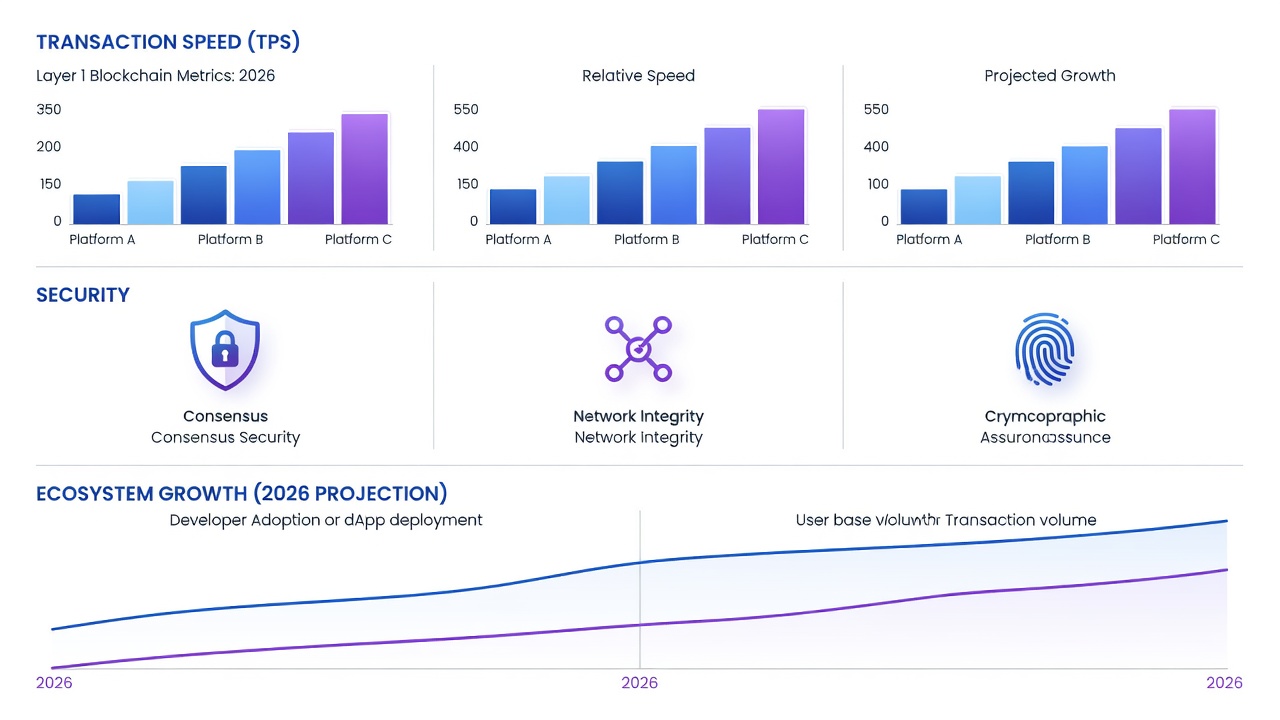
Transaction speed and scalability remain central differentiators. Networks are benchmarked on real-world throughput, finality times, and energy efficiency. Ethereum maintains its position through Layer 2 scaling while base-layer upgrades enhance capacity. Solana emphasizes high-speed execution with its unique consensus approach, and newer entrants focus on modular designs for specialized workloads. For example, during peak DeFi trading periods, networks with parallel transaction processing demonstrate clear advantages in handling thousands of operations without congestion. Latency under one second becomes critical for applications such as real-time gaming and automated market makers. Energy consumption also factors into institutional adoption, where proof-of-stake variants generally outperform older models in sustainability reports.
Security Models Compared
Security varies across proof-of-stake, proof-of-history hybrids, and novel consensus mechanisms. Each model balances decentralization, fault tolerance, and attack resistance differently. Investors should evaluate validator distribution, slashing conditions, and historical resilience to exploits. A well-distributed validator set reduces single points of failure, while economic penalties for misbehavior deter collusion. Networks incorporating zero-knowledge proofs add an extra layer of privacy-preserving verification that appeals to enterprise use cases. Real-world examples include successful defenses against large-scale DDoS attempts and rapid recovery from temporary outages, which build user confidence over time.
Ecosystem Growth and Real-World Adoption
Developer activity, total value locked, and daily active addresses provide insight into momentum. Case studies of top competitors reveal how DeFi protocols, gaming platforms, and enterprise integrations drive usage. Ethereum continues to anchor much of the ecosystem through its robust tooling and community governance. Meanwhile, high-throughput chains attract consumer-facing applications that require low fees and fast confirmations. Tracking GitHub commit volumes and grant program outcomes offers a forward-looking view of which ecosystems will sustain innovation beyond current hype cycles.
Technological Differentiators
Emerging features include parallel execution engines, zero-knowledge proof integrations, and cross-chain interoperability standards. These advancements influence which networks capture specific market segments such as high-frequency trading or supply-chain tracking. Modular architectures separate execution from consensus and data availability, allowing specialized teams to optimize individual components. Interoperability protocols enable seamless asset transfers and message passing across ecosystems, reducing fragmentation. Builders evaluating platforms often prioritize those with mature developer tooling and clear upgrade paths that minimize future migration costs.
Step-by-Step Evaluation Framework for Investors
- Define investment goals around yield, long-term holding, or infrastructure exposure. Clear objectives help narrow the field from dozens of viable Layer 1 options to a manageable shortlist.
- Assess core metrics including throughput, latency, and security audits. Public dashboards and third-party reports provide transparent data that can be compared side by side.
- Review on-chain data for developer commits and user retention. Sustained activity signals genuine utility rather than speculative interest alone.
- Analyze tokenomics and governance participation. Transparent treasury management and active voter turnout indicate healthy community stewardship.
- Stress-test against regulatory and technological risks. Scenario planning around potential policy changes or protocol upgrades reveals hidden vulnerabilities.
Direct Cost and Scalability Comparisons
Transaction fees and deployment costs differ significantly across networks. Scalability roadmaps outline planned upgrades that could shift competitive positioning over the next 12-24 months. Qualitative assessments highlight trade-offs between speed and decentralization. For instance, networks optimized for micro-transactions excel in gaming economies, while those prioritizing maximal security suit institutional custody solutions. Monitoring upgrade timelines helps investors anticipate fee reductions or throughput increases that may affect token demand.
Market Share Trends and Future Outlook
Shifts in dominance often follow major upgrades or ecosystem launches. Monitoring funding flows, partnership announcements, and institutional adoption provides forward-looking signals. Diversification across multiple Layer 1 assets can mitigate concentration risk in portfolios. Historical patterns show that early leadership in developer tools often translates into lasting market share, yet disruptive newcomers can rapidly gain traction when they solve specific pain points more elegantly.
Common Mistakes to Avoid When Evaluating Layer 1 Projects
- Relying solely on headline TPS numbers without considering real-world conditions and congestion scenarios.
- Ignoring validator centralization risks that could compromise network security during market stress.
- Overweighting short-term price action instead of fundamental adoption metrics such as daily active addresses.
- Failing to review governance proposals that may alter token supply or fee structures unexpectedly.
Conclusion
Selecting Layer 1 blockchains requires balancing technical fundamentals with real adoption signals. The frameworks and comparisons presented equip readers to make informed decisions amid ongoing innovation. By applying structured evaluation methods and monitoring both quantitative metrics and qualitative ecosystem health, investors can position portfolios for sustainable exposure to the evolving blockchain sector.
FAQ
What defines a Layer 1 blockchain?
A Layer 1 is the base protocol responsible for consensus, security, and data availability, independent of secondary scaling solutions.
How do I compare security across networks?
Examine validator sets, economic incentives, and past incident responses rather than relying solely on theoretical claims.
Which metrics matter most for long-term value?
Sustained developer activity and genuine user adoption typically outweigh short-term price movements or marketing hype.
Should investors diversify across multiple Layer 1 chains?
Yes, diversification reduces exposure to single-network risks while capturing growth from different technological approaches and user bases.
How often should evaluation frameworks be updated?
Review core metrics and ecosystem developments quarterly, as major protocol upgrades and market shifts can alter competitive standings quickly.


No comments yet. Be the first!