 CryptoChain Blog

What is RWA Tokenization and Why 2026 is Pivotal
Real-World Asset (RWA) tokenization is transforming traditional finance by converting physical assets like real estate, commodities, art, and bonds into blockchain-based digital tokens. This process unlocks liquidity, fractional ownership, and global accessibility, bridging TradFi and DeFi. In 2026, RWA tokenization is projected to explode, with market capitalization potentially surpassing $10 trillion by 2030 according to Boston Consulting Group estimates, driven by institutional adoption and maturing blockchain infrastructure.
The appeal lies in its ability to democratize high-value investments. Imagine owning a fraction of a Manhattan skyscraper or a gold bar without millions upfront. By 2026, advancements in layer-2 scaling, cross-chain bridges, and regulatory clarity will propel RWAs from niche experiments to mainstream portfolio staples. This deep dive unpacks the growth drivers, platforms, hurdles, case studies, and strategies to capitalize on this trend.
Key Platforms Powering RWA Tokenization in 2026
Several platforms lead the charge, each specializing in asset classes and blockchain integrations. Here's a breakdown:
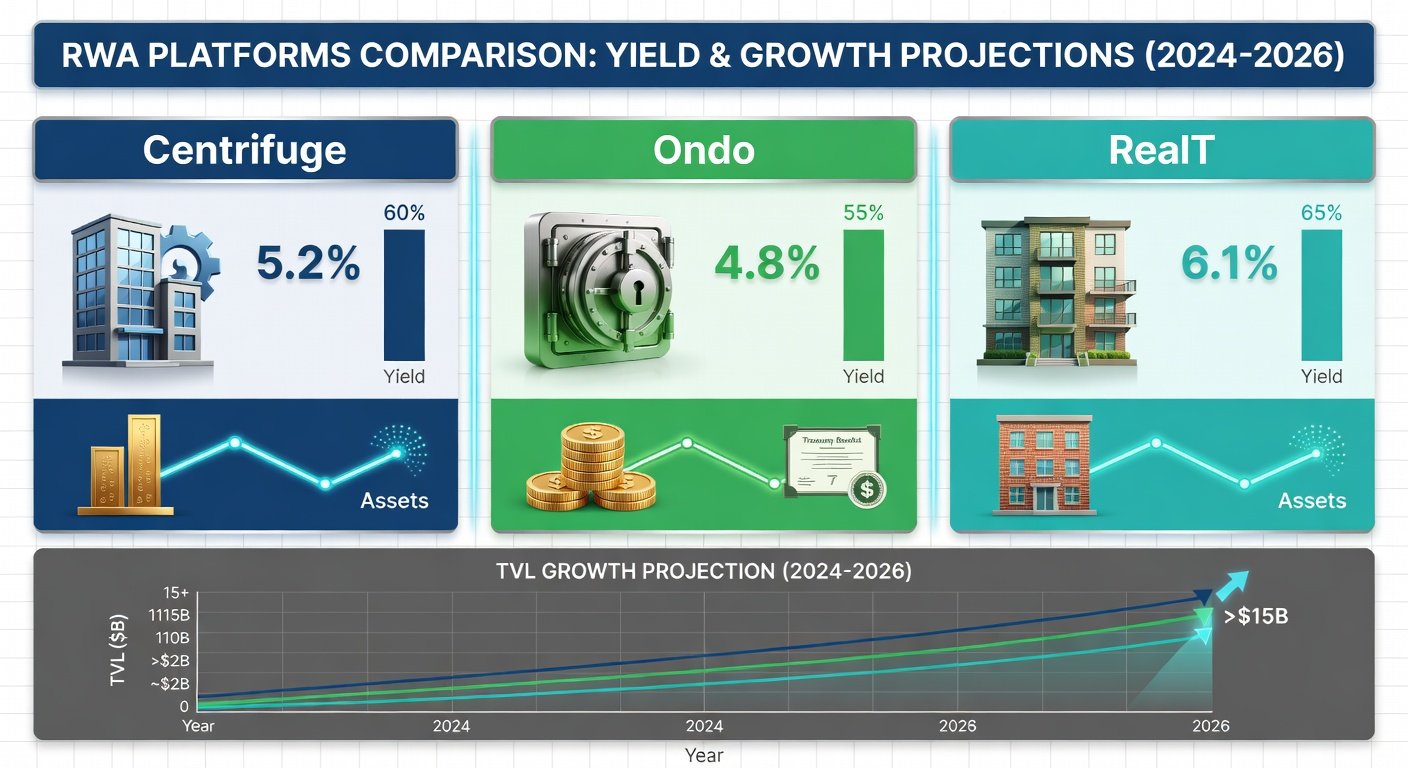
- Centrifuge: Focuses on enterprise RWAs like invoices and credit. Its Tinlake protocol pools assets for yield-bearing pools, integrated with Polkadot for interoperability.
- Ondo Finance: Tokenizes U.S. Treasuries and funds, offering stable yields (4-6% APY). By 2026, Ondo's OUSG token could see billions in TVL as institutions seek on-chain safe havens.
- RealT: Pioneers tokenized real estate on Ethereum and Gnosis Chain, enabling rental income streams via automated smart contracts.
- Maple Finance: Undercollateralized lending against RWAs, targeting institutions with yields up to 10%.
These platforms leverage ERC-20/ERC-721 standards for compliance and composability, with total RWA TVL expected to hit $50 billion in 2026 per DeFiLlama projections.
Regulatory Hurdles and 2026 Breakthroughs
Regulation remains the biggest barrier. In the U.S., the SEC classifies many RWAs as securities, requiring registration under the Howey Test. Europe's MiCA framework offers clearer paths, boosting adoption there. By 2026, expect:
- U.S. clarity via FIT21 Act amendments, allowing tokenized assets on compliant chains.
- Japan and Singapore as RWA hubs with sandbox approvals.
- Global standards from FATF for AML/KYC in tokenization.
Institutions like BlackRock are filing for tokenized ETFs, signaling mainstreaming. Investors must monitor jurisdictions; non-compliance risks token delistings or freezes. For updates, check the SEC guidelines.
Yield Opportunities: APYs and Risk-Adjusted Returns
RWAs shine in yield generation, often outperforming volatile crypto natives. In 2026:
- Tokenized Treasuries: 4-5% stable yields via Ondo or Backed.fi.
- Real Estate: 8-12% from rentals, fractionalized for retail access.
- Commodities: Gold/silver tokens like PAXG yield 2-4% plus price appreciation.
- Private Credit: 10-15% via Goldfinch or Maple, with overcollateralization mitigating defaults.
Compare to DeFi: RWAs offer lower volatility (beta <1 vs. ETH) but require due diligence on oracles and custodians. Diversify across 3-5 protocols to average 7-10% portfolio yield.
Case Study 1: Tokenized Real Estate Revolution
RealT's Detroit multifamily property tokenized in 2020 now generates $100K+ monthly yields for 1,000+ holders. By 2026, platforms like Propy and Lofty.ai scale to commercial assets. Impact: $2T global real estate market fractionalized, reducing entry barriers from $500K to $100. Market effect? Boosts ETH/Gnosis usage, with RWA real estate TVL hitting $20B.
Investment Strategy: Start with $1K in diversified properties via RealT marketplace. Reinvest weekly rentals via auto-compounding. Avoid illiquid tokens; prioritize audited oracles like Chainlink.
Case Study 2: Commodities Tokenization Boom
Paxos' PAXG (pegged 1:1 to gold) holds $500M+, offering custody via Brink's. Tether Gold (XAUT) follows suit. In 2026, tokenized oil (via Vakt) and carbon credits emerge, hedging inflation. Case: During 2025 volatility, PAXG returned 15% vs. BTC's swings.
Market impact: Commodities RWAs stabilize crypto markets, attracting $100B TradFi inflows. Strategy: Allocate 20% portfolio to PAXG/XAUT for non-correlated returns; trade futures on dYdX for leverage.
Crypto Trends Enhancing RWA Adoption
Interoperability: Chains like Polkadot and Cosmos enable seamless RWA transfers. XCM (Cross-Consensus Messaging) lets a tokenized bond move from Ethereum to Solana instantly, slashing fees 90%.
Other trends:
- Layer-2s (Optimism, Arbitrum) for cheap minting.
- AI oracles (Chainlink Functions) for real-time asset pricing.
- ZK-proofs for privacy-compliant compliance.
These make RWAs composable in AMMs like Uniswap V4, spawning yield farms with 20%+ APYs.
Investment Strategies for 2026 RWA Portfolios
Build a diversified RWA basket:
- Assess Risk: Use DeFiLlama for TVL/audit checks.
- Entry Points: Dollar-cost average into OUSG, RealT, PAXG.
- Yield Farming: Stake in Aave/Compound RWA pools.
- Exit Strategy: Monitor macro (Fed rates) for redemptions.
Mistakes to Avoid:
- Ignoring KYC: Platforms like Centrifuge require it.
- Over-leverage: Stick to 2x max.
- Single-asset bets: Diversify across classes.
For analytics, visit CoinDesk. Target 15-25% portfolio allocation for balanced growth.
Conclusion: Position for RWA Dominance
2026 marks RWA tokenization's inflection point, blending real yields with blockchain efficiency. From regulatory tailwinds to interoperable ecosystems, opportunities abound for savvy investors. Start small, stay compliant, and watch RWAs redefine diversified portfolios. The future of finance is tokenized—don't miss out.

No comments yet. Be the first!