 CryptoChain Blog
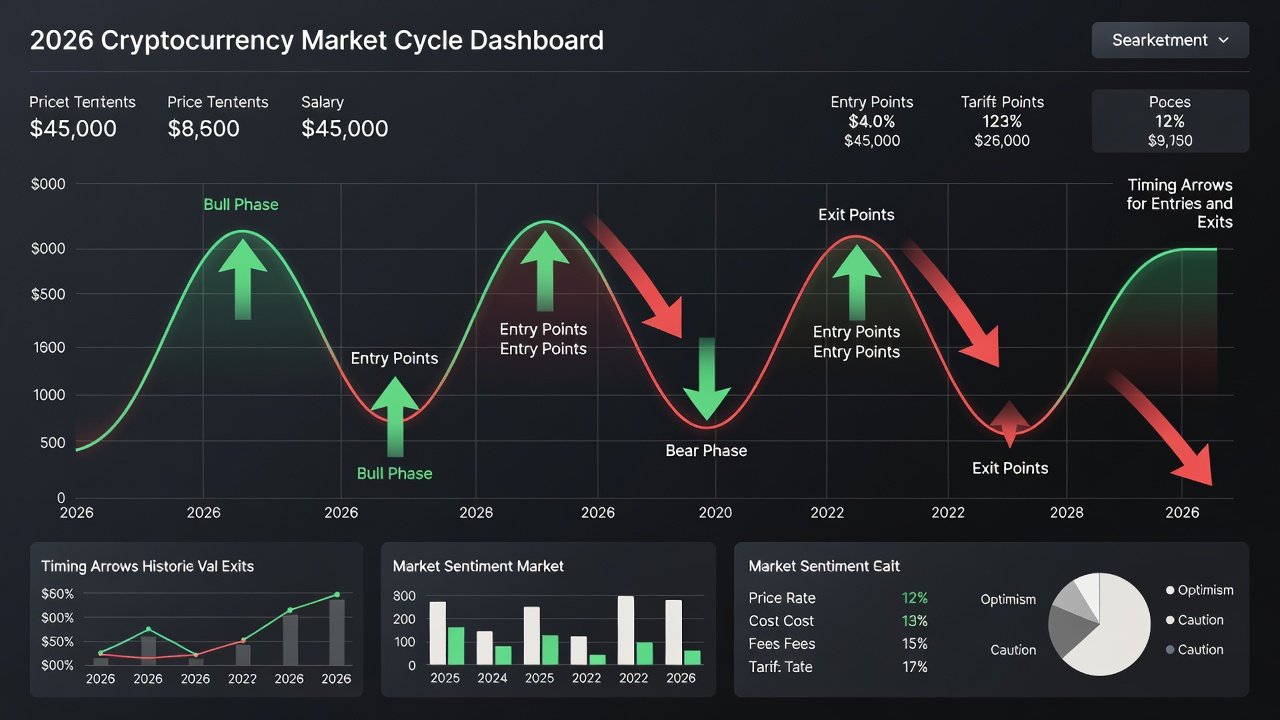
Introduction to 2026 Crypto Market Cycles
The cryptocurrency market in 2026 promises heightened volatility driven by institutional adoption, regulatory shifts, and macroeconomic factors. Advanced traders must move beyond basic trend spotting to master precise entry and exit timing. This guide extends proven cycle analysis with practical strategies using technical indicators, on-chain data, and volume patterns to identify high-probability opportunities while managing downside risk effectively. Success in this environment requires a disciplined, multi-layered approach that combines historical context with forward-looking projections tailored to faster market dynamics.
Understanding market cycles helps identify accumulation, markup, distribution, and markdown phases. In 2026, these phases may compress due to faster information flow and leveraged trading environments, making disciplined frameworks essential for success. Traders who integrate multiple data layers gain an edge in navigating rapid sentiment shifts and capitalizing on both upward and downward movements. Without such preparation, even experienced participants risk emotional decisions that erode capital over repeated cycles.
Key Phases of the Crypto Market Cycle
Every cycle follows four primary phases. Accumulation occurs after bear markets when smart money builds positions quietly at depressed prices. During this stage, prices stabilize with low volatility and increasing on-chain activity from long-term holders who recognize undervaluation. Markup features rapid price appreciation fueled by retail FOMO and positive news flow as momentum builds across social and traditional media channels. Distribution sees profit-taking by early investors as euphoria peaks and volume begins to diverge from price action, often accompanied by increasing retail participation. Markdown brings sharp declines as sentiment turns negative and leveraged positions unwind in cascading liquidations.
Projecting from past cycles like 2017-2018 and 2021-2022, the 2026 cycle may see early accumulation signals from on-chain metrics in late 2025 carrying into Q1 2026 entries. Distribution phases in prior cycles lasted three to six months, requiring traders to prepare exit ladders and monitor for weakening momentum well in advance. Recognizing these transitions early allows for better capital preservation and redeployment into subsequent opportunities.
Technical Indicators for Precise Timing
Combine multiple indicators for confirmation rather than relying on any single signal. Moving averages such as the 50-day and 200-day EMA help identify trend direction, with crossovers providing early warnings of shifts that can be validated against higher timeframes. The Relative Strength Index signals overbought or oversold conditions above 70 or below 30, though in strong trends these levels can persist longer than expected and require context from volume or on-chain data. MACD crossovers and histogram changes offer insight into momentum acceleration or deceleration during volatile periods.
For 2026 volatility, incorporate Bollinger Bands to gauge expansion and contraction. When bands squeeze during low volatility periods, expect breakout moves ideal for entries. Advanced users also layer Fibonacci retracement levels to pinpoint support zones during pullbacks within larger uptrends. Always wait for confluence across at least two indicators before committing capital to reduce false signals common in fast-moving markets.
On-Chain Metrics and Volume Patterns
On-chain analysis reveals underlying network health invisible on price charts alone. Key metrics include active addresses, transaction volume, realized price, and exchange inflows. Rising exchange inflows often precede sell-offs, signaling potential exits for traders holding large positions. Declining active addresses during price rallies can indicate weakening participation and an approaching distribution phase that warrants caution.
Volume patterns confirm trend strength. High volume on upswings indicates strong buyer conviction, while declining volume on rallies warns of weakening momentum. Divergences between price and volume frequently precede major reversals. 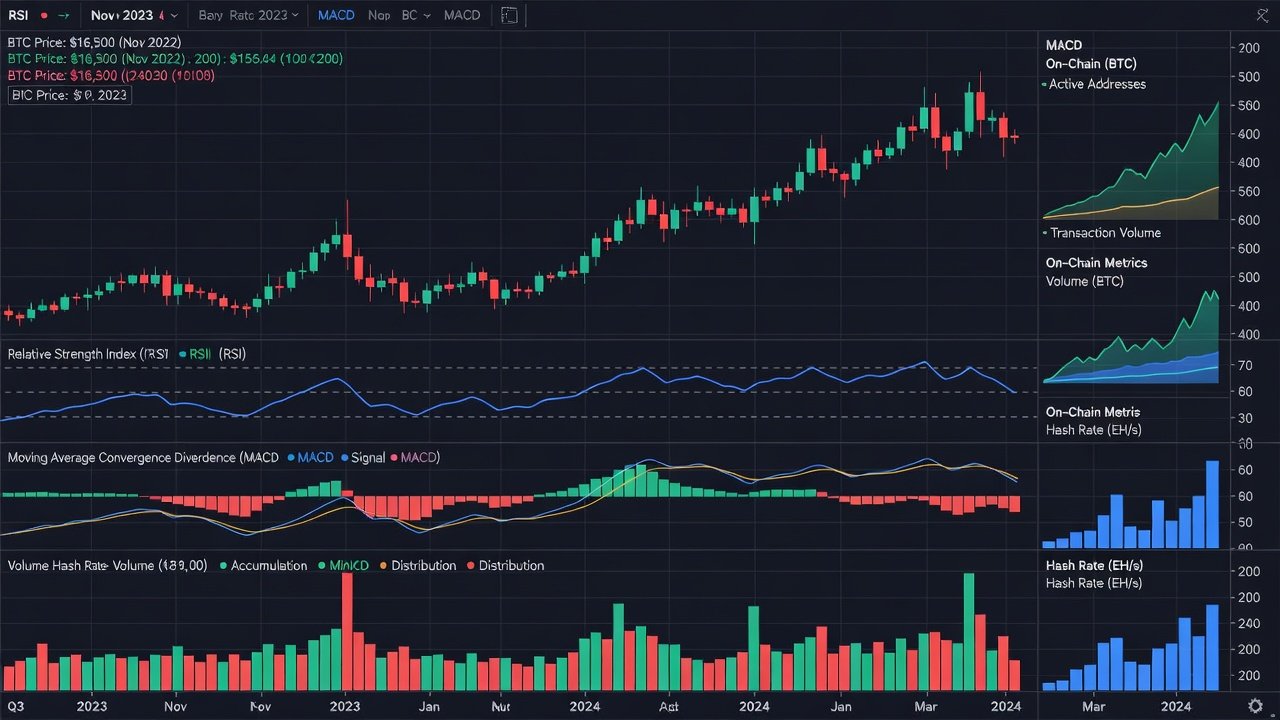
Traders should cross-reference on-chain data with price action for higher probability setups and maintain dashboards that track multiple chains simultaneously to capture cross-asset correlations.
Step-by-Step Entry and Exit Frameworks
- Scan for cycle phase confirmation using multiple indicators and on-chain trends aligned in the same direction.
- Wait for confluence such as RSI divergence plus on-chain accumulation signals and supportive volume.
- Enter with defined risk parameters, placing stop-loss orders below recent swing lows or key moving averages.
- Scale out during distribution using volume spikes and sentiment extremes as alerts to begin reducing exposure.
- Review and adjust based on weekly performance metrics while maintaining a trading journal for continuous improvement.
This structured approach reduces emotional decision-making and improves consistency across different market regimes encountered throughout 2026.
Real-World Examples Projected to 2026
The 2021 Bitcoin cycle saw accumulation in early 2020 followed by markup into November. Applying similar patterns, 2026 may feature compressed timelines where accumulation windows last only weeks rather than months, demanding quicker recognition of on-chain shifts. In the 2017 cycle, Ethereum experienced a prolonged markup phase with multiple 50 percent corrections that offered excellent re-entry points for patient traders who used volume confirmation. Projecting forward, similar corrections in 2026 could be identified using on-chain holder distribution data and volume profile analysis to time additions during temporary weakness.
These historical parallels underscore the value of preparing exit strategies during markup rather than waiting for obvious distribution signals that often arrive too late for optimal execution.
Risk-Adjusted Tactics for Bull Versus Bear Shifts
In bull markets, use trailing stops and partial profit-taking to lock in gains while allowing winners to run. Position sizing should remain conservative even during strong trends to preserve capital for later opportunities and avoid overexposure. Bear shifts demand tighter risk management, including reduced position sizes, increased cash allocation, and hedging with stablecoins or inverse products to protect overall portfolio value.
Portfolio implications include diversification across Bitcoin, Ethereum, and select altcoins while maintaining liquidity buffers for volatility spikes. Rebalancing quarterly helps capture gains from outperforming assets and prevents overexposure to any single sector as cycles evolve.
Building a Personal Monitoring System
Advanced traders benefit from creating customized dashboards that aggregate technical, on-chain, and volume data in one interface. Tools should include alerts for key threshold breaches such as exchange inflow spikes or RSI extremes. Regular backtesting of frameworks against historical data ensures robustness before live deployment in the 2026 environment. This proactive setup minimizes reaction time during rapid phase transitions.
Common Pitfalls and Checklists
- Avoid chasing parabolic moves without volume confirmation or clear catalyst alignment.
- Do not ignore macroeconomic news that can override technical signals and trigger sudden reversals.
- Checklist for entries: Multiple indicator alignment, favorable on-chain trends, clear risk levels, and sufficient liquidity across exchanges.
- Checklist for exits: Distribution signals present, sentiment extremes reached, portfolio rebalancing needs identified, and tax implications considered before execution.
Mastering these elements positions advanced traders for consistent results in the 2026 environment by emphasizing process over prediction and continuous refinement of tactics.
Further reading on cycle dynamics is available at bitcoin.org, ethereum.org, and sec.gov.


No comments yet. Be the first!