 CryptoChain Blog
Introduction to DeFi Yield Farming in 2026
DeFi yield farming has evolved dramatically, becoming a cornerstone of cryptocurrency investment strategies. As we approach 2026, market conditions favor sophisticated approaches that balance high APYs with mitigated risks. This guide dives into advanced strategies, leveraging liquidity pools, real-time data analytics, and emerging trends like restaking to optimize returns. Whether you're a seasoned farmer or scaling up, these insights will equip you to thrive in a maturing DeFi landscape.
With total value locked (TVL) projected to surpass $500 billion across major chains, yield farming offers annualized percentage yields (APYs) often exceeding 20-50% on select pools. However, impermanent loss, smart contract vulnerabilities, and regulatory shifts demand precision. We'll analyze top protocols, provide setup guides, and highlight tools for data-driven decisions.
Key Market Conditions Shaping 2026 Yield Farming
By 2026, Ethereum's Dencun upgrade and layer-2 scaling will reduce gas fees, making frequent rebalancing feasible. Bitcoin layer-2 solutions like Stacks and emerging L2s on Solana will diversify opportunities. Expect stablecoin dominance in pools, with real-world assets (RWAs) integrating for steadier yields.
- High-Gas Efficiency: L2s like Arbitrum and Optimism dominate with sub-cent fees.
- Cross-Chain Liquidity: Bridges like LayerZero enable seamless farming across ecosystems.
- AI-Driven Optimization: Bots auto-compound yields, minimizing manual intervention.
Analyzing Top Liquidity Pools and APYs
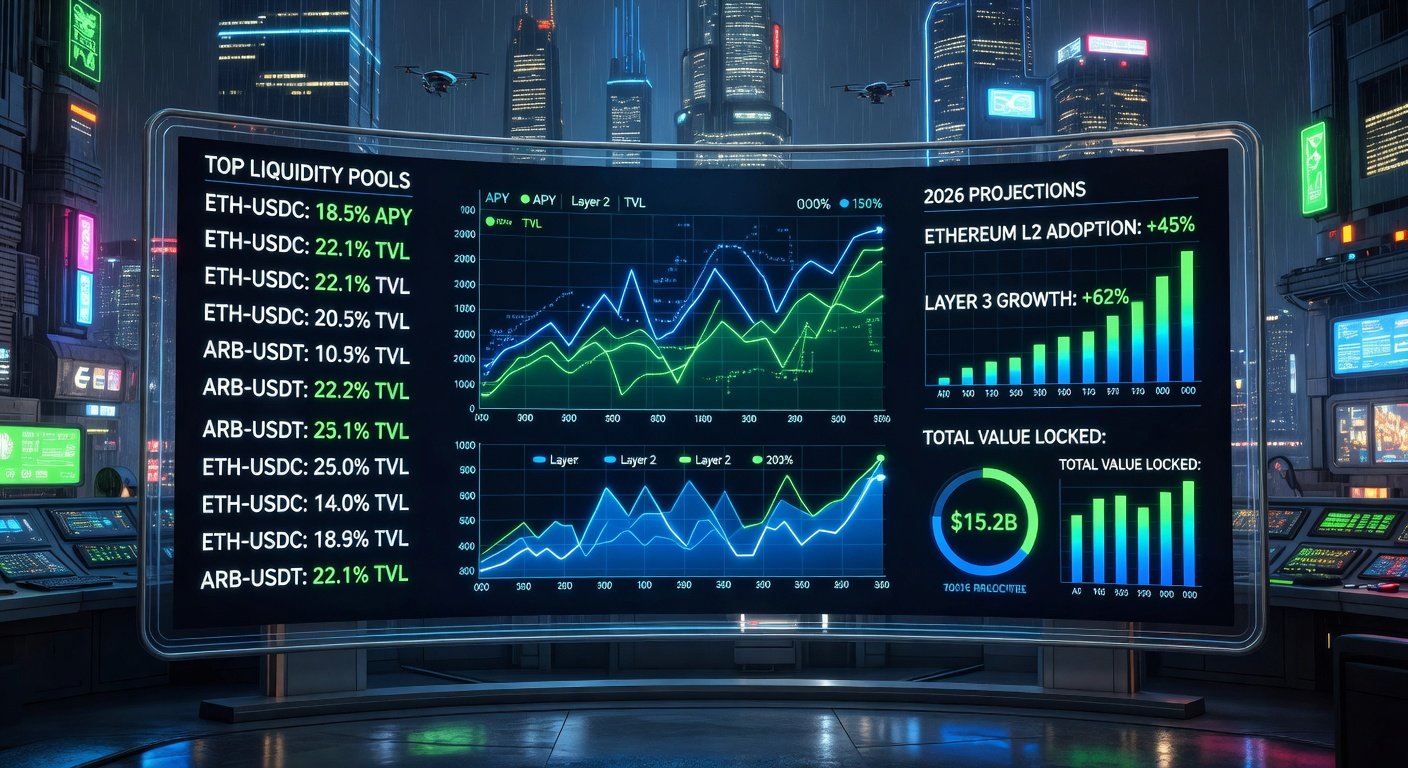
Liquidity pools are the heart of yield farming. In 2026, focus on concentrated liquidity models from Uniswap V4 and Curve's crvUSD stables. Current leaders include:
- ETH-USDC on Uniswap V3 (Arbitrum): APY ~25-40%, low IL risk.
- stETH-ETH on Curve: APY ~15-30%, boosted by Lido staking.
- BTC-wrapped pairs on Pendle: APY ~50%+ via yield tokenization.
Monitor APYs via DeFiLlama, which aggregates real-time data across 100+ protocols. For 2026 projections, factor in token emissions halving on platforms like Aave.
Risk Factors and Mitigation Strategies
Yield farming isn't risk-free. Key concerns include:
- Impermanent Loss (IL): Mitigate with single-sided staking or IL-neutral pools like Bancor V3.
- Smart Contract Risks: Audit histories via Etherscan; prioritize battle-tested protocols.
- Liquidation Cascades: In lending farms, maintain 200%+ collateral ratios.
- Regulatory Volatility: Favor decentralized, permissionless pools amid global scrutiny.
Use risk dashboards like RugDoc or DeFiSafety scores. Advanced farmers employ hedging via perpetuals on dYdX.
Comparing Top DeFi Protocols for 2026
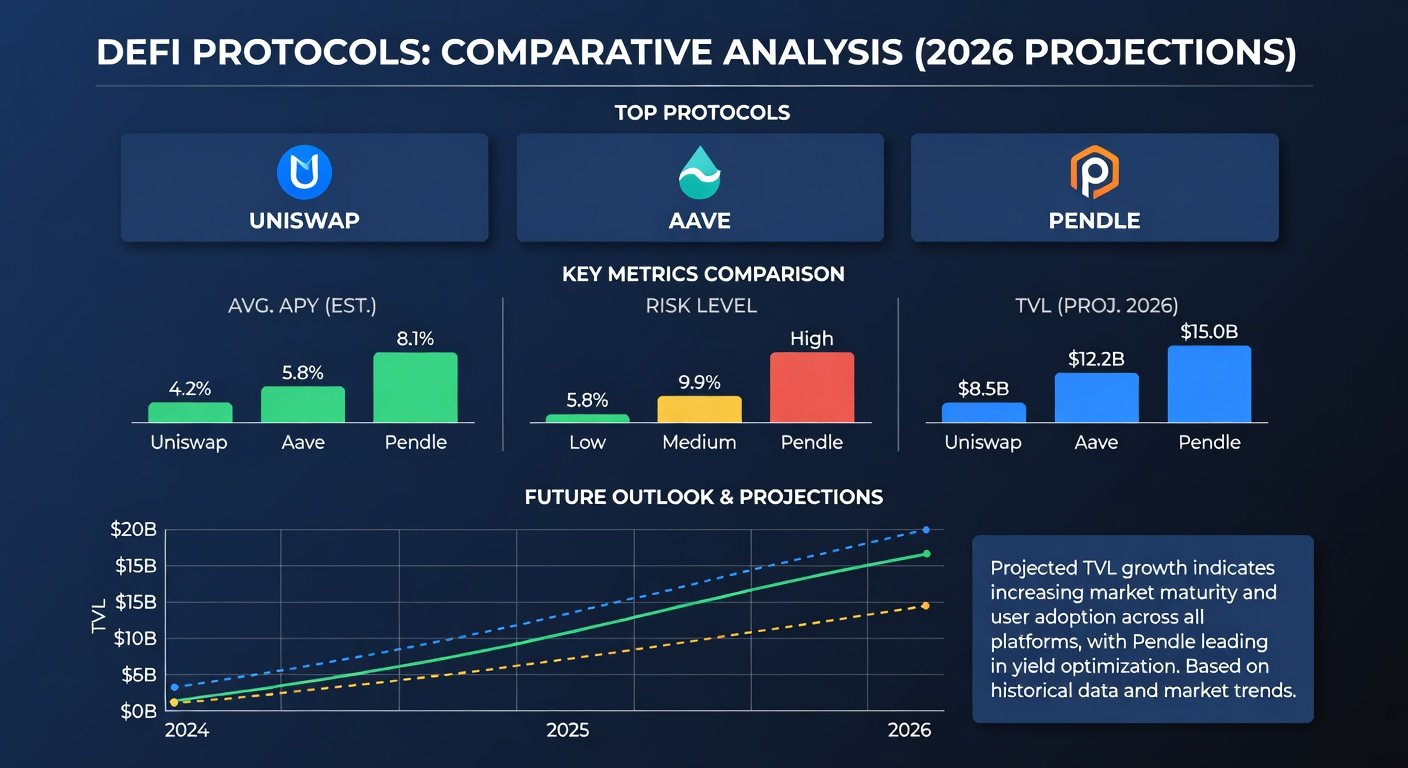
| Protocol | TVL (Proj. 2026) | Best Pools | APY Range | Risk Level |
|---|---|---|---|---|
| Uniswap | $100B+ | Concentrated stables | 20-60% | Low |
| Aave V4 | $50B | Variable rate lending | 10-40% | Medium |
| Pendle | $30B | Yield trading | 40-100% | High |
| Curve | $80B | Stable swaps | 15-35% | Low |
Uniswap leads for liquidity depth; Pendle excels in yield speculation. Check official docs at Uniswap.org for V4 updates.
Step-by-Step Setup Guide for Advanced Yield Farming
Here's how to set up a high-yield farm on Arbitrum using Uniswap V3 and auto-compounders.
- Wallet Setup: Use MetaMask or Rabby; bridge funds via official Arbitrum bridge.
- Select Pool: Visit Uniswap app, choose ETH-USDC 0.05% fee tier.
- Provide Liquidity: Set price range ±10% from current; approve tokens.
- Farm Boost: Stake LP tokens in protocol vaults (e.g., Aave or Yearn).
- Automate: Integrate Beefy Finance for auto-compounding; monitor via Zapper.fi.
- Rebalance: Weekly checks using Dune Analytics dashboards for APY drift.
For restaking: Deposit LSTs (liquid staking tokens) into EigenLayer, earning points and yields simultaneously.
Emerging Trends: Restaking and Beyond
Restaking, pioneered by EigenLayer, allows reusing staked ETH for securing AVSs (Actively Validated Services), pushing APYs to 30-60%. By 2026, expect Babylon for BTC restaking and Symbiotic for generalized collateral.
- Max Returns: Restake via KelpDAO for diversified exposure.
- Risks: Slashing events; cap exposure at 20% portfolio.
Other trends: Liquid restaking tokens (LRTs) like ether.fi and AI-optimized farms via Fetch.ai integrations.
Essential Tools for Real-Time Data and Analysis
Stay ahead with:
- DeFiLlama & Dune.com: Custom queries for pool metrics.
- Zapper/ Zerion: Portfolio tracking with yield breakdowns.
- Token Terminal: Protocol revenue analysis for sustainability.
Conclusion: Positioning for 2026 Success
Advanced DeFi yield farming in 2026 rewards the informed. By focusing on audited pools, real-time tools, and trends like restaking, you can achieve superior risk-adjusted returns. Start small, diversify across chains, and always DYOR. The future of passive income is here—farm wisely.


No comments yet. Be the first!