 CryptoChain Blog

Introduction to DePIN in 2026
Decentralized Physical Infrastructure Networks (DePIN) represent a transformative intersection of blockchain technology and real-world hardware systems. As cryptocurrency markets evolve, DePIN projects are gaining traction by enabling decentralized ownership and operation of physical infrastructure such as wireless networks, data storage, and energy grids. This 2026 market analysis explores key trends, top projects, token economics, and practical insights for investors seeking exposure to this emerging sector. The growth of DePIN stems from its ability to incentivize individuals and organizations to contribute hardware resources in exchange for crypto tokens. Unlike traditional centralized models, DePIN leverages token rewards to bootstrap networks rapidly, leading to more resilient and cost-effective infrastructure that scales with community participation rather than corporate budgets.
In the current landscape, DePIN is moving beyond experimental phases into mainstream adoption. Projects are demonstrating measurable impacts on connectivity in underserved regions and data sovereignty for enterprises. This article provides a comprehensive examination to help readers understand the mechanisms, opportunities, and challenges involved.
Understanding DePIN Fundamentals
DePIN projects combine blockchain protocols with Internet of Things (IoT) devices, sensors, and edge computing hardware. Participants deploy physical equipment that provides services like connectivity or compute power, earning tokens based on usage and contribution metrics. This model has accelerated adoption across industries by reducing reliance on single corporate entities. Core components include proof-of-physical-work mechanisms, where nodes verify real-world contributions through cryptographic proofs. In 2026, advancements in hardware integration are making these networks more efficient and scalable, with improvements in energy efficiency and interoperability standards allowing seamless connections between different DePIN ecosystems.
At its core, DePIN operates on the principle of tokenized incentives. Hardware owners stake tokens or lock devices into the network, and smart contracts automatically distribute rewards proportional to the value delivered. This creates a self-reinforcing loop where increased participation improves service quality, attracting more users and further contributors.
Top DePIN Projects and Market Insights
Several leading DePIN initiatives dominate the landscape. Projects focusing on decentralized wireless networks and distributed storage continue to lead in user adoption and token utility. Market insights reveal increasing institutional interest, driven by proven real-world utility beyond speculative trading. Performance examples from established networks show consistent growth in active devices and transaction volumes, highlighting the shift toward practical applications. For instance, wireless-focused networks have expanded coverage in urban and rural areas alike, while storage projects offer competitive alternatives for cloud computing needs.
Market analysis indicates that DePIN protocols are capturing attention from both retail and professional investors due to their hybrid nature of digital assets backed by tangible infrastructure.
Token Economics and Adoption Metrics
Token economics in DePIN emphasize utility over mere speculation. Tokens typically serve multiple roles: rewarding hardware providers, facilitating service payments, and governing network upgrades. Adoption metrics, including device counts and network coverage, indicate strong momentum heading into 2026. These metrics often track daily active nodes, total value locked in hardware commitments, and revenue generated from end-user services. Comparisons to centralized alternatives reveal DePIN's advantages in cost reduction and geographic reach, though challenges like initial hardware investment persist. Token models frequently incorporate deflationary mechanisms or revenue-sharing features to align long-term holder incentives with network growth.
Real-World Use Cases and Hardware Integration Trends
DePIN excels in applications such as decentralized 5G coverage, peer-to-peer data storage, and community-driven energy distribution. Emerging crypto trends in hardware integration focus on modular devices that simplify participation for non-technical users. These use cases demonstrate how DePIN bridges digital assets with tangible infrastructure, creating new revenue streams for participants worldwide. Hardware integration trends include plug-and-play sensors that auto-configure via mobile apps and AI-optimized edge devices that dynamically allocate resources based on demand signals from the blockchain.
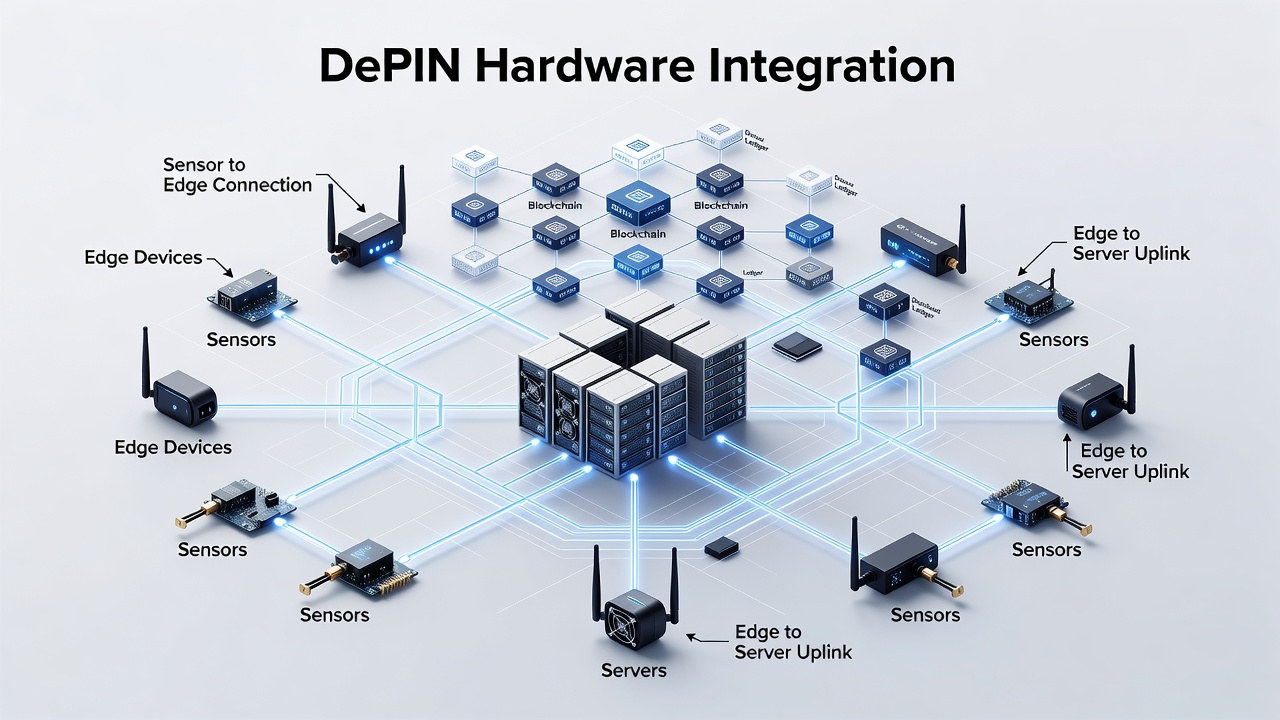
Practical examples range from individuals setting up home-based wireless hotspots to businesses deploying sensor arrays for environmental monitoring, all compensated through protocol-native tokens.
Practical Investor Steps and Performance Examples
Investors interested in DePIN should follow these steps: research project roadmaps, evaluate token utility, assess hardware requirements, monitor on-chain metrics, and diversify across multiple networks. Performance examples from prior cycles illustrate how early adopters benefited from both token appreciation and service revenues. A structured approach involves starting with education on protocol whitepapers, followed by small-scale deployments to understand operational realities before scaling.
- Start with small hardware deployments to test viability and learn maintenance routines.
- Track metrics like active nodes, revenue per device, and network utilization rates on public dashboards.
- Stay updated via official project documentation, community channels, and independent analytics platforms.
- Consider hardware compatibility with future upgrades to avoid obsolescence.
- Evaluate tax implications of token rewards in your jurisdiction for accurate reporting.
Real-world performance examples show networks achieving broad coverage through grassroots contributions, often outperforming traditional rollouts in speed and cost efficiency.
Comparisons to Centralized Alternatives
When compared to centralized infrastructure providers, DePIN offers greater resilience against single points of failure and potentially lower long-term costs due to distributed ownership. However, centralized options may provide more consistent service-level agreements and easier onboarding for enterprise clients. DePIN shines in scenarios requiring rapid geographic expansion or censorship resistance.
Emerging Crypto Trends in Hardware Integration
Trends point toward greater convergence with artificial intelligence for predictive maintenance of devices and zero-knowledge proofs for enhanced privacy in data-handling networks. These developments are expected to broaden DePIN's appeal across additional verticals such as autonomous transportation support and smart city infrastructure.
Risk Considerations
While promising, DePIN carries risks including hardware failure, regulatory uncertainty, token volatility, and competition from centralized providers. Thorough due diligence and risk management strategies are essential for sustainable participation. Additional considerations include supply chain disruptions for specialized hardware components, potential smart contract vulnerabilities, and varying levels of community governance effectiveness across projects. Investors should also monitor evolving global regulations around cryptocurrency and physical infrastructure operations.
FAQ on DePIN Participation and Profitability
How do I get started with DePIN?
Begin by selecting a project with clear hardware guidelines, purchasing compatible equipment, and connecting it to the network via the project's app or dashboard. Many protocols offer detailed onboarding tutorials and community support forums.
Is DePIN profitable in 2026?
Profitability depends on factors like network demand, token value, and operational costs. Many participants report positive returns through combined token rewards and service fees, but results vary based on location, hardware quality, and market conditions.
What are common risks?
Key risks involve hardware maintenance, market fluctuations, and potential protocol changes. Diversification across projects and ongoing education help mitigate these.
Can I participate without owning hardware?
Some DePIN projects allow indirect participation through token staking or liquidity provision, though direct hardware contribution typically yields higher rewards.
Conclusion
DePIN continues to reshape cryptocurrency markets by delivering real infrastructure value. With strategic participation and awareness of trends, investors can position themselves effectively in this dynamic sector. For further reading, explore resources from CoinDesk and The Block.

No comments yet. Be the first!