 CryptoChain Blog
Introduction to Social Sentiment Analysis in Crypto
In 2026, cryptocurrency markets continue to be heavily influenced by public opinion shared across social platforms. Social sentiment analysis has emerged as a critical tool for traders and analysts seeking to anticipate price movements before they appear in traditional charts. This guide provides a beginner-to-intermediate roadmap for leveraging social data to gain market insights. Understanding the collective mood on platforms where crypto communities gather allows investors to identify emerging narratives, detect hype cycles, and spot potential reversals. When combined with other data sources, sentiment metrics can significantly enhance decision-making and provide an edge in volatile markets.
By 2026, the volume of crypto-related discussions has grown exponentially, making manual monitoring impossible. Automated sentiment analysis bridges this gap by processing millions of posts daily to extract meaningful signals. This approach transforms unstructured social chatter into quantifiable data that can be tracked over time and compared against price action.
Key Platforms Driving Crypto Sentiment
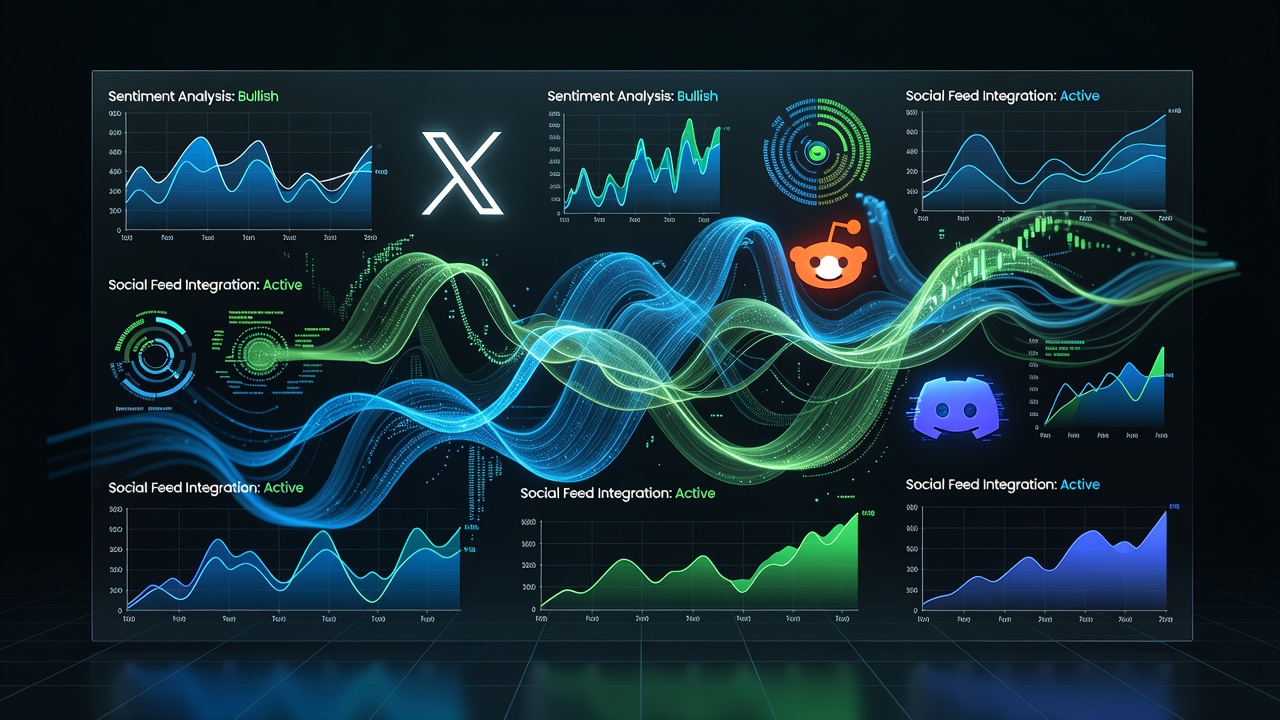
Three primary platforms dominate crypto-related discussions: X (formerly Twitter), Reddit, and Discord. Each offers unique advantages and requires specific monitoring strategies.
X (Formerly Twitter)
X provides real-time, high-velocity conversations with influential accounts often shaping short-term price action. Crypto traders monitor hashtags like #Bitcoin and #Ethereum alongside mentions of specific tokens. Influencers with large followings can trigger rapid sentiment shifts within minutes. In practice, analysts track engagement metrics such as likes, retweets, and reply sentiment to gauge the strength of a narrative.
Reddit hosts deeper, community-driven threads in subreddits like r/cryptocurrency and r/Bitcoin. Discussions here tend to be more analytical and longer-form, offering insights into fundamental concerns or bullish theses. Subreddit growth rates and upvote velocity serve as additional sentiment indicators beyond simple keyword counts.
Discord
Discord serves as a hub for project-specific communities where developers and early adopters share updates. Real-time voice channels and announcement rooms allow sentiment to evolve quickly during events like token launches or protocol upgrades. Monitoring requires joining multiple servers and tracking message volume alongside tone.
Tools for Scraping and Quantifying Sentiment
Effective analysis begins with reliable data collection. Open-source libraries such as Tweepy for X data and PRAW for Reddit allow developers to pull public posts. Natural language processing frameworks like VADER and Hugging Face Transformers convert text into sentiment scores ranging from negative to positive. Commercial platforms offer pre-built dashboards that aggregate mentions across multiple sources while applying machine learning models trained on crypto-specific vocabulary. These tools quantify volume spikes, emotional tone, and influencer reach to produce actionable scores. Additional options include custom scripts using the Discord API and sentiment libraries like TextBlob for quick prototyping.
Step-by-Step Correlation with Price Movements
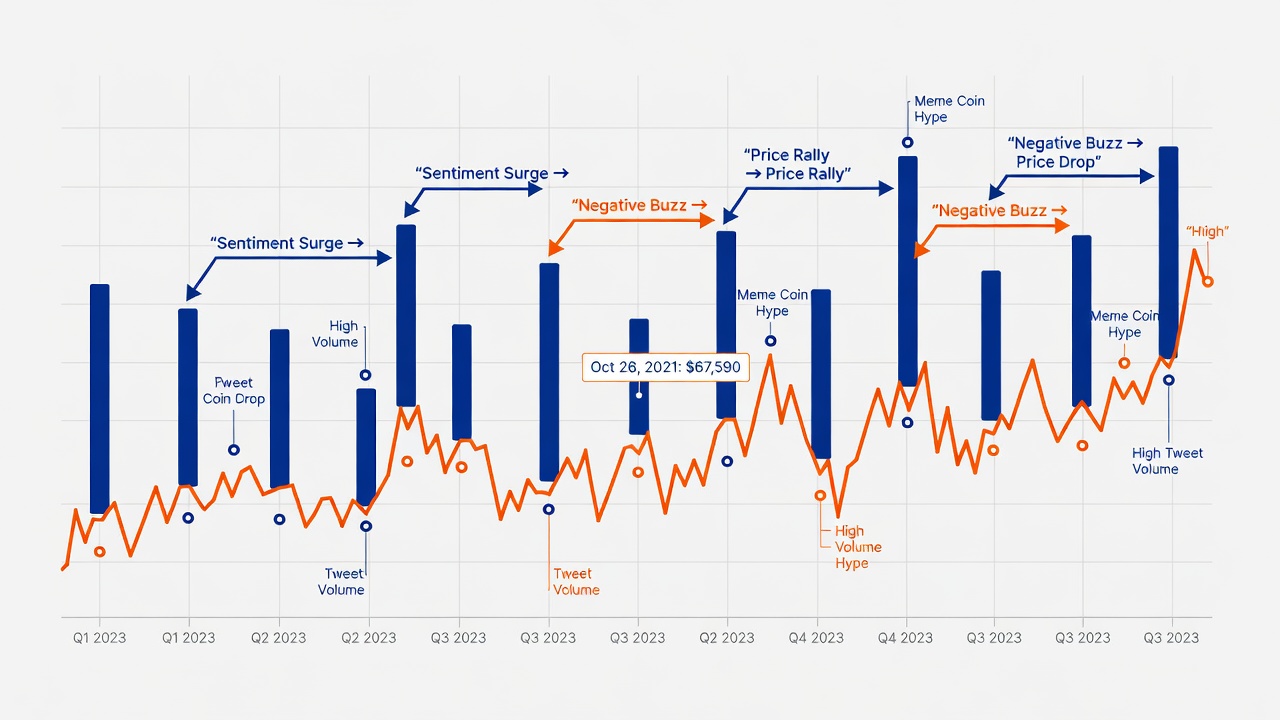
Correlating social buzz with price requires a structured process. First, establish baseline sentiment levels over a 30-day window using historical data pulls. Next, monitor for statistically significant deviations above or below this baseline. When sentiment surges coincide with rising trading volume, the likelihood of a price move increases. Traders typically apply time-lagged analysis, observing how sentiment changes 4–24 hours before corresponding price shifts. Backtesting these correlations against historical data helps refine signal thresholds and reduce false positives. Additional steps include normalizing sentiment scores across platforms, filtering for bot activity, and combining results with volume-weighted metrics. Practical implementation often involves setting up automated alerts that trigger when sentiment crosses predefined thresholds, allowing rapid response to emerging trends.
2026 Case Studies
One notable example from early 2026 involved a mid-cap altcoin that experienced a 180% price increase within 72 hours after coordinated community campaigns on X and Reddit generated sustained positive sentiment. Analysts who tracked rising mention velocity and influencer endorsements captured the move early. In another instance, a layer-2 scaling solution saw sentiment turn sharply negative on Discord following delayed roadmap updates, leading to a 40% price drop over five days despite stable on-chain activity. A third case highlighted a meme coin whose community-driven hype on X produced repeated short-term pumps, each preceded by measurable sentiment spikes 12 hours in advance. These examples demonstrate how sentiment often precedes on-chain confirmation and price discovery.
Comparing Social Sentiment to On-Chain Metrics
Social sentiment offers leading signals, while on-chain metrics such as active addresses, transaction volume, and exchange flows provide lagging confirmation. Combining both data types creates a more robust framework. For instance, rising social positivity paired with increasing wallet activity and decreasing exchange reserves strengthens a bullish thesis. Resources like CoinMarketCap and CoinDesk regularly publish on-chain dashboards that can be cross-referenced with sentiment scores. Analysts also benefit from comparing sentiment against derivatives data such as funding rates and open interest to identify potential divergences. This multi-layered approach reduces reliance on any single indicator and improves overall predictive reliability.
Practical Tips for Avoiding Manipulation
- Filter out bot activity by analyzing account age, posting frequency, and engagement patterns.
- Focus on verified or high-follower accounts rather than anonymous hype accounts.
- Cross-validate signals across at least two platforms before acting on any trend.
- Set strict position-sizing rules to limit exposure to potential coordinated campaigns.
- Regularly audit your data sources for changes in API access or platform policies.
- Monitor for sudden coordinated posting from clusters of new accounts created within the same timeframe.
- Use weighted sentiment scores that prioritize quality discussions over sheer volume.
Implementing Your Own Analysis Pipeline
Building a personal sentiment pipeline starts with selecting one or two platforms and setting up API access. Next, schedule regular data pulls using scripts that store results in a database. Apply sentiment models daily and visualize trends through simple dashboards built with tools like Python’s Matplotlib or Tableau Public. Test correlations weekly by exporting data and running statistical analysis. Over time, refine thresholds based on observed accuracy and adjust for market regime changes. This hands-on approach helps develop intuition while maintaining control over data quality.
FAQ
How accurate is social sentiment analysis for crypto?
Accuracy varies by methodology and market conditions. When properly calibrated with multiple data sources, sentiment models can achieve directional accuracy above 65% in backtests, though they perform best as one component of a broader strategy rather than standalone signals.
What are best practices for beginners?
Start with free public APIs and open-source sentiment libraries. Focus on one asset and one platform initially. Document every signal and outcome to build intuition over time and avoid overtrading on weak signals.
Can sentiment analysis predict long-term trends?
Sentiment excels at short- to medium-term moves but should be combined with fundamental and on-chain analysis for longer horizons. Persistent positive sentiment often aligns with sustained adoption phases.
How do I handle platform API limitations?
Respect rate limits, use official endpoints where possible, and consider aggregating data from multiple free tiers. Many analysts rotate between tools to maintain coverage without violating terms.
Is paid sentiment software worth the cost?
Paid tools save time and offer cleaner interfaces, but many traders achieve strong results with open-source alternatives after investing time in customization and validation.
Conclusion
Social sentiment analysis provides valuable context for navigating crypto markets in 2026. By systematically collecting data from major platforms, quantifying tone, and correlating results with price and on-chain metrics, traders can develop more informed perspectives while remaining vigilant against manipulation attempts. Consistent practice and iterative refinement turn sentiment analysis into a reliable component of any crypto research workflow.


No comments yet. Be the first!