 CryptoChain Blog

How to Perform Cryptocurrency Analysis: 2026 Market Insights Guide
Cryptocurrency markets in 2026 continue to evolve rapidly, making independent analysis essential for beginners and intermediate investors who want to gain actionable insights without depending on paid reports or external newsletters. This comprehensive guide walks you through proven methods for evaluating digital assets, with a focus on whitepaper review, social sentiment tracking, and basic technical charting. By mastering these skills, you can better understand trends in major cryptocurrencies like Bitcoin and Ethereum while developing a repeatable process for any project.
Understanding the Foundations of Crypto Analysis
Effective cryptocurrency analysis blends three core approaches: fundamental evaluation of project documents and economics, sentiment monitoring across online communities, and technical examination of price behavior. Fundamental analysis helps determine whether a project solves a real problem with sustainable token mechanics. Sentiment analysis reveals how traders and developers feel about upcoming developments, often acting as an early warning system for shifts in momentum. Technical analysis provides timing signals based on historical patterns and current market structure.
Before diving in, define your investment horizon and risk tolerance. Long-term holders prioritize whitepaper fundamentals and token utility, while active traders focus more on sentiment spikes and chart patterns. Bitcoin serves as the primary market bellwether due to its liquidity and institutional adoption, whereas Ethereum offers insight into decentralized applications and network upgrades that influence the broader ecosystem.
Evaluating Whitepapers for Project Viability
Whitepapers remain the primary source for understanding a cryptocurrency's technical foundation and economic model. Always download the document from the official project website rather than secondary sources to avoid altered versions.
Follow this structured evaluation process:
- Identify the core problem the project claims to solve and assess whether the proposed technology offers a genuine improvement over existing solutions.
- Scrutinize tokenomics details, including maximum supply, allocation percentages to founders or investors, vesting schedules, and real-world utility of the token within the network.
- Review the development team's credentials, previous projects, and any advisory board members listed in the document.
- Examine the roadmap for specific milestones, technical specifications, and realistic timelines rather than vague promises.
- Look for sections on security audits, governance mechanisms, and potential risks or limitations acknowledged by the authors.
Apply this to Bitcoin by studying its foundational document available at Bitcoin.org, which emphasizes peer-to-peer electronic cash without intermediaries. For Ethereum, consult resources at Ethereum.org to analyze how its smart contract platform and recent protocol improvements support decentralized finance applications. Cross-reference claims in the whitepaper with on-chain data where possible to verify progress against stated goals.
Analyzing Market Sentiment from Social Data
Social sentiment provides real-time context that whitepapers cannot capture. In 2026, platforms such as X, Reddit communities, Telegram channels, and Discord servers generate the bulk of public discussion around cryptocurrencies.
Implement these practical steps for reliable sentiment analysis:
- Track keyword volume and engagement trends using free tools like Google Trends or built-in search functions on each platform.
- Distinguish between organic community discussion and coordinated promotional activity by examining account age, follower authenticity, and consistency of messaging.
- Monitor developer-focused forums and GitHub activity alongside retail chatter to separate technical progress from hype.
- Quantify sentiment polarity by noting the ratio of positive versus negative comments during key events such as protocol upgrades or regulatory announcements.
- Set up alerts for sudden volume increases that may precede or follow major price movements in assets like Bitcoin or Ethereum.
Consider a scenario where Ethereum community discussions center on scaling solutions. Sustained positive developer engagement on technical channels often precedes broader market interest, whereas retail-heavy hype on short-form platforms may signal short-term volatility rather than lasting adoption.
Using Basic Charting Tools for Price Predictions
Technical analysis helps translate market psychology into actionable observations. Free platforms such as TradingView provide accessible charting with essential indicators suitable for most investors.
Build your charting workflow with these steps:
- Choose appropriate timeframes—weekly charts for macro trends and daily charts for entry timing—while always referencing longer-term context.
- Apply moving averages to identify trend direction and potential reversal zones where shorter-term averages cross longer-term ones.
- Mark key support and resistance levels derived from previous swing highs and lows, then observe how price reacts when these levels are tested.
- Incorporate volume analysis to confirm whether breakouts occur with meaningful participation or on low conviction.
- Layer simple oscillators such as RSI to detect overbought or oversold conditions that may align with sentiment shifts.
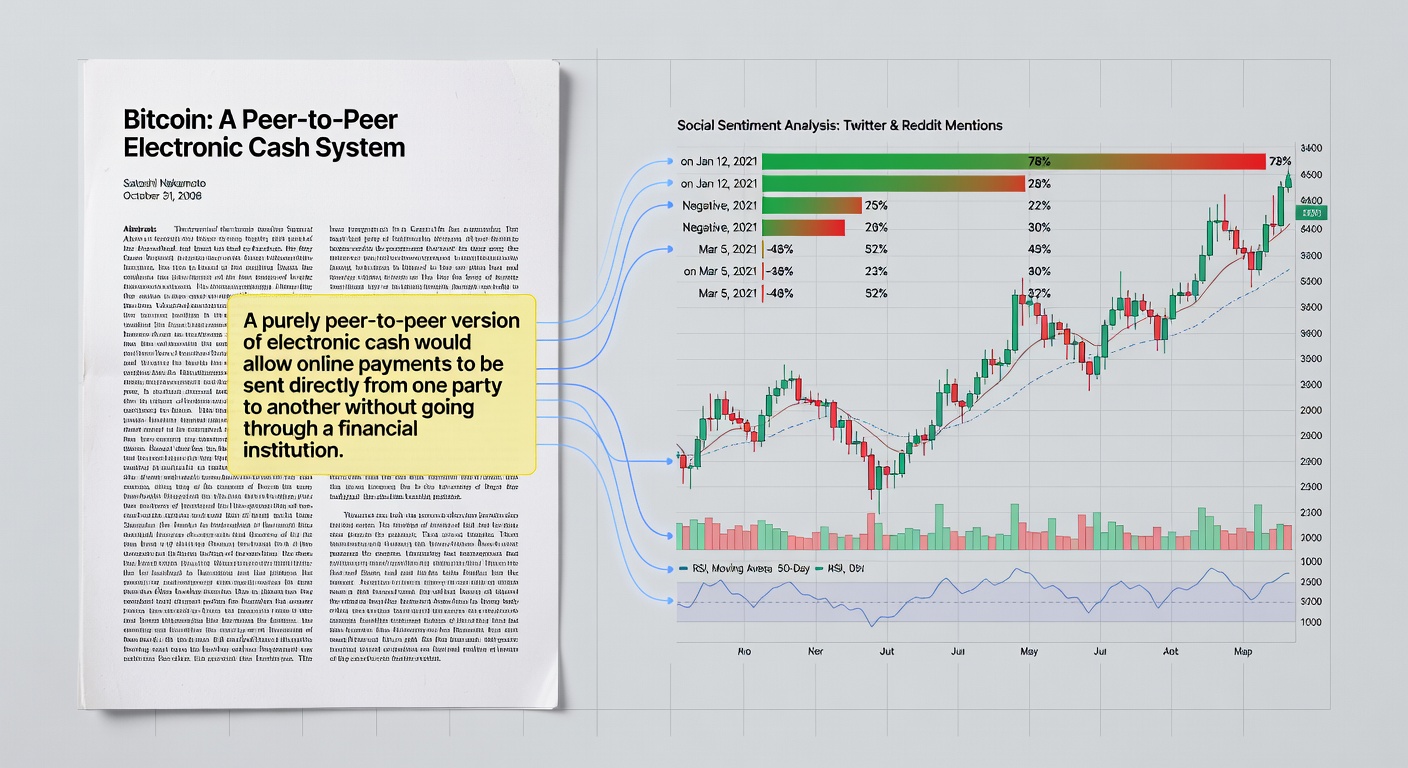
Real-world application appears when Bitcoin tests established support zones during periods of elevated social volume. Ethereum charts may reveal accumulation patterns ahead of network upgrades, offering intermediate traders clearer signals when combined with whitepaper milestones.
Comparing Analysis Methods and Building a Combined Approach
Each analysis method carries distinct strengths and limitations. Fundamental analysis excels at long-term value assessment but reacts slowly to short-term catalysts. Sentiment analysis captures crowd psychology effectively yet remains vulnerable to manipulation and noise. Technical analysis delivers precise timing but can produce misleading signals in low-liquidity environments.
The most robust strategy integrates all three. Begin with whitepaper fundamentals to filter viable projects, layer sentiment data to gauge timing windows, and finalize decisions with chart confirmation. This layered process reduces the chance of overlooking critical weaknesses while avoiding over-reliance on any single data stream.
Practical Risk Management and Common Pitfalls
Even thorough analysis cannot eliminate market risk. Maintain position sizing rules that limit exposure to any single asset. Keep a decision journal documenting the rationale behind each trade or investment, including which analysis methods supported the choice. Avoid common mistakes such as ignoring token unlock schedules, chasing social media narratives without verification, or abandoning a structured process during periods of high volatility. Regularly revisit earlier analyses to learn from both successful and unsuccessful outcomes.
FAQ
How long does it take to become proficient at cryptocurrency analysis?
Most dedicated beginners develop functional skills within four to eight weeks by consistently applying these methods to live market data and reviewing past cycles.
Can these techniques apply to smaller altcoins as well as Bitcoin and Ethereum?
Yes, though smaller assets require extra caution due to thinner liquidity and higher susceptibility to sentiment-driven swings; always increase scrutiny of whitepaper claims in such cases.
Do I need expensive software or data subscriptions?
Free public resources and charting platforms provide everything necessary for high-quality analysis; paid tools may offer convenience but are not prerequisites for success.
How often should I update my analysis?
Review fundamentals quarterly or after major project announcements, while monitoring sentiment and charts on a daily or weekly basis depending on your trading style.
Conclusion
Developing independent cryptocurrency analysis skills empowers investors to navigate 2026 markets with greater confidence and clarity. By systematically evaluating whitepapers, tracking social sentiment, and applying basic charting techniques to assets like Bitcoin and Ethereum, you create a repeatable framework that supports informed decisions. Consistent practice and disciplined risk management turn these methods into a durable advantage over time.


No comments yet. Be the first!