 CryptoChain Blog
Introduction to DeFi Arbitrage in 2026
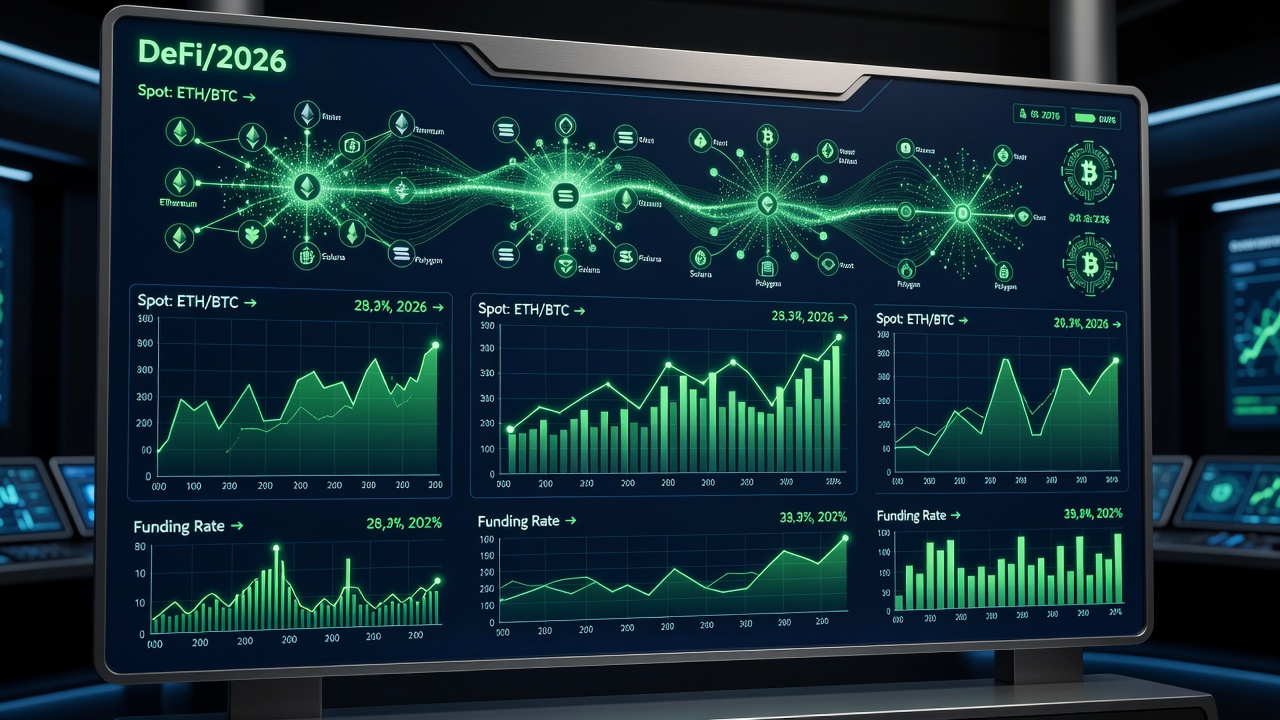
DeFi arbitrage continues to attract traders seeking to profit from price discrepancies across decentralized protocols, exchanges, and blockchain networks. As the ecosystem matures in 2026, opportunities arise from fragmented liquidity, varying oracle feeds, and differing funding mechanisms on perpetual platforms. This comprehensive guide explores the primary arbitrage strategies—spot, triangular, statistical, and funding-rate—while providing actionable insights into tools, execution, risk controls, and optimization techniques. Readers will gain a thorough understanding of how to identify, evaluate, and execute these plays safely across multiple chains.
The decentralized nature of DeFi means prices can diverge momentarily due to trading volume imbalances, bridge delays, or smart contract interactions. Unlike centralized markets, on-chain arbitrage demands attention to transaction finality, gas dynamics, and potential front-running by bots. Success hinges on combining real-time data analysis with automated execution and disciplined capital allocation.
Core Types of DeFi Arbitrage Explained
Spot Arbitrage Across Protocols and Chains
Spot arbitrage focuses on buying an asset at a lower price on one venue and selling it higher on another without using derivatives. In 2026, popular opportunities often involve stablecoins or blue-chip tokens moving between Uniswap V3 pools, Curve stableswap implementations, and cross-chain bridges like those connecting Ethereum to Arbitrum or Base. Traders monitor price feeds from multiple sources and execute atomic or near-atomic swaps when discrepancies exceed total costs. A practical example involves detecting a 0.8% premium for ETH on a smaller DEX versus a major aggregator, then routing the trade through an optimized path that accounts for liquidity depth.
Triangular Arbitrage on Single DEXes
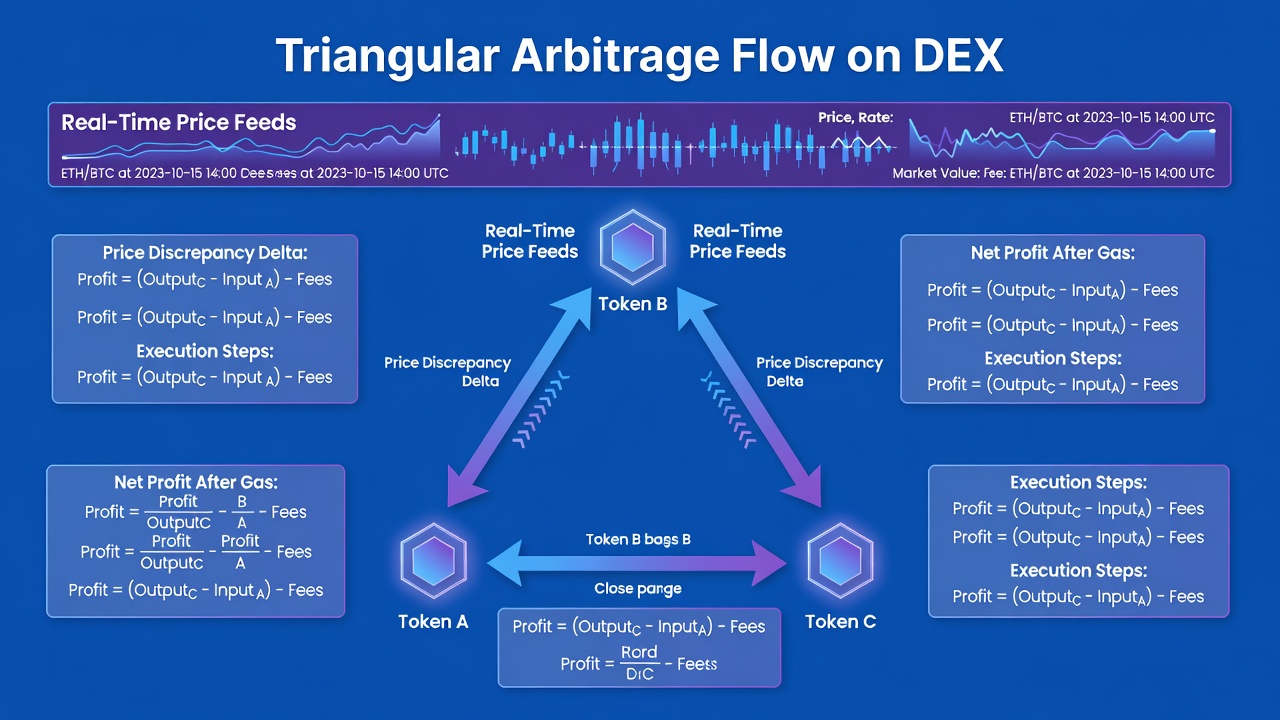
Triangular arbitrage exploits inconsistencies in three-asset pricing cycles on the same decentralized exchange. Consider a loop starting with ETH swapped to USDC, then USDC to WBTC, and finally WBTC back to ETH. The key is calculating the product of the three exchange rates and comparing it against the starting amount after fees. When pool imbalances occur due to large trades or oracle lags, small profits accumulate. This method avoids bridge risks but requires precise slippage modeling and often benefits from custom scripts that scan multiple pools simultaneously.
Statistical Arbitrage Using On-Chain Correlations
Statistical arbitrage relies on mean-reversion between correlated assets such as ETH and liquid staking derivatives like stETH or different wrapped Bitcoin variants. Traders build models based on historical on-chain data to detect when spreads widen beyond two standard deviations. Positions are opened with the expectation that the relationship will normalize. In 2026, advanced dashboards integrate machine learning signals with real-time blockchain queries to surface these setups faster than manual monitoring allows.
Funding-Rate Arbitrage in Perpetual Markets
Funding-rate arbitrage pairs spot holdings with perpetual futures positions to capture periodic payments. When funding rates on platforms become excessively positive, traders short the perp and hold the underlying asset, collecting the rate differential while remaining market-neutral. Conversely, negative rates prompt the opposite stance. This strategy works particularly well during high-volatility periods and requires careful tracking of settlement intervals and margin requirements across protocols.
Leading Tools and Automation Solutions for 2026
Effective arbitrage depends on reliable data aggregation and execution bots. Platforms such as DefiLlama provide yield and volume metrics, while custom bots built on Ethereum.org infrastructure handle multi-leg transactions. Aggregators and automation networks like Gelato enable scheduled or event-driven trades. Developers often combine Web3 libraries with off-chain price oracles to create low-latency monitoring systems that alert users or auto-execute when thresholds are met. Testing these setups extensively on testnets remains essential before deploying real capital.
Gas Optimization and Cross-Chain Efficiency
Transaction costs can quickly erode narrow margins, making gas optimization critical. Key techniques include executing during off-peak hours, leveraging Layer-2 networks such as Arbitrum and Optimism for lower fees, batching multiple operations into single transactions, and utilizing gas-efficient contract interactions. Some traders employ meta-transactions or sponsored gas models offered by certain protocols. Monitoring network congestion dashboards helps identify optimal windows, while choosing bridges with fast finality reduces exposure time between legs of a trade.
Comprehensive Risk Management Framework
Robust risk controls separate consistent performers from those who suffer repeated losses. Begin by modeling every cost component—gas, slippage, bridge fees, and potential oracle deviations—before committing capital. Implement strict position sizing limits and maintain diversified exposure across several chains and protocols. Use hardware wallets or multi-signature setups for larger holdings and regularly review smart contract audit reports. Additional safeguards involve setting maximum slippage tolerances, employing circuit breakers in custom bots, and maintaining detailed logs for compliance and performance review. Understanding impermanent loss and MEV exposure further strengthens overall strategy resilience.
Detailed Step-by-Step Execution Examples
For a spot arbitrage example, monitor ETH prices across two DEXes. When a 1.2% gap appears, calculate net profit after estimated gas, then route through an aggregator for best execution. Confirm liquidity depth in both pools and execute the buy and sell legs in rapid succession. In a triangular scenario on a single DEX, input the three-asset path into a simulator, verify the output exceeds costs by a comfortable margin, and trigger the cycle only after all legs clear simulation. Funding-rate setups require opening a spot position and an opposing perp trade simultaneously, then monitoring the funding accrual over multiple periods while adjusting for any basis risk.
Platform Comparison and Decision Factors
| Platform | Primary Arbitrage Type | Supported Chains | Key Advantage | Consideration |
|---|---|---|---|---|
| Uniswap | Spot & Triangular | Ethereum, Arbitrum, Base | Deep liquidity pools | Higher gas on L1 |
| GMX | Funding Rate | Arbitrum, Avalanche | Transparent funding mechanics | Perp-specific risks |
| Curve | Stablecoin Spot | Multiple L2s | Minimal slippage on stables | Limited token pairs |
| dYdX | Funding Rate | Ethereum, Cosmos | High leverage options | Complex margin rules |
Common Pitfalls and How to Avoid Them
Overlooking MEV protection exposes trades to sandwich attacks. Underestimating bridge latency can turn profitable discrepancies into losses. Ignoring cumulative fees across multiple hops often leads to break-even or negative results. Many beginners also neglect tax implications and fail to maintain adequate record-keeping. Mitigation involves using private RPC endpoints, simulating full trade paths in advance, and building checklists that cover liquidity verification, cost modeling, and post-trade reconciliation.
Regulatory and Compliance Considerations
DeFi participants must stay informed about evolving regulations in their jurisdictions. Reporting requirements for taxable events, know-your-customer rules on certain bridges, and potential restrictions on automated trading can all impact strategy viability. Consulting legal professionals and using compliant tracking tools helps maintain adherence while continuing to pursue opportunities.
Frequently Asked Questions
Is DeFi arbitrage still viable in 2026?
Yes, but margins have tightened, making automation and cost control more important than ever.
How does slippage impact triangular trades?
Slippage compounds across three legs and can eliminate profits on illiquid pools; always model worst-case scenarios.
What starting capital is recommended?
Smaller amounts work on Layer-2 networks, yet sufficient size is needed to overcome fixed costs.
Are there risks from smart contract exploits?
Yes, always verify audits and limit exposure per protocol.
How do I handle regulatory reporting?
Maintain detailed on-chain transaction records and consult tax advisors familiar with crypto.
Conclusion and Actionable Checklist
DeFi arbitrage in 2026 rewards preparation, technical proficiency, and disciplined execution. Start by mastering data monitoring tools, then progress to automated bots on testnets. Apply the following checklist to every opportunity: confirm price discrepancy with multiple sources, calculate all-in costs, simulate the complete trade path, verify liquidity and slippage tolerance, execute with appropriate protections, monitor positions in real time, and document results for review. Staying updated through resources like Uniswap.org and Chain.link ensures strategies remain effective as protocols evolve.


No comments yet. Be the first!