 CryptoChain Blog

Introduction to Multi-Sig Wallets in DeFi
Multi-signature wallets have become essential infrastructure for teams and decentralized autonomous organizations managing shared treasury funds in 2026. Unlike single-key wallets, these setups require multiple approvals before executing transactions, significantly reducing the risk of unauthorized access or single points of failure. This guide focuses on practical configurations tailored for DeFi environments, emphasizing integration with protocols and recovery strategies. As DeFi ecosystems mature, the need for robust shared custody solutions grows, especially when treasuries hold substantial assets across multiple chains. Multi-sig wallets provide an additional security layer that complements existing strategies such as hardware wallet usage and regular security audits.
Key Protocols: Safe and Leading Alternatives
The dominant solution remains Safe, formerly Gnosis Safe, which supports Ethereum and multiple EVM-compatible chains. Alternatives include Fireblocks for institutional users and multi-sig options on Solana such as Squads. Each offers different security models, with Safe providing modular smart contract architecture that allows custom modules for DeFi approvals. Safe stands out because of its open-source codebase and widespread adoption by major DAOs. Other options like Gnosis Safe on non-EVM chains or custom implementations on Cosmos-based networks provide flexibility for teams operating in heterogeneous blockchain environments. When evaluating protocols, consider factors such as audit history, community support, and ease of integration with popular DeFi applications.
Step-by-Step Setup for Teams and DAOs
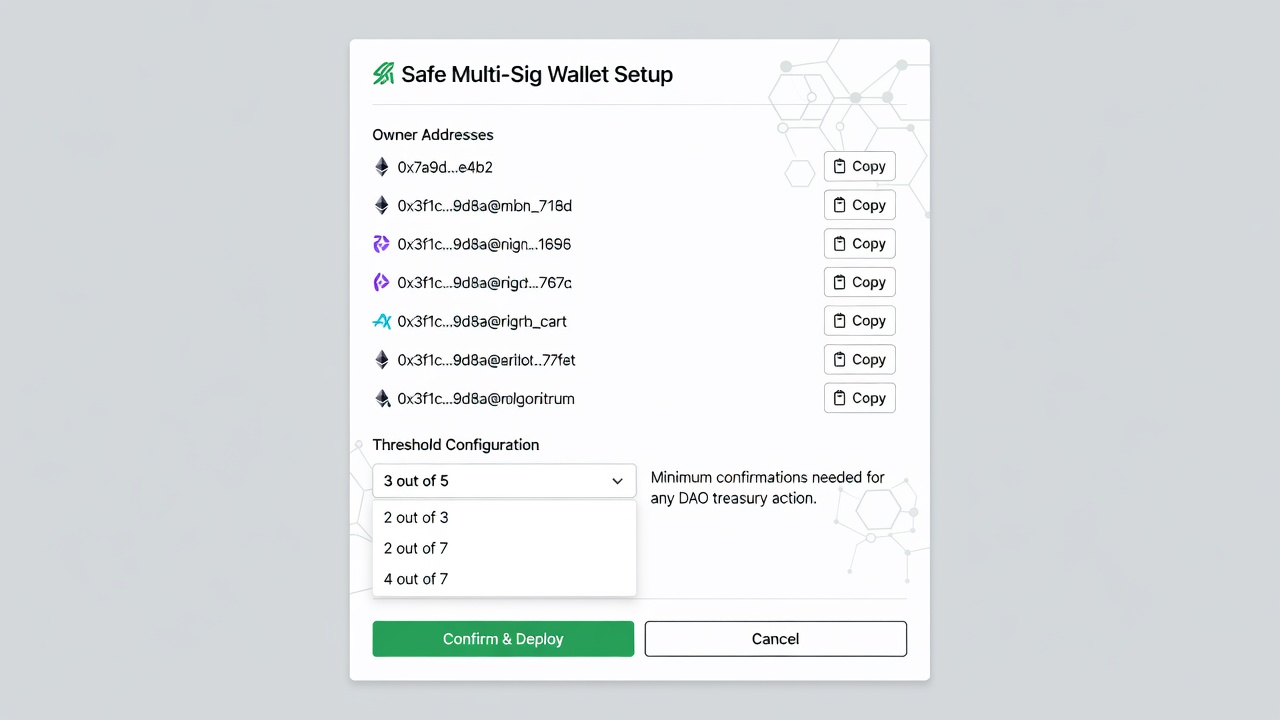
Begin by deploying a new Safe on your preferred chain through the official interface. Add owners by entering their Ethereum addresses, then set a threshold such as 3-of-5 for balanced security. Test the configuration on a testnet before funding the main wallet. For DAO integration, connect the Safe to governance platforms like Snapshot for proposal-based approvals. Detailed steps include verifying each owner address through multiple communication channels, enabling two-factor authentication on any connected accounts, and documenting the entire setup process in a shared internal wiki. After deployment, perform a small test transaction to confirm all signers can participate successfully. This methodical approach prevents costly errors once real funds are involved.
Threshold Recommendations
Teams of 3-5 members typically use 2-of-3 or 3-of-5 thresholds to avoid deadlock while maintaining security. Larger DAOs often adopt 5-of-9 or higher for treasury operations exceeding certain value limits. Always document the rationale and maintain an off-chain backup of owner details. For example, a five-person core team might choose a 3-of-5 setup to ensure decisions require majority consensus without needing unanimous agreement. In contrast, a 20-member DAO council could implement a 7-of-13 threshold for high-value transfers, balancing inclusivity with operational efficiency. Regular reviews of the threshold are advisable as team composition changes.
Integration with DeFi Protocols
Once configured, connect your multi-sig to lending platforms, DEXes, and yield aggregators. Approve contract interactions through the Safe interface, requiring the necessary signatures. This adds a layer of governance to actions like liquidity provision or collateral management without introducing new smart contract risks. Popular integrations include Aave for lending, Uniswap for swaps, and Curve for stablecoin yields. Teams should map out approval workflows in advance, such as requiring two signers for routine operations and all signers for large withdrawals. Testing integrations on testnets helps identify any interface quirks before mainnet deployment.
Comparing Gas Costs Across Chains
Transaction costs vary significantly by network. Ethereum mainnet remains the most expensive for multi-sig operations, while Layer 2 solutions like Arbitrum and Optimism reduce fees substantially. Arbitrum and similar networks allow frequent DAO activity at a fraction of mainnet costs. Polygon and Base offer even lower costs for routine operations. Always simulate transactions in advance to estimate total gas expenditure. Teams managing cross-chain treasuries should maintain small operational balances on multiple networks and use bridges judiciously to minimize cumulative fees.
Common Pitfalls and Key Loss Recovery
One frequent issue is losing access when owners depart or lose keys. Mitigate this by implementing social recovery modules or designating trusted backup signers. Regular audits of the owner list and threshold settings prevent outdated configurations that could lock funds permanently. Additional pitfalls include failing to update the owner list after personnel changes and neglecting to test recovery procedures periodically. In practice, teams benefit from creating a detailed incident response plan that outlines steps for key compromise or member departure. Social recovery features in modern multi-sig implementations allow trusted contacts to help restore access without compromising security.
Real-World DAO Treasury Case Studies
Several prominent DAOs have successfully used multi-sig setups for treasury management. For example, protocol treasuries on Ethereum have executed multi-million dollar grants and investments through threshold approvals, demonstrating resilience during market volatility. These cases highlight the importance of combining multi-sig with on-chain governance tools. Another case involves a DeFi lending DAO that used a 4-of-7 multi-sig to manage liquidity pools across three chains, successfully avoiding a potential exploit by requiring extra approvals for unusual transactions. A third example shows how a gaming DAO recovered from a lost signer key within 48 hours thanks to pre-established recovery procedures, preserving millions in treasury value.
Best Practices for Layered Security
Beyond the core multi-sig setup, implement additional measures such as requiring hardware wallet confirmation for high-value actions and maintaining a separate emergency multi-sig for recovery scenarios. Conduct quarterly security reviews and educate all signers on phishing prevention. Using Ethereum ecosystem resources can further strengthen these practices through community-vetted modules and educational materials.
FAQ: Compliance Considerations
- How do multi-sig wallets affect regulatory reporting? They provide transparent on-chain records that can simplify KYC/AML processes for teams operating in regulated jurisdictions.
- Are there tax implications for shared wallets? Transactions remain attributable to individual signers or the entity controlling the DAO, depending on jurisdiction.
- What about cross-border operations? Ensure compliance with local laws regarding digital asset custody and multi-party approvals.
- Can multi-sig setups help with audit trails? Yes, every transaction requires multiple recorded approvals, creating a clear audit log useful for both internal reviews and external compliance checks.
Conclusion
Implementing a well-designed multi-signature wallet strengthens DeFi treasury security for teams and DAOs. By following structured setup processes, choosing appropriate thresholds, and planning for recovery, organizations can confidently manage shared funds while integrating seamlessly with the broader DeFi ecosystem. Continuous education and periodic testing remain key to long-term success in this evolving landscape.
No comments yet. Be the first!