 CryptoChain Blog

Introduction to DeFi Automation in 2026
DeFi automation has become essential for users aiming to maximize yields without constant manual intervention. In 2026, bots and keeper networks handle recurring tasks like reward harvesting and portfolio rebalancing, allowing investors to focus on strategy rather than execution. This guide explores core concepts, leading protocols, setup processes, and risk management to help you build passive DeFi strategies securely. Automation reduces emotional decision-making during market volatility and ensures consistent execution across multiple protocols simultaneously.
Whether you manage stablecoin lending positions or complex liquidity provision strategies, automation tools can handle everything from simple reward claims to sophisticated rebalancing based on predefined thresholds. The result is higher efficiency and potentially improved returns through timely actions that would be difficult to replicate manually around the clock.
Understanding Bots and Keepers in DeFi
Bots are automated scripts that execute predefined actions on blockchain protocols, while keepers are decentralized networks of nodes incentivized to perform these tasks. Together, they reduce human error and enable 24/7 operations across lending platforms, yield aggregators, and liquidity pools. Automation shines in volatile markets where timing is critical for capturing opportunities such as sudden price movements or reward distribution events.
Keepers operate on an incentive model where participants earn fees for successfully completing jobs. This creates a competitive marketplace that ensures tasks are executed reliably. Bots, on the other hand, can be fully on-chain or hybrid solutions that combine off-chain computation with on-chain execution. Understanding this distinction helps users choose the right tool for their specific DeFi workflow.
Leading Protocols: Gelato, Keep3r Network and Beyond
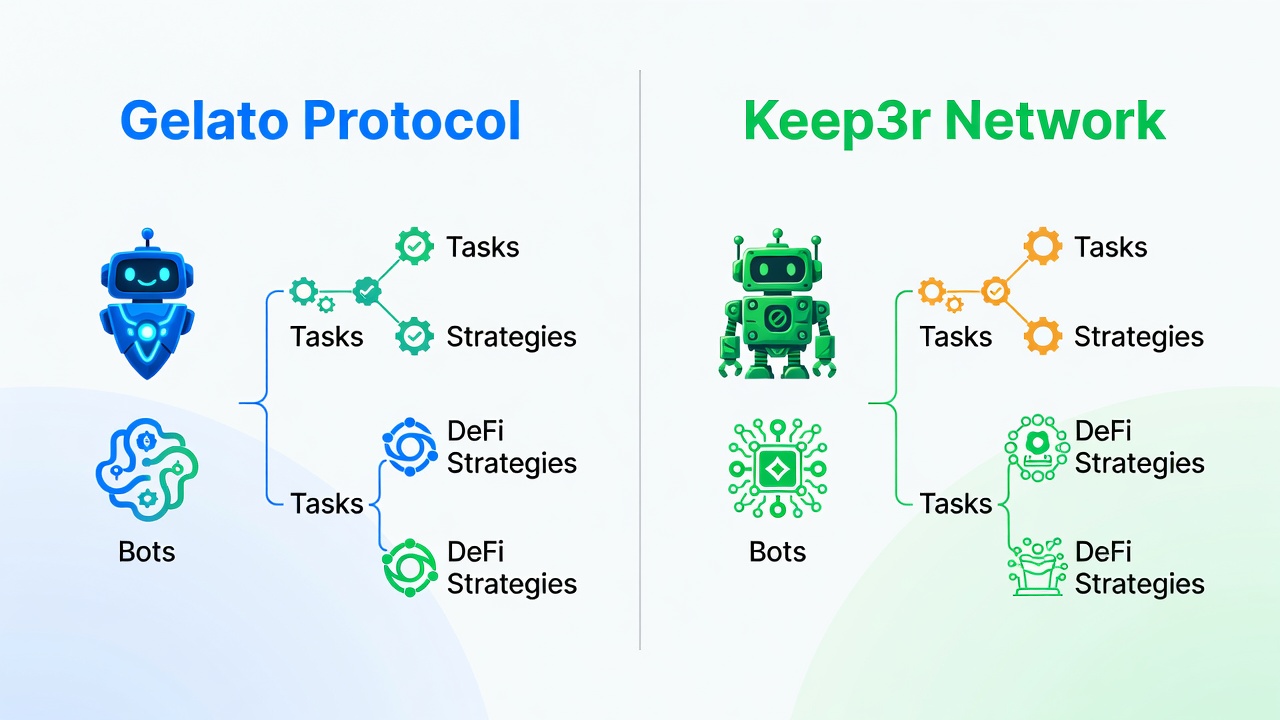
Gelato provides a robust infrastructure for scheduling and executing smart contract functions without gas management hassles. Keep3r Network focuses on connecting job creators with keepers who compete to fulfill on-chain tasks. Both support common DeFi operations such as claiming rewards or adjusting collateral ratios. Users benefit from their battle-tested security and broad protocol integrations across multiple blockchains.
Additional options like Chainlink Keepers offer decentralized alternatives with strong emphasis on reliability and data feeds. When selecting a protocol, consider factors such as supported networks, developer documentation quality, and community governance activity. Gelato official site offers detailed documentation for developers and users alike. Similarly, Keep3r Network provides transparent job listings and keeper performance metrics. For oracle-integrated automation, many users also reference Chainlink resources.
Practical Setup Steps for Recurring Tasks
Setting up automation begins with connecting a wallet to the chosen protocol dashboard. Next, define tasks such as harvesting rewards from a yield farm every 48 hours. Configure parameters like minimum reward thresholds to avoid unnecessary transactions. Test on a small position before scaling. For rebalancing, specify target allocations and slippage tolerances to maintain optimal exposure across assets.
Advanced users often integrate multiple tasks into a single workflow, such as combining reward harvesting with automatic compounding into the same position. Always verify contract addresses and review permission scopes before granting approvals. Monitoring dashboards provided by the automation protocols allow real-time tracking of task execution success rates.
Actionable Checklist for Initial Setup
- Review protocol audits and recent security reports
- Start with low-value test transactions
- Set gas price limits and notification alerts
- Document all task parameters for future audits
- Enable multi-signature controls where available
- Establish fallback manual override procedures
- Verify supported chains and token compatibility
Comparing Bot Costs and Tool Options
Automation expenses vary by protocol and task complexity. Users should evaluate fee structures qualitatively, focusing on gas optimization features and keeper incentives rather than fixed rates. Popular alternatives include custom scripts via Chainlink Keepers alongside the main two protocols. A comparison table reveals differences in ease of use, supported chains, and community support levels. Gelato tends to excel in developer-friendly interfaces while Keep3r offers strong transparency in keeper competition and job fulfillment rates.
Risk Mitigation Tactics
Security remains paramount. Always use hardware wallets for large positions and implement time-locked admin functions. Monitor for smart contract vulnerabilities through on-chain analytics. Diversify across multiple automation providers to avoid single points of failure. Regular portfolio reviews help catch drift from intended strategies before it impacts overall performance.
Additional tactics include setting conservative task parameters that account for network congestion and implementing circuit breakers that pause automation during extreme market events. Users should also maintain separate wallets for automated versus manual interactions to limit exposure in case of a compromised integration.
Real-World Case Studies with Sample Portfolios
Consider a diversified portfolio holding positions in stablecoin lending and liquidity provision. One user automated weekly reward claims and monthly rebalancing, resulting in consistent yield capture during market swings. Another example involves a leveraged farming strategy where keepers automatically adjusted debt ratios, preventing liquidation events. These cases highlight how automation converts active management into reliable passive income streams.
A third case study involved a cross-chain portfolio spanning Ethereum and Polygon. Automation handled bridge timing and reward reinvestment, reducing manual oversight from daily checks to monthly reviews while maintaining competitive yields compared to non-automated peers.
Common Mistakes to Avoid
Many beginners set task frequencies too high, leading to unnecessary gas consumption. Others neglect to update parameters when market conditions change, resulting in suboptimal execution. Always test automation flows with small amounts and maintain detailed logs of all triggered actions for troubleshooting purposes.
Security Best Practices
Implement multi-factor authentication on all connected accounts and regularly rotate API keys or wallet permissions. Use only audited protocols and stay informed about emerging threats through community channels. Consider insurance options for smart contract risks when automating high-value positions.
Frequently Asked Questions
What common errors occur during setup?
Users often overlook gas estimation or set overly aggressive task frequencies, leading to wasted fees. Always simulate tasks first and review execution logs regularly.
How do compliance considerations affect automation?
Regulations vary by jurisdiction; ensure your automated strategies align with local tax reporting requirements and avoid protocols flagged for compliance issues. Consult legal professionals for jurisdiction-specific guidance.
Can automation work across multiple chains?
Yes, leading protocols support multi-chain deployments, though users must configure separate tasks for each network and account for varying gas dynamics.
Conclusion
DeFi automation empowers investors to achieve higher efficiency and yields in 2026. By leveraging protocols like Gelato and Keep3r, applying checklists, and prioritizing security, you can transition to truly passive strategies while minimizing risks and maximizing long-term returns.


No comments yet. Be the first!