 CryptoChain Blog

Introduction to DeFi in 2026
Decentralized finance, or DeFi, continues to evolve rapidly in 2026, offering users direct access to financial services without traditional intermediaries such as banks or brokers. For beginners entering this space, the priority must be safe onboarding methods that emphasize education, risk awareness, and gradual exposure. This comprehensive guide covers essential topics including wallet setup, platform evaluation, first protocol interactions, and basic strategies like stablecoin lending supported by real-world examples. By following a structured approach, new users can navigate DeFi with greater confidence while minimizing common risks associated with smart contract interactions and private key management.
The decentralized nature of DeFi relies heavily on blockchain networks like Ethereum and layer-2 solutions, where users retain full control over their assets. However, this control comes with responsibilities, including understanding transaction mechanics and security best practices. Beginners should view their initial steps as an educational investment rather than a quick path to returns.
Selecting the Right Wallet for Secure Onboarding
Choosing a beginner-friendly wallet forms the foundation of any safe DeFi journey. Hardware options such as Ledger devices provide offline storage for private keys, reducing exposure to online threats, while software wallets like MetaMask offer convenient browser integration for daily interactions. When comparing tools, evaluate criteria such as multi-chain support, transaction simulation features, and recovery options. MetaMask excels in ease of use for Ethereum-based protocols, whereas alternatives like Rabby Wallet include built-in security checks that flag suspicious contract interactions before approval.
Additional considerations include compatibility with hardware wallets and the ability to export transaction histories for personal record-keeping. Always download wallets directly from official websites to avoid counterfeit applications that could compromise seed phrases. For users seeking maximum security, combining a software wallet for routine access with a hardware device for larger holdings creates a balanced setup.
Platform Selection Criteria for 2026
Evaluating DeFi platforms requires attention to several objective factors that influence safety and usability. Liquidity levels, recent security audits, and transparent governance structures indicate reliable environments. New users benefit from starting with protocols that publish detailed audit reports and maintain active bug bounty programs. Reviewing historical data on total value locked through analytics platforms helps identify established projects with proven resilience.
Other important criteria encompass user interface clarity, customer support availability through community channels, and integration with popular stablecoins. Avoid platforms lacking verifiable on-chain transparency or those with frequent governance disputes. Cross-referencing community feedback on established forums provides additional context before committing funds.
Step-by-Step Wallet Setup and First Transactions
Begin the wallet setup process by visiting the official provider site and installing the extension or application. Generate a new wallet address, immediately record the seed phrase on paper or metal backup, and store copies in separate secure locations. Test the recovery process on a testnet such as Sepolia before moving any real assets. Once comfortable, connect the wallet to a mainnet and perform small test transactions to familiarize yourself with gas estimation tools.
Your first protocol interaction should involve bridging a minimal amount of cryptocurrency using verified bridge interfaces. Verify all contract addresses against official documentation and utilize transaction preview features where available. This methodical approach builds practical experience while limiting potential losses from user error.
Stablecoin Lending Strategies with Examples
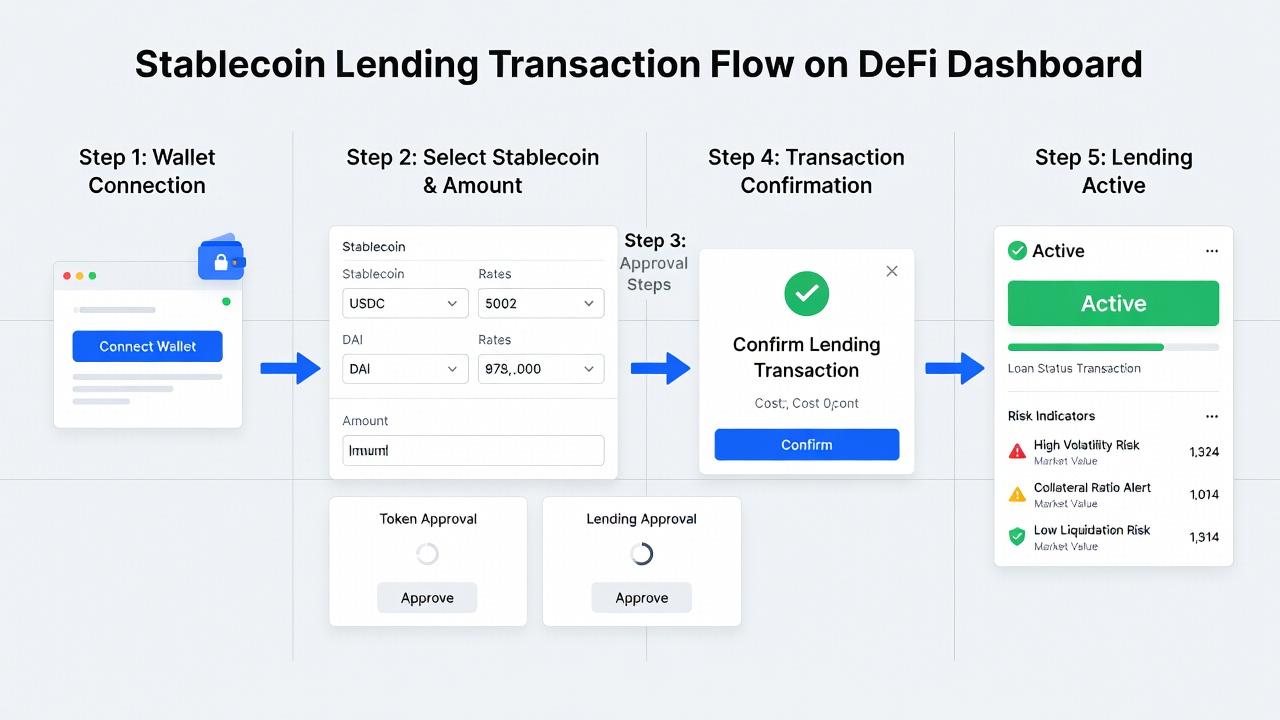
Stablecoin lending offers beginners a lower-volatility method to explore yield generation within DeFi. By supplying assets such as USDC or DAI to established lending markets, users can earn interest while the principal maintains relative price stability compared to volatile cryptocurrencies. A practical example involves depositing stablecoins into a lending pool, monitoring utilization rates through the protocol dashboard, and withdrawing portions as needed to manage liquidity.
Another scenario demonstrates risk layering: a user might supply stablecoins to one market and simultaneously borrow against them in a controlled manner to explore leveraged positions, always keeping collateralization ratios well above liquidation thresholds. These examples illustrate how beginners can apply core concepts incrementally, learning to read interest rate models and assess platform-specific risks before scaling positions.
Comparing User-Friendly DeFi Tools
Popular DeFi interfaces differ in their approach to accessibility. Some emphasize simplified dashboards ideal for first-time users, while others provide advanced analytics suited for users ready to progress. Comparing these tools side by side reveals trade-offs between feature depth and learning curve. Starting with interfaces that include guided tutorials and clear risk warnings accelerates safe adoption.
Common Pitfalls to Avoid
- Never share seed phrases or private keys, even with supposed support representatives, as legitimate services never request this information.
- Avoid approving unlimited token allowances to unknown contracts, which can lead to unauthorized draining of wallets.
- Double-check all transaction parameters including recipient addresses and gas limits to prevent irreversible mistakes.
- Refrain from chasing unusually high yields without understanding the underlying mechanisms and associated smart contract risks.
- Steer clear of unverified links or social media promotions that may lead to phishing sites mimicking legitimate protocols.
Security Checklist for Secure Starts
- Verify every website URL manually and bookmark frequently used platforms to prevent typosquatting attacks.
- Enable hardware wallet confirmations for transactions exceeding small test amounts.
- Periodically audit and revoke dApp permissions through wallet settings to limit ongoing access.
- Monitor network upgrades and protocol announcements through official channels only.
- Implement multi-signature wallet configurations when managing larger asset pools.
- Maintain separate wallets for different risk levels, isolating experimental activities from core holdings.
Understanding Gas Fees and Asset Recovery
What influences gas fees in 2026?
Gas fees fluctuate based on network demand and layer-2 scaling solutions. Users should consult real-time estimators on block explorers and consider timing transactions during lower congestion periods to optimize costs.
Can lost assets be recovered?
Recovery of assets sent to incorrect addresses or lost private keys is generally not possible on public blockchains. Prevention through careful verification and redundant backups remains the only reliable strategy. For assets held on centralized exchanges, contact their verified support teams promptly with transaction details.
Risk Management Best Practices
Effective risk management in DeFi involves diversifying across multiple protocols, setting position size limits relative to overall portfolio, and maintaining emergency withdrawal plans. Regularly reviewing positions and staying informed about regulatory developments helps users adapt strategies over time.
Conclusion
Safe participation in DeFi during 2026 demands preparation, continuous learning, and disciplined risk management. By mastering wallet fundamentals, selecting appropriate platforms, and applying strategies such as stablecoin lending through practical examples, beginners can build a solid foundation. Continue exploring official resources available at Ethereum.org, MetaMask, and DefiLlama to deepen your understanding and stay current with ecosystem developments.


No comments yet. Be the first!