 CryptoChain Blog
Introduction to DeFi and CeFi Integration in 2026
The financial landscape in 2026 continues to evolve rapidly as investors seek optimized returns by blending decentralized finance (DeFi) protocols with centralized finance (CeFi) platforms. This hybrid approach allows users to leverage the transparency and high yields of DeFi while benefiting from the regulatory compliance, liquidity, and user-friendly interfaces of CeFi. Search intent for this topic centers on creating balanced portfolios that go beyond pure DeFi exposure, mitigating volatility through strategic integration points. Hybrid yield strategies focus on combining elements like wrapped assets for cross-chain compatibility, seamless on-ramps for fiat entry, and shared liquidity pools that bridge both ecosystems. By 2026, these methods have matured, offering practical pathways for retail and institutional investors alike. Many portfolio managers now allocate 40-60% of crypto holdings across hybrid setups to capture yields from both lending markets and traditional fixed-income equivalents routed through compliant channels.
Key Integration Points: Wrapped Assets, On-Ramps, and Shared Liquidity Pools
Understanding the core integration mechanisms is essential for building effective hybrid strategies. Wrapped assets serve as tokenized representations of cryptocurrencies or fiat on different blockchains, enabling seamless movement between CeFi custodians and DeFi smart contracts. For example, wrapped Bitcoin (WBTC) allows Bitcoin holders to participate in Ethereum-based lending protocols without selling their underlying holdings. On-ramps provide entry points from traditional banking systems into crypto ecosystems. Platforms like major exchanges facilitate direct bank transfers into stablecoins that can then be deployed into DeFi yield farms. Shared liquidity pools aggregate capital from both centralized order books and decentralized automated market makers (AMMs), improving price discovery and reducing slippage.
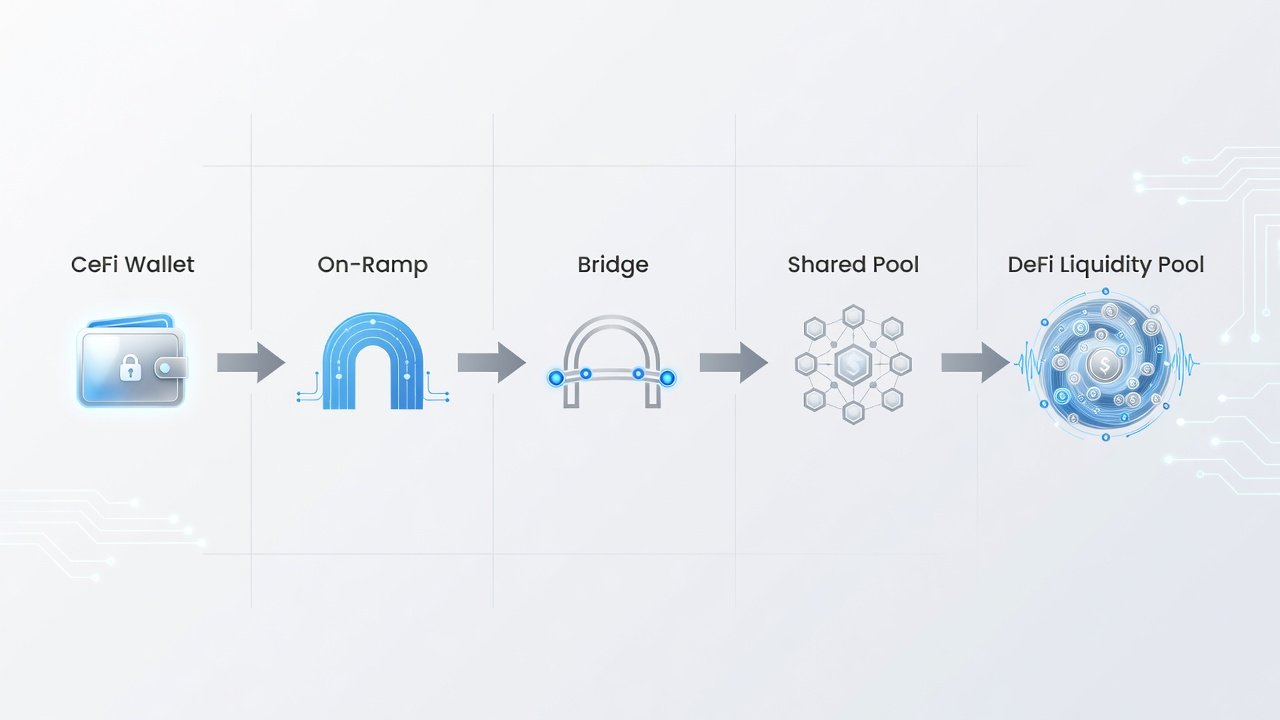
These points create frictionless flows. A typical setup might involve depositing USD on a CeFi exchange, converting to a stablecoin, wrapping it for DeFi compatibility, and supplying it to a liquidity pool for yield generation. Additional integration layers include oracle feeds that sync pricing data across both environments and compliance APIs that flag suspicious activity in real time. Investors often use multi-signature wallets to control assets that move between the two systems, adding an extra layer of security during transfers.
Step-by-Step Setup Examples for Hybrid Strategies
- Choose a compliant CeFi on-ramp provider and complete KYC verification to fund an account with fiat currency. Research providers that offer low-fee ACH or wire transfers and confirm they support direct stablecoin issuance.
- Convert funds to a stablecoin and transfer to a wallet supporting wrapped asset protocols. Test the transfer with a small amount first to verify network fees and confirmation times.
- Use a bridge or wrapping service to create the DeFi-compatible version of your asset. Popular bridges in 2026 emphasize audited smart contracts and insurance-backed coverage for bridge failures.
- Connect the wallet to a DeFi protocol and supply liquidity or lend the wrapped asset to earn yields. Monitor gas fees on the target chain and consider layer-2 solutions to keep costs manageable.
- Monitor positions through integrated dashboards that track both CeFi balances and DeFi smart contract interactions. Set automated alerts for yield rate changes or liquidity drops.
- Implement rebalancing triggers to move assets back to CeFi for withdrawals when needed. Document each step for tax reporting purposes, noting transaction hashes and timestamps.
These steps emphasize security practices such as using hardware wallets and enabling multi-signature approvals where possible. Always verify contract addresses through official documentation before interacting with any protocol.
Comparisons of Top Hybrid Platforms in 2026
Several platforms have emerged as leaders in facilitating DeFi-CeFi hybrids. Centralized exchanges with DeFi integrations offer one-click access to wrapped asset pools, while specialized protocols focus on institutional-grade custody combined with on-chain yields. Key differentiators include fee structures, supported asset pairs, regulatory licenses, and user interface sophistication. Users should compare factors like withdrawal speeds, insurance coverage on CeFi sides, and smart contract audit histories on DeFi sides to select the best fit for their risk tolerance. Some platforms provide built-in tax reporting tools that aggregate activity across both environments, saving hours during filing season.
Ethereum Foundation resources provide foundational technical details on wrapping standards that many hybrid platforms rely upon.
Real-World Case Studies from 2026
In early 2026, a mid-sized investment fund successfully blended CeFi stablecoin deposits with DeFi lending pools, achieving consistent returns across market cycles by dynamically shifting allocations based on on-chain metrics and traditional market indicators. The fund maintained a 55% CeFi allocation for liquidity buffers while routing the remainder into DeFi strategies, resulting in smoother drawdowns during volatility spikes. Another example involved retail users leveraging shared liquidity on integrated platforms to farm yields from both order book arbitrage and automated market maker incentives simultaneously. These users reported improved risk-adjusted returns by rotating between stablecoin pools and blue-chip wrapped assets based on real-time utilization rates. A third case featured a family office that combined CeFi margin lending with DeFi options strategies to hedge against downside moves while still collecting base yields.
Managing Risks in Hybrid Yield Strategies
While hybrid approaches enhance returns, they introduce unique risks including smart contract vulnerabilities, counterparty exposure on CeFi platforms, liquidity mismatches, and evolving regulatory landscapes. Mitigation involves diversifying across multiple protocols, utilizing insurance options where available, and staying informed through official channels. Regulatory concerns often center on securities classification of certain yield products, while liquidity risks arise during high-volatility periods when CeFi withdrawals may face delays compared to on-chain transactions. Common mistakes to avoid include over-allocating to a single bridge without testing recovery procedures and ignoring tax implications of wrapping and unwrapping events. Investors should also review each platform’s insurance coverage limits and understand what happens to assets during a CeFi platform insolvency event.
SEC guidance on digital assets offers valuable context for navigating compliance in hybrid setups.
Building a Balanced Portfolio: Practical Tips and Tools
Constructing a resilient hybrid portfolio requires ongoing monitoring and clear decision frameworks. Start by defining your risk tolerance and target yield range, then select allocation bands such as 30-50% in CeFi stable instruments and the balance in DeFi yield sources. Use portfolio trackers that pull data from both on-chain and exchange APIs to generate unified performance reports. Rebalance quarterly or when allocation drifts exceed 10%. Consider stress-testing your strategy against scenarios like a 30% market drop or a major bridge exploit. Tools such as on-chain analytics dashboards and CeFi mobile apps with API integrations help surface early warning signs of liquidity stress or smart contract anomalies.
Conclusion
DeFi and CeFi integration in 2026 empowers investors to pursue superior yields through thoughtful combinations of wrapped assets, efficient on-ramps, and collaborative liquidity mechanisms. By following structured setups, comparing platforms carefully, and addressing risks proactively, users can build resilient portfolios that capitalize on the strengths of both worlds.
FAQ
What are the main regulatory concerns with hybrid strategies?
Key issues involve how wrapped assets and yield-generating products are classified under securities laws, potential KYC/AML requirements across both ecosystems, and cross-border compliance challenges. Staying updated with guidance from multiple jurisdictions helps avoid unexpected enforcement actions.
How do liquidity concerns manifest in DeFi-CeFi integrations?
Liquidity mismatches can occur when CeFi platforms impose withdrawal limits during stress events, while DeFi pools may experience temporary illiquidity due to impermanent loss or low trading volume in specific pairs. Diversifying across several pools and maintaining CeFi cash buffers reduces this exposure.
Are there practical steps to start a hybrid portfolio today?
Begin with education on wrapping standards, select regulated CeFi entry points, test small transfers to DeFi protocols, and use portfolio trackers that aggregate data from both sectors. Document every transaction for compliance and tax purposes.
What tax considerations apply to hybrid yield strategies?
Wrapping, unwrapping, and yield accrual events are often taxable in many jurisdictions. Maintain detailed records of cost basis, fair market values at each step, and any fees paid. Consulting a crypto-savvy tax professional is recommended before scaling positions.


No comments yet. Be the first!