 CryptoChain Blog
Introduction to DeFi and IoT Convergence in 2026
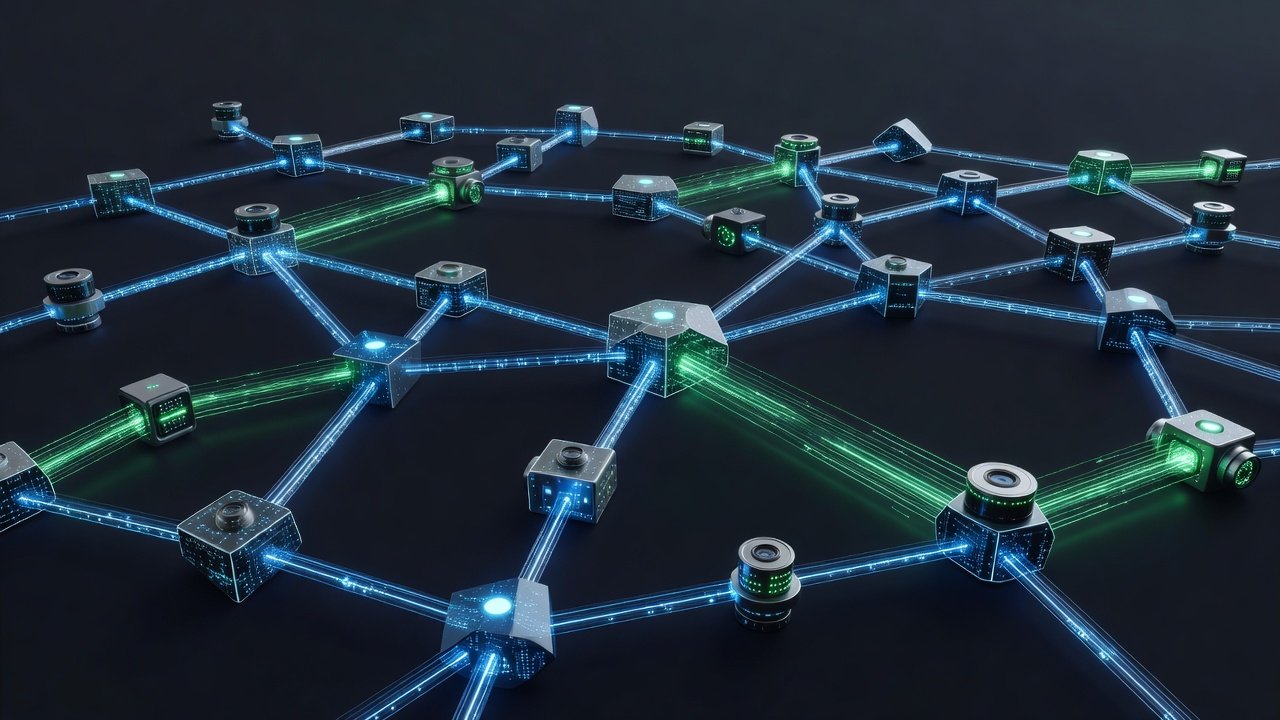
The intersection of decentralized finance (DeFi) and the Internet of Things (IoT) is creating entirely new machine-to-machine (M2M) economies where devices operate independently. Sensors, actuators, and connected hardware can now execute micropayments, participate in yield-generating protocols, and settle transactions autonomously without any human oversight. This convergence leverages blockchain’s trustless nature combined with real-time data from IoT networks to enable seamless automation across industries. In 2026, major network upgrades on leading blockchains have reduced latency and fees dramatically, making device-scale interactions practical for the first time at global levels. Developers and DeFi users seeking forward-looking strategies will find concrete implementation paths in this guide, covering everything from oracle selection to smart contract deployment and risk management. The result is an ecosystem where a shipping container sensor can pay for customs clearance or a smart city parking meter can automatically allocate collected fees into yield pools.
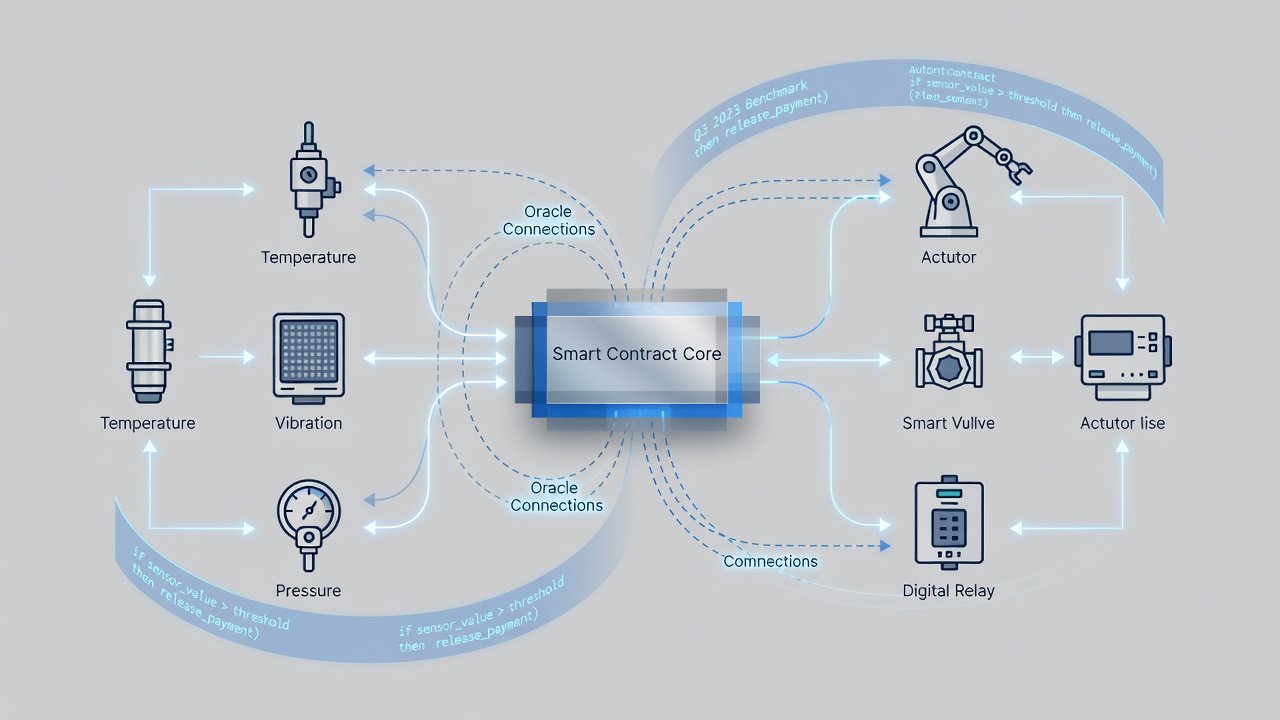
Understanding the technical foundations is essential. IoT devices generate continuous streams of environmental, location, or usage data. When fed through decentralized oracles into smart contracts, these inputs trigger conditional logic such as releasing funds or staking tokens. This removes intermediaries and creates new revenue models for device owners while lowering operational costs for networks.
Top Protocols Supporting IoT Oracles
Decentralized oracles remain the critical bridge between physical IoT sensors and blockchain execution. Chainlink continues to lead with its robust decentralized oracle networks that deliver tamper-proof data feeds and support automation via Keepers. Chainlink has expanded IoT-specific integrations allowing low-power devices to push telemetry directly into price or event triggers. Band Protocol offers an alternative focused on cross-chain compatibility and lightweight queries ideal for bandwidth-constrained hardware. Additional options include API3, which emphasizes first-party data sourcing from device manufacturers themselves, reducing single points of failure.
When evaluating protocols, developers must consider latency under 500 milliseconds, cost per query below typical micropayment thresholds, and uptime guarantees above 99.9 percent. Real-world testing on 2026 testnets reveals that Chainlink’s latest oracle updates handle concurrent device feeds more efficiently than earlier versions. Combining multiple oracles through aggregation further increases resilience against individual node outages.
Step-by-Step Wallet and Smart Contract Setup
Practical implementation begins with selecting IoT-compatible wallet infrastructure. Hardware security modules or secure element chips embedded in devices provide the foundation for key management. Multi-signature schemes allow both the device and an off-chain monitoring service to authorize transactions. Start by generating device-specific key pairs using libraries such as ethers.js or Web3.js.
const { ethers } = require('ethers');
const provider = new ethers.JsonRpcProvider('https://mainnet.infura.io/v3/YOUR_KEY');
const wallet = new ethers.Wallet(devicePrivateKey, provider);
// Deploy contract with oracle integration
async function deployM2MContract() {
  const factory = new ethers.ContractFactory(abi, bytecode, wallet);
  const contract = await factory.deploy(oracleAddress);
  await contract.waitForDeployment();
  return contract.target;
}
Next, write the smart contract logic. Include functions that ingest oracle data, verify device signatures, and execute conditional transfers or staking operations. Use modifiers to enforce rate limits and prevent replay attacks. Deploy first on testnets like Sepolia or Solana Devnet, then migrate to mainnet after thorough auditing. Incorporate account abstraction via ERC-4337 to simplify onboarding for devices without native gas management capabilities. Optimization tips include pre-computing gas estimates and batching multiple device actions into single transactions where supported by 2026 protocol upgrades.
Comparisons of Energy-Efficient Chains for Device Transactions
Energy consumption and transaction costs directly impact the viability of always-on IoT deployments. Solana stands out with its proof-of-history mechanism delivering sub-second finality and fees often under one cent per transaction, making it suitable for high-frequency sensor payments. Solana excels when thousands of devices must settle micropayments simultaneously. Polygon provides strong EVM compatibility and a mature ecosystem of DeFi protocols, with recent upgrades further lowering energy per transaction while maintaining security through zk-rollups. Stellar offers another lightweight alternative optimized for cross-border value transfer with minimal overhead.
- Solana: Highest throughput, lowest per-transaction energy use, best for real-time M2M economies.
- Polygon: Easiest migration path for existing Ethereum developers, balanced cost-security profile.
- Stellar: Strong focus on stablecoin micropayments and enterprise IoT pilots.
- Arbitrum: Layer-2 scaling reduces fees while inheriting Ethereum security for complex yield logic.
Selection criteria should include device power budget, required finality speed, and existing DeFi liquidity. Always benchmark on 2026-upgraded testnets before production rollout.
Real-World Case Studies
Supply chain deployments illustrate tangible benefits. In one European logistics pilot, IoT temperature sensors on refrigerated containers automatically released escrow payments to carriers upon verified arrival conditions, cutting settlement times from days to minutes. Smart city implementations in Singapore and Barcelona integrate parking sensors with DeFi yield protocols; collected fees flow directly into liquidity pools that fund infrastructure maintenance while earning returns for the city treasury. Another example involves agricultural IoT networks where soil moisture devices trigger micro-insurance payouts via parametric smart contracts, protecting farmers from drought without manual claims processing. These cases demonstrate how M2M economies scale from pilot to production when oracle reliability and chain efficiency align.
Risk Mitigation Techniques
Security remains paramount. Oracle manipulation risks are mitigated through multi-source aggregation and deviation thresholds. Smart contract vulnerabilities require formal verification and regular third-party audits before mainnet deployment. Device-level threats such as physical tampering or firmware exploits are addressed with secure boot processes and hardware-backed key storage. Additional strategies include implementing circuit breakers that pause operations during detected anomalies and using zero-knowledge proofs to protect sensitive IoT data during on-chain verification. Continuous monitoring via on-chain analytics dashboards helps identify unusual M2M transaction patterns early.
Optimization Tips for 2026 Network Upgrades
Network upgrades throughout 2026 emphasize layer-2 interoperability and account abstraction. Developers should batch device actions, adopt gasless meta-transactions where possible, and explore restaking mechanisms that allow idle device collateral to generate additional yield. Privacy-focused upgrades enable confidential micropayments while maintaining auditability. Testing these features on public testnets now positions projects for seamless production migration.
FAQ
How secure are autonomous M2M payments?
Security depends on audited contracts, redundant oracles, and hardware-protected keys. Multi-signature and rate-limiting further reduce exposure.
What scalability improvements arrived in 2026?
Major chains now support thousands of transactions per second at sub-cent fees, enabling city-scale IoT deployments without congestion.
Can low-power devices interact directly with blockchains?
Yes, through lightweight clients, off-chain computation, and proxy relayers that handle heavy cryptographic work.
Which chains are most energy efficient for IoT?
Solana and Polygon currently lead in energy-per-transaction metrics while supporting rich DeFi functionality.
Begin experimenting on testnets today to prepare for production M2M economies that will define the next phase of decentralized automation.

No comments yet. Be the first!