 CryptoChain Blog
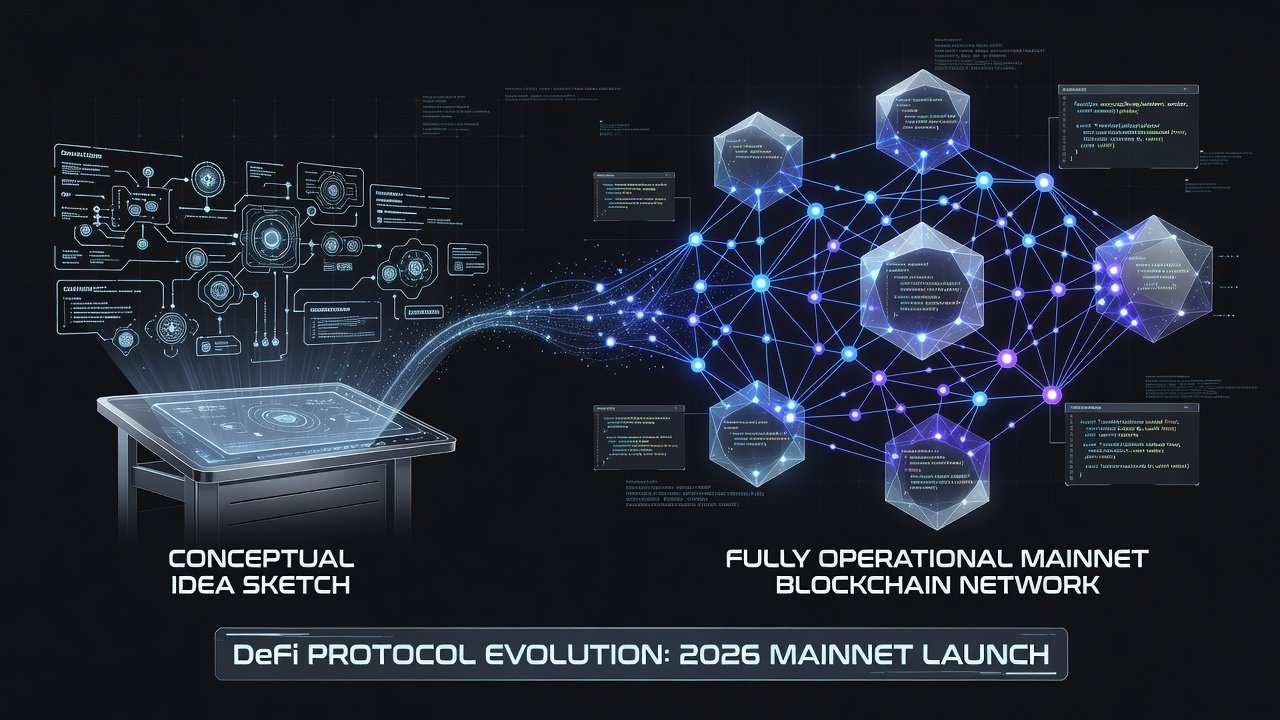
Introduction to Launching a DeFi Protocol in 2026
Launching a decentralized finance (DeFi) protocol in 2026 demands a structured approach that balances technical innovation, economic sustainability, and regulatory foresight. Developers and founders face an evolving landscape where blockchain scalability has improved dramatically, yet security threats and market volatility persist. This guide outlines the end-to-end process from initial idea validation through mainnet deployment, emphasizing practical roadmaps tailored for teams seeking real-world execution. By examining each phase in detail, readers gain actionable insights to mitigate common failures and capitalize on emerging opportunities in lending, trading, and yield optimization sectors. The emphasis remains on execution excellence, with comparisons of available platforms and funding options that have proven effective in recent cycles.
Ideation and Market Research
Effective ideation begins with identifying underserved niches within DeFi ecosystems. Founders should analyze on-chain metrics such as total value locked across existing protocols to pinpoint inefficiencies like high slippage in decentralized exchanges or fragmented liquidity in cross-chain bridges. Market research involves surveying potential users via targeted forums and reviewing whitepapers from prior launches. A strong problem statement guides feature prioritization, ensuring the protocol solves tangible pain points rather than replicating saturated solutions. For instance, protocols focusing on real-world asset tokenization have gained traction by addressing institutional entry barriers. Practical market validation often includes deploying simple landing pages to gauge interest and collecting feedback through structured surveys.
Practical Steps in Ideation
- Conduct competitive audits using public blockchain explorers to map feature gaps
- Validate demand through MVP prototypes deployed on testnets with simulated user interactions
- Assemble a core team with expertise in Solidity, economics, and compliance
- Outline initial architecture diagrams that account for gas optimization and interoperability across multiple chains
- Perform SWOT analysis tailored to DeFi variables such as oracle reliability and liquidation mechanisms
Designing Robust Tokenomics
Tokenomics design requires careful modeling to align incentives across users, developers, and investors. Key considerations include supply caps, vesting cliffs for team allocations, and mechanisms for value accrual such as fee sharing or buyback programs. In 2026, sustainable models prioritize deflationary pressures through utility burns while avoiding over-reliance on inflationary rewards. Founders often simulate scenarios using spreadsheet tools to test governance voting power distribution and liquidity pool dynamics. Comparisons between fixed-supply tokens and elastic models reveal trade-offs in adoption speed versus long-term stability. Real examples demonstrate that protocols incorporating revenue-sharing features tend to retain users longer during market downturns.
Security Audits and Smart Contract Development
Smart contract development follows rigorous standards to prevent exploits that have historically drained millions in value. Teams should adopt modular coding practices, extensive unit testing, and integration with formal verification tools. Multiple audit firms are engaged sequentially, followed by public bug bounty programs on platforms like Immunefi. 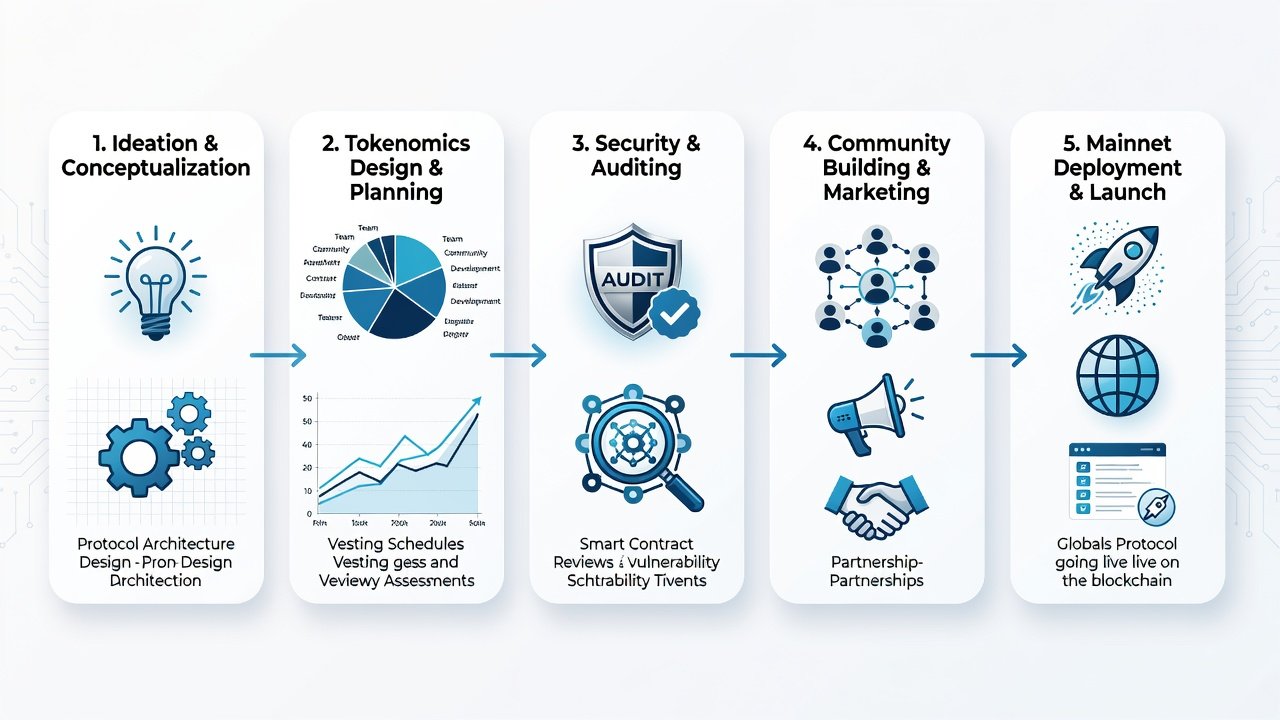
Community Bootstrapping Strategies
Community formation starts pre-launch with transparent communication channels including governance forums and social media campaigns. Incentive structures like retroactive airdrops reward genuine contributors while filters deter sybil attacks. Founders compare tools such as Snapshot for gasless voting against fully on-chain systems, selecting based on desired decentralization levels. Successful bootstrapping often involves partnerships with established DeFi projects for cross-promotion and liquidity seeding events. Building a core group of ambassadors who actively participate in testing phases accelerates organic growth and provides valuable early feedback loops.
Regulatory Navigation
Regulatory compliance involves early consultation with legal experts to structure operations across jurisdictions. Key resources include guidance from official regulatory bodies and foundational documentation at Ethereum resources. Protocols may incorporate decentralized autonomous organization frameworks to distribute control and reduce central entity risks. Monitoring updates from bodies like the Bank for International Settlements helps anticipate policy shifts affecting stablecoin integrations or yield products. Proactive measures such as KYC integrations for certain features can open doors to broader institutional adoption while maintaining core decentralization principles.
Comparing Launch Platforms and Funding Routes
Launch options range from permissioned launchpads offering built-in visibility to independent deployments on major chains like Ethereum or layer-2 solutions. Funding routes encompass seed rounds from venture firms, community token sales, and grants from ecosystem foundations. Each path carries distinct timelines and dilution impacts; for example, launchpad participation accelerates user acquisition but may impose vesting constraints. Post-launch tactics emphasize liquidity mining campaigns and strategic integrations with oracles for reliable price feeds. Teams should evaluate platform fees, user demographics, and historical success rates when choosing between options.
Post-Launch Growth and Risk Mitigation
After deployment, growth hinges on monitoring key performance indicators such as daily active users and retention curves. Risk mitigation includes diversified liquidity sources and emergency pause mechanisms in contracts. Governance setup benefits from clear quorum requirements and timelock delays to prevent hasty decisions. Examples of pitfalls avoided include gradual rollout of new features based on community proposals rather than top-down mandates. Continuous iteration based on on-chain analytics ensures the protocol adapts to shifting market conditions and user behaviors.
Case Studies of Recent Successes
Recent DeFi launches illustrate the value of comprehensive preparation. One protocol succeeded by prioritizing multi-audit cycles and hybrid governance, resulting in sustained total value locked growth over multiple quarters. Another navigated regulatory hurdles through proactive entity structuring, enabling broader institutional participation without compromising decentralization. These cases underscore the importance of adaptive strategies that respond to on-chain feedback loops and community sentiment analysis.
Step-by-Step Checklists for Execution
- Finalize whitepaper and token allocation model with economic simulations
- Deploy testnet with user testing phases and collect structured feedback
- Complete audits and publish reports publicly for transparency
- Launch community incentives and gather initial feedback through governance channels
- Execute mainnet deployment with monitoring dashboards and incident response plans
- Iterate based on post-launch metrics and proposals while maintaining security standards
Mistakes to Avoid
Common errors include rushing token launches without sufficient vesting schedules, neglecting front-end security, and failing to establish clear governance parameters early. Founders should also avoid overpromising features that cannot be delivered within technical constraints, as this erodes community trust rapidly.
FAQ: Addressing Common Pitfalls
How can liquidity bootstrapping challenges be overcome? Begin with targeted incentives tied to usage rather than pure speculation, and maintain reserves for market-making activities. What governance structures minimize capture risks? Implement quadratic voting combined with delegation limits to balance influence across participants. How should founders handle unexpected exploits? Activate predefined incident response plans including fund recovery coordination and transparent user updates. What metrics matter most post-launch? Focus on retention rates, liquidity depth, and proposal participation volume. How to balance innovation with compliance? Consult legal counsel at each major milestone and design modular features that can adapt to new rules.
Conclusion
Navigating a DeFi protocol launch in 2026 integrates disciplined ideation, secure development, and strategic community engagement. By following detailed roadmaps and learning from established examples, founders position their projects for resilience and adoption in a maturing ecosystem.

No comments yet. Be the first!