 CryptoChain Blog

Introduction to the DeFi Creator Economy in 2026
The creator economy is evolving rapidly within decentralized finance, allowing independent artists, writers, and influencers to monetize directly through blockchain tools. In 2026, tokenized communities enable creators to issue their own tokens that grant access, governance rights, and revenue shares without intermediaries. This shift empowers sustainable income streams via smart contracts, moving beyond ad revenue or platform algorithms. Creators now leverage decentralized protocols to build loyal audiences that participate in value creation rather than passive consumption.
Key innovations include token-gated content platforms, creator DAOs for collective decision-making, yield-bearing NFTs that generate passive returns, and revenue-sharing protocols. These mechanisms provide direct monetization while fostering loyal fan bases. As traditional social media platforms continue to change algorithms and monetization policies, DeFi alternatives offer greater control and transparency. The result is a more resilient ecosystem where creators retain ownership of their intellectual property and community relationships.
Token-Gated Content Platforms and Their Evolution
Token-gated platforms restrict access to exclusive content based on token ownership. Successors to Mirror and Friend.tech have refined this model with improved user interfaces and cross-chain compatibility. Creators can launch membership tokens that unlock newsletters, videos, or private communities. These platforms now support seamless onboarding through social logins and wallet integrations that lower the barrier for non-technical fans.
Practical benefits include recurring revenue from token sales and trading fees. For instance, a creator might distribute tokens that holders use to vote on content direction or access premium drops. This model creates a flywheel effect: engaged members buy tokens, increasing scarcity and value, which in turn attracts new participants. Real-world implementations show higher retention rates compared to subscription services because ownership feels tangible and participatory.
Creator DAOs: Governance and Treasury Management
Creator DAOs allow communities to collectively manage treasuries and projects. Members hold governance tokens to propose initiatives like merch drops or collaborations. Step-by-step setup begins with selecting a DAO framework on an L2, deploying a token contract, and configuring voting parameters. Once live, the DAO treasury can fund community grants, marketing campaigns, or development of new features.
Managing treasuries involves allocating funds to yield strategies for growth. Always implement multi-signature wallets to enhance security. Regular community votes on treasury spending ensure alignment with member interests. Successful DAOs publish transparent quarterly reports detailing inflows, outflows, and performance metrics so participants understand how their contributions are utilized.
Yield-Bearing NFTs and Revenue-Sharing Smart Contracts
Yield-bearing NFTs combine collectibles with DeFi yields by staking underlying assets in protocols that distribute returns to holders. Revenue-sharing contracts automatically split earnings from token sales or secondary markets among creators and community members. This creates ongoing income even after the initial launch, turning one-time collectors into long-term stakeholders.
Real examples include projects building on Mirror's publishing model and Friend.tech-inspired social tokens, now enhanced with automated distributions via audited smart contracts. These systems often integrate with decentralized exchanges to enable secondary trading while redirecting a percentage of each transaction back to the creator treasury.
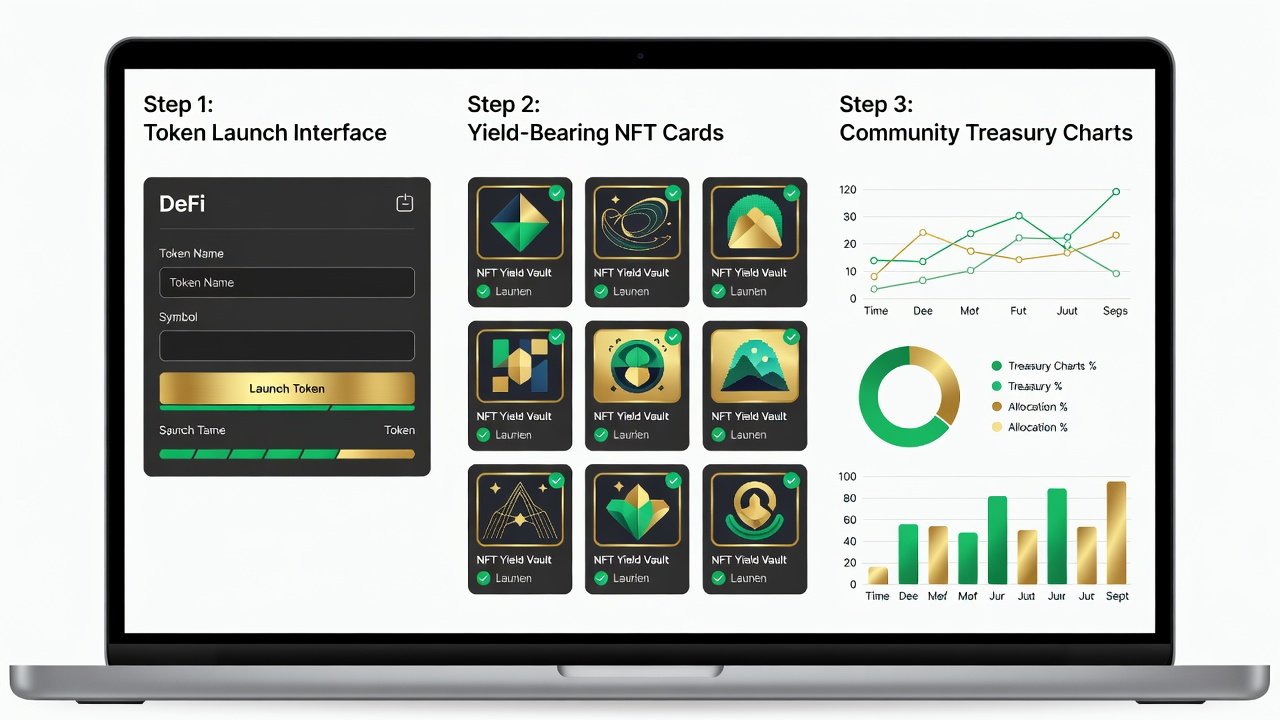
Step-by-Step Guide: Launching a Creator Token
- Research and select an L2 network that aligns with your audience demographics and technical requirements.
- Use a no-code token deployment tool to define supply, utility features, and initial distribution rules.
- Configure metadata and visuals so the token represents your brand identity clearly.
- Integrate revenue-sharing logic directly into the smart contract for automated splits.
- Deploy on a testnet first to verify functionality before mainnet launch.
- Promote via social channels and offer early-bird incentives to bootstrap initial holders.
- Monitor on-chain activity and gather community feedback for iterative improvements.
Comparing Gas-Efficient L2 Options for Creators
Layer-2 solutions reduce costs significantly compared to Ethereum mainnet. Options like Arbitrum and Optimism offer fast transactions with low fees, ideal for frequent community interactions. Base provides strong developer tools for NFT integrations. Evaluate based on ecosystem support, security audits, and bridging ease before launching.
- Arbitrum excels in DeFi liquidity depth and has robust tooling for DAO deployments.
- Optimism emphasizes optimistic rollups with strong emphasis on public goods funding.
- Base offers seamless Coinbase wallet integration, useful for onboarding mainstream creators.
- Consider transaction speed, finality times, and available bridges when making your choice.
Risk Management for Volatile Token Launches
Token volatility poses challenges. Mitigate by starting with small supplies, using vesting schedules for team allocations, and educating the community on long-term holding. Monitor on-chain metrics and diversify treasury holdings across stable assets. Implement circuit breakers in contracts that pause trading during extreme price swings. Conduct third-party audits before public launch and maintain an emergency multisig for rapid response to exploits. Creators should also disclose tokenomics clearly in a public whitepaper-style document to build trust from day one.
Case Studies of Successful Creator-Led DeFi Projects
One notable project built a tokenized writing community with revenue shares funding ongoing publications. The community treasury grew through secondary market fees, allowing members to vote on guest contributors and special editions. Another leveraged yield NFTs for music releases, generating ongoing royalties distributed automatically to early supporters. A third example involved a visual artist who created a DAO around generative art drops, using proceeds to fund physical exhibitions that further increased token utility and demand.
Integrating Yield Strategies Without Traditional Platforms
Creators can connect directly to decentralized protocols for yield farming on community treasuries. This involves bridging assets, selecting audited vaults, and monitoring APYs through dashboards. Focus on low-risk pools to preserve capital while earning returns. Combine multiple strategies such as liquidity provision and lending to balance risk and reward. Regular rebalancing based on community votes keeps the treasury resilient against market downturns.
FAQ: Common Onboarding Hurdles for Non-Technical Users
How do I get started with wallets?
Begin with user-friendly options that support social logins and guide through seed phrase security. Many modern wallets include built-in tutorials and recovery options that reduce intimidation for beginners.
What if I lack coding skills?
Many platforms offer templates and wizards for token creation and DAO setup, requiring no prior experience. Visual builders allow drag-and-drop configuration of token utilities and governance rules.
How are taxes handled in DeFi creator income?
Consult local regulations, as token sales and yields may be taxable events; use tracking tools for records. Maintain detailed transaction histories from the start to simplify reporting.
Are there security risks?
Always verify contract audits and start with small tests to avoid common pitfalls like phishing or rug pulls. Enable hardware wallet support for larger treasury holdings.
How do I handle community disputes?
Establish clear governance proposals and voting thresholds early. Many DAOs use quadratic voting to prevent whale dominance and encourage broader participation.
Explore more on decentralized protocols at Ethereum Foundation resources and L2 comparisons via Arbitrum documentation. For broader DeFi insights, review DefiLlama analytics and Optimism ecosystem details at Optimism official site.
Conclusion
The DeFi creator economy in 2026 offers unprecedented opportunities for direct, sustainable monetization. By combining tokenized access, DAO governance, yield-bearing assets, and smart revenue sharing, creators can build resilient income streams while deepening community engagement. Careful planning around L2 selection, risk controls, and transparent communication positions creators for long-term success in this decentralized landscape.


No comments yet. Be the first!