 CryptoChain Blog
Introduction to DeFi Protocol Stacking in 2026
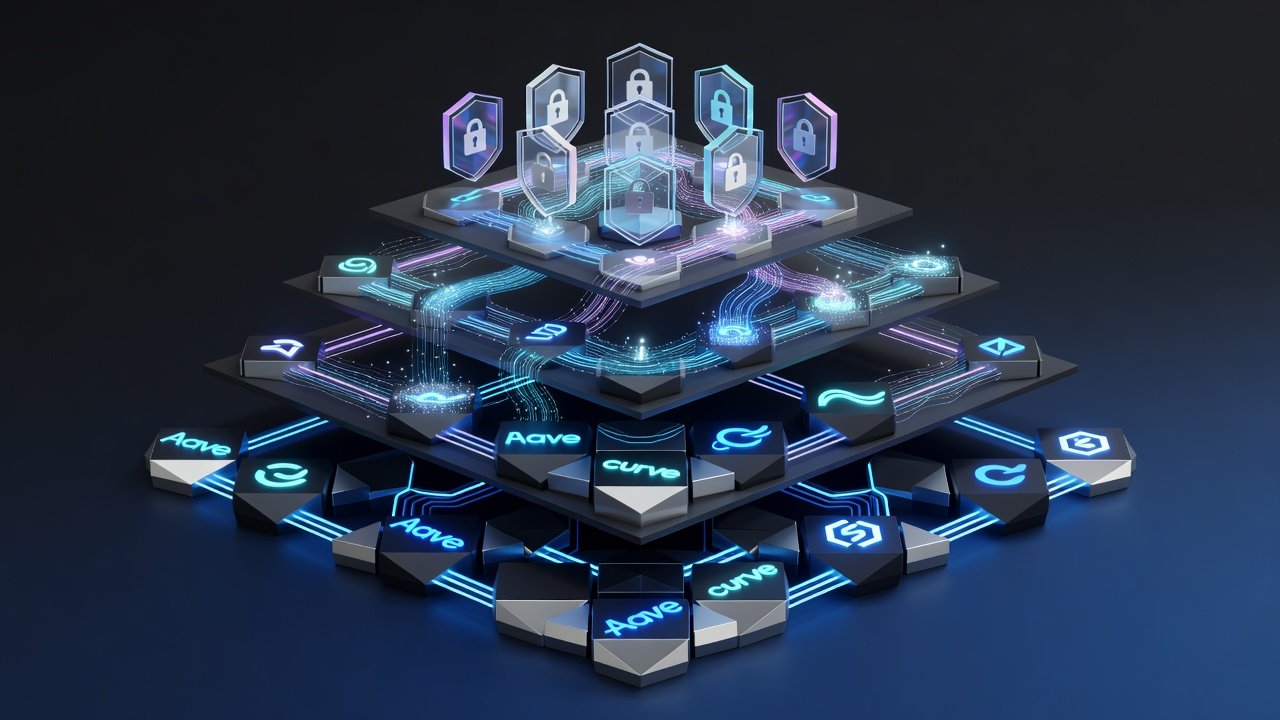
As decentralized finance matures into 2026, protocol stacking has become a cornerstone strategy for yield enhancement through advanced composability. This technique involves layering multiple DeFi protocols to create compounded positions that amplify returns beyond single-protocol use. Users can now integrate lending markets, automated market makers, and liquidity pools in sequences that were once considered too complex or risky. The evolution stems from improved smart contract standards, better oracle networks, and widespread adoption of Layer-2 scaling solutions. However, the increased complexity requires a deep understanding of inter-protocol dependencies to prevent cascading liquidations or impermanent loss. This article provides comprehensive guidance on safe execution, drawing from current best practices and real implementations.
Composability allows outputs from one protocol to serve directly as inputs for another, creating efficient capital flows. For example, collateral supplied to a lending platform can unlock borrowing power that funds liquidity provision elsewhere. In 2026, emphasis has grown on modular designs that isolate failure points across layers, making stacking more accessible yet still demanding vigilance.
Understanding Safe Composability Techniques
Safe composability in 2026 revolves around audited contracts, conservative position sizing, continuous monitoring, and fallback mechanisms. Practitioners begin with small test transactions on testnets before scaling. Non-custodial wallet usage combined with hardware security keys reduces exposure. Oracle reliability checks are mandatory, as price feed delays can trigger unexpected liquidations in stacked positions. Modular architectures now allow users to isolate risks, such as separating lending exposure from liquidity provision risks.
Benefits and Challenges in 2026
The primary benefit is enhanced capital efficiency, where the same assets generate multiple revenue streams simultaneously. Challenges include smart contract upgrade risks, cross-protocol governance conflicts, and amplified volatility during market stress. Regulatory scrutiny has also increased, requiring users to document yield events for tax purposes in many jurisdictions.
Core Concepts of Stacking
- Leveraged yield farming: Borrow against supplied assets to increase exposure while monitoring health factors closely to avoid liquidation thresholds.
- Liquidity nesting: Deposit LP tokens from one pool into secondary protocols for additional reward layers, carefully calculating combined APYs against potential losses.
- Flash loan integration: Execute atomic multi-protocol strategies that borrow, stack, and repay within a single transaction block, minimizing capital requirements but demanding precise coding.
Step-by-Step Examples Using Aave, Curve, and Balancer
A foundational stack begins with supplying stablecoins to Aave to earn lending interest and generate borrowing capacity. The borrowed assets then provide liquidity on Curve for low-slippage stablecoin swaps, producing LP tokens. These Curve LP tokens are subsequently deposited into a Balancer weighted pool to capture trading fees and additional rewards. Detailed steps include: first, verify wallet connectivity and approve token spending on Aave; second, deposit USDC while noting the collateral factor; third, borrow a correlated asset like USDT at a safe ratio; fourth, migrate to Curve's 3pool and add liquidity; fifth, stake the resulting LP tokens on Balancer for boosted yields. Always simulate the full sequence using transaction preview tools.
A second advanced example uses Balancer's composable stable pools to create diversified index tokens, which are then posted as collateral on Aave for credit delegation. This allows indirect exposure to multiple assets while earning delegation fees. Users should compare current pool weights and fee structures across protocols before committing capital. Documentation from Aave, Curve, and Balancer provides up-to-date parameters for these operations.
Risk Mitigation Strategies
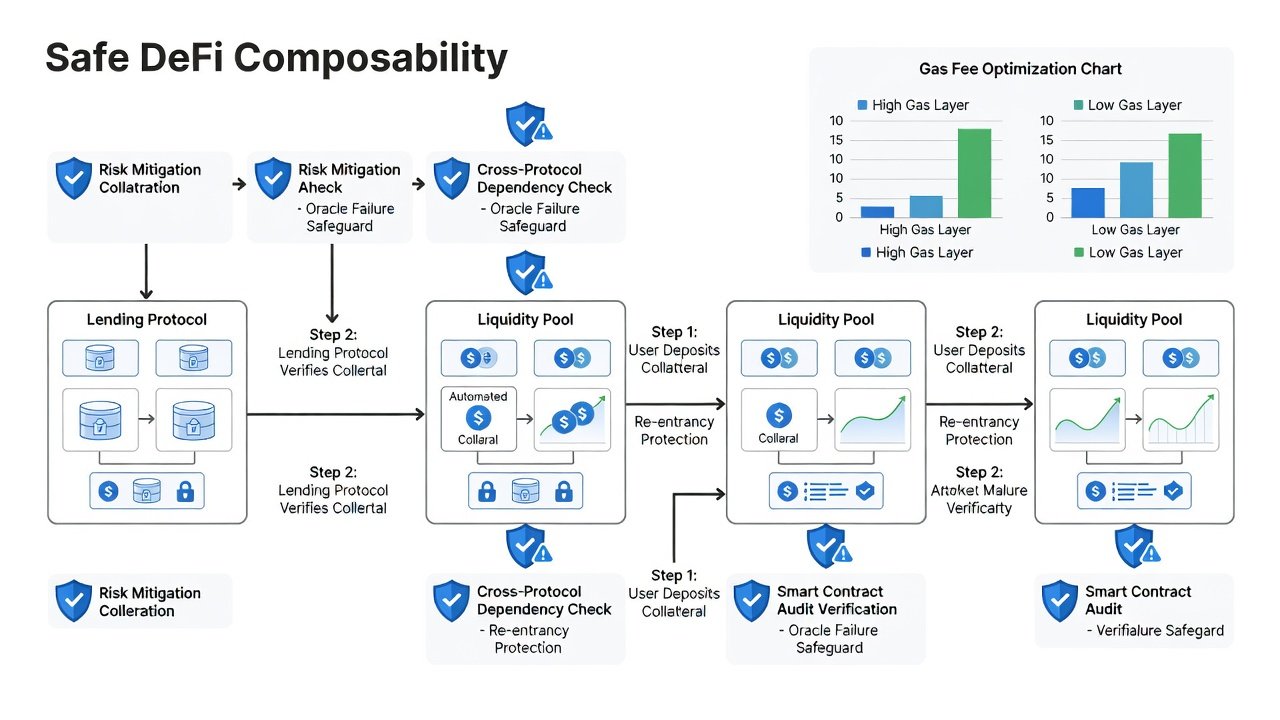
Stacking multiplies both returns and downside exposure, making mitigation essential. Maintain over-collateralization above 150 percent and diversify across unrelated protocols to limit single-point failures. Set automated alerts for health factor drops and liquidation prices. Participate in governance forums to anticipate smart contract upgrades. Consider supplemental coverage through decentralized insurance protocols. Regular third-party audits from recognized firms remain a prerequisite for any protocol in the stack. Scenario planning for black swan events, including oracle failures or bridge exploits, helps prepare exit strategies in advance.
Gas Optimization Tips
Transaction fees can significantly erode stacked yields on high-cost networks. Batch multiple actions using multicall contracts to reduce overhead. Schedule complex operations during off-peak periods, often weekends or early UTC hours. Prioritize Layer-2 networks such as Arbitrum and Optimism, which offer substantially lower fees for repeated stacking actions. Utilize permit signatures to skip redundant token approvals. Integrate real-time gas estimators directly into wallet interfaces and avoid front-running risks by monitoring mempool activity where possible.
Real-World Case Studies
One documented 2026 case involved a stablecoin-focused stack across Aave, Curve, and Balancer that delivered consistent net yields despite market swings. The user maintained conservative leverage ratios and reviewed positions daily, successfully navigating a brief volatility spike by partial unwinding. A contrasting case demonstrated the consequences of neglecting oracle latency, leading to temporary under-collateralization that required rapid manual intervention. These examples underscore the value of simulation tools and alert systems before live deployment.
Tools for Safe Execution
Essential tools include DeFiLlama for cross-protocol yield comparisons, Zapper for streamlined one-click stacking interfaces, and Tenderly for pre-execution transaction simulations. Gnosis Safe enables multi-signature controls suitable for larger positions. WalletConnect facilitates secure mobile interactions, while integrated dashboards from each protocol provide real-time position tracking. Always cross-verify contract addresses from official sources before interaction.
Common Pitfalls to Avoid
- Over-leveraging without predefined exit triggers, which can lead to forced liquidations during brief downturns.
- Ignoring impermanent loss calculations when nesting liquidity positions across multiple AMMs.
- Relying on unverified or phishing-prone frontends instead of direct protocol interfaces.
- Overlooking tax reporting obligations arising from frequent compounding and reward claims.
- Failing to account for protocol-specific risks such as governance attacks or liquidity crunches.
FAQs on Regulatory Considerations and Future Trends
What regulatory aspects should DeFi stackers consider in 2026?
Participants must monitor jurisdiction-specific rules governing decentralized lending and liquidity activities. High-volume operations increasingly trigger KYC requirements, and yield events are subject to standard tax reporting. Users should review guidance from relevant authorities such as the SEC or equivalent bodies in their region.
How might future trends impact protocol stacking?
Anticipated developments include AI-enhanced risk modeling for dynamic position management and more secure cross-chain bridges. Greater regulatory clarity may encourage institutional flows, while advancements in zero-knowledge proofs could enhance privacy within complex stacks.
Are there recommended resources for staying updated on composability risks?
Following official protocol blogs, participating in governance forums, and subscribing to security-focused newsletters provide ongoing insights into emerging vulnerabilities and best practices.


No comments yet. Be the first!