 CryptoChain Blog

Introduction to DeFi Flash Loans in 2026
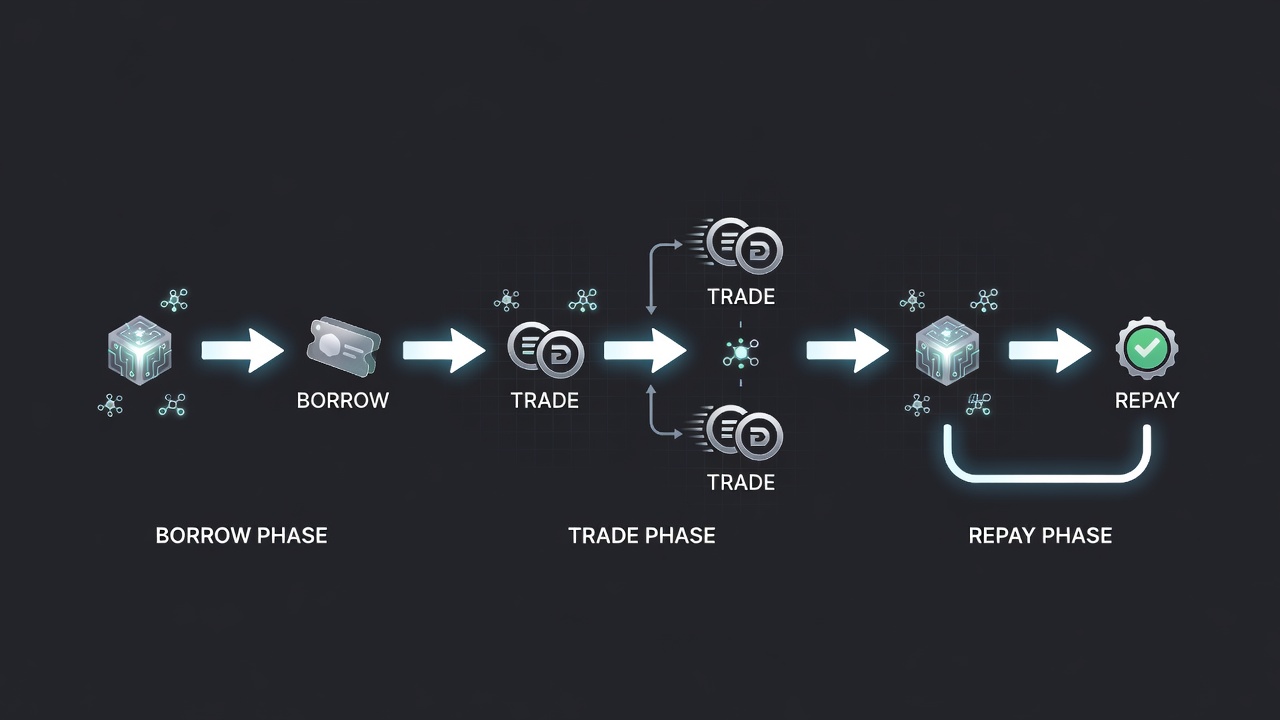
Flash loans have become a cornerstone of capital-efficient trading in decentralized finance. These uncollateralized loans allow users to borrow substantial amounts of cryptocurrency instantly, provided the funds are repaid within the same blockchain transaction. In 2026, flash loan arbitrage remains one of the most accessible strategies for traders seeking profits without tying up personal capital. This approach leverages the atomic nature of blockchain transactions to execute complex strategies that would otherwise require significant upfront funding, opening doors for both retail and institutional participants in the DeFi ecosystem.
This guide explores flash loan mechanics across leading protocols, provides a detailed step-by-step workflow for arbitrage opportunities, and includes practical code examples. We also cover risk management, gas optimization, and regulatory considerations relevant in 2026. Whether you are a beginner exploring DeFi or an advanced user refining strategies, understanding these elements is essential for success in the evolving landscape of decentralized finance. The rapid growth of layer-2 networks and improved oracle reliability has further enhanced the viability of flash loan strategies this year.
How Flash Loans Work: Core Mechanics
Flash loans operate on smart contract logic. A borrower requests funds, executes operations such as arbitrage or liquidation, and repays the loan plus fees in one atomic transaction. If repayment fails, the entire transaction reverts, protecting lenders from default risk. This mechanism relies on the EVM's ability to execute all steps sequentially and revert changes if conditions are not met, ensuring no funds are lost even in volatile market conditions.
Key protocols include Aave and dYdX, which dominate flash loan volume. These platforms integrate with decentralized exchanges like Uniswap for seamless arbitrage execution. The atomicity ensures that no partial execution occurs, making flash loans uniquely suited for high-frequency trading opportunities across multiple protocols without exposing users to counterparty risk. Developers often combine flash loans with flash swaps to maximize efficiency in multi-hop trades.
Comparing Major Flash Loan Platforms
Selecting the right platform is critical for effective arbitrage. Here is a detailed comparison of leading options in 2026:
- Aave: Supports multiple assets with low fees and robust liquidity pools. Ideal for complex multi-step arbitrage involving stablecoins and major cryptocurrencies. It offers flexible repayment options and strong developer documentation, making it a top choice for beginners and experts alike.
- dYdX: Focuses on perpetuals and offers competitive rates for high-volume traders. Its emphasis on derivatives makes it suitable for strategies involving leveraged positions and cross-margin trading.
- Balancer and MakerDAO: Provide niche flash loan capabilities for specific use cases like liquidity provision or vault interactions. Balancer excels in weighted pool arbitrages while MakerDAO supports DAI-related operations with unique stability mechanisms.
Platform choice depends on asset availability, fee structures, and integration with DEX aggregators. Always review current liquidity depths and supported chains before committing to a protocol, as network congestion can impact execution speed significantly.
Step-by-Step Arbitrage Execution Guide
Follow this beginner-friendly workflow checklist for successful flash loan arbitrage:
- Identify price discrepancies across DEXes using on-chain data tools such as aggregators or custom scripts. Look for spreads exceeding typical fees and slippage, often targeting stablecoin or blue-chip pairs.
- Write or deploy a smart contract that borrows via flash loan, executes trades, and repays. Ensure the contract handles approvals and swaps correctly while incorporating fallback mechanisms.
- Simulate the transaction on a testnet to verify profitability after fees. Use tools like Tenderly or Hardhat for detailed debugging and to catch edge cases early.
- Submit the transaction with optimized gas parameters during periods of low network activity to improve success rates.
- Monitor and log results for future refinements, tracking metrics like success rate and net profit margins across multiple attempts.
Here is a simplified Solidity code snippet for an arbitrage contract:
pragma solidity ^0.8.0;
import "@aave/core-v3/contracts/flashloan/base/FlashLoanSimpleReceiverBase.sol";
contract Arbitrage is FlashLoanSimpleReceiverBase {
    function executeOperation(...) external override returns (bool) {
        // Perform arbitrage trades here
        // Repay loan + premium
        return true;
    }
}
Risk Mitigation Techniques
Flash loans carry smart contract, oracle, and slippage risks. Always audit contracts through reputable firms, use reputable oracles like Chainlink, and set strict slippage tolerances. Diversify across protocols to avoid single-point failures. Additional techniques include implementing circuit breakers in your contracts and maintaining emergency withdrawal functions. Backtesting strategies on historical data helps identify edge cases before live deployment. It is also wise to monitor mempool activity to anticipate front-running attempts by bots.
Advanced Gas Optimization Tips
Minimize gas costs by batching operations, using efficient libraries like OpenZeppelin, and timing transactions during low network congestion. Consider layer-2 solutions for reduced fees in 2026 environments. Further optimizations involve using assembly-level code for critical paths, caching storage variables, and leveraging gas-efficient data structures. Monitoring gas prices via oracles can also help schedule executions optimally, while calldata compression techniques can shave additional costs on complex transactions.
Real Transaction Examples and Tools
Successful 2026 arbitrage often involves stablecoin pairs or ETH-BTC discrepancies. Review on-chain explorers for recent examples demonstrating profitable execution paths. Common tools include web3.js or ethers.js for frontend integration, along with The Graph for querying blockchain data efficiently. These resources enable developers to build robust monitoring dashboards that alert users to emerging opportunities in real time.
Common Mistakes to Avoid
New users frequently overlook transaction simulation, leading to failed executions and wasted gas. Another pitfall is ignoring protocol-specific fee structures, which can erode thin arbitrage margins. Always verify contract permissions and avoid hardcoding addresses that may change during upgrades. Educating yourself on these issues through community forums and documentation can prevent costly errors.
FAQ: Common Errors and Regulatory Considerations
What causes flash loan transactions to fail?
Common errors include insufficient repayment amounts, failed trade executions due to slippage, or contract bugs. Always test thoroughly on testnets and include comprehensive error handling to improve reliability.
Are flash loans regulated in 2026?
Regulatory landscapes vary by jurisdiction. Users should consult legal experts, as DeFi activities may fall under securities or money transmission rules in certain regions. Refer to Ethereum Foundation resources for developer guidelines.
How do I get started safely?
Begin with small test transactions on platforms like Aave and review Uniswap documentation for integration best practices. Explore Chainlink for reliable oracle integrations.
What resources help with ongoing learning?
Stay updated via protocol blogs, developer Discord channels, and on-chain analytics platforms to adapt to evolving market conditions and protocol upgrades.
Conclusion
DeFi flash loans offer powerful arbitrage opportunities when executed with proper planning. By understanding protocols, following structured workflows, and prioritizing risk management, traders can leverage these tools effectively in 2026 and beyond. Continuous learning and adaptation to protocol updates will remain key to long-term success in this dynamic space, empowering users to navigate DeFi with greater confidence and precision.


No comments yet. Be the first!