 CryptoChain Blog
Introduction to DeFi Index Funds in 2026
DeFi index funds provide a streamlined way to gain diversified exposure across multiple cryptocurrencies and protocols without the need to actively manage individual positions. In 2026, these products have matured into essential tools for both intermediate users seeking efficiency and those comparing indices versus manual allocation. By automating basket construction, rebalancing, and fee optimization, DeFi indices simplify portfolio management while targeting passive strategies that reduce emotional decision-making during volatile market periods.
This comprehensive guide covers top index protocols, token weighting methodologies, rebalancing mechanics, and fee comparisons in detail. It includes step-by-step setup instructions, real-world examples with current 2026 context, risk considerations such as smart contract exposure, and a FAQ addressing common pitfalls. Whether you are looking to simplify your portfolio or explore automated strategies, understanding these elements is crucial for long-term success in decentralized finance.
Top DeFi Index Protocols
Several leading protocols dominate the DeFi index space. Index Coop offers tokenized baskets like the DPI for broad sector exposure across lending, trading, and derivatives protocols. Set Protocol enables customizable sets with automated management features that allow users to define precise rules for asset inclusion. Other notable options include PowerPool for governance-focused baskets and Enzyme Finance for more advanced on-chain fund management. These platforms integrate with major blockchains such as Ethereum and various layer-2 solutions to reduce transaction costs and improve accessibility for global users.
Token Weighting Methodologies
Weighting determines how capital is allocated within a basket and directly influences risk and return profiles. Common approaches include market-cap weighting, which assigns larger portions to bigger assets based on their circulating supply and price, and equal weighting for balanced exposure that prevents over-concentration in dominant tokens. Some protocols employ volatility-adjusted or liquidity-based methods to optimize performance by favoring assets with stable trading volumes. Choosing the right methodology depends on your goals—market-cap weighting suits broad market trends, while equal weighting reduces concentration risk in smaller, higher-volatility assets. Intermediate investors often experiment with hybrid models that blend multiple approaches for customized outcomes.
Rebalancing Mechanics Explained
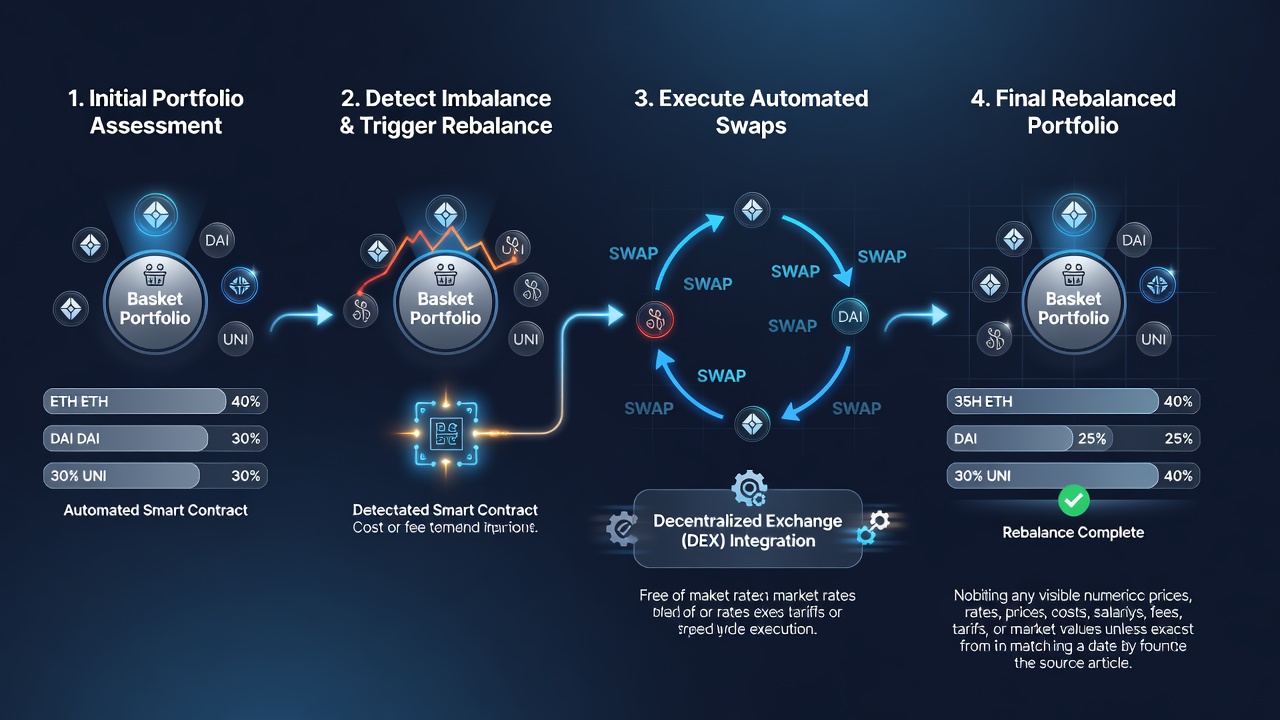
Rebalancing keeps the basket aligned with its target weights over time. Automated protocols trigger rebalances based on thresholds such as percentage deviations, fixed time intervals like weekly or monthly, or volatility signals that respond to market swings. This process involves selling overperforming assets and buying underperformers, typically executed via decentralized exchanges to minimize slippage and front-running risks. Understanding these mechanics helps users anticipate potential tax implications in certain jurisdictions and overall transaction costs that can accumulate. In practice, a well-designed rebalancing rule set can maintain diversification even during rapid market shifts without requiring constant user intervention.
Fee Comparisons Across Protocols
Fees vary by platform and strategy complexity, impacting net returns especially for passive holders. Management fees are typically charged as a percentage of assets under management, while some strategies add performance fees for outperformance relative to benchmarks. Users should compare protocols by reviewing transparent fee structures directly on official dashboards and documentation. Lower overall fees enhance long-term compounding effects, making them particularly valuable for those pursuing set-it-and-forget-it approaches in DeFi.
Step-by-Step Setup Instructions
- Connect a compatible non-custodial wallet such as MetaMask or WalletConnect to your chosen protocol interface while ensuring you are on the correct network.
- Browse available index products or create a custom basket by selecting desired sectors, assets, and allocation parameters.
- Define weighting rules, rebalancing frequency, and any yield optimization toggles if supported by the protocol.
- Review the full composition, simulated performance, and associated smart contract permissions before depositing funds.
- Approve necessary token allowances and execute the initial deposit through the protocol's interface.
- Monitor ongoing performance, rebalancing events, and any governance proposals through integrated analytics dashboards.
- Periodically review and adjust parameters as market conditions, personal risk tolerance, or protocol upgrades evolve.
Real-World Examples with Current 2026 Context
Consider a diversified DeFi basket focused on lending protocols, decentralized exchanges, and oracle networks. Such strategies integrate automated yield opportunities from liquidity provision and lending markets, providing exposure that would otherwise require managing dozens of individual positions. Users often observe more stable performance trajectories compared to concentrated manual allocation during sideways or moderately bullish markets. Reviewing on-chain analytics platforms regularly provides the latest context for how these baskets behave under varying conditions.
Risk Considerations Including Smart Contract Exposure
Key risks include smart contract vulnerabilities that could lead to loss of funds, impermanent loss when baskets incorporate liquidity pool positions, and broader regulatory shifts affecting protocol operations. Diversification across indices mitigates single-asset risks but introduces dependency on the underlying protocol's security and governance. Practical mitigation steps include using only audited contracts from established teams, enabling multi-signature wallet controls for larger positions, and maintaining awareness of potential oracle manipulation or governance attacks. Additional layers such as coverage from decentralized insurance protocols can help offset certain tail risks, though they add their own costs and complexities.
Comparing Indices vs Manual Allocation
Indices excel in time savings, professional-grade automation, and consistent adherence to predefined rules that remove emotional biases. Manual allocation offers complete customization and the ability to react quickly to specific opportunities but demands constant oversight, research, and execution. Many intermediate users adopt a hybrid model—allocating the majority of capital to indices for core diversified exposure while using manual tactics for smaller satellite positions that allow tactical adjustments.
Practical Tips for Long-Term Management
- Start with smaller test allocations to familiarize yourself with the interface and rebalancing behavior before scaling up.
- Track total costs including gas fees, management fees, and any slippage on a spreadsheet for accurate performance measurement.
- Stay informed about protocol upgrades and community governance votes that could alter basket composition or fee structures.
- Consider tax implications in your jurisdiction by documenting all deposits, withdrawals, and rebalancing events.
- Regularly compare your index performance against simple benchmarks like holding major assets to evaluate whether the automation adds value.
Conclusion
DeFi index funds represent a powerful evolution in passive investing within decentralized finance. By mastering basket construction, weighting choices, and ongoing management, users can achieve efficient diversification while navigating the unique risks of the space. Begin with established protocols, implement the steps outlined above, and maintain a disciplined approach to monitoring and adjustment for the best results.
FAQ
What are common pitfalls when starting with DeFi indices?
Overlooking smart contract audits, ignoring cumulative fee impacts, and failing to understand rebalancing triggers are frequent mistakes. Always verify protocol security through public audit reports and model total costs before committing significant capital.
How do rebalancing fees affect overall yields?
Frequent or aggressive rebalancing can erode returns through accumulated transaction costs and slippage. Opt for protocols with optimized mechanics and reasonable thresholds to balance portfolio alignment with cost efficiency.
Are DeFi indices suitable for beginners?
Intermediate users with some DeFi experience benefit most immediately, but beginners can start with established products after learning wallet security fundamentals and basic concepts like gas fees and token approvals.
What role does governance play in index funds?
Many protocols allow token holders to vote on methodology changes, new asset inclusions, or fee adjustments. Staying engaged with governance helps ensure the basket continues to align with your investment thesis over time.

No comments yet. Be the first!