 CryptoChain Blog

Introduction to Institutional DeFi Adoption in 2026
As decentralized finance continues to mature into a mainstream asset class, institutional players ranging from hedge funds and pension managers to family offices are actively exploring safe entry points into DeFi ecosystems. By mid-2026, the convergence of maturing blockchain infrastructure, clearer regulatory signals, and institutional-grade tooling has created a viable pathway for large-scale participation. This comprehensive guide examines how funds can navigate evolving regulations while deploying capital efficiently. It covers compliance frameworks, custody best practices, protocol selection criteria, and risk controls specifically designed for substantial allocations. Institutions must strike a delicate balance between leveraging DeFi's yield opportunities and maintaining the rigorous oversight expected by stakeholders and regulators alike.
The 2026 landscape features hybrid models where permissioned liquidity pools operate alongside public blockchains. These environments allow verified participants to interact with decentralized protocols while satisfying institutional mandates around transparency and accountability. Funds that invest early in robust compliance infrastructure are positioned to capture alpha that remains inaccessible to retail participants.
Understanding the 2026 Regulatory Landscape
Global regulators have made significant progress in establishing frameworks that address DeFi's unique risks without stifling innovation. In the United States, the SEC continues to clarify expectations around decentralized applications and custody arrangements. Internationally, organizations such as the Financial Action Task Force provide updated guidance on anti-money laundering standards that directly impact on-chain activities. Funds entering DeFi must monitor these developments closely, as non-compliance can result in restricted access to key liquidity venues or reputational damage.
Permissioned liquidity pools have gained prominence as a regulatory-friendly bridge. These pools require participants to complete identity verification before accessing capital pools, thereby reducing exposure to sanctions-listed addresses and illicit financing risks. Institutions benefit from built-in controls that align with traditional finance requirements while still accessing competitive yields unavailable in conventional markets.
Building Robust Compliance Frameworks
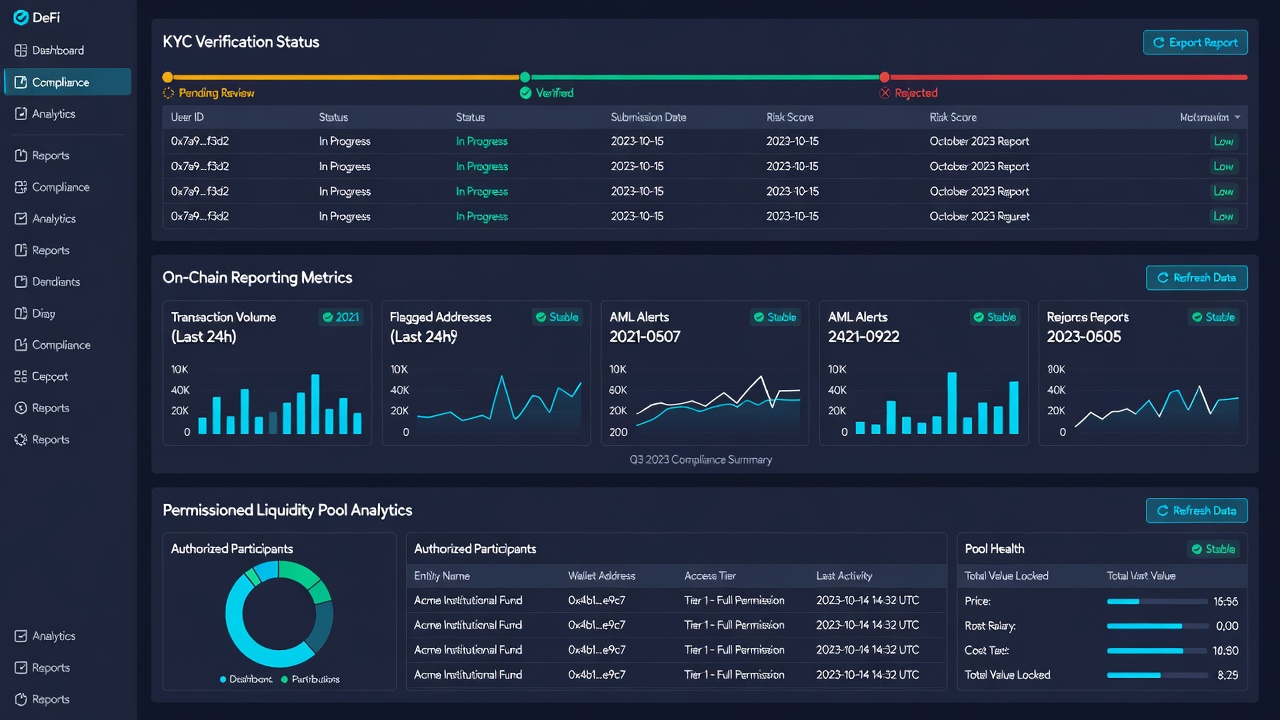
Successful institutional entry begins with comprehensive compliance frameworks that integrate seamlessly with blockchain technology. KYC integration is the foundation: leading providers now offer APIs that embed identity verification directly into smart contract logic, allowing only pre-approved wallets to interact with institutional pools. Beyond basic KYC, funds implement ongoing transaction monitoring and sanctions screening to maintain compliance throughout the investment lifecycle.
On-chain reporting tools have evolved considerably. Modern solutions automatically capture transaction metadata, calculate realized gains, and generate jurisdiction-specific reports that integrate with enterprise resource planning systems. This automation reduces operational overhead and minimizes errors during tax season. Funds should also establish internal policies for governance, including multi-party approval workflows for large deployments and regular compliance audits conducted by specialized blockchain forensics firms.
Custody Best Practices for Institutional Capital
Custody represents one of the highest-risk areas for institutional DeFi participants. Best practices emphasize a layered approach combining multi-signature wallet architectures with institutional-grade hardware security modules. Many funds adopt hybrid custody models that keep the majority of assets in cold storage while maintaining limited hot wallets connected to approved protocols through secure bridges. These bridges incorporate timelocks and withdrawal limits to prevent rapid unauthorized movements.
Risk controls extend beyond custody to include dynamic position sizing algorithms and automated circuit breakers that halt transactions during extreme market volatility. Institutions also maintain detailed incident response plans that outline procedures for smart contract exploits or key compromise events. Regular penetration testing and third-party security audits are essential components of any institutional custody strategy.
Selecting Scalable Protocols for Large Deployments
Not every DeFi protocol is suitable for institutional-scale capital. Selection criteria should prioritize protocols with proven track records, comprehensive audit histories from multiple reputable firms, and governance structures that accommodate institutional input. Funds evaluate total value locked trends, liquidity depth, and the presence of institutional-specific features such as customizable compliance dashboards and enhanced reporting APIs.
Comparison of Leading Institutional DeFi Platforms
- Platform A specializes in permissioned fixed-income products with integrated KYC workflows and strong governance participation rights for large token holders.
- Platform B offers advanced on-chain analytics suites that provide real-time compliance scoring and automated tax reporting exports tailored for asset managers.
- Platform C focuses on cross-chain interoperability with established institutional custody partnerships and transparent fee mechanisms that scale efficiently for large positions.
Institutions should conduct pilot programs on each platform before committing significant capital, testing both technical integration and compliance reporting accuracy under realistic conditions.
Real-World Case Studies of Successful Entries
In early 2026, a prominent European asset manager successfully deployed capital into a permissioned yield protocol after completing an extensive nine-month compliance review. The firm established dedicated compliance committees, partnered with a specialized KYC provider, and implemented custom on-chain monitoring dashboards. Their phased rollout began with a small test allocation that was gradually increased as operational confidence grew.
Another example involves a North American pension fund that utilized on-chain reporting tools to satisfy multi-jurisdictional tax obligations. By integrating these tools with their existing accounting infrastructure, the fund reduced manual reconciliation efforts by more than half while maintaining full audit trails for regulatory examinations. These cases demonstrate that thorough preparation and technology selection are critical success factors.
Step-by-Step Onboarding Checklist
- Engage specialized legal counsel to perform a regulatory impact assessment across all relevant jurisdictions.
- Select and integrate KYC/AML providers capable of embedding verification into smart contract permissions.
- Design and implement a custody architecture that includes cold storage, secure bridges, and recovery procedures tested through tabletop exercises.
- Evaluate and select protocols based on liquidity, audit quality, and institutional feature sets, then conduct pilot deployments.
- Establish continuous monitoring systems for on-chain activity, including alerts for suspicious patterns or protocol changes.
- Develop internal policies covering governance approvals, incident response, and periodic compliance reviews by external auditors.
- Create documentation packages for stakeholders that explain risk controls, expected returns, and regulatory safeguards in clear language.
Addressing Tax Reporting and Audit Requirements
FAQ
How do institutions handle DeFi tax reporting in 2026? Automated on-chain analytics platforms capture every transaction and produce jurisdiction-specific reports that integrate directly with traditional accounting software, significantly reducing manual effort while improving accuracy.
What audit requirements apply to institutional DeFi participation? Funds typically undergo annual third-party audits covering smart contract interactions, custody arrangements, and compliance control effectiveness, supplemented by continuous on-chain verification of permissioned access rules.
Are there specific risks with permissioned liquidity pools? While permissioned pools enhance regulatory alignment, they can introduce centralization points that require ongoing governance oversight and contingency planning for operator failure.
Common Mistakes to Avoid
Many institutions underestimate the complexity of integrating traditional compliance systems with blockchain environments. Another frequent error is selecting protocols based solely on yield without sufficient attention to audit quality or governance resilience. Funds should also avoid rushing deployments without comprehensive pilot testing, as operational issues discovered after large allocations can prove costly.
Conclusion
Institutional DeFi adoption in 2026 rewards organizations that treat compliance as a core capability rather than an afterthought. By combining proven custody practices, integrated KYC solutions, carefully vetted protocols, and thorough onboarding processes, funds can access decentralized opportunities while meeting the expectations of regulators and investors. Continuous monitoring of regulatory developments and technological advancements will remain essential for sustained success in this rapidly evolving space.


No comments yet. Be the first!