 CryptoChain Blog

Introduction to DeFi Invoice Tokenization in 2026
Supply chain finance is evolving rapidly in 2026 as DeFi protocols enable investors to access real-world yields from tokenized invoices. Unlike volatile crypto farming, invoice tokenization offers exposure to actual business receivables with predictable cash flows. Centrifuge remains a leading platform for onboarding real invoices, minting asset-backed tokens, and distributing yields to participants seeking stability outside speculative markets. This approach bridges traditional trade finance with blockchain transparency, allowing both originators and investors to benefit from verified receivables without intermediaries taking large cuts. In an era where supply chains face disruptions from geopolitical events and economic shifts, tokenized invoices provide a resilient alternative for generating consistent returns.
This guide covers practical steps for wallet setup, invoice onboarding, token minting, yield calculations, risk assessment, and on-chain tracking. It also compares available pools and addresses 2026 compliance requirements, giving readers actionable insights to participate confidently.
Why Invoice Tokenization Appeals to Yield Seekers
Tokenized invoices represent short-term trade receivables from verified suppliers and buyers. In 2026, platforms like Centrifuge integrate with compliance tools that verify invoice authenticity and track performance on-chain. Investors earn yields from the discount rates applied to these invoices, typically backed by real trade flows rather than algorithmic emissions. The appeal lies in the asset-backed nature of the investments, which reduces exposure to the sharp price swings common in cryptocurrency markets. Many participants appreciate the alignment with real economic activity, such as manufacturing and logistics payments that occur regardless of token price movements.
Key advantages include lower correlation to crypto volatility and integration with regulatory frameworks emerging in major jurisdictions. This makes the strategy suitable for conservative portfolios aiming for steady income streams.
Wallet and Platform Setup: Step-by-Step Guide
Begin by preparing a compatible non-custodial wallet such as MetaMask or Rabby. Connect to Ethereum mainnet or supported Layer-2 networks used by Centrifuge. Security should be a priority from the outset, especially when handling real-world asset exposures.
- Install and secure your wallet with a hardware device for large positions, ensuring seed phrases are stored offline.
- Acquire the native gas token and any required stablecoins for pool participation, while testing small transfers first to confirm network compatibility.
- Visit the official Centrifuge app at centrifuge.io and connect your wallet, reviewing all permissions before approval.
- Complete KYC or KYB verification if required by the pool's compliance module in 2026, uploading necessary business documentation through secure channels.
- Approve token allowances for the Tinlake or successor contracts, double-checking gas fees and contract addresses displayed on the interface.
- Monitor your dashboard for any pending actions, such as signature requests or additional confirmations needed for tranche participation.
Always verify contract addresses through official documentation to avoid phishing risks, and consider using a dedicated wallet solely for DeFi activities to isolate potential threats.
Onboarding Real Invoices and Minting Tokens
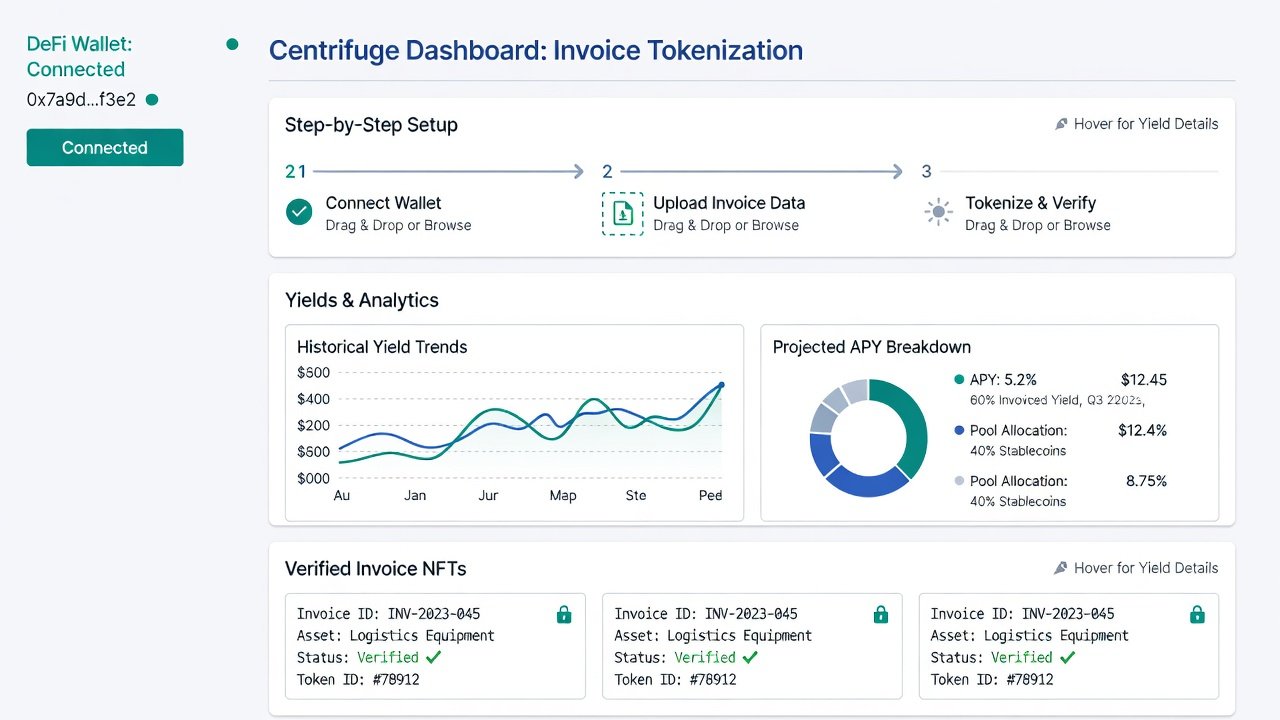
Originators upload invoice documents through the Centrifuge portal. The protocol verifies details via oracles and off-chain data providers. Once validated, the invoice is tokenized into an NFT representing the asset. This process creates immutable records of the underlying trade agreement while maintaining confidentiality for sensitive commercial terms. Investors can then review available assets and decide on participation levels based on risk tolerance and expected tenor.
Investors then mint interest-bearing tokens by depositing into senior or junior tranches. The process creates on-chain proof of ownership while preserving privacy for underlying trade parties. For example, a logistics company might tokenize a batch of supplier invoices due in 45 days, allowing DeFi users to fund the early payment at a discount and earn the spread upon repayment.
Yield Calculations and Pool Comparisons
Yields derive from the difference between the invoice face value and the discounted purchase price. Senior tranches typically offer lower but more protected returns, while junior tranches absorb first losses for higher potential yields. To calculate expected returns, participants examine the discount rate, expected repayment timeline, and any protocol fees deducted automatically. Transparent dashboards display historical performance metrics, enabling informed allocation decisions across multiple originators.
Compare pools by reviewing historical default performance, average tenor, and overcollateralization ratios directly on the Centrifuge dashboard. Diversify across multiple originators to reduce concentration risk. Some pools focus on specific industries like manufacturing or agriculture, while others span global trade routes. Evaluating these differences helps match investment choices with personal risk preferences and portfolio goals.
Risk Factors Including Default Rates
Primary risks include invoice default, where the buyer fails to pay. 2026 platforms provide transparent default rate data derived from on-chain repayment history. Additional risks encompass smart contract vulnerabilities, liquidity constraints during market stress, and regulatory shifts affecting cross-border trade finance. Understanding these elements requires reviewing pool-specific parameters such as reserve ratios and insurance coverage options where offered.
Always review pool-specific risk parameters and consider using insurance wrappers where available. Mitigation strategies include spreading investments across tranches and monitoring real-time repayment indicators to adjust positions proactively.
On-Chain Tracking Examples
Use block explorers and Centrifuge's analytics tools to monitor repayment status. Each tokenized invoice carries a unique identifier allowing investors to trace funding, repayment events, and yield distributions in real time. For instance, an investor can query the NFT contract to view timestamps of origination, funding, and final settlement, confirming that yields accrued as projected.
Integrate with dashboards that aggregate data across multiple pools for portfolio-level visibility. This level of transparency supports ongoing due diligence and helps identify any anomalies early in the asset lifecycle.
2026 Compliance Tools and Regulatory Landscape
Modern protocols embed automated compliance checks aligned with evolving standards from bodies such as the U.S. Securities and Exchange Commission. Features include investor accreditation verification and automated reporting for tax authorities. These tools streamline participation for both institutional and retail users while reducing administrative burdens associated with traditional trade finance.
Common Mistakes to Avoid
- Neglecting to verify invoice authenticity through multiple data sources before committing capital.
- Over-allocating to a single pool or originator without diversification.
- Ignoring gas fee fluctuations when executing minting or redemption transactions.
- Failing to review updated compliance requirements as regulations evolve throughout 2026.
- Assuming all pools carry identical risk profiles without examining historical performance data.
Frequently Asked Questions
How are tokenized invoice yields taxed?
Tax treatment varies by jurisdiction. Gains are often classified as ordinary income or capital gains depending on holding period and local rules. Consult a tax professional familiar with digital asset regulations in 2026. Platforms may provide transaction reports to assist with filing obligations.
What liquidity options exist for tokenized positions?
Secondary markets on decentralized exchanges and protocol-native redemption mechanisms provide exit options. Liquidity depth varies by pool maturity and market conditions, so participants should evaluate available venues before entry.
Can beginners participate without prior DeFi experience?
While basic wallet knowledge helps, many platforms offer guided interfaces and educational resources. Starting with smaller positions and reviewing documentation thoroughly reduces the learning curve effectively.
Conclusion
DeFi invoice tokenization on platforms like Centrifuge offers a compelling path to stable yields backed by real supply chain activity in 2026. By following structured onboarding processes, comparing pools carefully, and monitoring risks through on-chain tools, investors can build resilient portfolios outside traditional volatile farming strategies. The combination of transparency, compliance integration, and asset backing positions this sector for continued growth among yield-focused participants.
No comments yet. Be the first!