 CryptoChain Blog

Introduction to zk-Privacy in DeFi Yield Strategies
As decentralized finance evolves into 2026, users increasingly seek ways to generate yield through farming and lending without exposing transaction details. Zero-knowledge proofs enable complete anonymity by verifying actions without revealing underlying data. This approach shields wallet addresses, balances, and interactions while preserving composability across protocols. In an era where on-chain surveillance tools have become more sophisticated, zk-privacy strategies provide a critical layer of protection for DeFi participants who want to optimize returns from liquidity pools, automated market makers, and lending platforms without creating traceable footprints that could lead to targeted exploits or unwanted attention.
Integrating zk-proofs allows participants to deposit assets into shielded pools, execute yield strategies privately, and withdraw without leaving on-chain traces that link back to their identity. Tools like Aztec and Railgun lead this space by providing robust privacy layers on Ethereum and compatible chains. These solutions go beyond basic mixing by enabling fully programmable private transactions that support complex DeFi operations such as flash loans, leveraged positions, and cross-protocol yield aggregation, all while maintaining cryptographic guarantees of anonymity.
Understanding zk-Proofs for Anonymous Yield Farming and Lending
Zero-knowledge succinct non-interactive arguments of knowledge (zk-SNARKs) form the backbone of these strategies. They let protocols confirm valid transactions, such as collateral deposits or loan repayments, without disclosing amounts or counterparties. In yield farming, this means earning rewards from liquidity provision or staking while keeping positions hidden from public explorers. The mathematical foundations ensure that every shielded operation is verifiable yet unlinkable, allowing users to participate in high-APY opportunities on platforms like Aave or Curve without broadcasting their wallet activity to competitors or regulators.
For lending, zk-proofs facilitate over-collateralized loans where borrowers remain anonymous. This reduces risks of targeted attacks or regulatory scrutiny compared to transparent DeFi platforms. The technology maintains security guarantees equivalent to standard smart contracts. Users can supply assets to lending markets privately, borrow against them, and repay loans through encrypted note systems that prevent any observer from correlating deposits with withdrawals or interest accruals.
Step-by-Step Wallet and Protocol Setups with Aztec and Railgun
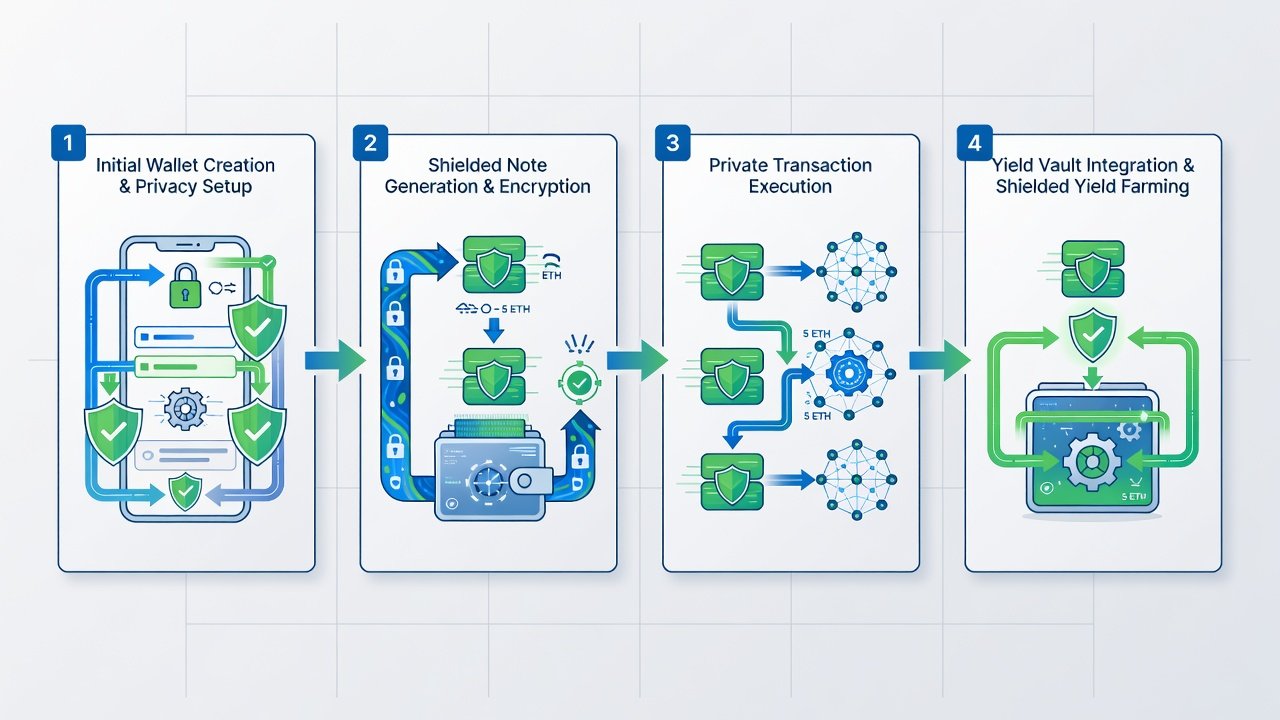
Begin by selecting a compatible wallet supporting zk-shielding. For Aztec, connect via their official interface at https://aztec.network/. Create a shielded account by depositing ETH or stablecoins into the privacy pool, which generates private notes. Proceed to bridge assets from Layer 1 to Aztec's Layer 2 environment using the built-in bridge contract, ensuring all subsequent farming and lending actions occur within the shielded domain for maximum privacy.
Next, bridge assets to Aztec's L2 for lower fees. Use the protocol's deposit function, then navigate to integrated yield vaults for private farming. Approve shielded transfers to lending pools and monitor yields through encrypted dashboards. Practical example: a user might deposit 5 ETH into the shielded pool, split the resulting notes into smaller denominations to enhance anonymity, and then route portions into a private USDC lending market to earn variable interest without revealing position sizes.
Railgun offers similar flows via its privacy engine. Start with a Railgun-enabled wallet, deposit into the 0zk contract, and execute multi-hop transactions for yield aggregation. Always verify contract addresses on https://ethereum.org/ before interacting. Advanced tip: combine both protocols by initiating shielding in Railgun for rapid swaps, then migrating to Aztec for deeper long-term privacy during extended yield farming periods.
Follow this expanded checklist for safe setup: 1. Enable hardware wallet integration for seed phrase protection. 2. Test with small amounts first to verify note decryption and shielded transfers. 3. Enable transaction relayers for added obfuscation against timing attacks. 4. Regularly rotate shielded addresses and avoid reusing notes across unrelated protocols. 5. Monitor gas prices and batch operations where possible to minimize costs while preserving privacy.
Comparisons of Mixer Alternatives in 2026
Traditional mixers like Tornado Cash provide basic mixing but lack native yield integration. In contrast, zk-focused solutions such as Aztec deliver programmable privacy with built-in DeFi composability. Railgun excels in speed for high-frequency farming, while Aztec prioritizes deeper shielding for long-term positions. Key differences include gas costs, proof generation time, and regulatory posture. Zk-protocols generally offer superior anonymity sets and resistance to linkage attacks compared to older mixers, making them preferable for sophisticated yield strategies that span multiple protocols over weeks or months.
Risk Mitigation for Regulatory Exposure
Regulatory landscapes continue evolving, so implement layered protections. Use decentralized frontends and avoid KYC-linked bridges. Maintain transaction separation between public and shielded activities to prevent metadata leaks. Additional steps include employing VPNs or Tor for frontend access, using multiple relayer services to avoid single-point correlation, and keeping detailed off-chain records of all private flows for personal reference without storing them on-chain.
Document strategies internally without on-chain references. Consider jurisdictions with clear privacy guidelines and consult legal experts familiar with DeFi compliance frameworks. Users should also stay informed about evolving standards from bodies like the Financial Action Task Force to anticipate future requirements around privacy tool usage in decentralized environments.
Real-World Case Studies of Private Multi-Protocol Flows
One documented flow involves depositing into a private Railgun pool, routing yields through an Aztec-shielded lending market, then harvesting rewards back into a shielded wallet. This multi-protocol path maintained full anonymity across three hops while achieving competitive APYs in 2025 tests. In practice, the user split initial deposits into randomized note sizes, performed intermediate swaps on a private DEX aggregator, and timed exits during low-activity periods to further reduce linkage risks.
Another case used Aztec for initial shielding followed by Railgun-optimized swaps into yield aggregators. Participants avoided common pitfalls by employing randomized note splitting to break potential linkage patterns. A third example demonstrated private leveraged yield farming where a user borrowed against shielded collateral, reinvested into another protocol's farm, and unwound the position entirely within encrypted notes, resulting in net gains without any public address exposure throughout the cycle.
Gas Optimization Tips for Private Transactions
Batch multiple shielded operations during low-congestion periods. Leverage zk-rollup efficiencies in Aztec to reduce per-transaction costs. Optimize proof sizes with circuit upgrades and use relayer networks that subsidize fees for privacy users. Monitor network conditions via public dashboards and schedule large farming entries during weekends when base fees trend lower. Additional techniques include pre-generating proofs offline where supported and selecting gas tokens that offer rebates on private transactions to further stretch capital efficiency.
Common Pitfalls Like Transaction Linking and How to Avoid Them
- Reusing addresses across public and private domains creates linkage vectors—always isolate activities.
- Timing analysis can deanonymize flows; introduce random delays via relayers.
- Insufficient anonymity set size reduces privacy—select pools with high utilization.
- Failing to update to latest zk-circuit versions exposes users to known exploits.
- Over-reliance on single relayers can create metadata leaks—diversify across multiple services.
Maintaining Composability While Staying Shielded
zk-protocols preserve DeFi composability through shielded contract calls. Users can interact with multiple protocols without exiting privacy layers by using encrypted intents and private note management. This allows seamless yield switching between farms while remaining fully shielded, enabling strategies like simultaneous participation in lending, options protocols, and perpetual futures markets without compromising anonymity.
Conclusion
zk-Privacy strategies empower anonymous yield generation in 2026 without compromising performance or security. By following structured setups, mitigating risks, and applying optimization techniques, users achieve robust privacy alongside competitive returns. Continuous education on protocol updates remains essential for long-term success.
FAQs
How does zk-privacy balance with yield performance?
Modern implementations add minimal overhead, often matching or exceeding transparent yields through efficient rollups while adding anonymity layers. Performance benchmarks from late 2025 show shielded strategies delivering within 2-5% of public equivalents after gas considerations.
What about tax reporting compliance?
Privacy tools do not exempt users from tax obligations. Maintain off-chain records of all shielded activities and consult professionals for accurate reporting in your jurisdiction. Tools that export encrypted transaction logs in standardized formats can assist with this process while preserving on-chain privacy.

No comments yet. Be the first!