 CryptoChain Blog
Introduction to DeFi P2P Lending in 2026
Decentralized finance has matured significantly by 2026, positioning peer-to-peer lending as a sophisticated alternative to traditional pooled protocols. Direct credit markets enable lenders to match individually with borrowers, potentially delivering superior yields through customized terms and transparent on-chain verification. This approach appeals to users who seek greater control over their capital allocation compared to the aggregated risk models found in many liquidity pools. Throughout this guide, we examine proven strategies for participating in these markets, with particular attention to established platforms such as Goldfinch and Maple. Participants benefit from enhanced visibility into borrower profiles but must develop expertise in credit assessment, collateral management, and portfolio diversification to navigate inherent risks effectively.
The evolution of DeFi P2P lending reflects broader shifts toward real-world asset integration and institutional participation. Unlike earlier DeFi iterations focused primarily on over-collateralized crypto loans, 2026 markets incorporate reputation scoring and hybrid collateral models. Lenders evaluating this space should first understand the fundamental differences from pooled systems, where returns are diluted across many participants and liquidity is often prioritized over yield optimization.
Key Platforms Driving Direct Credit Markets
Goldfinch specializes in real-world asset financing by connecting global investors with creditworthy borrowers in emerging economies. Its model emphasizes off-chain due diligence combined with on-chain transparency, allowing lenders to support projects ranging from renewable energy to small business expansion. Maple, meanwhile, caters primarily to institutional borrowers, facilitating undercollateralized loans through rigorous reputation and credit analysis frameworks. Both platforms have refined their interfaces to support seamless wallet interactions while maintaining robust security protocols.
Engaging with these platforms begins with thorough research into available borrower pools and historical performance data. Goldfinch users typically review pool-level metrics including average loan duration and repayment rates before committing funds. Maple participants evaluate borrower-specific credit scores derived from prior on-chain activity and external references.
Wallet Setup, Onboarding, and On-Chain Credit Scoring
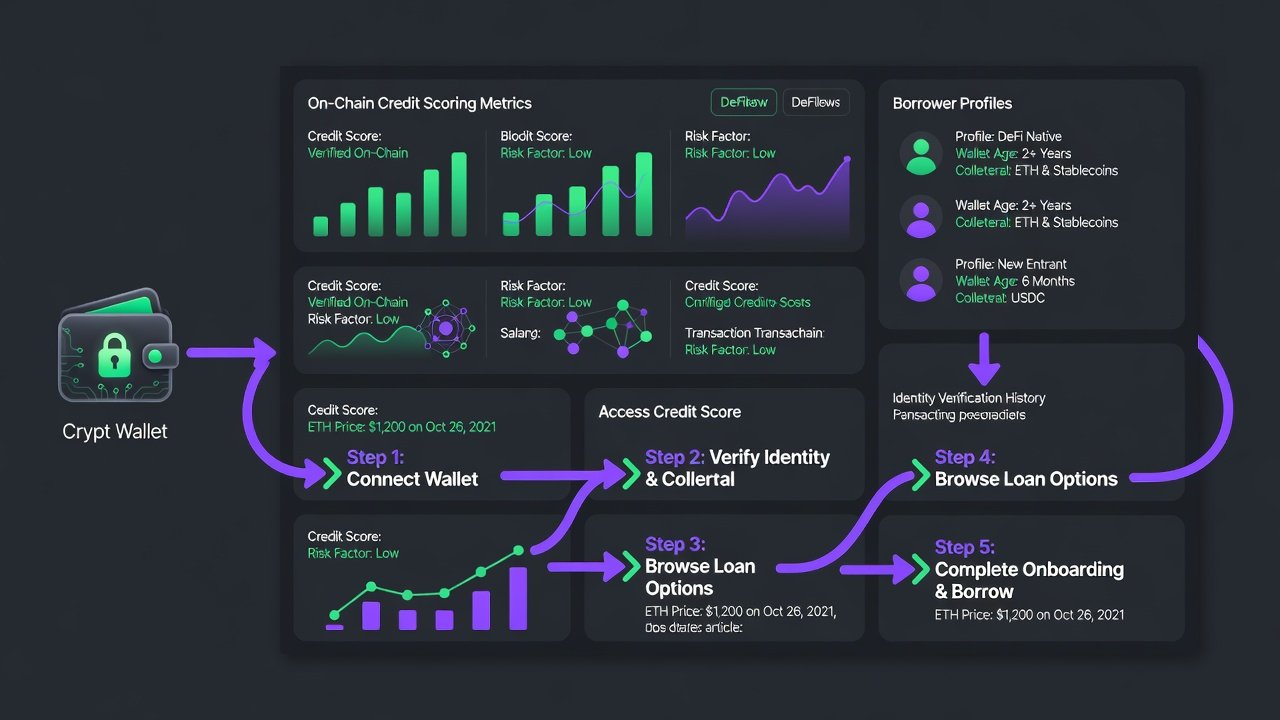
Setting up a secure wallet is the foundational step for any DeFi P2P activity. Recommended options include hardware wallets like Ledger for enhanced security or software solutions such as MetaMask configured for multi-network support. Users should enable two-factor authentication where available and maintain separate wallets for lending activities to isolate potential risks. Once configured, connect the wallet to the chosen platform interface, verify network compatibility (typically Ethereum mainnet or layer-2 solutions), and complete any required profile verification processes.
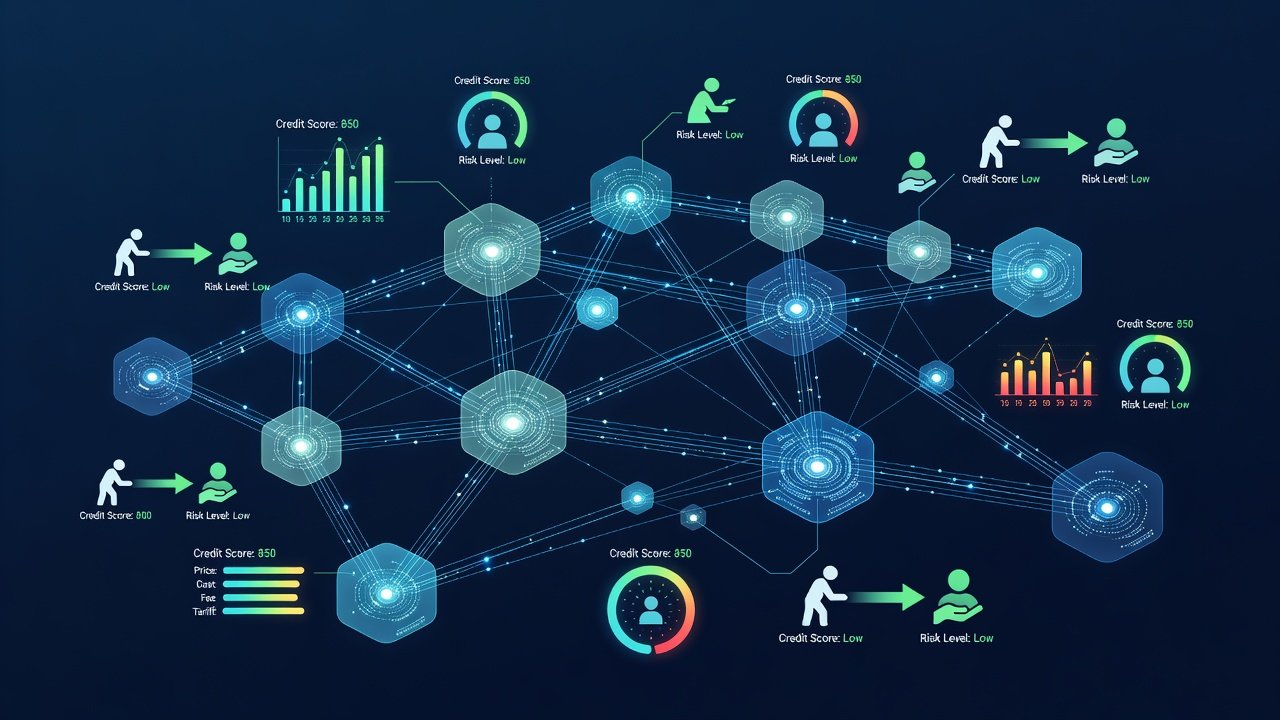
On-chain credit scoring aggregates multiple data points including transaction velocity, historical repayment behavior, and collateral utilization ratios. Advanced analytics tools parse public blockchain records to generate dynamic risk profiles that update in real time. Lenders can access these scores directly through platform dashboards, enabling informed decisions without reliance on traditional credit agencies. This process promotes financial inclusion while introducing new variables around data privacy and scoring algorithm transparency.
Comprehensive Risk Mitigation Techniques
Successful P2P lending demands proactive risk management. Core techniques encompass mandatory collateral thresholds calibrated to borrower history, strategic diversification across at least ten distinct loans, and continuous monitoring of repayment milestones. Over-collateralization remains a common safeguard, though some platforms permit partial collateralization when strong reputation signals exist. Lenders should also implement position sizing rules, capping any single exposure at a modest percentage of total portfolio value to limit downside impact from isolated defaults.
- Establish collateral minimums based on loan size and borrower tenure.
- Rebalance portfolios quarterly to incorporate new credit opportunities.
- Utilize platform alerts for early warning signs of repayment delays.
- Participate in governance proposals that influence risk parameters.
Additional layers include reviewing smart contract audit histories and considering supplemental insurance products offered by third-party providers. These steps collectively reduce vulnerability to market volatility and technical failures.
Real-World Case Studies of Successful P2P Deals
A prominent Goldfinch transaction in 2025 involved funding a microfinance initiative in Latin America that achieved full repayment ahead of schedule, bolstered by milestone-based disbursements verified through on-chain oracles. Another Maple-facilitated deal supported a European fintech startup with a reputation-backed loan that scaled successfully, demonstrating how institutional-grade credit assessments can facilitate larger ticket sizes with controlled default rates. These examples illustrate the value of combining quantitative scoring with qualitative project evaluation for optimal outcomes.
Direct Comparisons to Aave-Style Pooled Lending
Aave exemplifies pooled lending by offering instant liquidity and variable interest rates determined algorithmically. While convenient, this model often results in more modest yields because risk is distributed collectively. In contrast, direct P2P environments on platforms like Goldfinch and Maple allow lenders to negotiate or select terms that align with specific risk appetites, frequently producing higher net returns after accounting for platform fees. Liquidity trade-offs exist, however, as P2P loans typically lock capital until maturity. Investors prioritizing flexibility may favor Aave, whereas those focused on yield enhancement explore direct credit channels after thorough due diligence.
Practical Tools Including Yield Calculators and Default Workflows
Integrated yield calculators enable precise forecasting by incorporating variables such as interest rates, loan duration, expected default probabilities, and reinvestment assumptions. Users input portfolio allocations to generate scenario analyses that highlight break-even points and sensitivity to market shifts. These tools prove invaluable for stress-testing strategies before deployment.
Default handling follows structured workflows beginning with automated notifications and progressing to collateral liquidation or negotiated restructuring through platform governance. Lenders review predefined escalation paths outlined in smart contracts to understand recovery timelines and associated costs. Maintaining detailed records of each position facilitates efficient responses when issues arise.
Addressing Regulatory Shifts and Smart Contract Risks
How do evolving regulations impact DeFi P2P participants?
Regulatory developments worldwide emphasize transparency and consumer safeguards, prompting platforms to incorporate enhanced compliance modules. Lenders benefit from staying informed via official channels and adjusting strategies to accommodate jurisdiction-specific requirements without compromising core decentralization principles.
What smart contract vulnerabilities require attention?
Potential code exploits remain a persistent concern. Mitigation involves prioritizing platforms with multiple independent audits, limiting exposure during early protocol upgrades, and leveraging decentralized insurance where feasible. Education on common attack vectors further strengthens user resilience.
Conclusion
DeFi P2P lending strategies in 2026 offer compelling avenues for yield generation through direct borrower engagement. Mastery of platforms including Goldfinch and Maple, combined with disciplined risk practices and comparative analysis against pooled alternatives like Aave, equips participants to construct durable credit portfolios. Ongoing attention to on-chain tooling, regulatory landscapes, and operational workflows will determine long-term success in this dynamic segment of decentralized finance.
No comments yet. Be the first!