 CryptoChain Blog
Introduction to Safe Stablecoin Yield in DeFi
Stablecoins remain a cornerstone of decentralized finance in 2026, offering users a way to generate returns without the volatility of assets like Bitcoin or Ethereum. The key challenge is balancing attractive yields with peg stability. This guide explores practical strategies for yield farming on stablecoins like DAI and USDC, focusing on overcollateralized lending and liquidity provision while avoiding depeg events. As DeFi ecosystems expand across multiple blockchains, participants seek reliable methods to put idle stablecoin holdings to work. Overcollateralized approaches provide an extra layer of security by requiring borrowers to lock up more value than they receive in loans, creating buffers against market swings.
DeFi protocols have matured significantly, with mechanisms designed to maintain 1:1 pegs through collateralization and arbitrage incentives. Users can now access yields via established platforms without exposing capital to unnecessary risks. Whether you are a beginner or an experienced user, understanding these mechanics helps in selecting the right protocols and chains for your portfolio.
Understanding Peg Maintenance Mechanics
Stablecoin pegs are maintained through a combination of overcollateralization, redemption mechanisms, and market incentives. For DAI, the MakerDAO system uses crypto collateral exceeding the value of issued stablecoins, with stability fees adjusting supply and demand. When collateral values drop, automated liquidations kick in to restore balance. USDC relies on fiat reserves and Circle's redemption processes for direct convertibility, allowing holders to exchange tokens for dollars at any time through regulated channels.
In 2025, depeg events highlighted vulnerabilities in algorithmic models, but overcollateralized approaches proved more resilient. Protocols now incorporate real-time oracle feeds and liquidation thresholds to prevent cascading failures. Additional safeguards include circuit breakers that pause operations during extreme volatility and governance proposals that can quickly adjust parameters. These features collectively reduce the likelihood of sustained deviations from the target peg, giving users greater confidence when deploying capital in yield-generating activities.
DAI vs USDC: Cross-Chain Comparisons
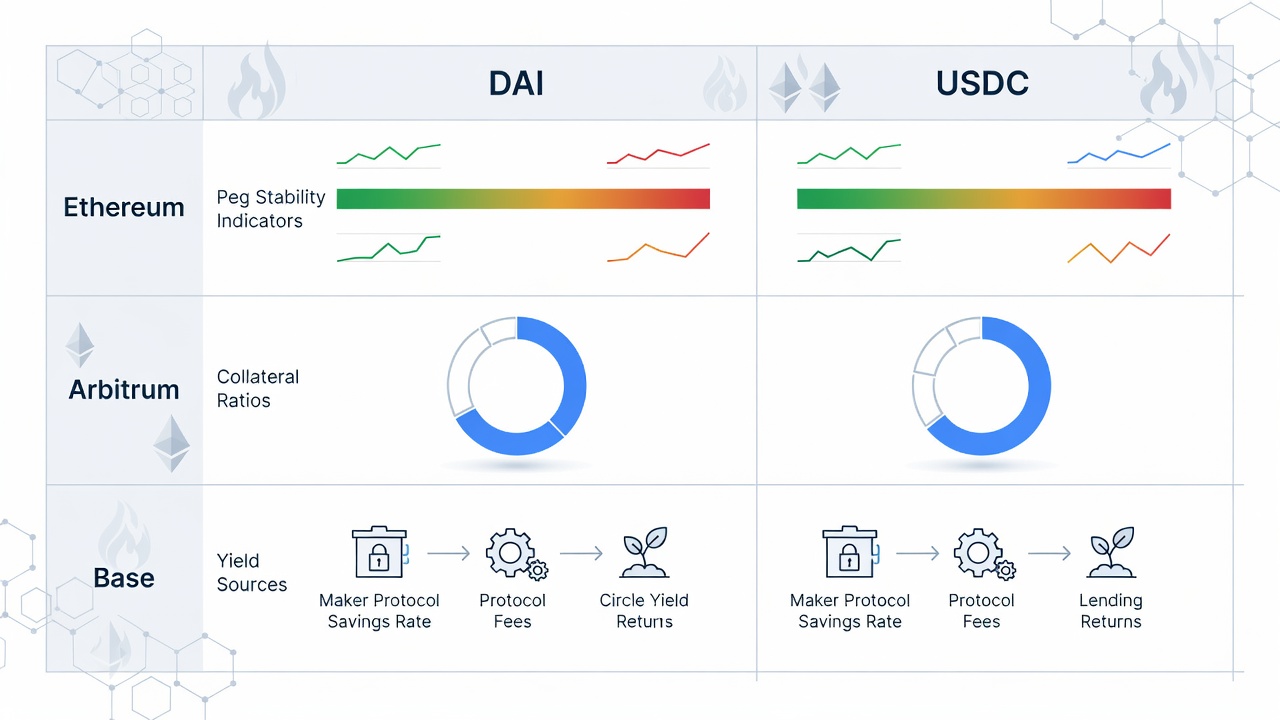
DAI offers decentralized governance and multi-collateral options across Ethereum, Arbitrum, and Optimism. Its permissionless nature allows anyone to participate in minting and governance, fostering a community-driven approach to risk management. USDC provides regulatory transparency and seamless bridging via official Circle integrations on chains like Base and Polygon, making it popular among institutions that prioritize compliance and auditability.
Both support liquidity provision on decentralized exchanges, but DAI tends to show slightly higher volatility during market stress due to its crypto-backed nature. USDC benefits from institutional adoption, resulting in tighter peg deviations historically. On Layer 2 networks, transaction costs are lower, enabling more frequent compounding of yields. For example, supplying DAI to lending markets on Arbitrum often experiences faster liquidation processes than on mainnet Ethereum because of reduced gas fees and quicker oracle updates. Users should evaluate chain-specific factors such as liquidity depth and bridge security before choosing where to deploy funds.
Learn more about MakerDAO's collateral framework for deeper protocol insights.
Top Protocols for Stablecoin Yield Farming
Leading platforms include Aave for overcollateralized lending, where users supply stablecoins as collateral to borrow against while earning interest. Lenders benefit from variable or stable rates depending on utilization, and borrowers pay fees that directly fund supplier returns. Curve Finance excels in liquidity provision for stablecoin pairs, minimizing slippage through concentrated liquidity pools that reward providers with trading fees plus governance tokens.
Additional options involve Morpho for optimized lending rates that match suppliers directly with borrowers to improve efficiency, and Spark Protocol for DAI-specific yields that integrate closely with MakerDAO parameters. Always verify current APYs through aggregators before committing funds, and consider factors like smart contract risk and insurance coverage options offered by some platforms. Diversifying across two or three protocols can further spread exposure while maintaining overall portfolio stability.
Step-by-Step Wallet and Strategy Setup
- Choose a non-custodial wallet like MetaMask or Rabby and fund it with ETH for gas fees on your target networks. Enable hardware wallet integration for larger positions to add an extra security layer.
- Bridge assets to your target chain using official bridges to avoid high Ethereum costs. Always double-check bridge contract addresses and recent security audits before initiating transfers.
- Connect to Aave or Curve, approve token spending, and supply stablecoins to begin earning. Start with smaller test transactions to confirm all approvals and interfaces function as expected.
- For liquidity provision, select balanced pools and monitor for impermanent loss using analytics tools. Set position ranges carefully on concentrated liquidity platforms to maximize fee capture during normal trading volumes.
- Set up automated alerts for liquidation thresholds or peg deviations via on-chain monitoring services. Schedule periodic reviews of your positions to rebalance or exit if market conditions change significantly.
2025 Depeg Event Case Studies
The March 2025 depeg involving certain algorithmic stablecoins underscored the importance of overcollateralization. DAI maintained its peg through rapid liquidations and governance interventions, while USDC recovered within hours via reserve transparency. Participants who had diversified across multiple stablecoins and chains experienced minimal disruption compared to those concentrated in single assets.
Lessons include diversifying across multiple chains and avoiding high-leverage positions during volatility spikes. Post-event analysis showed that protocols with strong oracle redundancy and clear liquidation waterfalls recovered faster. Users who had pre-set stop-loss or auto-rebalancing rules protected capital more effectively than those relying solely on manual monitoring.
Risk Mitigation Checklists
- Verify protocol audits and TVL metrics before depositing. Review recent governance proposals to understand upcoming changes that could affect yields or risk parameters.
- Maintain collateral ratios above minimum requirements by at least 20% to create a safety buffer against sudden price movements.
- Use hardware wallets for large holdings and enable multi-signature approvals for added protection against unauthorized transactions.
- Diversify stablecoin exposure between DAI and USDC to reduce single-point failures related to issuer-specific issues.
- Monitor on-chain data regularly for unusual redemption patterns that might signal emerging stress in the system.
Explore Ethereum's role in secure DeFi infrastructure.
Common Mistakes to Avoid
Many users chase the highest advertised yields without fully assessing smart contract risks or liquidity depth. Another frequent error is neglecting to monitor positions during weekends or holidays when market liquidity thins. Overusing leverage even in stablecoin strategies can amplify small peg deviations into larger losses. Finally, ignoring tax implications of frequent compounding or reward claims can lead to compliance issues later.
Practical FAQ
How do I handle tax reporting for stablecoin yields?
Track all interest accruals and liquidity rewards as taxable events in your jurisdiction. Use tools that export transaction histories compatible with common tax software, and maintain records of acquisition costs for accurate capital gains calculations.
What causes impermanent loss in stablecoin pools?
Even in stable pairs, minor price deviations can lead to loss when rebalancing occurs. Choose low-volatility pairs and rebalance periodically to mitigate impacts, or opt for single-sided liquidity options where available.
Are there automation tools for passive income?
Yes, services like Gelato and Keeper networks allow automated compounding and rebalancing without constant manual intervention, reducing gas costs over time while maintaining strategy consistency.
Check current DeFi yields and protocol data to stay informed.
Conclusion
By prioritizing overcollateralized strategies and established protocols, DeFi users can generate reliable stablecoin yields in 2026 while protecting against peg risks. Consistent monitoring and diversified approaches remain essential for long-term success in this evolving landscape.

No comments yet. Be the first!