 CryptoChain Blog
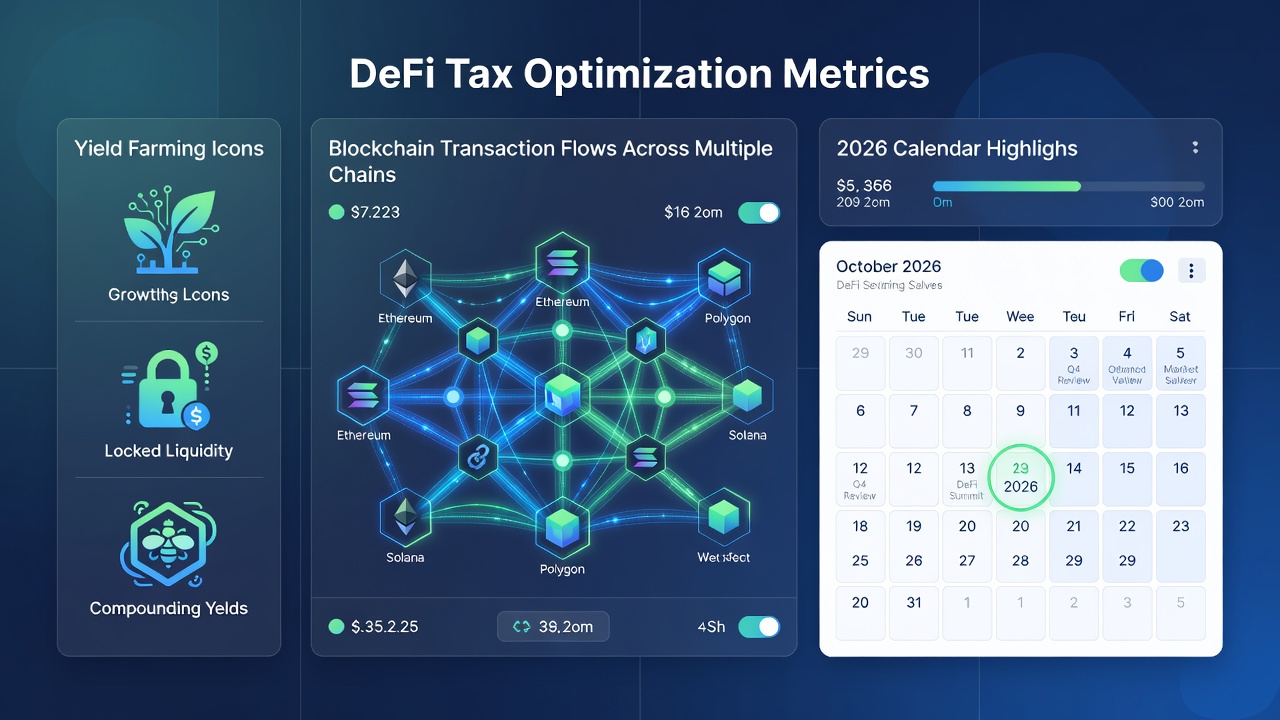
Introduction to DeFi Tax Optimization in 2026
Decentralized finance (DeFi) continues to evolve rapidly, bringing both opportunities and complex tax obligations. In 2026, users must navigate updated regulatory frameworks while optimizing their strategies to minimize liabilities legally. This guide provides actionable steps for tracking multi-chain transactions, handling yield farming income, reporting staking rewards, and addressing impermanent loss. Whether you are a beginner or advanced DeFi participant, these insights help maintain compliance across jurisdictions.
Regulatory updates in 2026 emphasize clearer reporting on cross-chain activities and automated income recognition. Staying informed reduces audit risks and supports optimized tax positions. DeFi participants now face heightened scrutiny on yield-generating activities, making proactive record-keeping essential for both compliance and strategic tax planning.
Tracking DeFi Transactions Across Multiple Chains
Effective tax optimization begins with comprehensive transaction tracking. DeFi activities span Ethereum, Solana, Binance Smart Chain, and others, each with unique wallet addresses and protocols. Manual tracking is error-prone; instead, aggregate data from blockchain explorers and connect wallets to specialized software. For instance, a user active on Uniswap for swaps and Aave for lending must reconcile Ethereum mainnet data with any bridged assets on Polygon or Arbitrum.
Start by exporting CSV files from each chain's explorer. Label every transaction type: swaps, liquidity provision, borrowing, and repayments. This foundation supports accurate cost basis calculations and income reporting throughout the year. Advanced users often maintain a master spreadsheet that cross-references wallet addresses with protocol-specific events, reducing the chance of missing taxable events during high-volume periods.
Handling Yield Farming Income
Yield farming generates rewards in tokens or stablecoins, which are taxable as ordinary income upon receipt. Calculate fair market value at the time of receipt using reliable price feeds. Compound rewards add complexity because each distribution creates a new taxable event. Consider a scenario where you farm on a protocol like Curve Finance: every reward harvest must be valued at the exact moment it enters your wallet, even if you immediately reinvest the tokens.
Best practice involves separating principal from rewards in your records. Use automated tools to timestamp and value each harvest. This approach prevents underreporting and simplifies year-end reconciliation. Additionally, track any fees paid in native tokens, as these may qualify as deductible expenses in many jurisdictions when properly documented.
Step-by-Step Example: Reporting Staking Rewards
- Identify all staking positions and their start dates across every supported chain.
- Record each reward distribution with date, token amount, and USD value at receipt using consistent pricing sources.
- Track subsequent sales or transfers of staked tokens separately for capital gains calculations.
- Apply any applicable deductions for transaction fees paid in native tokens during the staking period.
- Reconcile totals against your chosen tax software output before filing, adjusting for any chain-specific nuances like epoch-based distributions.
- Document any lock-up periods or slashing events that affect the final taxable amount.
This methodical process ensures staking income is reported consistently and supports optimization through loss harvesting where eligible. In one practical example, a user staking ETH on Lido would log each daily reward as income while noting the original staked principal remains untouched until withdrawal.
Understanding and Reporting Impermanent Loss
Impermanent loss occurs when providing liquidity to automated market makers. The divergence between holding assets versus providing liquidity creates potential capital losses that can offset gains. For example, depositing equal values of ETH and USDC into a Uniswap pool may result in a net loss if ETH's price surges dramatically, as your position rebalances automatically.
Document entry and exit prices for each liquidity position. Calculate the difference between actual returns and hypothetical holding returns. Many 2026-compliant platforms now offer built-in impermanent loss estimators to streamline this reporting. Users should also factor in any trading fees earned from the pool, which can partially offset the loss and must be reported as additional income.
Comparing Popular DeFi Tax Tools: Koinly vs CoinTracker
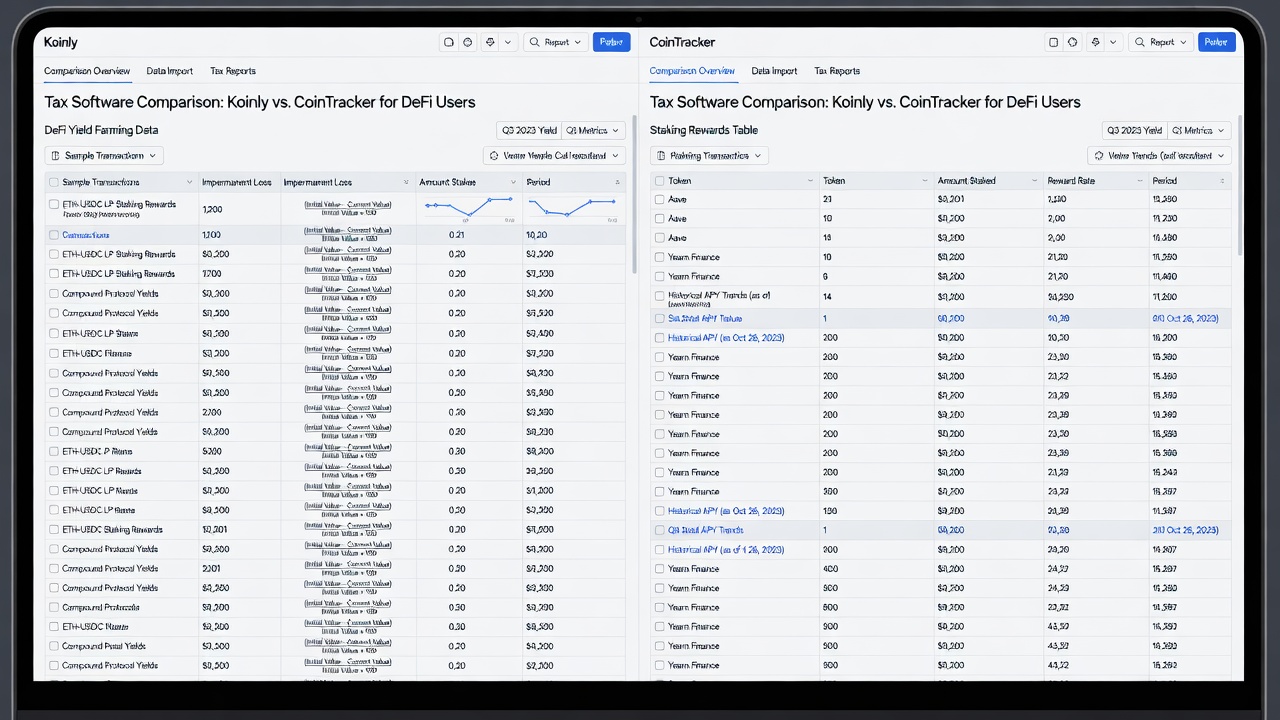
Choosing the right software is critical for accuracy and efficiency. Koinly excels at multi-chain support and DeFi protocol integrations, automatically importing data from major platforms like Aave, Compound, and PancakeSwap. CoinTracker offers strong portfolio tracking alongside tax reporting with user-friendly dashboards that highlight unrealized gains in real time.
Koinly provides more granular DeFi transaction categorization, making it ideal for complex yield farming strategies, while CoinTracker emphasizes real-time portfolio insights useful for ongoing optimization decisions. Evaluate both based on your specific chain usage and volume. Free trials allow testing before committing, and both platforms support direct CSV imports from wallets for users who prefer manual oversight. Advanced features such as tax-loss harvesting suggestions are available in each, though implementation details differ slightly by jurisdiction.
2026 Regulatory Updates Impacting DeFi
Authorities have clarified rules around decentralized autonomous organization (DAO) distributions and cross-border DeFi activity. Enhanced data-sharing agreements between chains and tax agencies require users to maintain detailed records for at least seven years. New guidance addresses the treatment of wrapped tokens and liquid staking derivatives, ensuring these are reported consistently with underlying assets.
Review official guidance from bodies such as the IRS and SEC regularly. Early adoption of compliant practices positions users favorably for future audits. Staying current with these developments also helps identify new opportunities for legal optimization, such as timing withdrawals around regulatory thresholds.
Practical Checklist for Safe DeFi Tax Optimization
- Connect all wallets and exchanges to your chosen tax platform at the start of each quarter.
- Verify automated categorizations and manually adjust any misclassified DeFi interactions such as flash loan repayments.
- Calculate and document fair market values using consistent pricing sources across all chains.
- Review impermanent loss and staking positions monthly to catch discrepancies early.
- Consult a tax professional familiar with DeFi before implementing advanced strategies like cross-chain bridging for tax purposes.
- Retain backup copies of all transaction exports and software reports in multiple secure locations.
- Monitor for any protocol-specific events such as airdrops or governance token distributions that create additional taxable events.
Common Mistakes to Avoid in DeFi Tax Reporting
Many users overlook the tax implications of bridging assets between chains or fail to report small reward distributions from lesser-known protocols. Another frequent error involves ignoring gas fees paid in volatile tokens when calculating net income. To avoid these pitfalls, maintain a quarterly review habit and cross-check software outputs against raw blockchain data at least twice per year.
Frequently Asked Questions
What are common pitfalls when reporting DeFi income?
Users often overlook small reward distributions or fail to account for gas fees paid in volatile tokens. Always reconcile software outputs against on-chain data and maintain timestamps for every event.
Can I deduct impermanent loss against other crypto gains?
Yes, when properly documented as a capital loss. Maintain clear records of position entry and exit values to support the claim during any review process.
Which tool is better for high-volume traders?
Koinly generally handles complex DeFi interactions more robustly, while CoinTracker suits users prioritizing portfolio visualization alongside reporting.
How do 2026 updates affect DAO token distributions?
Distributions from DAOs are now treated as ordinary income at fair market value upon receipt, requiring immediate valuation and record-keeping similar to traditional staking rewards.
Conclusion
DeFi tax optimization in 2026 demands diligent tracking, accurate valuation, and the right software. By following the strategies outlined—monitoring multi-chain activity, correctly reporting yield and staking income, and leveraging proven tools—you can achieve compliance while legally minimizing your tax burden. Implement the checklists provided and revisit your approach quarterly to stay ahead of regulatory changes and protect your financial position.
No comments yet. Be the first!