 CryptoChain Blog

Introduction to Tokenized Invoices in DeFi Supply Chain Finance
As decentralized finance matures into 2026, supply chain applications are emerging as a reliable source of stable yields for investors seeking alternatives to volatile crypto markets. Tokenized invoices represent a bridge between traditional trade finance and blockchain efficiency, allowing businesses to unlock liquidity while offering DeFi participants predictable returns backed by real-world receivables. This approach builds on the proven performance of trade finance topics by focusing on practical supply chain use cases where real economic activity underpins digital assets. Investors can earn yields from invoices issued by suppliers, tokenized on-chain for transparency and fractional ownership, reducing reliance on speculative trading strategies.
The appeal lies in connecting global supply chains directly to decentralized protocols, creating opportunities for both corporates needing working capital and yield-focused DeFi users. With traditional banking channels sometimes slow or inaccessible for mid-sized firms, tokenized solutions provide faster settlement and broader access.
Benefits of Tokenized Invoices for DeFi Users Seeking Stable Yields
Tokenized invoices offer several advantages over other DeFi yield sources. They are typically backed by actual commercial transactions rather than purely algorithmic mechanisms, which can introduce stability. Participants gain exposure to real-world economic flows in sectors like manufacturing, logistics, and agriculture. This asset class also promotes portfolio diversification, as returns correlate differently from cryptocurrency price movements. Furthermore, the transparency of blockchain allows users to track invoice status in real time, fostering greater trust compared to opaque traditional instruments.
How Tokenized Invoices Work in 2026
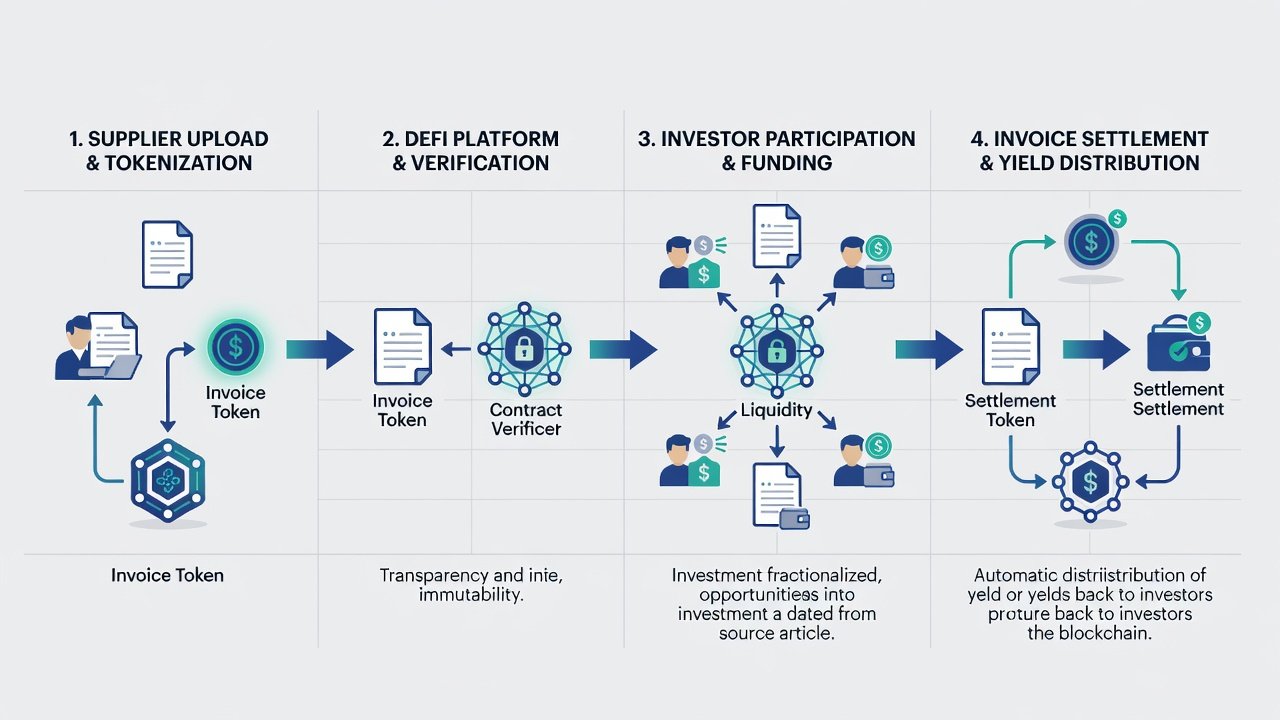
Tokenized invoices digitize traditional paper or PDF invoices into blockchain-based tokens, typically using standards like ERC-1400 for compliance features. In 2026, the process involves issuers uploading verified invoices to a protocol, where they are assessed for risk and converted into yield-bearing assets. Smart contracts handle payments, ensuring funds flow directly to token holders upon invoice settlement. Key advancements include real-time oracle integrations for invoice verification and automated default detection, reducing manual oversight. The lifecycle begins with a supplier issuing an invoice to a buyer, followed by verification through third-party data feeds or legal oracles. Once tokenized, the asset can be fractionalized and sold to investors who receive pro-rata payments when the buyer settles the original invoice. This creates a seamless loop from physical commerce to digital yield generation.
Key Protocols: Centrifuge and New Entrants
Centrifuge remains a leader in this space, connecting real-world assets to DeFi through its Tinlake pools that emphasize institutional-grade compliance. New entrants in 2026 include specialized platforms focusing on emerging markets and enhanced compliance tools. These protocols emphasize on-chain transparency and integration with stablecoin ecosystems for seamless yield distribution. Centrifuge official site provides detailed documentation on current pool structures and asset onboarding processes.
Step-by-Step Onboarding for Businesses and Investors
For businesses seeking liquidity: First, complete identity verification through integrated KYC providers. Next, connect existing accounting systems such as ERP software to automatically sync outstanding invoices. Then select an appropriate protocol and risk-tiered pool based on the supplier's credit profile. Finally, approve the tokenization transaction to receive immediate stablecoin advances against the receivables.
For investors allocating capital: Connect a compatible wallet to the protocol dashboard. Review detailed risk metrics including historical default rates and buyer credit scores. Deposit approved stablecoins into selected invoice pools. Monitor performance via real-time dashboards that display accrued yields and upcoming maturities. Rebalance positions as needed to optimize exposure across different invoice durations and industries.
Risk Assessment Frameworks
Effective frameworks evaluate counterparty credit, invoice authenticity, and market liquidity. Protocols now incorporate AI-driven scoring alongside traditional credit reports to assign risk tiers, helping users avoid high-default exposures. Additional layers include legal enforceability checks across jurisdictions and insurance wrappers that cover a portion of potential losses. Users are encouraged to examine pool-level data on concentration risk, such as overexposure to a single buyer or sector.
Real Yield Calculations and Examples
Yields are derived from invoice discounts minus protocol fees and any insurance costs. Investors should calculate net returns by factoring in expected default rates and average settlement times, often resulting in stable performance compared to unsecured lending protocols. For instance, a diversified portfolio might achieve consistent positive yields after accounting for occasional delays, provided rigorous due diligence is applied.
Platform Comparisons
- Centrifuge: Strong focus on institutional-grade assets, broad DeFi integrations, and established track record in multiple jurisdictions.
- Newer platforms: Often target niche supply chains with potentially attractive yields but require careful evaluation of liquidity depth and governance maturity.
- Comparison factors include fee structures, supported stablecoins, geographic coverage, and availability of secondary markets for early exits.
Integration with Lending Markets
Tokenized invoices can be used as collateral in lending protocols, enhancing capital efficiency for both suppliers and investors. This allows suppliers to borrow against future receivables while investors earn layered yields by deploying tokens in additional DeFi strategies. Integration points often involve permissioned bridges that maintain compliance standards across platforms.
Case Study of a Mid-Sized Supplier
A mid-sized electronics supplier based in Southeast Asia tokenized several batches of invoices through a leading protocol. The firm uploaded verified purchase orders from established buyers in the automotive sector. Within weeks, the assets attracted DeFi investors seeking predictable income streams. The supplier gained immediate access to working capital without traditional bank intermediation, enabling timely raw material purchases and production scaling. Investors received regular distributions upon buyer payments, demonstrating the end-to-end flow from physical trade to on-chain returns. This example highlights how mid-market companies can leverage DeFi infrastructure to optimize cash flow while providing tangible value to yield seekers.
Practical Checklists for Participants
- Conduct thorough due diligence on invoice originators and their historical payment behavior.
- Diversify holdings across multiple protocols, industries, and invoice tenors to mitigate concentration risk.
- Regularly monitor pool performance metrics including utilization rates and delinquency indicators.
- Review smart contract audits and governance proposals before committing larger positions.
- Maintain records of all transactions for tax and compliance reporting purposes.
FAQ on Regulatory Compliance
Q: Are tokenized invoices compliant with securities laws? A: Many protocols incorporate KYC/AML procedures and use permissioned tokens to align with regulations in major jurisdictions, though users should consult local counsel.
Q: What happens in case of default? A: Legal recourse mechanisms, buyer guarantees, and insurance pools are increasingly standard features in 2026 protocols to protect investor capital.
Q: How do tax authorities treat yields from tokenized invoices? A: Treatment varies by jurisdiction but often falls under interest income or capital gains rules; professional advice is recommended.
Q: Can retail investors participate? A: Access depends on the protocol's onboarding requirements, with some pools restricted to accredited participants while others offer broader entry points.
Tips for Minimizing Default Exposure While Maximizing Returns
Diversify across industries and geographies to reduce systemic risks. Prioritize invoices with shorter payment terms for quicker capital recycling. Utilize available insurance wrappers where offered by the protocol. Stay updated on macroeconomic indicators affecting supply chains such as commodity prices and trade policy shifts. Leverage secondary market liquidity when available to adjust positions dynamically. SEC resources on digital assets offer guidance on compliance best practices, while World Bank trade finance information provides context on global supply chain dynamics.
Conclusion
DeFi supply chain finance through tokenized invoices offers a compelling path to stable yields in 2026. By understanding protocols, risks, onboarding processes, and mitigation strategies, both businesses and investors can participate effectively while managing exposures responsibly. Continued innovation in verification technology and regulatory clarity will likely expand opportunities in this intersection of real-world commerce and decentralized finance.

No comments yet. Be the first!