 CryptoChain Blog
NFT Collateral Tactics 2026: Fractional Ownership & Leverage Plays
The NFT market has matured significantly by 2026, with fractional ownership and leveraged collateral strategies emerging as core tactics for sophisticated participants. Building on established NFT-Fi protocols, investors now combine fractionalization with cross-protocol borrowing to unlock liquidity while retaining upside exposure. This guide examines proven setups on platforms like NFTfi and BendDAO, royalty-backed yield generation, volatility mitigation, and data-driven decision frameworks using on-chain dashboards. Readers will gain concrete workflows, real-world examples from top-performing collections, and practical comparisons that help navigate both opportunities and pitfalls in the evolving landscape.
Understanding Fractional Ownership in NFT-Fi
Fractional ownership divides a single NFT into tradable ERC-20 tokens, enabling shared exposure without full acquisition costs. In 2026, this model supports leveraged plays where fractions serve as collateral across multiple protocols. Key benefits include improved liquidity for blue-chip assets and diversified risk allocation among holders. The process begins with smart contract deployment that locks the original NFT and mints proportional tokens, each representing a defined percentage of ownership rights including future royalties or rental income. Compared to full ownership, fractional models reduce entry barriers while introducing governance considerations through token voting rights. Protocols tokenize ownership via smart contracts that enforce proportional revenue sharing from royalties or rentals. For example, a popular generative art piece valued at a high floor price can be split into 10,000 fractions, allowing smaller investors to participate in appreciation while the original holder retains a controlling stake through reserved tokens.
Step-by-Step Setup on NFTfi
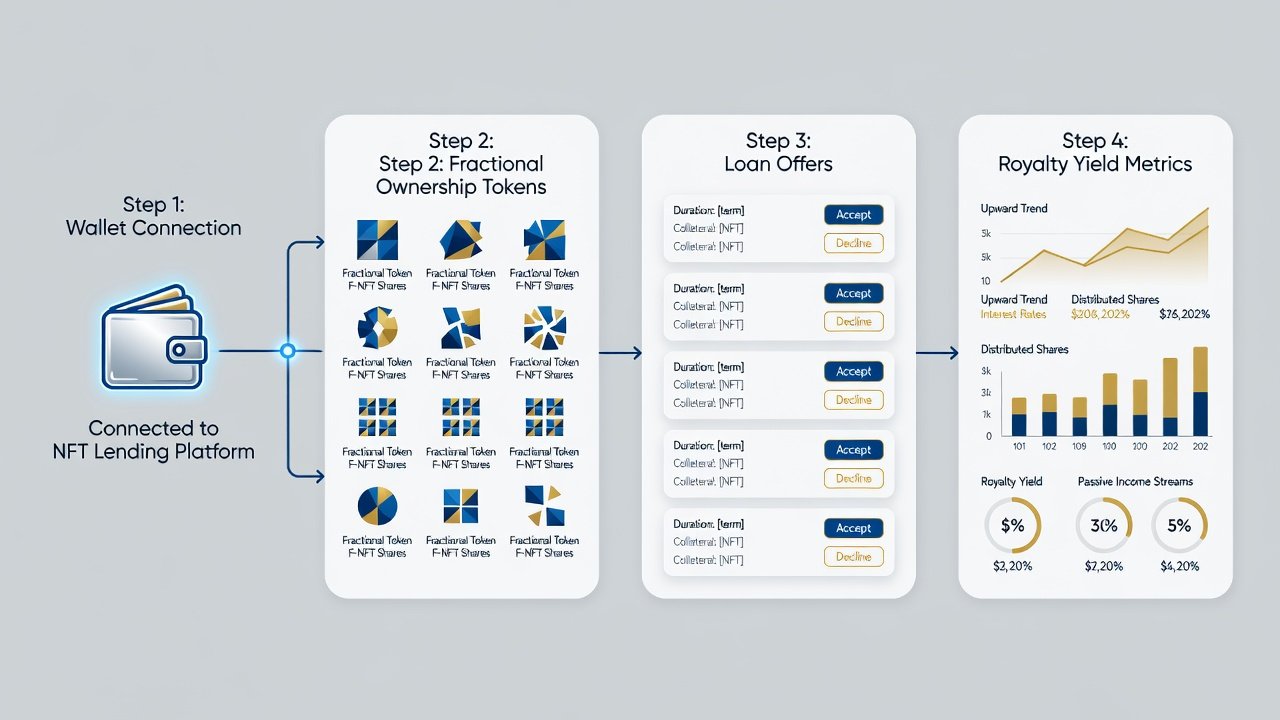
Begin by connecting a compatible wallet such as MetaMask or Rabby to the NFTfi platform. Select an eligible NFT collection and initiate the fractionalization process by defining the total supply of fractions and the reserve price. Once minted, deposit fractions as collateral to borrow against them. Next, configure loan parameters including duration and interest rate. Lenders on the platform evaluate offers based on floor price data and historical performance. Monitor positions through the dashboard to adjust or refinance as market conditions shift. Advanced users integrate NFTfi positions with external lending markets for layered leverage, ensuring all transactions remain verifiable on-chain. A practical wallet flow involves approving the fractional token contract, then submitting a borrow request that matches against available liquidity pools. Users should verify gas fees on the chosen network and set slippage tolerances to avoid failed transactions during volatile periods. On-chain case studies from leading PFP projects demonstrate how repeated refinancing cycles can compound yields when timed with collection milestones such as new drops or partnerships.
BendDAO Leverage Workflows
BendDAO specializes in instant NFT-backed loans with competitive rates. Start by depositing a supported NFT into the BendDAO vault. The protocol automatically generates a loan offer based on real-time valuation models. To add leverage, borrow stablecoins against the NFT and deploy those funds into additional fractional positions or yield-generating strategies. Repayment occurs via auction mechanisms if thresholds are breached, underscoring the importance of maintaining healthy collateral ratios. Users often combine BendDAO loans with fractional purchases on secondary markets to amplify exposure without liquidating core holdings. Detailed steps include selecting the NFT, confirming the loan-to-value ratio displayed in the interface, and routing borrowed assets directly to a DEX for fraction acquisition. Risk-aware participants track health factors daily and maintain a buffer of stablecoins for quick top-ups during market dips.
Royalty-Backed Yield Examples
Royalty streams provide passive income that can be tokenized alongside fractions. For instance, creators and collectors structure agreements where a portion of secondary sales flows back to fraction holders. This creates compounded returns when combined with lending yields on platforms like NFTfi. Practical flows involve routing royalty payments through automated smart contracts that distribute tokens proportionally. Data from leading collections shows royalty-backed strategies outperforming simple buy-and-hold approaches during sideways markets. One documented example involved a music NFT collection where fractions entitled holders to ongoing streaming revenue shares, which were then lent out on NFTfi to generate additional interest. Such hybrid models require careful tracking of royalty percentages and smart contract permissions to ensure distributions reach all participants accurately.
Risk Mitigation for Volatility
NFT markets remain susceptible to sharp price swings. Effective tactics include setting conservative loan-to-value ratios below 50 percent and diversifying across multiple collections rather than concentrating in one asset class. Implement automated alerts for floor price drops and maintain liquidity reserves in stablecoins. Cross-protocol hedging, such as pairing long fractional positions with short perpetual futures where available, further reduces downside exposure. Additional safeguards involve using multi-signature wallets for large positions and regularly auditing smart contract interactions through third-party tools. A common mistake to avoid is over-leveraging during bull runs without stress-testing against 30-50 percent drawdowns, which have occurred repeatedly in NFT history. Participants who maintain detailed spreadsheets of entry prices, loan terms, and current valuations tend to exit positions more profitably when triggers are met.
Ownership Model Comparisons
- Full Ownership: Highest control but lowest liquidity and highest capital requirement. Ideal for long-term holders who value complete governance rights.
- Fractional Ownership: Balanced access with shared governance and easier secondary trading. Suited for investors seeking partial exposure without tying up large sums.
- Leveraged Fractional: Amplified returns potential alongside liquidation risk and interest expenses. Best for experienced users comfortable with active monitoring and quick decision-making.
Practical Wallet Flows and On-Chain Case Studies
Top performers in 2026 often begin with hardware wallet security, then bridge assets to Layer-2 networks for lower fees. A documented case involved a prominent PFP collection where fractional tokens were leveraged across NFTfi and BendDAO, generating consistent yields tracked via Dune dashboards at Dune Analytics. Another example highlighted royalty distribution from a generative art project, where holders used fractions to access liquidity without selling core holdings, preserving long-term upside. Wallet flows typically follow a sequence of connecting the wallet, approving token contracts, executing fractional mints, and then initiating borrow transactions while monitoring transaction confirmations on explorers. Cross-protocol moves require careful sequencing to avoid temporary liquidity gaps that could lead to missed opportunities.
FAQ: Tax Implications and Liquidation Triggers
What are the tax considerations for fractional NFT sales?
Tax treatment varies by jurisdiction but generally classifies fractional token sales as capital events. Track cost basis for each fraction and report realized gains upon disposal. Consult local regulations and maintain detailed on-chain records. Additional considerations include whether royalty income is treated as ordinary income or capital gains depending on the holder’s status.
When do liquidations typically trigger?
Liquidations activate when collateral value falls below protocol-defined thresholds, often 60-70 percent of loan value. Monitor health factors in real time and add collateral proactively to avoid forced sales. Understanding oracle update frequencies and potential delays during extreme volatility helps users anticipate and prevent unwanted liquidations.
Additional questions around oracle reliability and smart contract audits frequently arise; always verify protocol security reports before committing significant capital. Resources such as Ethereum.org provide foundational guidance on smart contract risks that apply across NFT-Fi protocols.
Data-Driven Entry Points via Dune Dashboards
Recent Dune queries reveal active addresses, average loan durations, and royalty yield distributions across NFT-Fi protocols. Users should examine metrics such as utilization rates and default frequencies to identify favorable entry windows. Combining these insights with on-chain wallet analysis supports disciplined position sizing. Advanced dashboards allow filtering by collection floor trends and protocol-specific TVL changes, helping users spot emerging opportunities before they become widely known. Regular review of these public analytics fosters a more informed approach to timing both entries and exits.
Conclusion
By integrating fractional ownership with measured leverage, participants can navigate 2026 NFT markets more effectively while managing inherent risks. Success depends on thorough preparation, ongoing monitoring, and a willingness to adapt strategies based on real-time data from reliable sources.


No comments yet. Be the first!