 CryptoChain Blog

Introduction to Invoice Tokenization in Trade Finance DeFi
In 2026, DeFi protocols are transforming trade finance by enabling investors to access real-world yields through tokenized invoices. This approach bridges traditional supply chain assets with blockchain liquidity, offering stable returns backed by actual trade flows rather than volatile crypto speculation. Tokenization converts invoices into digital assets on platforms such as Centrifuge, allowing fractional ownership and seamless trading. Investors benefit from yields derived from real business payments, typically ranging in the low double digits depending on risk profiles and market dynamics as observed in late 2026.
The growing adoption stems from increased transparency in global supply chains and the need for alternative financing sources amid traditional banking constraints. By tokenizing invoices, businesses unlock immediate capital while investors gain exposure to short-term, asset-backed instruments. This article provides a comprehensive guide covering mechanics, workflows, risk management, and practical implementation strategies.
Understanding Centrifuge Mechanics
Centrifuge operates as a decentralized protocol focused on real-world asset (RWA) tokenization. It uses a pool-based structure where originators upload invoices, which are then verified and tokenized into NFTs representing ownership claims. These tokens can be used as collateral in lending pools or integrated with yield-generating vaults. The protocol leverages Ethereum for smart contract execution and Tinlake for asset pools. Investors deposit stablecoins into pools that fund invoice purchases, earning interest as debtors pay. Key features include on-chain transparency for cash flows and automated distribution of repayments through smart contracts that handle interest accrual and principal return.
Additional mechanics involve governance tokens that allow community voting on pool parameters and risk parameters. The system employs a two-tranche model separating senior and junior positions to allocate risk appropriately. This structure helps protect conservative investors while offering higher potential returns for those taking on more exposure. Integration with oracles ensures accurate pricing and verification of invoice details without relying solely on centralized parties.
Centrifuge official documentation provides detailed protocol specifications for developers and investors exploring these mechanics. The Ethereum foundation also maintains resources on RWA standards that underpin such protocols.
Asset Onboarding Workflows
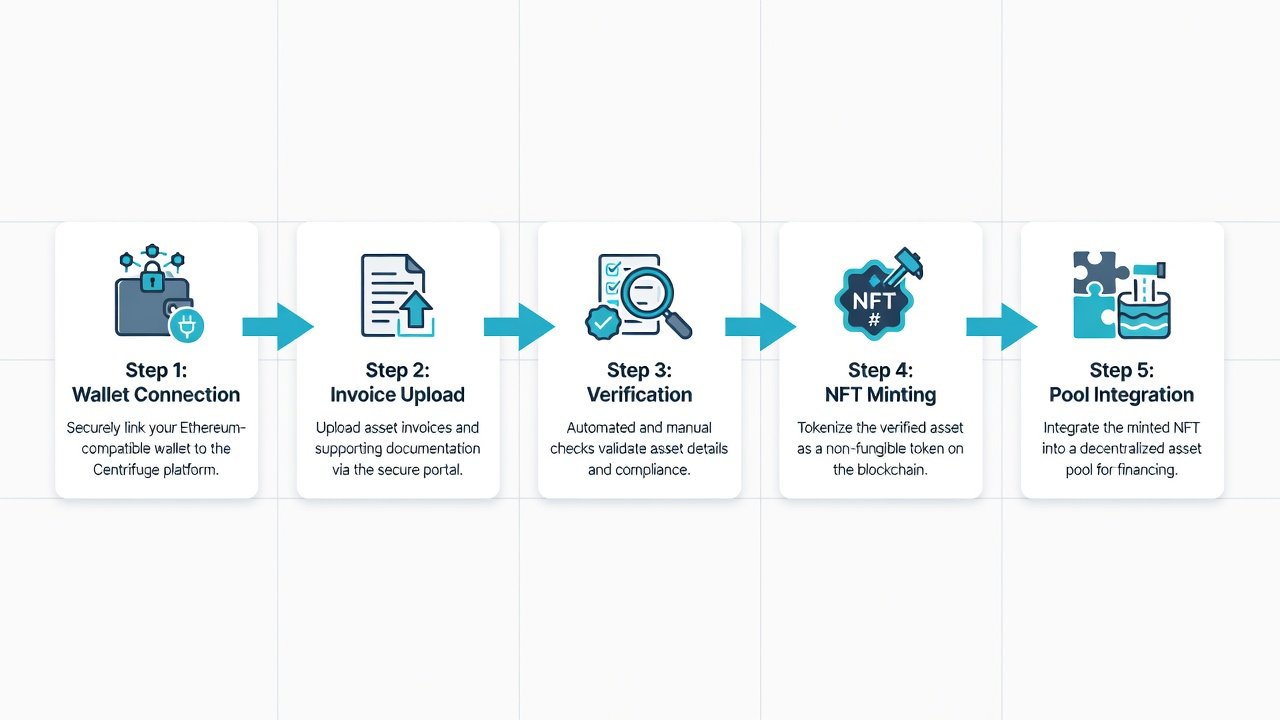
The onboarding process begins with KYC-compliant originators submitting invoice details via the Centrifuge app. Validators review documents for authenticity before minting the tokenized asset. This workflow ensures compliance while maintaining decentralization. Practical steps include preparing detailed invoice metadata such as buyer information, payment terms, and supporting contracts.
- Connect wallet and verify identity through integrated providers.
- Upload invoice data including amount, due date, and counterparty details.
- Undergo risk scoring based on historical payment data and credit checks.
- Mint the NFT and list it in a liquidity pool for investor participation.
- Monitor the asset through the dashboard for any updates or repayment events.
Originators should prepare audited financials to accelerate approval and attract lower-risk premiums. An example workflow for a mid-sized exporter might involve uploading a batch of 10 invoices totaling several hundred thousand dollars, with verification completed within 48 hours under optimal conditions.
Risk Assessment and Return Calculations
Investors must evaluate default probabilities, counterparty creditworthiness, and liquidity risks. Returns are calculated as the difference between invoice face value and discounted purchase price, minus protocol fees. Diversification across multiple pools mitigates single-asset exposure. Key risk factors include industry-specific volatility, geopolitical events affecting trade routes, and currency fluctuations in cross-border invoices.
Common metrics include expected yield, duration to maturity, and loss-given-default scenarios. Portfolio tools on the platform allow simulation of various market conditions. For instance, an investor might analyze a pool with 45-day average maturity against one with 90-day terms to balance liquidity needs. Mitigation tactics involve setting allocation limits per pool and using insurance wrappers where available.
Practical Steps for Investors
Begin by researching active pools on Centrifuge. Connect a compatible wallet, deposit stablecoins, and select pools based on risk-return profiles. Monitor repayments through on-chain dashboards for timely reinvestment decisions. Advanced users can employ API integrations to automate alerts for new invoice listings matching specific criteria such as minimum yield thresholds or industry focus.
Integration with yield vaults involves wrapping tokenized positions into automated strategies that compound returns across multiple protocols. Always review smart contract audits before committing capital. A step-by-step example: first fund a wallet with USDC, navigate to the pool interface, review the risk report, then execute the deposit transaction which settles in under a minute on Ethereum mainnet.
Platform Comparisons and Case Studies
Compared to competitors like Maple or Goldfinch, Centrifuge emphasizes supply chain invoices with strong real-world verification. A notable case study involves a European logistics firm that tokenized several million dollars in invoices, achieving consistent yields for DeFi participants through verified trade flows. Another example shows Asian manufacturers using the protocol to unlock working capital, with investors tracking performance via transparent repayment ledgers that update in real time.
These cases highlight how tokenization reduces the traditional 30-60 day payment cycles, providing faster liquidity. Investors in these flows reported stable performance even during supply chain disruptions, thanks to diversified counterparty exposure within each pool.
Integration Tips with Yield Vaults and Compliance
Link tokenized invoices to vaults on platforms like Yearn or custom DeFi aggregators for automated yield optimization. Ensure compliance with regulations such as SEC guidelines on RWAs by using permissioned pools where required. Additional considerations include adhering to AML requirements through verified onboarding and maintaining records for tax reporting purposes.
U.S. Securities and Exchange Commission resources offer guidance on digital asset classifications relevant to tokenized trade finance. Cross-border participants should also review local frameworks in jurisdictions like the EU or Singapore for additional clarity.
Portfolio Diversification Tactics
Spread investments across invoice maturities, geographies, and industries. Combine Centrifuge positions with other RWAs like real estate or commodities to balance volatility. Rebalance quarterly based on on-chain analytics. A sample diversified allocation might dedicate 40% to short-term trade invoices, 30% to longer-duration assets, and the remainder to complementary DeFi strategies for overall portfolio resilience.
Common mistakes to avoid include over-concentration in single originators and neglecting to monitor macroeconomic indicators that could affect trade volumes.
- Overlooking due diligence on buyer credit ratings.
- Ignoring gas fee impacts on smaller positions.
- Failing to set stop-loss triggers for unexpected pool events.
FAQs on Liquidity, Defaults, and Performance
How liquid are tokenized invoices?
Secondary markets on Centrifuge allow trading of positions before maturity, though liquidity varies by pool size and market conditions. Larger pools typically offer better exit options through peer-to-peer transfers.
What happens in default scenarios?
Recovery processes involve legal claims on underlying invoices, with protocol reserves providing partial protection depending on pool configuration. Historical data shows recovery rates influenced by the strength of original documentation and jurisdiction.
How to track performance?
Use built-in dashboards or integrate with analytics tools for real-time APY, repayment history, and risk alerts. Third-party explorers can supplement this with custom queries on transaction data.
Future Outlook and Conclusion
As 2026 progresses, invoice tokenization is expected to expand with improved interoperability and regulatory clarity. By following structured workflows, assessing risks thoroughly, and diversifying portfolios, investors can participate effectively while navigating compliance requirements. This method offers a compelling way to achieve stable yields grounded in real economic activity.

No comments yet. Be the first!