 CryptoChain Blog
Introduction to Ethereum Layer 2 Expansion in 2026
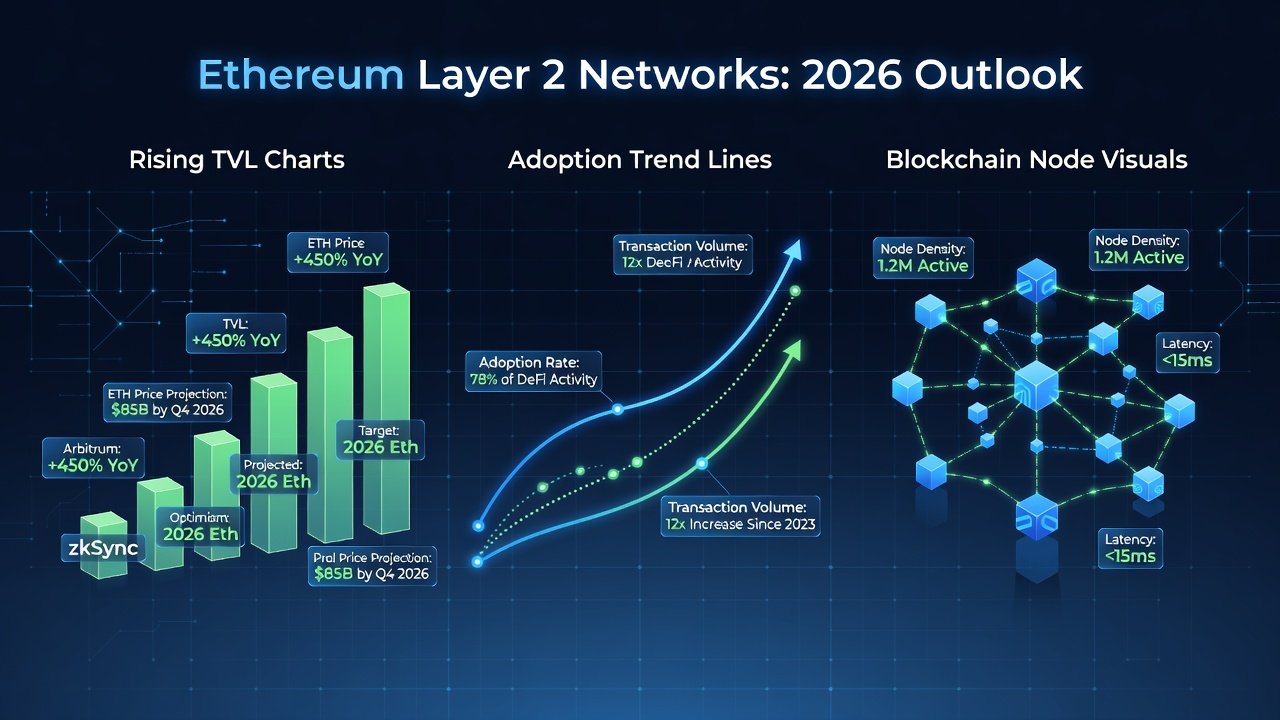
Ethereum Layer 2 solutions have become the backbone of scalable blockchain applications, handling the bulk of transactions while inheriting Ethereum's security. In 2026, these networks continue to demonstrate remarkable growth through rising total value locked (TVL) and expanding user bases. This article examines the latest TVL metrics, adoption patterns, infrastructure upgrades, and forward-looking predictions to help readers understand the evolving landscape. Layer 2s solve the core limitations of the Ethereum mainnet by batching transactions off-chain before final settlement, dramatically lowering costs and increasing throughput without compromising decentralization or security guarantees.
Layer 2s like Optimism, Arbitrum, and Base address Ethereum's scalability challenges by processing transactions off-chain and settling them on the mainnet. As adoption accelerates, these solutions attract both retail users and institutional players seeking efficient DeFi, gaming, and NFT experiences. The year 2026 marks a pivotal phase where technological maturity meets broader market participation, creating new opportunities for developers, traders, and enterprises alike. Understanding these dynamics requires examining not only headline TVL figures but also the underlying drivers such as protocol upgrades, incentive programs, and cross-chain interoperability improvements.
Key TVL Metrics from Leading L2 Networks
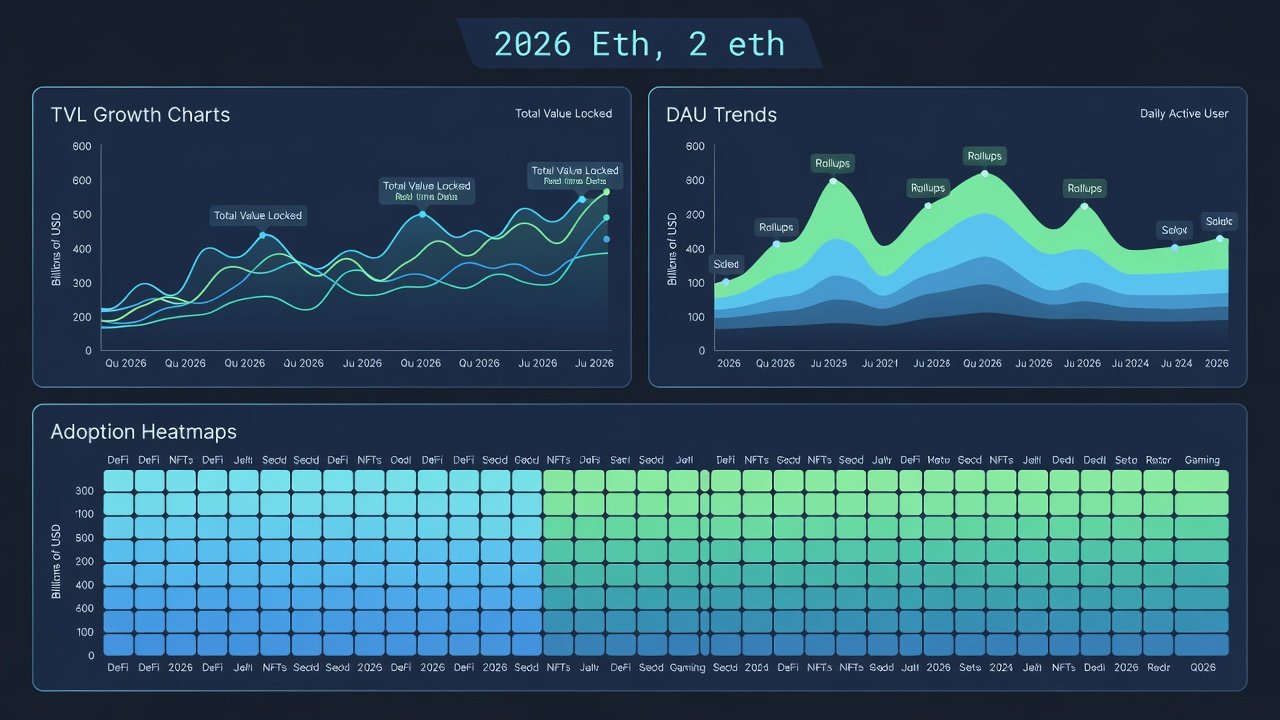
Tracking TVL provides a clear snapshot of capital committed to each ecosystem. Major L2s have posted substantial increases driven by improved user interfaces and new protocol launches. For instance, optimistic rollups and zero-knowledge rollups compete on efficiency and cost, drawing liquidity from various sectors. Optimistic approaches emphasize simplicity and EVM equivalence, while zero-knowledge variants prioritize cryptographic security and faster finality for specific use cases. This competition has led to differentiated growth patterns across networks, with some chains capturing liquidity in decentralized finance primitives and others excelling in gaming or social applications.
Comparative data highlights how networks differentiate themselves. Some focus on EVM compatibility for seamless developer migration, while others emphasize privacy features or specialized use cases like decentralized finance primitives. Investors and analysts often review TVL alongside metrics such as capital efficiency and yield opportunities to gauge sustainability. DefiLlama serves as a primary resource for real-time TVL dashboards across these chains, allowing users to filter by category and track historical trends over multiple timeframes.
User Adoption Trends and Behavioral Shifts
Beyond TVL, daily active addresses and transaction volumes reveal genuine usage growth. In 2026, Ethereum L2s report higher engagement from both new and returning users, fueled by lower fees and faster confirmations compared to Layer 1. Behavioral shifts include greater experimentation with complex financial strategies that were previously cost-prohibitive on the mainnet. Account abstraction has further simplified onboarding by enabling social logins and gasless transactions, reducing friction for non-technical audiences.
Trends include increased participation in yield farming, socialfi applications, and cross-chain bridges. Mobile-first wallets and account abstraction have lowered barriers, enabling mainstream onboarding. Developers are also deploying more sophisticated applications that leverage the unique strengths of each L2, such as custom fee tokens or native oracle integrations. These developments collectively point to a maturing user base that values both performance and ecosystem incentives.
- Retail traders shifting from centralized exchanges to on-chain perpetuals for better transparency and custody control
- Developers deploying more complex smart contracts on L2s to take advantage of reduced computational costs
- Communities forming around governance tokens and DAOs that distribute decision-making power more broadly
- Gaming studios launching play-to-earn titles with seamless in-game economies that reward consistent participation
TradFi Integrations Driving Institutional Interest
Traditional finance entities are increasingly bridging to Ethereum L2s for tokenized assets and settlement efficiency. Banks and asset managers explore stablecoin issuance and compliance-focused protocols on these networks. These integrations enhance credibility and liquidity, creating feedback loops that further boost TVL. Regulatory clarity in key jurisdictions supports this convergence between legacy systems and decentralized infrastructure, encouraging pilot programs for real-world asset representation.
Examples include partnerships between established financial institutions and L2 projects that facilitate compliant tokenization of bonds, funds, and commodities. Such collaborations not only increase on-chain capital but also introduce institutional-grade security practices and auditing standards that benefit the entire ecosystem. As a result, L2 networks are evolving into hybrid environments where decentralized applications coexist with regulated financial instruments.
Infrastructure Developments and Scaling Solutions
2026 brings advancements in data availability layers, sequencer decentralization, and interoperability standards. Projects are implementing shared sequencing and fraud-proof upgrades to enhance security and performance. These upgrades address previous bottlenecks in transaction ordering and data posting, enabling higher throughput without sacrificing decentralization. Developers benefit from improved tooling that accelerates deployment times and reduces gas costs.
Additional infrastructure includes enhanced bridge protocols that minimize trust assumptions during asset transfers between L2s and the Ethereum mainnet. Modular design principles allow teams to swap components such as execution environments or proof systems as technology advances. These infrastructure developments position L2s for sustained expansion into new verticals such as real-world asset tokenization and enterprise-grade supply chain solutions.
Comparing Growth Rates Across Major Networks
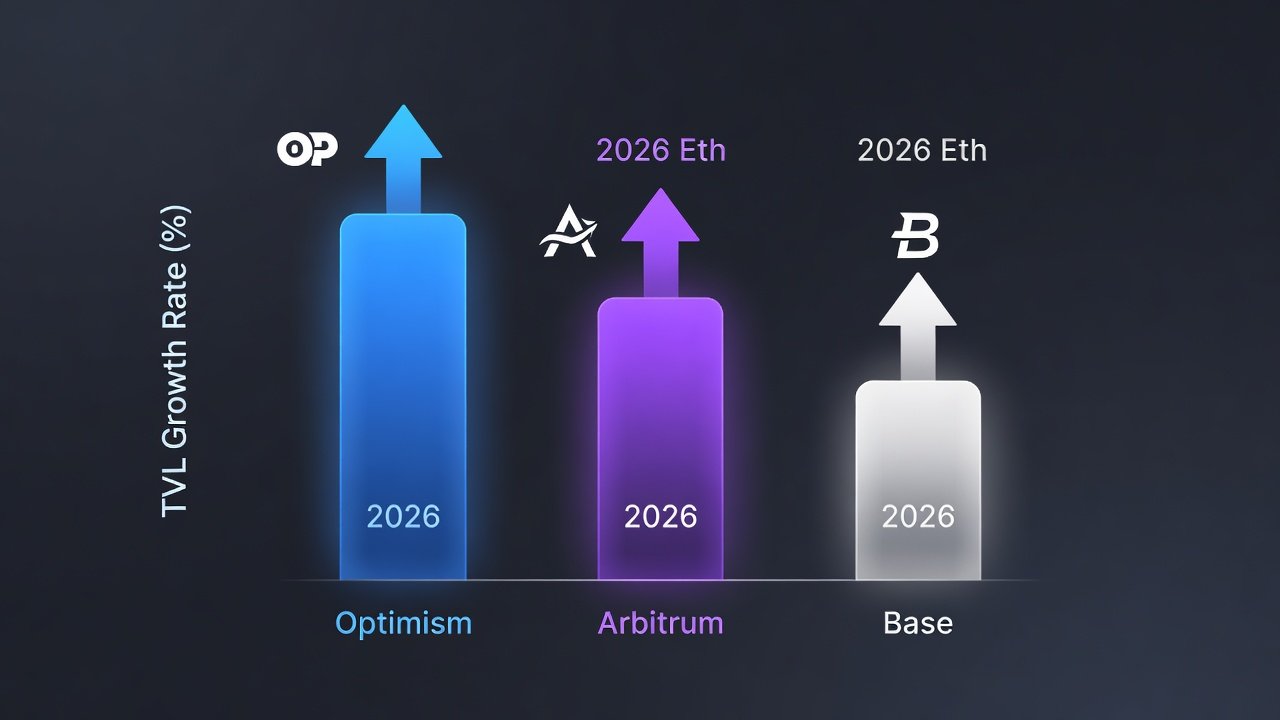
Growth trajectories vary significantly. Some L2s achieve rapid TVL multiplication through incentive programs, while others grow steadily via organic adoption and ecosystem grants. Metrics often show optimistic rollups leading in raw volume, whereas zk-rollups excel in specific niches like privacy-preserving transactions. Examining percentage increases side-by-side reveals which chains capture mindshare among developers and liquidity providers. L2Beat offers detailed risk and activity comparisons that complement TVL figures, helping users assess security assumptions and technology maturity alongside growth statistics.
Practical Examples of Projects Fueling Adoption
Concrete implementations illustrate the trends. Decentralized exchanges on Base have seen volume spikes from innovative liquidity mechanisms that reward long-term liquidity providers. Gaming titles built on Arbitrum leverage cheap transactions for seamless play-to-earn economies where players can trade assets frequently without prohibitive fees. Prediction markets and lending protocols have also gained traction by offering competitive rates and novel risk management tools unavailable on Layer 1.
Cross-protocol collaborations, such as lending markets integrated with prediction platforms, demonstrate composability advantages unique to Ethereum's L2 stack. These examples highlight how targeted incentives and user-centric design choices drive sustained engagement beyond initial hype cycles.
Interpreting Metrics for Investors
Investors should evaluate TVL alongside metrics like token velocity, developer activity, and bridge inflows. High TVL alone does not guarantee sustainability if it stems primarily from temporary incentives. Practical steps include monitoring revenue generated by protocols, reviewing governance participation rates, and assessing the diversity of applications within each ecosystem. Diversification across multiple L2s can mitigate risks associated with any single network's roadmap execution.
Common mistakes to avoid include over-reliance on short-term TVL spikes without examining underlying user retention or ignoring potential centralization risks in sequencers. A balanced approach combines quantitative dashboards with qualitative analysis of team execution and community health.
Expert Predictions on Future Scaling
Analysts anticipate continued maturation of L2 ecosystems, with potential consolidation around a few dominant players. Innovations in modular blockchain design may further accelerate throughput and reduce costs. Predictions point to broader enterprise adoption as infrastructure matures, alongside tighter integration with Ethereum's upcoming upgrades. Ethereum Foundation resources provide ongoing technical updates that inform these forecasts, helping stakeholders prepare for changes in data availability and execution environments.
FAQ: Tracking Real-Time Ethereum L2 Updates
How can I monitor live TVL across L2s? Use aggregated dashboards that pull data directly from on-chain sources for accurate snapshots updated in near real time.
What signals indicate healthy adoption beyond TVL? Rising daily active users, transaction counts, and unique wallet interactions offer deeper insights into genuine usage patterns.
Are there risks in chasing high-growth L2s? Smart contract vulnerabilities, bridge exploits, and governance centralization remain key considerations for any allocation strategy.
Where do experts share 2026 scaling forecasts? Community forums, research reports, and official protocol blogs deliver timely analysis grounded in current developments and technical roadmaps.
How should retail users get started with L2s safely? Begin with reputable wallets that support multiple networks, enable two-factor authentication, and start with small test transactions before committing larger amounts.
Conclusion
Ethereum L2 growth in 2026 reflects a maturing ecosystem where TVL metrics, user adoption, and infrastructure improvements converge to deliver scalable decentralized applications. By examining these elements together, stakeholders gain actionable perspectives on opportunities and risks ahead, positioning themselves to participate effectively in the next phase of blockchain expansion.
No comments yet. Be the first!