 CryptoChain Blog
Introduction to Ethereum L2 Ecosystem in 2026
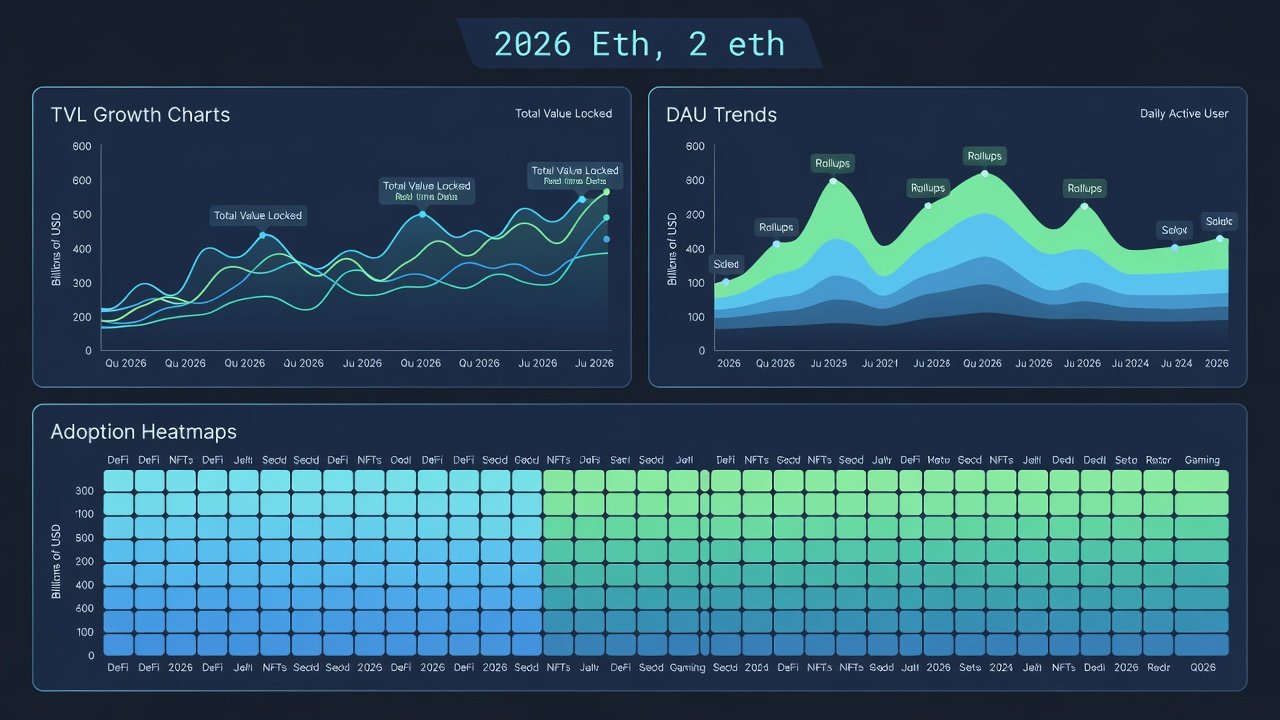
The Ethereum Layer 2 ecosystem has matured significantly by 2026, offering scalable solutions that address the base layer's limitations in throughput and fees. This article examines key metrics such as total value locked (TVL), daily active users (DAU), and inflows from traditional finance (TradFi) to assess overall health. Readers seeking ethereum and eth updates will find data-driven analysis rather than speculation, drawing from established sources to highlight sustainable growth patterns. As the network continues to evolve with upgrades like danksharding influences and improved data availability, L2s have become central to Ethereum's scalability narrative. Investors and developers alike benefit from understanding these dynamics to navigate opportunities and risks effectively.
Understanding these trends helps investors identify resilient projects and developers optimize for real user needs. We will break down interpretation methods, review case studies from leading rollups, and outline expert forecasts for the coming quarter. The focus remains on practical takeaways that go beyond surface-level numbers, emphasizing patterns in user behavior and capital flows that signal long-term viability.
Key Data Sources for L2 Metrics
Accurate tracking begins with reliable platforms. L2Beat provides comprehensive TVL breakdowns and risk assessments across optimistic and zk-rollups. Dune Analytics enables custom queries on on-chain activity, including user retention and transaction volumes. Additional context comes from Ethereum.org resources on protocol upgrades. These tools form the foundation for any serious analysis because they aggregate verifiable on-chain data rather than relying on marketing claims.
Step-by-step interpretation example: First, visit L2Beat to view aggregate TVL. Filter by chain to isolate major players. Then query Dune for DAU trends using standardized dashboards. Cross-reference with on-chain events like bridge inflows to validate momentum. This approach reveals whether growth stems from organic adoption or temporary incentives. For instance, a sudden TVL spike without corresponding DAU increase often indicates liquidity farming that may not persist. Developers can extend this by building alerts on Dune for specific contract interactions, allowing real-time monitoring of ecosystem shifts.
TVL Trends and Ecosystem Health
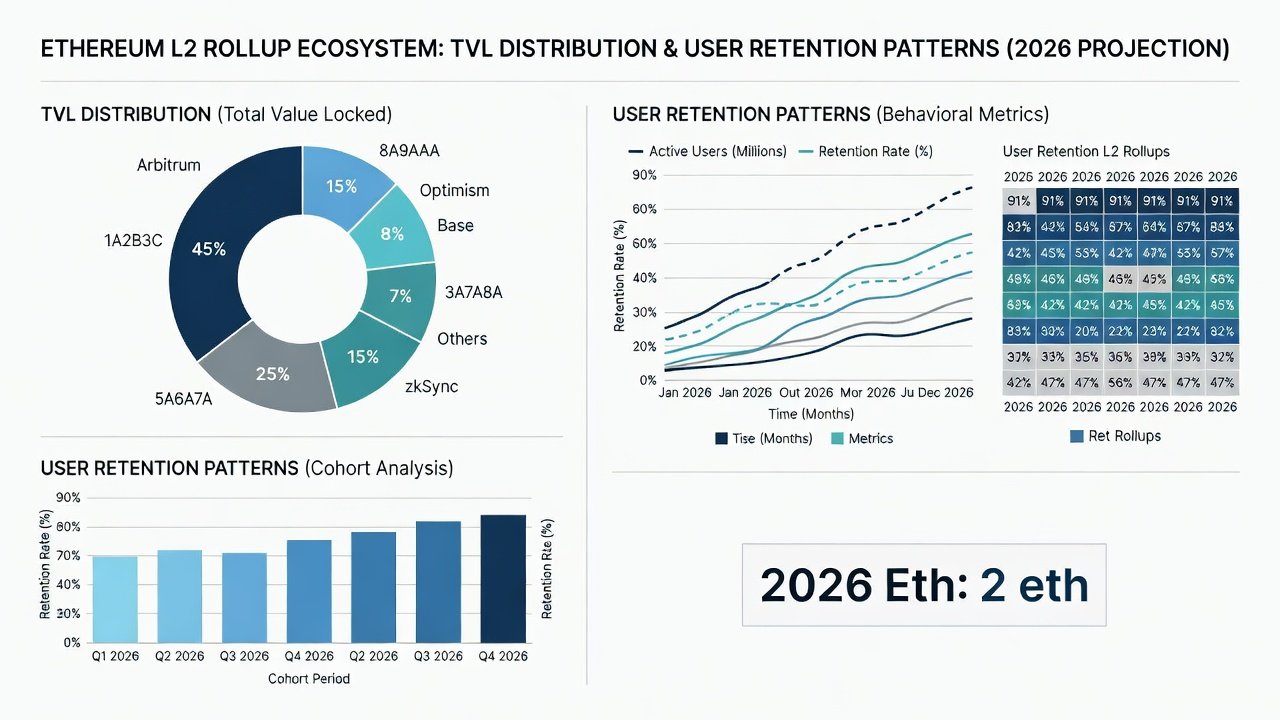
TVL serves as a primary indicator of capital commitment within the L2 space. In 2026, distribution across optimistic rollups, zk-rollups, and validiums shows diversification beyond early leaders. Infrastructure projects such as shared sequencers and decentralized bridges have boosted interoperability, indirectly supporting TVL stability by reducing fragmentation risks. When analyzing TVL, it is essential to consider not just the headline figure but also the breakdown by asset type and the duration of locked positions. Short-term deposits can inflate numbers without reflecting genuine ecosystem strength.
Practical takeaway: Monitor TVL composition for concentration in a few chains versus broad distribution. High concentration may signal vulnerability to single-point failures, while spread indicates maturing infrastructure. Compare TVL velocity—how frequently capital moves—against historical baselines to detect overheating. This layered view helps distinguish between hype cycles and structural growth driven by real utility in DeFi, gaming, and enterprise applications.
Daily Active Users and Adoption Patterns
DAU metrics reveal genuine engagement beyond locked capital. Leading rollups demonstrate strong user retention through improved UX features like account abstraction. Patterns show seasonal spikes tied to DeFi events, with sustained baselines in gaming and social applications. Retention often follows power-law distributions where a small percentage of users drive most activity, making cohort analysis critical for accurate forecasting.
- Track retention cohorts via Dune queries to distinguish one-time users from recurring participants.
- Compare DAU growth against TVL changes to spot decoupling, which often precedes corrections.
- Focus on chains with rising DAU alongside stable or growing TVL per user as signs of healthy adoption.
- Examine transaction complexity metrics, such as average gas used per active address, to gauge whether users engage with sophisticated dApps or simple transfers.
Real-world examples include rollups that introduced gas subsidies or seamless onboarding flows, resulting in measurable DAU lifts that persisted beyond promotional periods. Developers monitoring these patterns can prioritize similar UX improvements in their own projects.
TradFi Inflows and Institutional Interest
Inflows from traditional finance entities have accelerated integration of Ethereum L2s into broader markets. These flows typically target established rollups with proven security models, influencing overall ecosystem liquidity. Developers monitoring layer 2 ethereum news should note how institutional participation correlates with enhanced compliance tooling and custody solutions. Institutional interest often manifests through tokenized asset experiments and settlement use cases that leverage L2 finality guarantees.
Practical steps for investors include reviewing bridge volume data alongside institutional wallet activity on Dune. This reveals whether inflows are speculative or tied to operational needs, providing clearer signals for portfolio allocation decisions.
Case Studies from Leading Rollups
Arbitrum and Optimism continue to lead in optimistic rollup adoption, with infrastructure upgrades enhancing throughput. Zk-rollup projects emphasize privacy and finality advantages, attracting specific verticals like payments. Additional examples include Base, which has leveraged its Coinbase affiliation for rapid user acquisition, and zkSync, which focuses on developer-friendly tooling to drive ecosystem expansion. Each case highlights unique retention strategies, such as incentive redesigns that prioritize long-term holders over short-term farmers. Analyzing these rollups side-by-side shows how different technical trade-offs affect both TVL resilience and DAU consistency over time.
Expert Predictions for the Next Quarter
Analysts anticipate continued emphasis on interoperability standards and sequencer decentralization. Sustainable growth will favor projects demonstrating consistent DAU alongside TVL, while hype-driven spikes risk rapid reversals. Investors are advised to prioritize chains with transparent governance and active developer communities. Key watchpoints include the rollout of shared sequencing solutions and their impact on cross-L2 composability, which could further consolidate TVL in well-integrated ecosystems.
Mistakes to Avoid When Interpreting L2 Metrics
Common pitfalls include over-relying on TVL without context, ignoring risk factors listed on L2Beat, and failing to account for incentive-driven activity. Another frequent error is comparing absolute numbers across chains with vastly different user bases or token economics. Always normalize metrics where possible and review multiple quarters of data before drawing conclusions.
FAQ: Spotting Sustainable vs. Hype-Driven Growth
How can I differentiate real adoption from temporary hype? Examine retention metrics and TVL durability over multiple quarters rather than single-week surges.
What role does infrastructure play in long-term viability? Robust bridges and shared security layers reduce risks and support steady user growth.
Where should developers focus monitoring efforts? Combine L2Beat overviews with custom Dune queries for granular DAU and activity insights.
How do TradFi inflows affect retail metrics? They often stabilize TVL but can introduce volatility if tied to specific market events; track correlation carefully.
Conclusion
The 2026 Ethereum L2 landscape rewards careful metric analysis. By leveraging tools like L2Beat and Dune Analytics, stakeholders gain actionable visibility into TVL dynamics, user behavior, and institutional trends. This data-centric approach supports informed decisions in a rapidly evolving space, helping both investors and developers position themselves for sustainable success rather than fleeting opportunities.

No comments yet. Be the first!