 CryptoChain Blog
Introduction to Ethereum Layer 2 in 2026
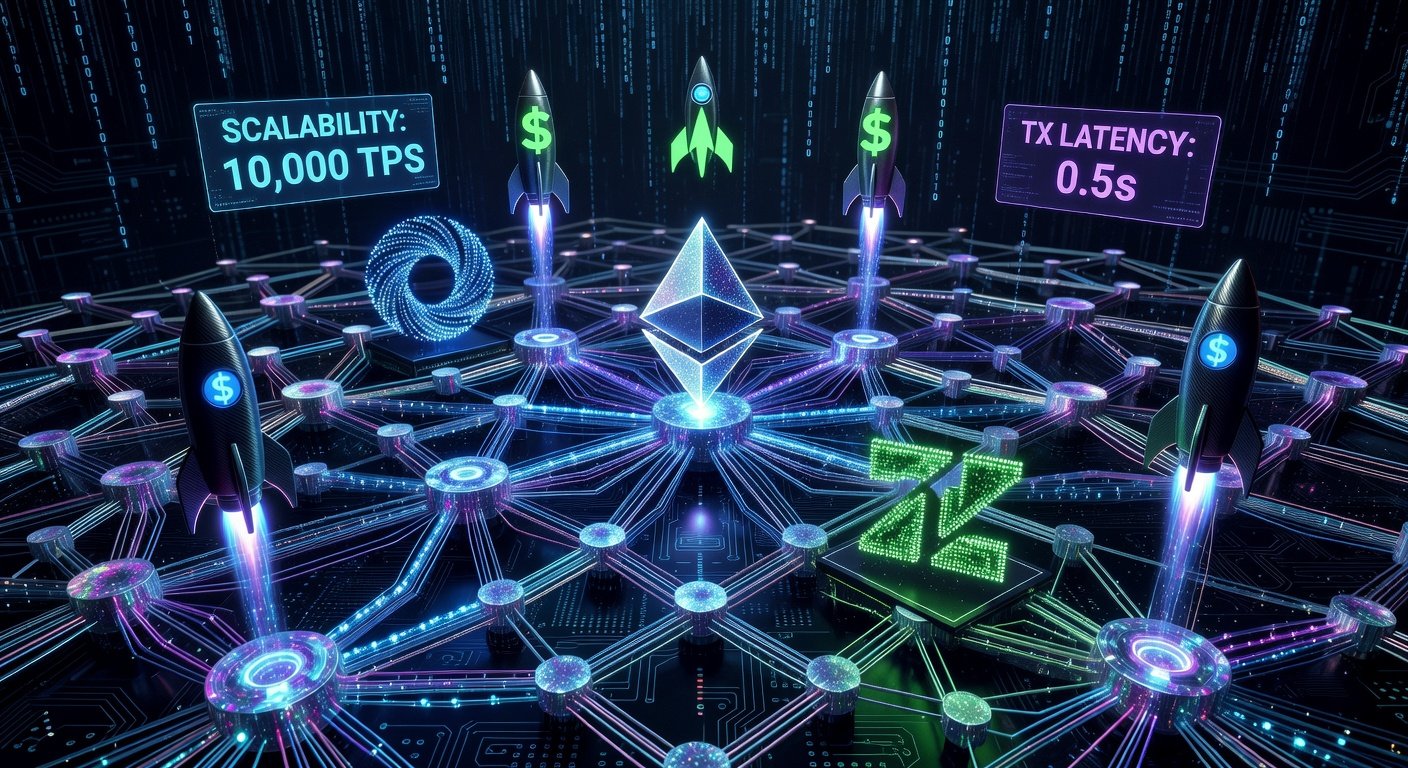
Ethereum's scalability challenges have long been a bottleneck for DeFi, NFTs, and dApps. Enter Layer 2 (L2) solutions like Arbitrum and zkSync, which have evolved dramatically by 2026. With Ethereum's Dencun upgrade and beyond, these optimistic rollups and zk-rollups are pushing transaction speeds to new heights while slashing fees. This comparison dives into their latest updates, real-world data, and which one reigns supreme for DeFi users and developers.
Arbitrum, powered by Offchain Labs, uses optimistic rollups for fast, cheap txs with fraud proofs. zkSync, from Matter Labs, leverages zero-knowledge proofs for validity and privacy. Both bridge Ethereum seamlessly, but 2026 updates like Arbitrum's Stylus 2.0 and zkSync's zkEVM 3.0 shift the landscape.
Scalability: Handling Ethereum's Massive Throughput
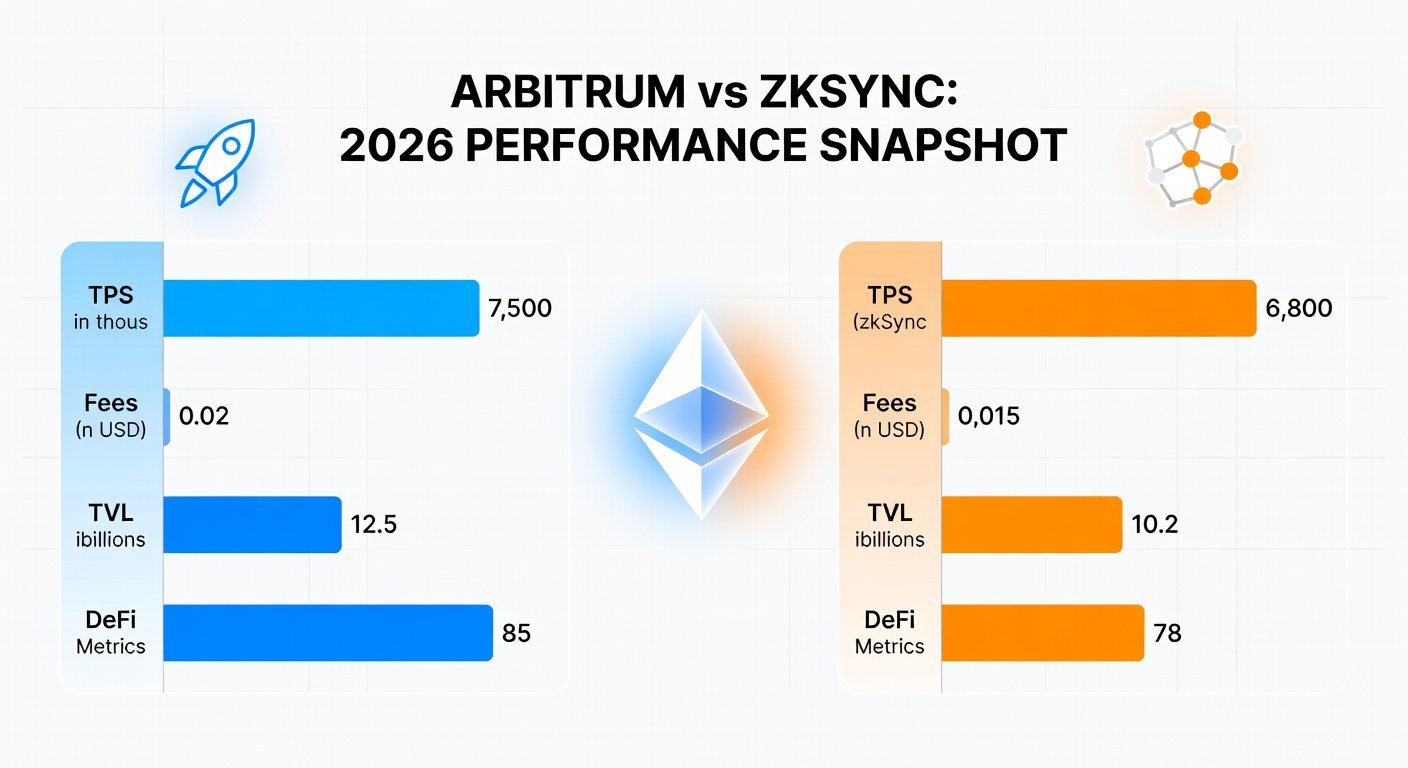
Scalability defines L2 success. In 2026, Arbitrum scales to 10,000+ TPS via its Orbit chains and Nitro upgrades, processing batches efficiently before Ethereum settlement. zkSync Era hits 20,000 TPS theoretically, thanks to zk-proofs compressing data 100x via the ZK Stack.
Real-world data from L2Beat shows Arbitrum at 40-50 TPS average in Q1 2026, peaking during DeFi bull runs. zkSync lags slightly at 25-35 TPS but excels in finality—under 1 second vs Arbitrum's 7-day challenge window.
Transaction Speeds: Who Delivers Instant Confirmations?
Speed is king for traders and gamers. Arbitrum's 2026 BoLD protocol cuts latency to sub-second for most txs, with 90% under 200ms. zkSync's hyperchains enable parallel execution, achieving 100ms confirmations via native account abstraction.
Recent Ethereum news highlights zkSync's edge in high-load scenarios. During the 2026 DeFi summer, zkSync processed 1.2M daily txs at 50ms average, per Dune Analytics dashboards. Arbitrum countered with 1M txs but averaged 150ms, prioritizing cost over raw speed.
Fees: The Cost Battle for Everyday Users
Gas fees on Ethereum mainnet can hit $10+; L2s fix that. Arbitrum fees hover at $0.01-$0.05 per tx in 2026, thanks to dynamic blob pricing post-Dencun. zkSync dips lower at $0.005-$0.02, with ZK compression minimizing calldata costs.
Data from Ethereum.org's L2 page confirms zkSync's 40% fee advantage during peaks. For DeFi swaps on Uniswap, Arbitrum costs ~$0.03, zkSync ~$0.01—critical for high-frequency trading.
Real-World Performance: DeFi TVL and Adoption Metrics
TVL tells the story. Arbitrum boasts $25B+ TVL in 2026, dominating with Aave, GMX, and Uniswap V4 integrations. zkSync trails at $15B but surges in privacy-focused DeFi like zkLend and SyncSwap.
Developer activity? Arbitrum's ecosystem has 5,000+ dApps, fueled by EVM compatibility. zkSync's 3,500 dApps shine in ZK-native apps, with 30% faster deployments via its CLI tools. Dune data shows Arbitrum with 2x user retention for DeFi yield farming due to mature liquidity.
- Arbitrum Wins: Liquidity depth, EVM tooling.
- zkSync Wins: Privacy, provable security.
Which is Best for DeFi Users and Developers?
For Users: DeFi enthusiasts prefer Arbitrum for its battle-tested DEXs and lower slippage. High-volume traders lean zkSync for fees and speed.
For Developers: Arbitrum's Rust/WASM support via Stylus appeals to performance hackers. zkSync's ZK circuits suit privacy dApps, though steeper learning curve.
Check official docs: Arbitrum for Orbit launches, zkSync for hyperchain guides.
Migration Tips: Switching Between Arbitrum and zkSync
- Bridge Assets: Use official bridges—Arbitrum Bridge or zkSync Zip—expect 10-30min waits, $1-5 fees.
- Test on Sepolia: Deploy contracts on testnets first to compare gas.
- Tools: Leverage LayerZero or Axelar for cross-L2 messaging.
- Security: Audit with tools like Slither; migrate in batches < $10K.
- Incentives: Claim ARB or ZK airdrops post-migration.
Avoid peak hours; use multisig wallets like Safe for security.
Future Predictions for Ethereum's L2 Ecosystem
By 2027, expect L2 convergence: Arbitrum adopting ZK for faster finality, zkSync enhancing EVM parity. Ethereum's Prague upgrade will boost shared sequencing, potentially unifying liquidity via Superchain or ZKSync Elastic.
Predictions: Arbitrum captures 40% L2 market share for general DeFi; zkSync 30% for enterprise/privacy. Restaked ETH via EigenLayer will supercharge security, with TVL hitting $100B+ across L2s.
2026 cements both as Ethereum staples, but zkSync's ZK edge positions it for mass adoption amid regulations demanding provability.
Conclusion
Arbitrum edges for current DeFi dominance and ease; zkSync leads in future-proof speed/fees. Choose based on needs—migrate wisely, and watch Ethereum L2s redefine Web3.

No comments yet. Be the first!