 CryptoChain Blog
Introduction to Ethereum L2 and Carbon Credit Markets in 2026
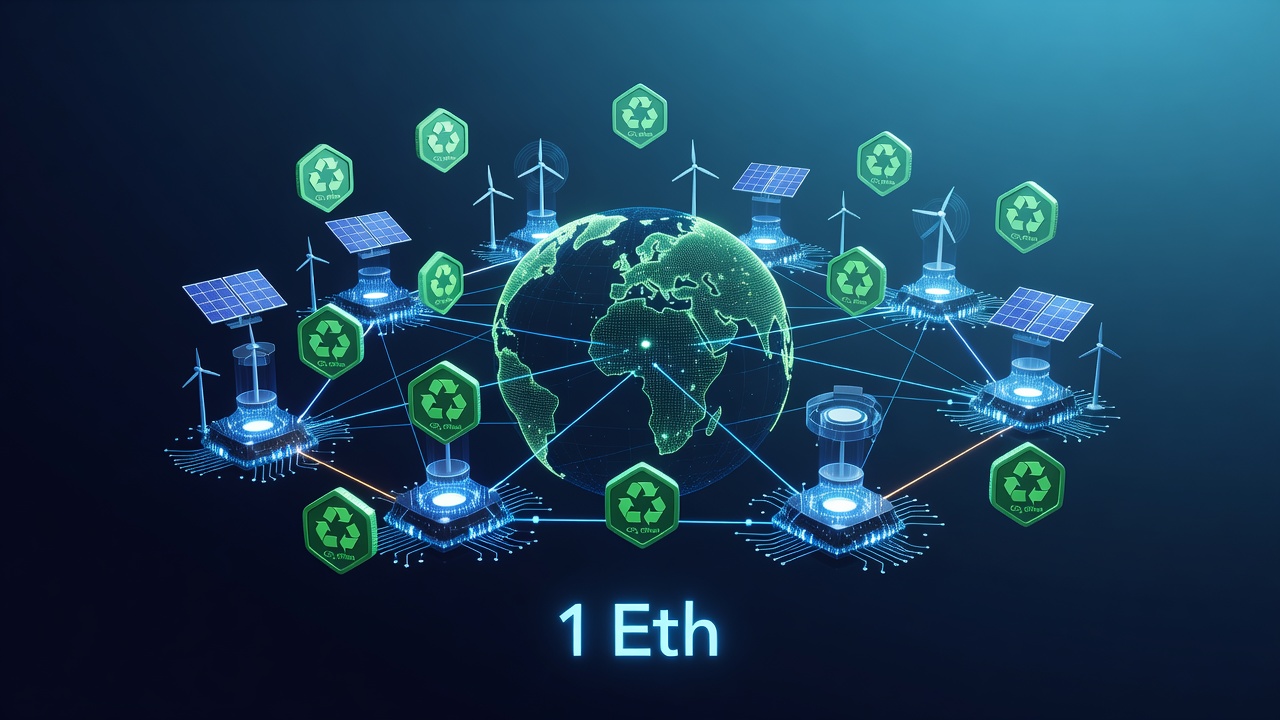
As environmental finance continues to evolve rapidly, Ethereum Layer 2 solutions are playing a transformative role in carbon credit trading by delivering scalable, low-cost infrastructure that was previously unattainable on the main Ethereum network. In 2026, these Layer 2 networks support the efficient tokenization of environmental assets, enabling seamless integration with global registries while dramatically lowering transaction costs and improving accessibility for participants ranging from large institutions to individual sustainability advocates. This shift aligns with broader Ethereum ecosystem advancements, including ongoing protocol optimizations that enhance throughput and reduce latency for specialized use cases like green finance.
This comprehensive guide examines recent ETH developments around tokenization standards, on-chain verification processes, and their practical applications. It provides in-depth comparisons of leading L2 networks, detailed real-world case studies from climate projects, and actionable step-by-step instructions for developers and sustainability professionals looking to participate. The focus remains on delivering practical insights that address search intent for actionable Ethereum news on green finance innovations.
Tokenization Standards and On-Chain Verification Processes
Tokenization of carbon credits involves converting verified emission reductions into digital assets that can be traded, retired, or fractionalized on Ethereum-compatible networks. Standards such as ERC-1155 for multi-token support and emerging environmental-specific protocols allow for granular ownership and transparent lifecycle tracking from issuance to retirement. These standards ensure interoperability across different platforms and registries, which is essential for maintaining liquidity in decentralized markets.
On-chain verification leverages oracles, zero-knowledge proofs, and decentralized identity solutions to confirm data authenticity from third-party auditors without exposing proprietary information. This approach enhances trust by creating immutable records of credit provenance. Integration with global registries, such as those overseen by international climate organizations, guarantees that tokenized credits meet stringent compliance criteria, including additionality and permanence requirements. Developers benefit from these frameworks because they can build applications that automatically enforce regulatory alignment through smart contract logic.
Benefits of L2 Solutions for Environmental Assets
Layer 2 networks address key limitations of Layer 1 Ethereum, particularly high gas fees and slower confirmation times that previously hindered frequent trading of smaller carbon credit batches. By batching transactions and using optimistic or zero-knowledge rollups, L2s achieve near-instant finality at fractions of the cost. This scalability is especially valuable for carbon markets, where micro-transactions and real-time retirement events are common. Additional benefits include improved user experience through familiar EVM tooling and enhanced security inherited from the Ethereum base layer, making L2s a preferred choice for sustainability-focused dApps in 2026.
Comparing L2 Networks for Low-Fee Carbon Transactions
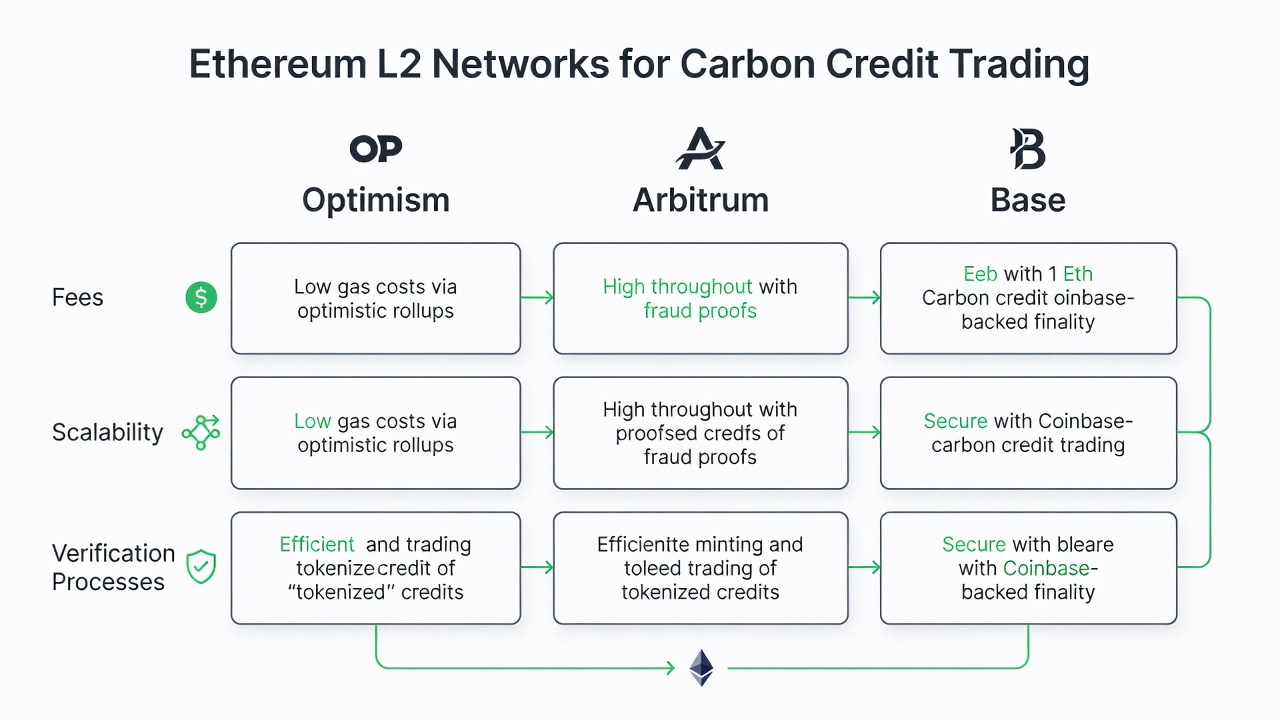
Selecting the right Layer 2 network depends on factors such as fee economics, security model, and ecosystem maturity for environmental applications. Here is a detailed comparison of prominent options:
- Optimism: Excels in low transaction fees and strong EVM compatibility, making it suitable for high-volume trading of fractional carbon credits and integration with existing sustainability dashboards.
- Arbitrum: Delivers robust security guarantees and high throughput, ideal for deploying complex verification smart contracts that handle multi-party audits and automated compliance checks.
- Base: Positions itself as an accessible, cost-effective environment with excellent developer tooling, supporting rapid prototyping of carbon marketplace interfaces and mobile-friendly participation tools.
- Polygon zkEVM: Emphasizes zero-knowledge scalability to minimize gas costs during on-chain proof generation, which is advantageous for projects requiring frequent verification of large datasets from climate monitoring sensors.
Teams should conduct pilot tests on each network to evaluate finality speed and support for environmental asset standards before committing to production deployments.
Real-World Case Studies from Climate Projects
Several pioneering initiatives illustrate successful L2 adoption in carbon credit ecosystems. One forestry conservation project tokenized verified credits on Arbitrum, achieving settlement times under two minutes and enabling smallholder farmers in Southeast Asia to receive payments directly through mobile wallets. Another renewable energy initiative integrated its registry data with Optimism, allowing community solar installations to issue and trade credits in real time while maintaining full audit trails for international buyers.
A third example involves a mangrove restoration program that utilized Base for its low overhead, resulting in broader participation from local NGOs that previously found Layer 1 fees prohibitive. These cases demonstrate how L2 infrastructure bridges traditional environmental finance with blockchain transparency, increasing market efficiency and encouraging wider adoption among climate-focused organizations.
Step-by-Step Setup for Participating in L2 Carbon Markets
Engaging with Ethereum L2 carbon credit platforms requires careful preparation to ensure security and compliance. Follow these expanded steps:
- Select an appropriate L2 network based on the comparison above and configure a wallet such as MetaMask with the correct RPC endpoint and chain ID for seamless connectivity.
- Bridge assets from Layer 1 using official, audited bridges while monitoring for any temporary network congestion that could affect timing.
- Acquire or mint tokenized carbon credits only after completing identity verification through recognized registries and confirming the credits meet additionality standards.
- Deploy or interact with audited smart contracts for trading, retiring credits, or participating in yield-generating green protocols, always reviewing contract source code beforehand.
- Integrate on-chain dashboards with external data feeds to track compliance metrics and generate reports for stakeholders or regulatory submissions.
- Implement ongoing monitoring using alerts for price fluctuations, credit retirements, and any protocol upgrades that might impact asset handling.
Consult legal advisors familiar with cross-border environmental regulations prior to large-scale involvement.
Challenges, Solutions, and Mistakes to Avoid
Common challenges include oracle data inaccuracies and evolving regulatory landscapes. Solutions involve using multiple redundant oracles and maintaining flexible smart contract upgrade paths. Frequent mistakes to avoid are neglecting wallet security best practices, selecting unverified credit projects, and overlooking gas optimization during high-activity periods. Always prioritize platforms with transparent governance and third-party audits.
FAQs on Compliance and Future ETH Updates
What compliance considerations apply to L2 carbon trading?
Participants must align with international frameworks including those from the UNFCCC to ensure credits represent genuine emission reductions. On-chain records facilitate transparent reporting of additionality and permanence metrics.
How might future ETH updates affect these markets?
Planned Ethereum improvements will further optimize L2 interoperability and reduce operational costs, potentially expanding access to emerging markets in developing regions.
Are there risks involved in L2 carbon trading?
Primary risks include smart contract vulnerabilities and shifts in regulatory policy. Mitigation strategies encompass using only audited contracts and staying informed through official Ethereum channels.
What tools help with on-chain verification?
Zero-knowledge proof libraries and decentralized oracle networks are widely adopted for maintaining data integrity without compromising privacy.
How do global registries integrate with L2 platforms?
Many registries now provide APIs that connect directly to L2 smart contracts, enabling automated issuance and retirement workflows.
Conclusion
Ethereum Layer 2 solutions represent a critical advancement for scaling carbon credit trading in 2026 and the years ahead. Through robust tokenization, reliable verification mechanisms, and cost-efficient networks, these technologies empower stakeholders to create measurable environmental impact via decentralized finance tools. Developers and sustainability professionals should actively explore these opportunities to contribute to innovative green finance solutions. For additional resources on Ethereum developments, consult ethereum.org, unfccc.int, worldbank.org, and epa.gov.
No comments yet. Be the first!