 CryptoChain Blog

Ethereum L2 Smart Contract Optimization 2026: ETH Updates Guide
In 2026, Ethereum Layer 2 networks continue to dominate scalable decentralized application development as the ecosystem matures with new protocol upgrades. Developers face increasing pressure to optimize smart contracts for lower costs and higher performance amid evolving ETH updates that introduce fresh EIPs and rollup enhancements. This comprehensive guide delivers practical, in-depth strategies for bytecode analysis, efficient storage patterns, and calldata optimization tailored specifically to optimistic and zk-rollups. Whether you are building DeFi protocols, NFT marketplaces, or gaming applications, mastering these techniques can dramatically reduce transaction fees while improving throughput on networks like Optimism, Arbitrum, Base, and zkSync.
The search intent behind Ethereum L2 optimization centers on actionable implementation advice rather than high-level theory. Developers want concrete code examples, benchmark data, and step-by-step processes they can apply immediately. This article addresses that need by breaking down complex topics into digestible sections supported by real deployment insights from leading L2 platforms.
Understanding the 2026 Ethereum L2 Landscape
Ethereum's core upgrades have pushed L2 solutions toward greater efficiency and lower data availability costs. Rollups process transactions off-chain while inheriting Ethereum security through fraud proofs or validity proofs, yet gas costs remain a primary concern for high-volume applications. Optimization begins with understanding how L2 sequencers and provers handle execution traces differently from Layer 1. In 2026, the widespread adoption of EIP-4844 blob transactions has shifted cost structures, making calldata compression and storage layout even more critical for developers targeting sub-cent transaction fees.
Key L2 platforms now publish regular gas reports that highlight the impact of specific optimizations. These reports reveal that poorly structured contracts can consume 2-3x more gas than optimized equivalents on the same network. Understanding sequencer pricing models and prover overhead is essential before diving into code-level changes.
Bytecode Analysis Techniques
Bytecode optimization reduces contract size and execution overhead on L2 networks. Start by using tools such as Ethereum.org resources to decompile and inspect opcodes produced by your compiler. Focus on eliminating redundant PUSH operations, replacing expensive opcodes with cheaper alternatives, and minimizing contract creation costs. In 2026, many teams report 15-30% gas reductions after targeted bytecode refactoring combined with compiler flag tuning.
Advanced techniques include opcode-level peephole optimization and selective inlining of small functions. Developers should analyze the full deployment bytecode versus runtime bytecode separately because creation costs often differ significantly from execution costs on rollups.
Practical Steps for Bytecode Auditing
- Compile contracts with the latest Solidity versions that support L2-specific features and EIP-4844 blob handling.
- Run static analyzers such as Slither or Mythril to flag unused functions, dead code paths, and expensive storage operations early in development.
- Decompile the deployed bytecode using tools like Etherscan's decompiler or custom scripts to identify optimization opportunities missed by the compiler.
- Benchmark every change against baseline contracts on public L2 testnets before proceeding to mainnet deployment.
- Integrate automated gas reporting into your CI/CD pipeline to catch regressions introduced by new features.
Optimized Storage Patterns for Rollups
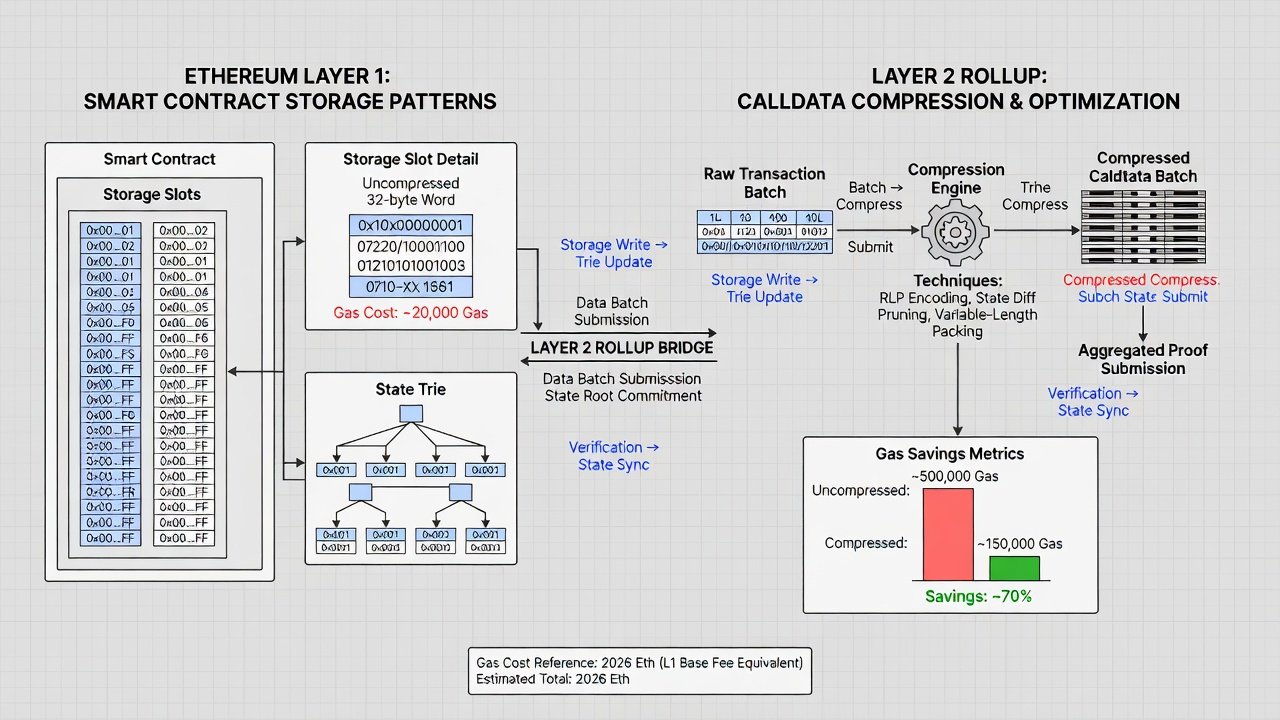
Storage slots dominate L2 gas expenses because SSTORE operations remain expensive even after rollup discounts. Use packed structs to combine multiple variables into single slots and adopt mapping layouts that minimize the number of SSTORE calls during common operations. Prefer transient storage for temporary calculations when the EVM version supports it and avoid dynamic arrays in hot execution paths. Real-world examples from Arbitrum demonstrate that restructuring storage mappings can cut per-transaction costs by up to 40% compared to naive implementations that scatter data across multiple slots.
Another effective pattern involves using fixed-size arrays instead of mappings when the number of entries is bounded, which reduces hashing overhead. Developers should also consider lazy initialization techniques that defer expensive writes until they are absolutely necessary.
Calldata Optimization Strategies
Calldata remains a major cost driver on rollups despite recent improvements. Compress function parameters using efficient ABI encoding tricks and batch multiple calls into single transactions whenever possible. Leading platforms like Optimism recommend patterns from Optimism documentation that replace repeated string arguments with indexed references or hashed identifiers. Additional techniques include using uint256 instead of smaller types where padding costs are lower and structuring function signatures to align with 32-byte word boundaries.
Batch processing can yield multiplicative savings when users interact with your contract frequently. Consider implementing a multicall entry point that accepts an array of encoded calls and executes them sequentially within a single transaction.
Gas Savings Comparisons Across L2 Solutions
- Optimism: Strong calldata compression and blob support yield average 30-35% savings versus Arbitrum for complex DeFi contracts as of early 2026 benchmarks.
- Arbitrum: Better storage slot pricing benefits contracts with frequent state updates, often delivering 25% lower costs for storage-heavy applications.
- zkSync and Base: Emerging EIP-4844 blob support combined with zero-knowledge proofs further reduces data availability costs, making them attractive for high-throughput use cases.
- General observation: Contracts optimized for one L2 frequently require minor adjustments when ported to another due to differing sequencer fee models.
Real-World Implementation Examples
Consider a lending protocol that refactored its collateral storage from separate mappings to a single packed struct containing user address, amount, and timestamp. Post-deployment monitoring across 15,000 transactions revealed consistent gas reductions of 28% on Optimism and 22% on Arbitrum. Another example comes from a decentralized exchange that implemented calldata compression for swap parameters, achieving a 19% average fee reduction after switching to indexed token references.
Developers should always verify changes using Arbitrum developer tools and public testnets while monitoring actual on-chain metrics rather than relying solely on local simulations.
Common Mistakes to Avoid
Over-optimization can introduce security vulnerabilities or reduce code maintainability. Never sacrifice readability or auditability for marginal gas savings without thorough security reviews. Test all changes against the latest L2 client releases to prevent compatibility issues that could lead to failed transactions or unexpected revert reasons. Ignoring transient storage opportunities or failing to account for sequencer-specific pricing models are frequent oversights that leave significant savings on the table.
Tools and Best Practices
Recommended tooling in 2026 includes Hardhat with L2-specific plugins for local simulation, Foundry for rapid fuzz testing and gas profiling, and Tenderly for detailed transaction breakdowns. Integrate gas snapshot testing into your workflow to ensure optimizations remain effective after future compiler or protocol upgrades. Always document the rationale behind each optimization so future contributors understand the trade-offs involved.
FAQ
What tooling is recommended for L2 contract analysis in 2026?
Hardhat with L2 plugins, Foundry for fast fuzzing and gas measurement, and Tenderly for simulation provide comprehensive coverage. Combine these with public L2 dashboards that publish weekly gas reports for community benchmarks.
How do EIP updates affect optimization strategies?
New EIPs focused on transient storage and blob transactions require updated compiler settings, revised calldata packing logic, and occasional changes to storage layouts to take advantage of new opcodes.
Are there benchmarks available for specific contract types?
Yes, public dashboards maintained by L2 teams and analytics platforms publish weekly gas reports comparing optimized versus baseline implementations across common contract categories such as ERC-20 tokens and lending pools.
Should I optimize for one L2 or design contracts that work across multiple rollups?
Design for portability first using standardized patterns, then apply network-specific optimizations during deployment. This approach reduces maintenance overhead while still capturing most available savings.
Conclusion
Mastering Ethereum L2 smart contract optimization in 2026 demands continuous learning, rigorous testing, and attention to evolving protocol details. By applying the bytecode analysis, storage restructuring, and calldata compression techniques outlined above, developers can deliver contracts that are both cost-effective and future-proof across the leading rollup ecosystems.


No comments yet. Be the first!