 CryptoChain Blog

Introduction to Decentralized Identity on Ethereum L2s
In 2026, Ethereum Layer 2 networks are transforming how decentralized identity (DID) systems operate, offering scalable, privacy-preserving solutions that address the limitations of Layer 1. As ETH updates continue to evolve, developers and users seek efficient ways to manage verifiable credentials without compromising on speed or cost. This guide examines the latest advancements, technical integrations like zero-knowledge proofs, and practical pathways for adoption.
Decentralized identity enables individuals to control their digital personas across platforms. On Ethereum L2s such as Arbitrum, Optimism, and zkSync, these systems benefit from reduced gas fees and higher throughput, making widespread implementation feasible. The shift to L2s addresses Ethereum mainnet congestion issues that previously hindered identity applications requiring frequent updates or verifications. With the maturation of rollup technology, identity solutions now support real-time interactions at scale while maintaining the security guarantees of the base layer.
How L2 Solutions Enable Scalable DID Systems
Layer 2 rollups batch transactions off the main Ethereum chain while inheriting its security. This architecture supports high-volume identity operations, including credential issuance and verification. Protocols leverage optimistic and zero-knowledge rollups to handle millions of identity attestations daily. For instance, an L2-based DID registry can process batch updates for thousands of users in a single transaction, dramatically improving efficiency compared to mainnet deployments.
Key integrations include smart contract wallets that embed DID standards such as W3C Verifiable Credentials. Developers can deploy identity registries on L2s that sync periodically with Ethereum mainnet for finality. This hybrid approach allows for low-latency operations on L2 while ensuring long-term immutability on L1. Additional benefits include support for account abstraction, which simplifies user onboarding by allowing gasless transactions and social recovery mechanisms tailored for identity management.
Zero-Knowledge Proofs for Privacy in Identity Verification
Zero-knowledge proofs (ZKPs) allow users to prove attributes like age or nationality without revealing underlying data. In 2026, ZK circuits optimized for L2 environments deliver sub-second proof generation. This enhances privacy in sectors like finance and healthcare where sensitive information must remain protected during verification processes.
Leading frameworks integrate zk-SNARKs and zk-STARKs directly into identity smart contracts. For example, a developer might use a ZK module to verify KYC status while keeping personal details encrypted. These proofs can be generated client-side on user devices, reducing trust assumptions and enabling selective disclosure of only necessary attributes. Advanced techniques now incorporate recursive proofs that aggregate multiple verifications into a single compact proof, further optimizing on-chain storage and computation costs on L2 networks.
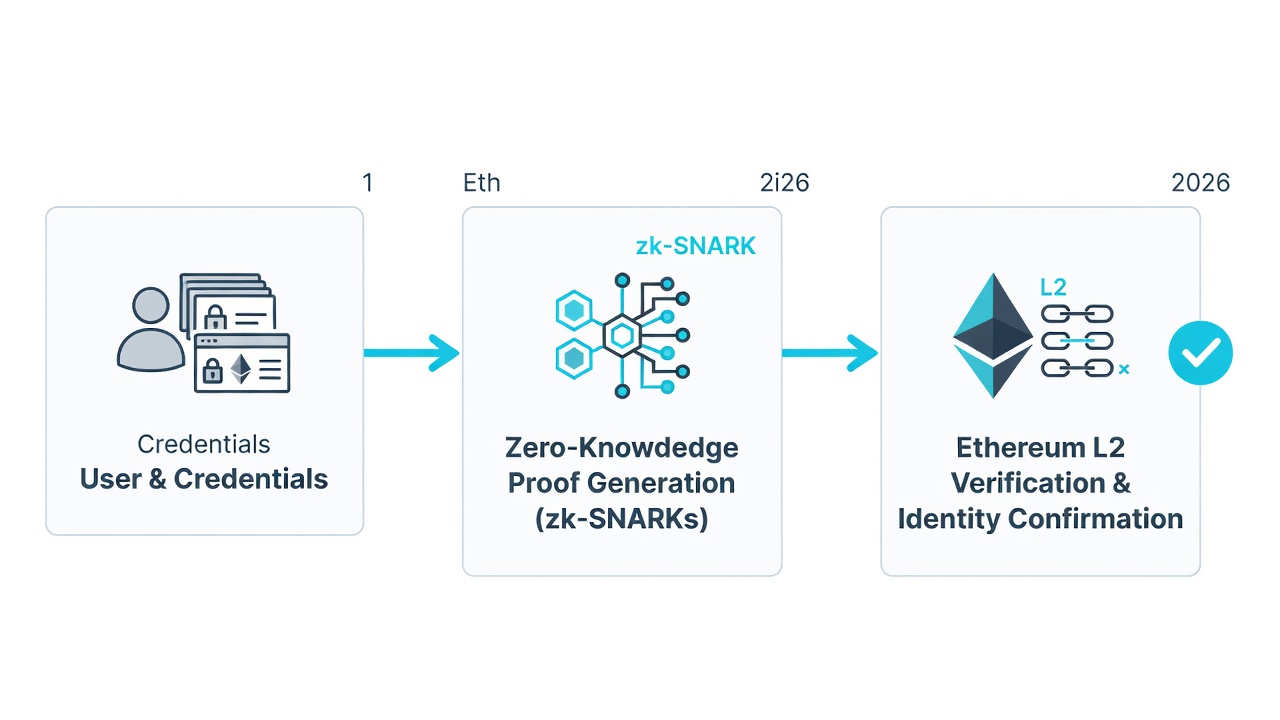
Comparisons of Identity Frameworks Across Major L2s
Different L2 ecosystems offer distinct advantages for decentralized identity implementations. Understanding these differences helps developers select the right platform for specific use cases.
- Arbitrum: Strong support for optimistic rollups with flexible identity modules; excels in EVM compatibility for seamless porting of existing DID contracts. It provides robust tooling for custom identity schemas and integrates well with popular wallet providers.
- Optimism: Focuses on governance-driven upgrades that prioritize decentralized identity tooling and community standards. Its optimistic model allows for rapid iteration on identity features while maintaining low fees for high-frequency operations.
- zkSync: Native ZK technology provides superior privacy defaults, ideal for high-security identity applications. Developers benefit from built-in support for advanced cryptographic primitives that simplify ZKP integration.
- Base and others: Emerging options offer competitive fee structures and growing ecosystem support for cross-chain identity portability. These platforms often emphasize developer experience with comprehensive SDKs for DID-related smart contracts.
Step-by-Step Adoption Strategies for Developers
- Choose an L2 based on your privacy and scalability needs; evaluate current TPS benchmarks from official network dashboards and consider factors like ecosystem maturity and bridge liquidity.
- Integrate DID libraries such as those aligned with Ethereum standards for wallet connections, ensuring compatibility with popular tools like MetaMask and WalletConnect.
- Implement ZK circuits using tools like Circom or Halo2 for proof generation, starting with pre-built templates for common identity proofs to accelerate development.
- Test interoperability with bridges to ensure credentials work across multiple L2s, including stress testing for edge cases like network congestion or proof verification failures.
- Deploy on testnets first, then monitor gas usage and optimize for production by implementing caching strategies for frequently accessed identity data.
- Incorporate monitoring and analytics to track verification success rates and user adoption metrics post-launch.
Performance Benchmarks and Implementation Tips
Recent benchmarks show L2 identity transactions completing in under 2 seconds with costs significantly lower than mainnet. Developers should prioritize modular contract designs and leverage existing oracles for off-chain data validation. Practical tips include using account abstraction for seamless user experiences and incorporating fallback mechanisms for cross-L2 verification failures. Additionally, caching verified credentials locally on user devices can reduce repeated on-chain calls, while employing efficient data structures like Merkle trees optimizes storage for large-scale identity registries.
Real-World Examples from Leading Protocols
Projects like those building on Polygon CDK and Starknet demonstrate live DID deployments for social recovery and credential marketplaces. These examples highlight how L2s enable user-controlled identities in DeFi lending and NFT provenance tracking. Other notable implementations include enterprise pilots using L2-based DIDs for supply chain verification, where participants prove compliance without exposing proprietary data. Community-driven initiatives on Optimism have also launched open-source identity frameworks that allow developers to extend core functionality with custom attributes.
Potential Challenges with Regulatory Compliance
Navigating global regulations remains complex. Developers must design systems that support selective disclosure to meet emerging standards while preserving decentralization. Collaboration with legal experts and adherence to frameworks from bodies like the W3C helps mitigate risks. Additional considerations involve data residency requirements and the potential need for on-chain audit trails that balance transparency with user privacy expectations.
Security Best Practices for L2 Identity Systems
Security remains paramount when handling identity data. Best practices include regular smart contract audits by reputable firms, implementing multi-signature controls for registry updates, and using hardware security modules for key management. Developers should also conduct penetration testing focused on ZK proof validation and monitor for common vulnerabilities such as reentrancy attacks in identity-related contracts.
Future Outlook and Interoperability Trends
Looking ahead, enhanced cross-L2 messaging protocols are expected to further improve identity portability. Integration with emerging standards from ethereum.org and contributions to open-source repositories will drive innovation. The convergence of L2 identity with AI-driven verification tools promises even more sophisticated use cases in the coming years.
Conclusion
Ethereum L2 decentralized identity solutions represent a pivotal advancement for 2026 and beyond. By combining scalability, privacy via ZK proofs, and thoughtful adoption strategies, the ecosystem is poised for broad innovation. Staying updated with ETH developments ensures developers can build future-proof identity systems.
FAQ
What security measures protect L2 identity solutions?
L2s inherit Ethereum's security model while adding fraud proofs or validity proofs for additional layers of protection against malicious activity. Regular audits and formal verification of ZK circuits further strengthen defenses.
How does interoperability work across different L2s?
Cross-chain bridges and standardized DID formats enable credential portability, though developers should implement verification checks to maintain trust. Emerging messaging layers are simplifying these connections significantly.
Are there any notable limitations in current implementations?
Challenges include initial setup complexity for ZK circuits and varying levels of ecosystem maturity across L2 networks. Ongoing research aims to address these through improved tooling and standardization efforts.
What role does account abstraction play in L2 identity adoption?
Account abstraction enables gasless transactions and programmable wallets that make identity interactions more user-friendly, reducing friction for non-technical users managing their DIDs.


No comments yet. Be the first!