 CryptoChain Blog
Introduction to Ethereum L2 Ecosystem in 2026
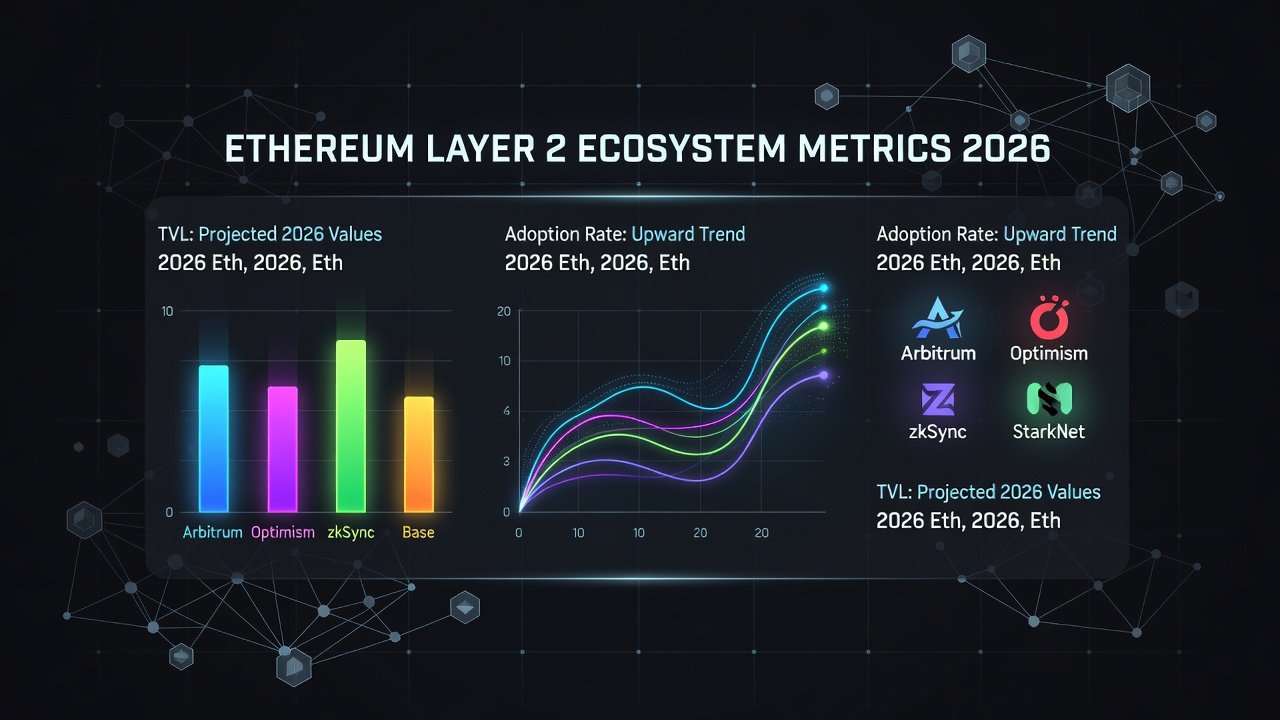
The Ethereum Layer 2 ecosystem continues to expand rapidly in 2026, building on the scalability solutions that have transformed transaction efficiency and cost structures. As the base layer evolves with ongoing upgrades, L2 rollups have become the primary venue for decentralized applications, DeFi protocols, and emerging user bases. This analysis examines key metrics including total value locked (TVL), adoption patterns, and integration with traditional finance, providing a forward-looking perspective grounded in current data trends.
Analysts project sustained momentum driven by improved interoperability and developer tooling. Understanding these dynamics helps stakeholders identify resilient projects and potential growth areas in the competitive L2 landscape. The shift toward modular blockchain architectures has further accelerated development, allowing rollups to optimize for specific use cases such as high-frequency trading or NFT marketplaces while maintaining Ethereum's security guarantees.
Throughout 2026, Ethereum L2s have demonstrated resilience amid broader market fluctuations, with infrastructure improvements enabling smoother scaling. This report delves into granular breakdowns and practical strategies for monitoring these metrics effectively.
TVL Breakdowns Across Major Rollups
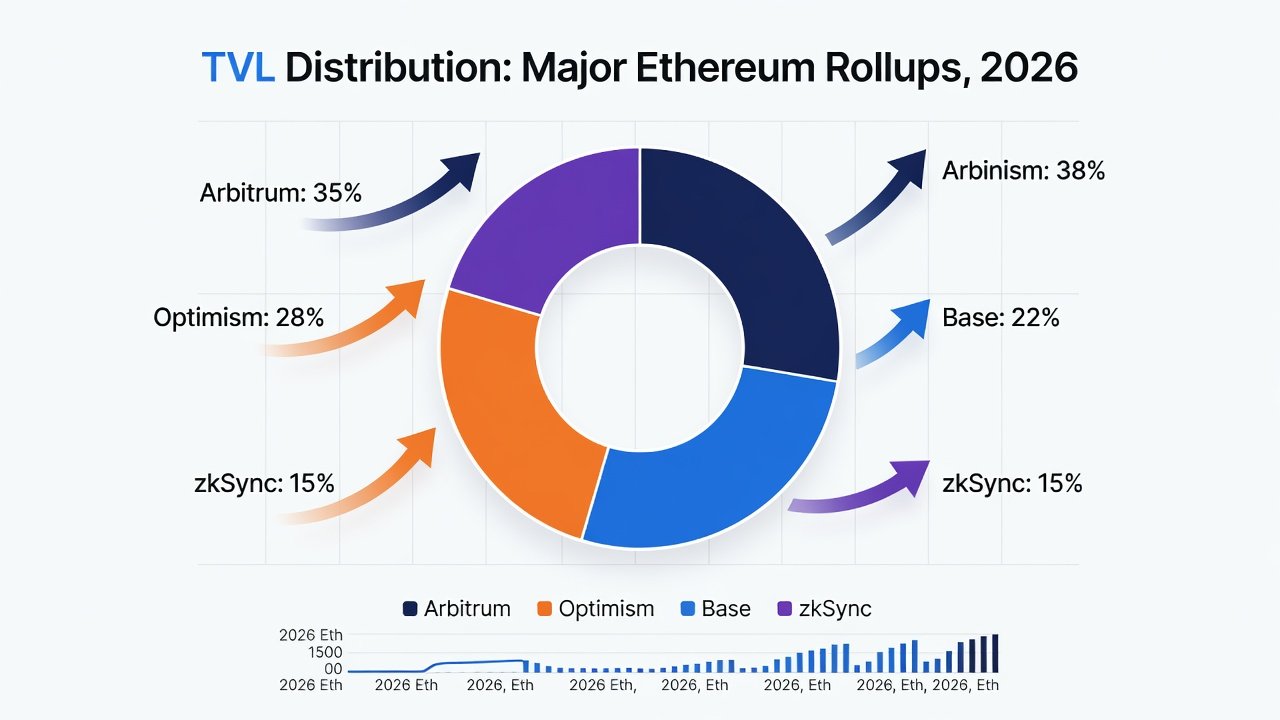
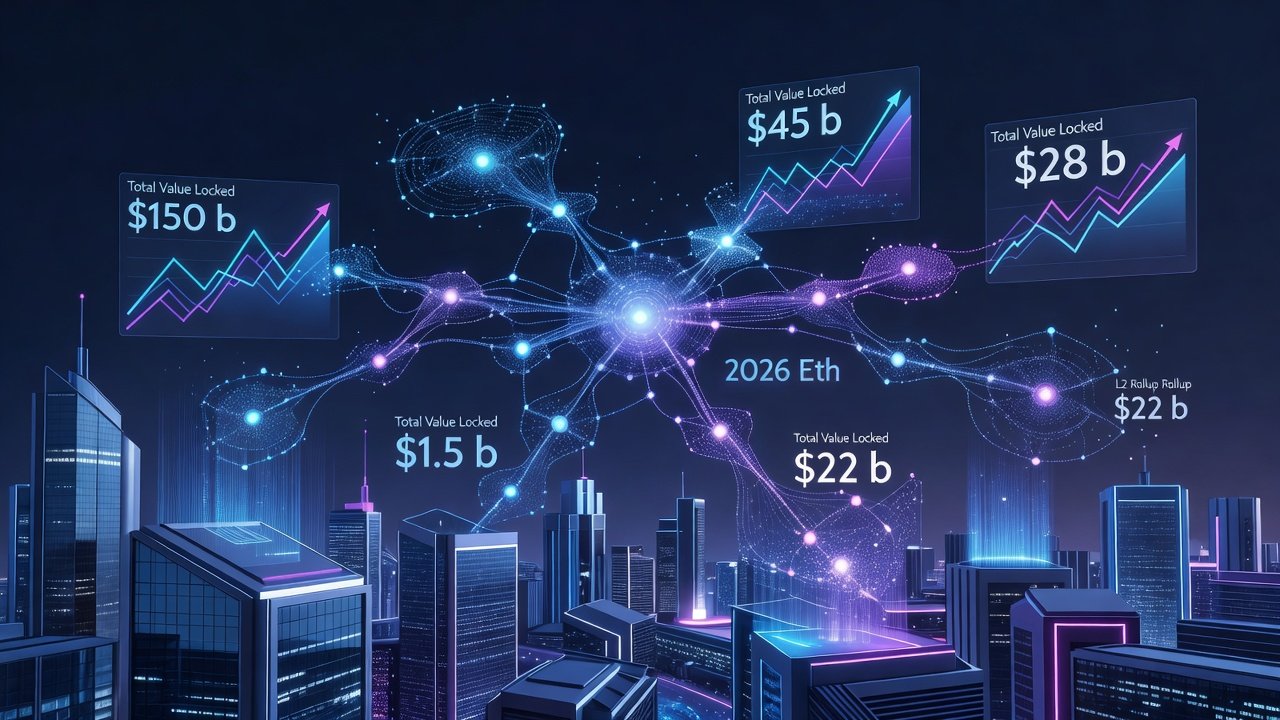
Total value locked serves as a primary indicator of ecosystem health, reflecting capital inflows and protocol usage. Leading rollups such as Arbitrum, Optimism, Base, and zkSync dominate the space, each capturing distinct market segments. Arbitrum maintains a strong position in DeFi lending and perpetuals, while Base has accelerated consumer-facing applications through seamless onboarding.
Comparisons reveal varied growth trajectories. Optimism emphasizes governance-driven expansions, whereas zkSync focuses on zero-knowledge proofs for enhanced security. Data from authoritative dashboards shows these platforms collectively accounting for the majority of Ethereum L2 TVL, with shifts influenced by fee markets and liquidity incentives. For instance, optimistic rollups have historically offered faster finality for certain transactions, attracting high-volume DeFi activity, while zk-rollups excel in computational efficiency for complex smart contracts.
Practical examples include liquidity providers migrating capital between chains based on yield opportunities and bridge reliability. Rollup-specific TVL often fluctuates with incentive programs, such as token airdrops or fee rebates, which can temporarily boost locked assets without corresponding increases in organic usage.
Comparative Insights
- Arbitrum leads in established DeFi TVL concentration due to its mature ecosystem of perpetual futures platforms and lending protocols.
- Base demonstrates fastest relative user growth in retail segments through integrations with social and gaming applications.
- zk-rollups gain traction for privacy-centric use cases, particularly in institutional settings requiring verifiable computations.
- Optimism's emphasis on public goods funding creates unique governance incentives that differentiate its TVL composition.
User Adoption Trends and Metrics
Adoption extends beyond TVL to active addresses, transaction volumes, and daily active users. In 2026, L2s report increasing engagement from both retail and institutional participants, fueled by lower fees and faster confirmations compared to Layer 1. Trends indicate rising cross-rollup activity, supported by bridges and shared sequencers that reduce fragmentation.
Emerging patterns include higher retention rates in gaming and social applications, signaling maturation beyond pure financial use cases. Expert commentary highlights infrastructure projects like shared liquidity layers as catalysts for broader accessibility. For example, daily transaction counts on major rollups have shown consistent upward trajectories, often exceeding Layer 1 volumes by multiples during peak periods.
Comparisons between optimistic and zk-based solutions reveal differences in user demographics, with the former attracting more speculative traders and the latter appealing to developers building privacy-focused tools. These trends underscore the importance of ecosystem diversity in sustaining long-term growth.
TradFi Integration Data and Opportunities
Traditional finance integration represents a pivotal development, with institutions exploring L2s for tokenized assets and settlement efficiency. Partnerships between rollup teams and financial entities facilitate compliant on-ramps, enhancing liquidity without compromising decentralization principles.
Forward-looking opportunities lie in real-world asset tokenization and programmable compliance tools. These integrations position Ethereum L2s as bridges between legacy systems and decentralized infrastructure, potentially unlocking new capital flows. Data-driven analyses show increasing volumes of tokenized treasuries and stablecoin settlements occurring on L2 networks, driven by reduced operational costs and improved transparency.
Stakeholders should examine case studies of early adopters, such as asset managers leveraging rollup infrastructure for fractional ownership models, to understand implementation challenges and best practices.
How to Track These Metrics Using On-Chain Tools
Practical tracking begins with established platforms. Users can monitor TVL via DefiLlama for aggregated breakdowns and historical comparisons. For detailed rollup analytics, L2Beat provides security assessments and activity metrics.
Advanced analysis leverages Dune Analytics for custom queries on transaction data and user cohorts. Ethereum.org resources offer foundational context on protocol upgrades influencing L2 performance. Regular review of these sources enables timely interpretation of growth signals such as TVL velocity and address clustering.
Step-by-step guidance includes setting up alerts for TVL changes exceeding predefined thresholds, cross-referencing multiple dashboards to validate data accuracy, and analyzing on-chain activity through public explorers. Common pitfalls to avoid involve over-relying on single metrics or ignoring security categorizations listed on tracking sites. Incorporating API integrations from these tools into custom dashboards can provide real-time insights tailored to specific investment strategies.
Expert Commentary on Infrastructure and Emerging Opportunities
Industry observers emphasize the role of modular infrastructure in sustaining scalability. Projects advancing data availability and fraud-proof mechanisms address lingering bottlenecks. Opportunities in 2026 include AI-enhanced oracle integrations and cross-chain composability frameworks that expand utility.
Stakeholders should prioritize ecosystems demonstrating consistent developer activity and transparent governance to mitigate risks associated with rapid expansion. Commentary from infrastructure leaders often points to the convergence of L2 scaling with zero-knowledge technologies as a key driver for future innovation, enabling new applications in verifiable machine learning and decentralized identity systems.
Mistakes to Avoid When Analyzing L2 Metrics
Interpreting ecosystem data requires caution to prevent misaligned conclusions. One frequent error is equating high TVL with sustainable adoption without examining underlying transaction quality or user retention. Another involves neglecting the impact of temporary incentive programs that inflate short-term metrics.
Additionally, failing to account for bridge risks or sequencer centralization can lead to overstated security assessments. Best practices include triangulating data across multiple sources and focusing on multi-quarter trends rather than isolated snapshots.
FAQ on Interpreting Growth Signals
What does rising TVL indicate?
Increasing TVL typically signals heightened confidence and liquidity, though it should be evaluated alongside usage metrics to distinguish speculative inflows from organic activity.
How reliable are adoption trends?
Trends derived from active addresses and transaction counts offer stronger signals than TVL alone, revealing genuine user engagement patterns across different rollup types.
Are TradFi integrations sustainable?
Early data suggests viability when supported by regulatory clarity and robust security models, though long-term success depends on continued infrastructure maturation and compliance frameworks.
What role do on-chain tools play in decision-making?
These platforms enable proactive monitoring, allowing users to identify emerging opportunities and risks before they become widely recognized in market narratives.
Conclusion
The Ethereum L2 ecosystem in 2026 presents compelling metrics for TVL growth, adoption acceleration, and TradFi convergence. By leveraging on-chain tools and monitoring key indicators, participants can navigate opportunities with informed precision. Continued innovation in infrastructure promises further evolution, reinforcing Ethereum's position as a leading scalable blockchain platform.
No comments yet. Be the first!