 CryptoChain Blog
Introduction to Ethereum L2 Energy Efficiency in 2026
As Ethereum continues its evolution, Layer 2 (L2) solutions play a pivotal role in enhancing scalability while prioritizing sustainability. In 2026, the focus on energy-efficient blockchain practices has intensified among developers and investors seeking eco-friendly ETH updates. This article examines real-world metrics, innovations, and actionable strategies for reducing environmental impact without compromising performance. Ethereum's transition to proof-of-stake laid the foundation, but L2 rollups now deliver the bulk of transaction throughput with dramatically lower energy demands per operation. Users searching for sustainable ETH updates will find that choosing the right L2 can align high-speed DeFi activity with meaningful carbon reductions.
Comparing Energy Consumption Across Major L2s
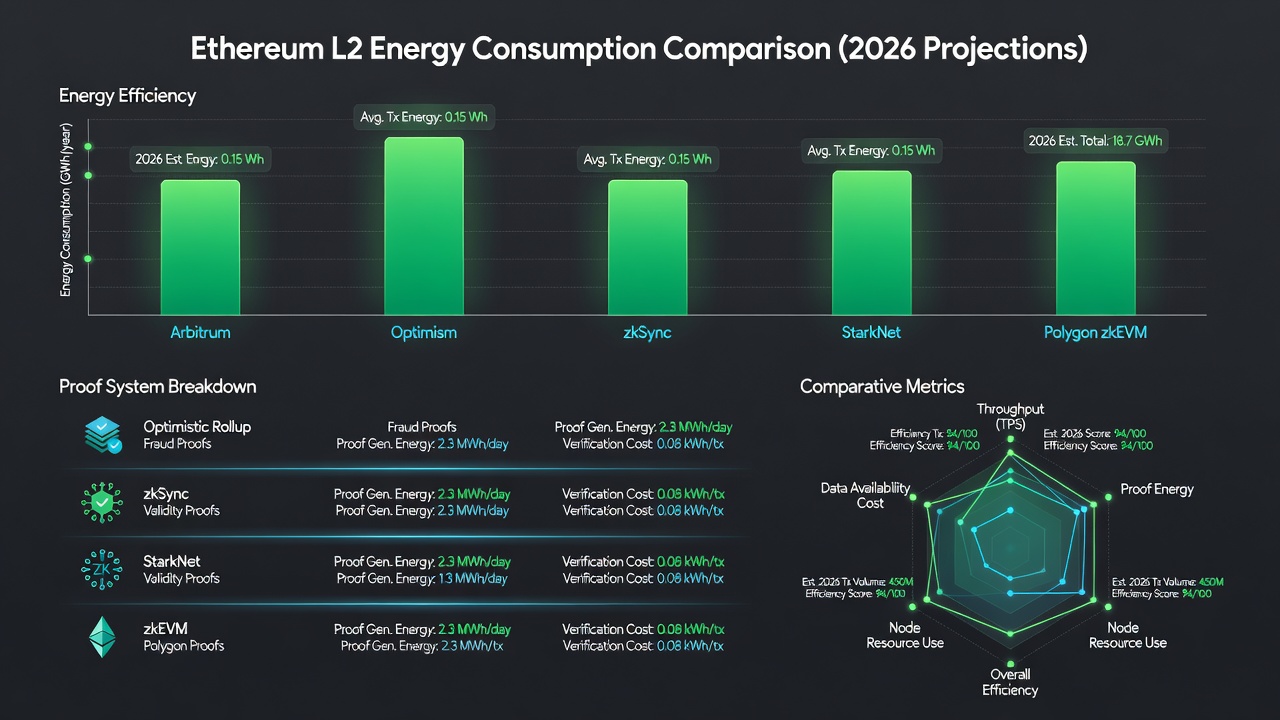
Understanding the energy profiles of leading L2 networks is essential for informed decision-making. Optimistic rollups like Optimism and Arbitrum generally consume less energy per transaction compared to zk-rollups due to their fraud-proof mechanisms. Recent 2026 deployments show that networks leveraging advanced compression techniques achieve up to 90% lower energy use than base-layer Ethereum. zkSync and Polygon zkEVM, while slightly higher in verification costs, have optimized their circuits to close the gap significantly. Base, built on Optimism technology, benefits from shared infrastructure that spreads energy overhead across thousands of daily transactions. Key factors include transaction throughput and proof verification overhead. For instance, data from recent mainnet upgrades indicate that certain L2s process thousands of transactions with minimal additional power draw. When comparing these networks, developers should examine sequencer efficiency and data availability solutions, as these elements directly influence total energy consumption in live environments.
Innovations in Proof Systems for Greener Blockchains
Proof systems have seen significant advancements. Zero-knowledge proofs are becoming more efficient through recursive SNARKs and hardware acceleration, reducing computational demands. These developments align with broader industry shifts toward sustainable practices, as highlighted on Ethereum.org. Additionally, hybrid proof models combine elements of optimistic and zk approaches to balance security and efficiency, leading to lower overall carbon footprints in 2026 deployments. New STARK-based implementations reduce trusted setup requirements and improve verifier speed, allowing networks to handle complex smart contracts with less electricity. Hardware accelerators tailored for zk computations have also emerged, enabling validators to operate on renewable-powered facilities without performance trade-offs. These innovations collectively push the ecosystem toward verifiable green claims rather than marketing assertions.
Real-World Metrics from Recent L2 Deployments
Deployments in early 2026 provide concrete benchmarks. Metrics from live networks demonstrate average energy consumption per transaction dropping below previous years' levels, thanks to optimized sequencers and batching strategies. These improvements support eco-friendly blockchain practices while maintaining high throughput. Independent monitoring shows that several optimistic rollups now average under 0.01 kWh per transaction in production, with zk variants approaching similar figures after circuit optimizations. Data availability layers using danksharding proposals further trim redundant computations. Such metrics help investors quantify the environmental benefits of migrating dApps to specific L2s and demonstrate tangible progress beyond theoretical models.
The Role of Renewable Energy in L2 Operations
Beyond proof efficiency, many L2 operators now prioritize renewable energy sources for their infrastructure. Validator nodes running on solar or wind-powered data centers contribute to net-zero goals. Partnerships with green energy providers have become common, allowing networks to publish transparent energy mix reports. This layer of sustainability complements technical improvements and appeals to institutional participants focused on ESG criteria.
Step-by-Step Guide to Selecting Green L2 Networks
Developers and investors can follow this practical process to prioritize sustainability:
- Evaluate official documentation for energy reporting and proof system details, including any published carbon accounting methodologies.
- Compare transaction costs and throughput against environmental metrics using tools like L2Beat dashboards to identify networks with the best efficiency ratios.
- Assess community initiatives around carbon offsetting and renewable energy partnerships, reviewing on-chain proposals and treasury allocations dedicated to sustainability.
- Test networks in sandbox environments to measure real performance and efficiency under varying load conditions that mirror production workloads.
- Review third-party audits for verifiable sustainability claims, focusing on reports that include both energy consumption data and verification of renewable sourcing.
Following these steps reduces the risk of selecting networks that overstate their green credentials while ensuring technical requirements remain met.
Common Mistakes to Avoid When Evaluating L2 Sustainability
- Relying solely on marketing claims without checking independent audits or raw on-chain metrics.
- Ignoring the energy impact of data availability solutions and focusing only on execution layer proofs.
- Overlooking validator geographic distribution, which affects access to renewable energy grids.
- Failing to account for future upgrades that may alter efficiency profiles significantly.
Case Studies of Low-Carbon DeFi Projects
Several DeFi protocols on L2s have adopted green practices successfully. One project on a zk-based L2 reduced its operational emissions by integrating renewable-powered validators, serving as a model for others. Another optimistic rollup deployment focused on efficient data availability layers, resulting in measurable carbon reductions while scaling lending and trading features. A third example involves a decentralized exchange that migrated to a hybrid L2 and published quarterly sustainability reports showing consistent year-over-year improvements. These case studies illustrate how practical choices in infrastructure and operations translate into verifiable environmental gains alongside strong user adoption.
FAQ: Common Concerns About Sustainability Claims
How reliable are L2 energy efficiency claims?
Claims should be verified through independent audits and transparent on-chain data. Many networks publish regular reports aligned with 2026 standards, allowing direct comparison across ecosystems.
Do energy-efficient L2s sacrifice security?
No. Modern proof systems maintain robust security while optimizing for lower energy use, as seen in recent Ethereum upgrades and the continued maturation of fraud and validity proofs.
What role does renewable energy play?
Validator operators increasingly source renewable power, further enhancing the green credentials of L2 ecosystems and providing an additional lever beyond protocol-level optimizations.
Can small teams realistically measure their own L2 carbon footprint?
Yes. Open-source tools and standardized reporting frameworks released in 2025 and 2026 make it feasible for teams of any size to track and report energy metrics accurately.
Future Trends in Green Ethereum Practices
Looking ahead, continued research into zero-knowledge machine learning and further recursion improvements promises even lower verification costs. Cross-L2 interoperability standards may also reduce redundant computations across networks. As regulatory attention on blockchain sustainability grows, transparent energy reporting will likely become a competitive necessity rather than an optional feature.
Conclusion
Ethereum L2 solutions in 2026 offer compelling pathways to energy-efficient blockchain adoption. By leveraging comparisons, innovations, and practical guides, stakeholders can align performance goals with environmental responsibility. Continued focus on these areas will drive broader adoption of sustainable ETH practices and position the ecosystem as a leader in green decentralized technology.
No comments yet. Be the first!